
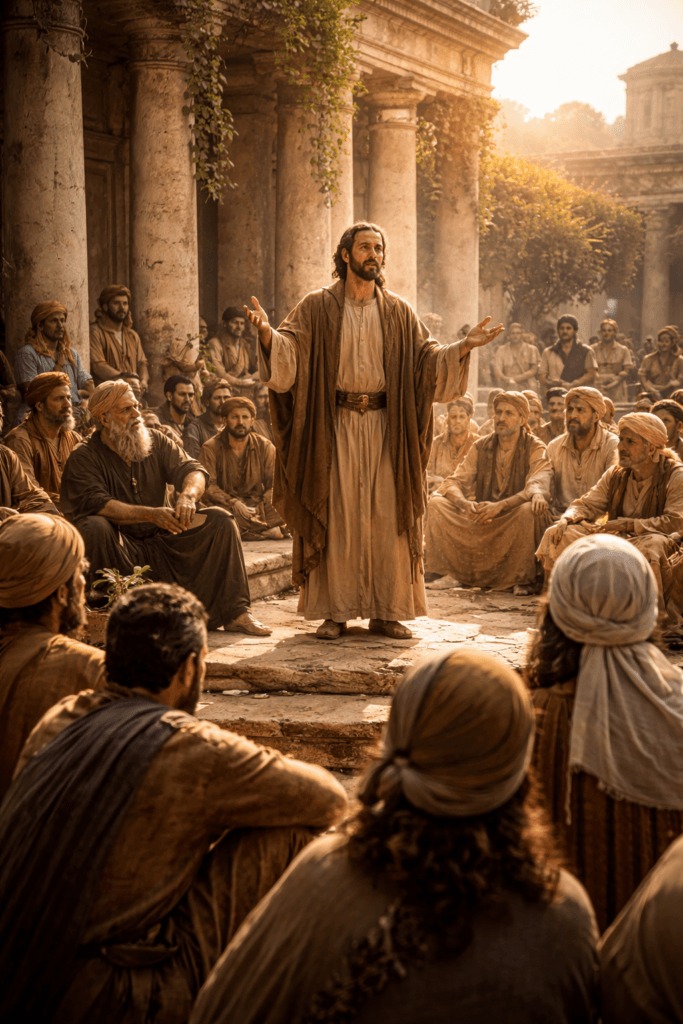
1 Corinthians — Called to Holiness, Rooted in Christ, Unified in Love
Introduction
Welcome to the 1 Corinthians Study Hub — a letter written into a church rich in gifting yet struggling in maturity.
Corinth was influential, intellectual, diverse, and morally complex.
The church reflected that environment.
- There were divisions.
- There was pride.
- There was immorality.
- There was confusion about spiritual gifts.
- There were misunderstandings about resurrection.
Yet Paul does not begin with condemnation. He begins with identity.
“To the church of God in Corinth, to those sanctified in Christ Jesus and called to be His holy people…”
Before correction, there is calling. Before rebuke, there is reminder.
- They are sanctified.
- They are gifted.
- They are enriched in speech and knowledge.
- They do not lack any spiritual gift.
But gifting without maturity produces disorder.
1 Corinthians addresses:
- Divisions within the church
- The centrality of the cross
- God’s wisdom versus human wisdom
- Sexual purity and holiness
- Marriage and singleness
- Christian freedom and conscience
- Order in worship
- Spiritual gifts and their purpose
- The supremacy of love
- The reality of resurrection
At the heart of this letter stands one stabilising truth: Christ crucified.
- The cross confronts pride.
- The cross dismantles division.
- The cross redefines wisdom.
- The cross anchors identity.
Paul calls the church to unity — not uniformity. To maturity — not rivalry. To love — not performance.
To resurrection hope — not cultural compromise.
1 Corinthians is not merely corrective. It is formative. It teaches that:
- Power is not spectacle.
- Love is not optional.
- Freedom is not self-serving.
- Gifts are not personal trophies.
- Resurrection is not metaphorical.
This letter invites believers to grow up.
- To move from worldly thinking to Christ-centred wisdom.
- To move from rivalry to unity.
- To move from disorder to Spirit-led alignment.
You are called. You are sanctified. You are gifted. Now grow.
1 Corinthians 1 — The Power and Wisdom of the Cross
Summary
Paul begins by anchoring the Corinthians in identity.
“To those sanctified in Christ Jesus and called to be His holy people…”
Before correction, he reminds them who they are.
- They are enriched in Christ.
- They do not lack any spiritual gift.
- They are being kept firm to the end.
- God is faithful.
Yet immediately Paul addresses division. “I appeal to you… that there be no divisions among you.”
Some say, “I follow Paul.” Others, “I follow Apollos.” Others, “I follow Cephas.” Still others, “I follow Christ.”
Personality loyalty is fracturing unity.
Paul asks: Is Christ divided? Was Paul crucified for you? Were you baptised in the name of Paul?
The cross belongs to Christ alone.
Paul clarifies that Christ did not send him to baptise but to preach the gospel — not with wisdom and eloquence, lest the cross of Christ be emptied of its power.
Then he unveils a central theme of the letter:
“The message of the cross is foolishness to those who are perishing, but to us who are being saved it is the power of God.”
God deliberately overturns human pride. He destroys worldly wisdom. He nullifies intellectual boasting.
The world did not know God through its wisdom.
So God was pleased through the “foolishness” of what was preached to save those who believe.
Jews demand signs. Greeks seek wisdom. But we preach Christ crucified.
A stumbling block to Jews. Foolishness to Gentiles. But to those whom God has called — Christ the power of God and the wisdom of God.
God chose the foolish things of the world to shame the wise. The weak things to shame the strong. The lowly and despised things — so that no one may boast before Him.
It is because of Him that you are in Christ Jesus. Christ has become for us:
- Wisdom from God.
- Righteousness.
- Holiness.
- Redemption.
Therefore: “Let the one who boasts boast in the Lord.”
Chapter 1 establishes:
- Unity must centre on Christ.
- The cross defines power.
- Human pride is dismantled.
- Boasting belongs only to the Lord.
Key Identity Realities
| Truth | Identity Proclamation |
|---|---|
| I Am Sanctified in Christ | My identity is rooted in Him. |
| God Is Faithful | He sustains me to the end. |
| Christ Is Not Divided | My loyalty rests in Him alone. |
| The Cross Is Power | Salvation is not human wisdom. |
| God Chooses the Weak | My limitations do not disqualify me. |
| Boasting Is Redirected | I glory only in the Lord. |
| Christ Is My Wisdom | True understanding flows from Him. |
| Christ Is My Righteousness | I stand justified in Him. |
Encouragement
Sister, do not centre your faith on personalities. Christ alone was crucified.
Division thrives where pride survives.
- The cross humbles.
- The cross unites.
- The cross empowers.
You do not need to impress the world with sophistication. The gospel is powerful because Christ is powerful.
If you feel small or overlooked, remember: God chooses what the world dismisses.
Your strength is not in status. Your worth is not in eloquence. Your security is not in affiliation.
Christ is your wisdom. Christ is your righteousness. Christ is your redemption. Boast in Him.
Stand unified. Reject rivalry. Return to the cross. Power is found there.
Reflection Questions
- Have I subtly aligned myself more with personalities than with Christ?
- How does the cross redefine what I consider powerful?
- Where might pride still be influencing my thinking?
- Do I live as though Christ truly is my righteousness?
- What does boasting only in the Lord look like practically?
1 Corinthians 2 — Spirit-Revealed Wisdom
Summary
Paul continues confronting the Corinthians’ attraction to eloquence and human sophistication.
“When I came to you, I did not come with eloquence or human wisdom as I proclaimed to you the testimony about God.”
He made a deliberate decision: “To know nothing while I was with you except Jesus Christ and Him crucified.”
His message was not built on persuasive technique. It was delivered in weakness, fear, and trembling. Why?
So that their faith might not rest on human wisdom, but on God’s power.
Paul clarifies that there is wisdom — but not the wisdom of this age.
The rulers of this age did not understand it. If they had, they would not have crucified the Lord of glory.
Instead, Paul speaks of “God’s wisdom — a mystery that has been hidden and that God destined for our glory before time began.”
This wisdom is not discovered by intellect.
“No eye has seen, no ear has heard, no human mind has conceived the things God has prepared for those who love Him.”
But God has revealed it to us by His Spirit. The Spirit searches all things — even the deep things of God.
Just as no one knows a person’s thoughts except their own spirit, no one knows the thoughts of God except the Spirit of God.
And we have received not the spirit of the world, but the Spirit who is from God — so that we may understand what God has freely given us.
Spiritual truth is spiritually discerned.
The person without the Spirit does not accept the things that come from the Spirit of God.
They are foolishness to them.
But the person with the Spirit makes judgments about all things.
Paul concludes with a stunning declaration: “We have the mind of Christ.”
Chapter 2 establishes:
- The cross is central.
- Human eloquence is secondary.
- Wisdom is Spirit-revealed.
- Understanding comes from the Spirit.
- Believers possess the mind of Christ.
Key Identity Realities
| Truth | Identity Proclamation |
|---|---|
| Christ Crucified Is Central | My faith rests on Him, not technique. |
| My Faith Is Built on Power | I depend on God, not persuasion. |
| God’s Wisdom Is Revealed | I am not spiritually blind. |
| I Have Received the Spirit | Understanding is accessible to me. |
| The Spirit Searches Deep Things | I am invited into divine depth. |
| I Understand What Is Freely Given | I do not live in spiritual ignorance. |
| Spiritual Truth Is Discerned | I think beyond worldly categories. |
| I Have the Mind of Christ | My perspective is being transformed. |
Encouragement
Sister, your faith does not rest on polished delivery. It rests on Christ crucified.
You do not need intellectual superiority to know God deeply. The Spirit reveals.
You are not left guessing. You are not locked out of understanding.
The Spirit within you gives access to what God has freely given.
When culture celebrates sophistication, remember: Power is not in performance. Power is in the cross.
You are not spiritually incapable. You have the mind of Christ.
That does not mean perfection. It means alignment.
- Ask the Spirit to illuminate.
- Lean into revelation.
- Depend on His wisdom.
You are not navigating life alone. Divine understanding is within reach.
Reflection Questions
- Is my faith resting on presentation or on Christ crucified?
- Do I seek human validation of wisdom more than Spirit-led insight?
- How intentional am I about listening to the Spirit?
- Where do I need deeper revelation of what God has freely given me?
- What does living from the “mind of Christ” look like today?
1 Corinthians 3 — God’s Field, God’s Building
Summary
Paul now addresses the core issue behind the Corinthians’ divisions — spiritual immaturity.
“I could not address you as people who live by the Spirit but as people who are still worldly — mere infants in Christ.”
They are not unsaved. They are immature. Jealousy and quarrelling reveal fleshly patterns.
When one says, “I follow Paul,” and another, “I follow Apollos,” they are thinking in merely human ways.
Paul reframes leadership. What, after all, is Apollos? And what is Paul?
Only servants, through whom you came to believe.
“I planted the seed, Apollos watered it, but God has been making it grow.”
Human leaders participate. God produces growth.
Neither the one who plants nor the one who waters is anything — but only God, who makes things grow.
The workers have one purpose. Each will be rewarded according to their labour.
“You are God’s field, God’s building.” Paul shifts metaphors.
By the grace given to him, he laid a foundation as a wise builder.
That foundation is Jesus Christ.
No one can lay any foundation other than the one already laid.
What we build on that foundation matters.
Gold, silver, costly stones — or wood, hay, straw.
The Day will test each person’s work with fire.
If what has been built survives, there is reward. If it burns up, there is loss — yet the person will be saved.
Then comes a powerful identity declaration:
“Do you not know that you yourselves are God’s temple and that God’s Spirit dwells in your midst?”
The temple is not a building. The temple is the gathered people of God.
If anyone destroys God’s temple, God will destroy that person.
God’s temple is sacred. And you together are that temple.
Paul confronts worldly wisdom again.
If any of you think you are wise by the standards of this age, you should become “fools” so that you may become wise.
Worldly wisdom is foolishness in God’s sight.
He concludes: “Let no one boast in human leaders.”
All things are yours — whether Paul or Apollos or Cephas or the world or life or death or the present or the future — all are yours.
And you are of Christ. And Christ is of God.
Chapter 3 establishes:
- Maturity is required.
- God causes growth.
- Christ is the only foundation.
- Works are tested.
- Believers are God’s temple.
- Boasting must cease.
Key Identity Realities
| Truth | Identity Proclamation |
|---|---|
| I Am Growing | Immaturity does not define my future. |
| God Causes Growth | I depend on Him for increase. |
| Christ Is My Foundation | My life is built on Him alone. |
| My Work Matters | What I build will be tested. |
| I Am God’s Temple | The Spirit dwells among us. |
| The Church Is Sacred | Unity must be protected. |
| Worldly Wisdom Is Limited | I seek God’s perspective. |
| I Belong to Christ | My security is anchored in Him. |
Encouragement
Sister, do not settle for spiritual infancy. You are called to maturity.
Jealousy and rivalry belong to fleshly thinking. Growth belongs to Spirit-led living.
You are not responsible to produce results. God gives the increase.
Build carefully. Foundation matters. Christ alone holds weight.
Your life is not temporary construction. It is eternal architecture.
And remember — You are not merely attending church. You are part of the temple.
God dwells among His people.
Protect unity. Reject comparison. Refuse personality worship.
You belong to Christ. And Christ is not divided.
Grow up in Him. Build wisely. Stand on the true foundation.
Reflection Questions
- Where might immaturity still show up in my attitudes?
- Am I relying on God for growth, or striving in my own effort?
- What am I currently building on Christ’s foundation?
- Do I truly value the sacredness of the church community?
- Have I placed any leader in a position that belongs only to Christ?
1 Corinthians 4 — Servants and Stewards
Summary
Paul now corrects the Corinthians’ distorted view of leadership.
“So then, men ought to regard us as servants of Christ and as those entrusted with the mysteries of God.”
Leaders are not celebrities. They are servants. They are stewards — entrusted managers.
And the primary requirement of a steward is faithfulness.
Paul explains that human judgment does not ultimately define him.
“I care very little if I am judged by you or by any human court… It is the Lord who judges me.”
Self-evaluation is limited. Public opinion is unstable. God alone sees motives clearly.
Therefore, do not pronounce judgment before the appointed time.
When the Lord comes, He will bring to light what is hidden and expose the motives of the heart.
Then each will receive praise from God.
Paul addresses their pride. Some had become arrogant, as though Paul were not coming back.
The Corinthians were acting self-satisfied — as though they had already become rich, already become kings.
Paul contrasts their perceived strength with apostolic suffering.
“We are fools for Christ… we are weak… we are dishonoured.”
The apostles endured hunger, hardship, persecution, slander.
They responded with blessing. With patience. With kindness.
“We have become the scum of the earth, the garbage of the world — right up to this moment.”
This is not self-pity. It is perspective.
Kingdom leadership is not glamorous. It is sacrificial.
Paul clarifies his motive:
“I am not writing this to shame you, but to warn you as my dear children.”
He sees himself as a spiritual father. They may have many instructors. But not many fathers.
He urges them: “Imitate me.”
Not in personality — but in humility, faithfulness, and endurance.
He sends Timothy to remind them of his way of life in Christ.
He closes with a sober question:
“Shall I come to you with a rod of discipline, or in love and with a gentle spirit?”
Chapter 4 establishes:
- Leaders are servants.
- Faithfulness outweighs recognition.
- God judges motives.
- Pride distorts perspective.
- True authority is fatherly and sacrificial.
Key Identity Realities
| Truth | Identity Proclamation |
|---|---|
| I Am a Steward | Faithfulness defines my success. |
| God Is My Judge | Public opinion does not anchor me. |
| Motives Matter | My heart posture is seen by God. |
| Pride Is Deceptive | I reject self-exaltation. |
| Suffering Is Not Failure | Sacrifice can reflect faithfulness. |
| Leadership Is Servanthood | Authority flows through humility. |
| I Am Spiritually Formed | Maturity requires imitation of Christlike models. |
| Discipline Is Loving | Correction aims at growth, not shame. |
Encouragement
Sister, do not measure success by applause. Faithfulness is the measure.
God sees what others cannot. Motives matter more than visibility.
If you feel overlooked, remember — servanthood is kingdom greatness.
Pride promises elevation. Humility produces maturity.
You are not called to impress. You are called to be faithful.
Judgment from others is temporary. God’s evaluation is eternal.
- Imitate Christlike humility.
- Respond to criticism with stability.
- Accept loving correction.
Kingdom leadership looks different.
- Serve.
- Endure.
- Remain faithful.
God sees.
Reflection Questions
- Do I measure success by visibility or by faithfulness?
- How do I respond when judged by others?
- Is pride subtly shaping my attitudes?
- Am I open to loving correction?
- Who am I imitating in my spiritual formation?
1 Corinthians 5 — Holiness Within the Household
Summary
Paul now addresses a serious issue within the Corinthian church — open sexual immorality that even the surrounding culture recognised as extreme.
A man was living in a relationship with his father’s wife. The shocking part? The church was proud.
Instead of mourning, they were boasting — possibly in a distorted view of grace.
Paul responds firmly. “Shouldn’t you rather have gone into mourning and have put out of your fellowship the man who has been doing this?”
Holiness is not optional within the body.
Paul explains that though absent physically, he has already judged the behaviour.
When they assemble in the name of the Lord Jesus, they are to hand this man over to Satan — meaning remove him from the protective covering of fellowship — so that his sinful nature may be destroyed and his spirit saved on the day of the Lord.
Discipline is not revenge. It is redemptive.
Paul then uses a metaphor. “A little yeast works through the whole batch of dough.”
Unchecked sin spreads influence.
“Get rid of the old yeast, so that you may be a new unleavened batch — as you really are.”
Notice the identity statement: You are unleavened. Christ, our Passover lamb, has been sacrificed.
Therefore, let us keep the festival — not with the old yeast of malice and wickedness, but with sincerity and truth.
Paul clarifies that he is not telling them to withdraw from immoral people in the world — that would require leaving the world entirely.
Rather, he refers to anyone who claims to be a brother or sister but persists in sexual immorality, greed, idolatry, slander, drunkenness, or swindling.
Do not even eat with such a person. Internal purity matters.
“What business is it of mine to judge those outside the church? Are you not to judge those inside?”
God judges those outside.
“Expel the wicked person from among you.”
Chapter 5 establishes:
- Grace does not excuse sin.
- Holiness protects community.
- Discipline can restore.
- Identity demands integrity.
- The church must guard purity.
Key Identity Realities
| Truth | Identity Proclamation |
|---|---|
| I Belong to a Holy Community | Purity protects the body. |
| Grace Is Not Permission | I do not misuse mercy. |
| Sin Affects the Whole | My choices influence others. |
| Discipline Can Restore | Correction aims at redemption. |
| Christ Is My Passover | My identity is cleansed through Him. |
| I Am Unleavened in Christ | Old patterns no longer define me. |
| Integrity Matters | Sincerity and truth mark my life. |
| God Judges Outside | My responsibility is inward holiness. |
Encouragement
Sister, grace never means indifference. Holiness is not harshness. It is protection.
Sin left unaddressed harms community. But discipline, when rightly applied, can rescue.
You are not called to self-righteous judgment. You are called to loving integrity.
You are unleavened in Christ. Cleansed. Set apart.
Live in sincerity. Walk in truth.
If you face correction, receive it humbly. If you must correct, do so redemptively.
The cross did not lower the standard. It empowered transformation.
Christ is your Passover. Your cleansing. Your foundation.
Guard holiness. Protect unity. Restore with love.
Reflection Questions
- Do I misunderstand grace as tolerance of sin?
- How do I respond when holiness requires hard conversations?
- Do I recognise how my actions influence the wider community?
- Is there any “old yeast” I need to remove?
- How can discipline be approached redemptively rather than harshly?
1 Corinthians 6 — Washed, Sanctified, Justified
Summary
Paul continues addressing internal disorder within the Corinthian church.
First, he confronts believers taking one another to secular courts.
“If any of you has a dispute with another, do you dare take it before the ungodly for judgment instead of before the Lord’s people?”
He reminds them:
- Do you not know that the Lord’s people will judge the world?
- Do you not know that we will judge angels?
If that is true, why entrust minor disputes to those outside the church?
The deeper issue is not legal procedure. It is spiritual maturity.
The very fact that lawsuits exist among them means they have already been defeated.
Why not rather be wronged? Why not rather be cheated?
Kingdom living values integrity over vindication.
Paul then addresses unrighteous behaviour more broadly.
“Do you not know that wrongdoers will not inherit the kingdom of God?”
He lists patterns of sin — sexual immorality, idolatry, adultery, greed, drunkenness, slander, swindling.
Then comes a powerful identity shift: “And that is what some of you were.” Past tense.
- But you were washed.
- You were sanctified.
- You were justified in the name of the Lord Jesus Christ and by the Spirit of our God.
Identity has changed.
Paul then corrects a slogan the Corinthians were using:
“I have the right to do anything,” you say — but not everything is beneficial.
“I have the right to do anything” — but I will not be mastered by anything.
Freedom is not self-indulgence. It is self-governed by the Spirit.
Food for the stomach and the stomach for food — but God will destroy them both.
The body, however, is not meant for sexual immorality, but for the Lord — and the Lord for the body.
God raised the Lord and will also raise us by His power. Your bodies are members of Christ Himself.
Shall I then take the members of Christ and unite them with a prostitute? Never.
Sexual sin is uniquely personal — it involves the body itself.
“Do you not know that your bodies are temples of the Holy Spirit, who is in you, whom you have received from God?”
You are not your own. You were bought at a price. Therefore honour God with your bodies.
Chapter 6 establishes:
- Disputes require maturity.
- Identity replaces past patterns.
- Freedom must not enslave.
- The body belongs to the Lord.
- You are washed, sanctified, justified.
Key Identity Realities
| Truth | Identity Proclamation |
|---|---|
| I Am Washed | My past does not define me. |
| I Am Sanctified | I am set apart for God. |
| I Am Justified | I stand declared righteous. |
| Freedom Does Not Master Me | I live self-governed by the Spirit. |
| My Body Belongs to the Lord | I honour Him physically. |
| I Am a Temple | The Spirit dwells within me. |
| I Was Bought at a Price | My life carries eternal value. |
| I Live for His Glory | Every choice reflects belonging. |
Encouragement
Sister, you are not who you were.
Washed. Sanctified. Justified.
Past patterns are not present identity.
Freedom does not mean self-rule. It means Spirit-led alignment.
Do not allow anything to master you.
Your body is not disposable. It is sacred.
You were bought at a price — not cheaply. Not casually.
The Spirit dwells within you. Honour flows from belonging.
When temptation whispers autonomy, remember — You are not your own.
- You are valued.
- You are redeemed.
- You are indwelt.
Live accordingly.
Reflection Questions
- Do I truly live as someone who has been washed and justified?
- Is there any area where “freedom” has begun to master me?
- How do I view my body — as mine or as belonging to the Lord?
- Am I handling conflict with maturity?
- What practical steps help me honour God physically?
1 Corinthians 7 — Undivided Devotion
Summary
Paul now responds to questions the Corinthians had raised about marriage and singleness.
He begins by affirming both as legitimate callings.
“It is good for a man not to have sexual relations with a woman,” he writes — but because of sexual immorality, each man should have his own wife, and each woman her own husband.
Marriage is honourable. Sexual intimacy within marriage is mutual and not self-centred.
The husband’s body belongs to his wife. The wife’s body belongs to her husband.
This mutuality protects and honours covenant.
Paul acknowledges that singleness is also a gift.
“I wish that all of you were as I am. But each of you has your own gift from God.”
Marriage is not superior. Singleness is not inferior. Both are grace-enabled callings.
To the unmarried and widows, Paul says it is good to remain single — but if they cannot exercise self-control, they should marry.
Marriage is not failure. It is wisdom when needed.
To married believers, he affirms Jesus’ teaching: A wife must not separate from her husband. A husband must not divorce his wife.
Where separation has occurred, reconciliation is encouraged.
For mixed marriages — where one spouse believes and the other does not — Paul counsels remaining together if the unbelieving partner is willing.
The believing spouse brings sanctifying influence into the home. God has called you to live in peace.
Paul then introduces a stabilising principle:
“Each person should remain in the situation they were in when God called them.”
Circumcised or uncircumcised. Slave or free.
Calling is not dependent on external status. “What matters is keeping God’s commands.”
Paul speaks of the present crisis — likely persecution or instability — encouraging wise discernment.
The time is short. Live with eternal perspective.
Those who marry will face worldly troubles. Those unmarried can focus more fully on the Lord.
The unmarried person is concerned about the Lord’s affairs. The married person is concerned about worldly affairs — how to please a spouse.
This is not condemnation. It is practical realism.
Paul’s aim is not to restrict but to promote undivided devotion to the Lord.
Chapter 7 establishes:
- Marriage and singleness are gifts.
- Calling transcends circumstance.
- Peace is prioritised.
- Devotion must remain central.
- Identity is not defined by marital status.
Key Identity Realities
| Truth | Identity Proclamation |
|---|---|
| My Calling Is a Gift | Marriage or singleness reflects grace. |
| I Belong to the Lord | My primary devotion is to Him. |
| Peace Is My Posture | I pursue reconciliation where possible. |
| Status Does Not Define Me | My identity transcends circumstance. |
| Marriage Reflects Mutual Honour | Covenant is sacrificial and shared. |
| Singleness Allows Focus | Undivided devotion is valuable. |
| Time Is Short | I live with eternal awareness. |
| Obedience Matters Most | External condition is secondary. |
Encouragement
Sister, your value is not tied to marital status.
Marriage is not spiritual superiority. Singleness is not spiritual deficiency.
Both are gifts. Both are sacred. Your first devotion is to the Lord.
If married, love sacrificially. If single, serve freely.
If in a difficult circumstance, remember — Calling stabilises you.
God does not require dramatic life shifts for legitimacy. He calls you to faithfulness where you are.
Live with eternal perspective. Do not measure your life by cultural expectation.
Peace. Devotion. Obedience. These define maturity.
You belong to the Lord. That is your primary identity.
Reflection Questions
- Do I view my current relational status as a gift or as a limitation?
- Is my devotion to the Lord undivided?
- How do I prioritise peace in relationships?
- Am I living with eternal perspective?
- What practical steps strengthen my faithfulness in my current calling?
1 Corinthians 8 — Knowledge and Love
Summary
Paul now addresses the issue of food sacrificed to idols — a culturally complex matter in Corinth.
Some believers understood that idols are nothing. They had knowledge.
“We know that an idol is nothing at all in the world and that there is no God but one.” Theologically correct.
But Paul immediately adds: “Knowledge puffs up while love builds up.” Knowledge alone inflates. Love strengthens.
Yes, there is one God, the Father. One Lord, Jesus Christ. But not everyone possesses this knowledge.
Some believers, especially those newly converted from pagan worship, still associate idol-related food with former spiritual practices.
For them, eating such food feels like participation in idolatry.
Their conscience is weak — not in moral worth, but in sensitivity and understanding.
Paul clarifies: Food does not bring us near to God. We are no worse if we do not eat, and no better if we do.
Christian freedom is real. But freedom must be governed by love.
Be careful that the exercise of your rights does not become a stumbling block to the weak.
If someone sees a believer with knowledge eating in an idol’s temple, they might be emboldened to act against their conscience. In doing so, they are wounded.
And when you sin against them in this way and wound their weak conscience, you sin against Christ.
That is the weight of it.
Paul concludes with a radical example: “If what I eat causes my brother or sister to fall into sin, I will never eat meat again.”
Freedom is willingly limited for the sake of love.
Chapter 8 establishes:
- Truth matters.
- Knowledge is valid.
- But love governs behaviour.
- Freedom must not wound.
- Conscience must be protected.
- Christ identifies with the vulnerable.
Key Identity Realities
| Truth | Identity Proclamation |
|---|---|
| There Is One God | My loyalty is singular. |
| Knowledge Is Not Enough | Love must guide my actions. |
| Freedom Is Real | I am not bound by superstition. |
| Love Builds Up | My goal is strengthening others. |
| Conscience Matters | I protect the sensitive faith of others. |
| I Do Not Wound Christ | My treatment of others reflects Him. |
| I Limit Myself for Love | Sacrifice protects unity. |
| Maturity Is Love-Governed | Growth is relational, not merely intellectual. |
Encouragement
Sister, maturity is not proving you are right. It is protecting others in love.
You may understand freedoms clearly. But wisdom asks: Does this build up?
You are not called to flaunt liberty. You are called to guard unity.
Love sometimes restrains what is permissible.
Christ identifies with the vulnerable. When you protect a weaker conscience, you honour Him.
Freedom without love fractures. Freedom with love strengthens.
Be willing to limit yourself for another’s growth.
This is not weakness. It is Christlike strength.
Reflection Questions
- Do I prioritise being right over building others up?
- Are there freedoms I exercise without considering their impact?
- How sensitive am I to the conscience of others?
- Am I willing to limit myself for the sake of love?
- Where is Christ calling me to choose love over liberty?
1 Corinthians 9 — Rights Surrendered, Purpose Pursued
Summary
Paul continues the theme of freedom — now using himself as an example.
“Am I not free? Am I not an apostle? Have I not seen Jesus our Lord?”
He affirms his legitimate rights.
- He has the right to material support.
- The right to food and drink.
- The right to take along a believing wife.
- The right to receive wages for ministry.
Scripture affirms that workers deserve support. Even the law says, “Do not muzzle an ox while it is treading out the grain.”
Yet Paul chose not to exercise these rights. Why?
Rather than hinder the gospel, he surrendered what he was entitled to.
His identity is secure. Therefore his rights are flexible.
Though free and belonging to no one, he made himself a slave to everyone — to win as many as possible.
- To the Jews, he became like a Jew.
- To those under the law, like one under the law.
- To those not having the law, like one not having the law (though still under Christ’s law).
- To the weak, he became weak.
“I have become all things to all people so that by all possible means I might save some.”
This is not compromise. It is strategic love. He does everything for the sake of the gospel.
Then Paul shifts to athletic imagery.
Do you not know that in a race all the runners run, but only one gets the prize?
Run in such a way as to get the prize.
Athletes exercise self-control. They discipline their bodies for a crown that will fade.
We do it for a crown that will last forever.
Paul does not run aimlessly. He does not fight like someone beating the air.
He disciplines his body and makes it his slave — so that after preaching to others, he himself will not be disqualified.
Chapter 9 establishes:
- Rights are real.
- Love limits rights.
- Purpose governs behaviour.
- Adaptation serves the gospel.
- Discipline sustains endurance.
- Eternal reward outweighs comfort.
Key Identity Realities
| Truth | Identity Proclamation |
|---|---|
| I Am Free | My identity is secure in Christ. |
| I Can Surrender Rights | Love outweighs entitlement. |
| I Serve for the Gospel | My life advances eternal purpose. |
| I Adapt Without Compromise | I pursue people wisely. |
| Self-Control Matters | Discipline protects calling. |
| I Run Intentionally | My life is not aimless. |
| Eternal Reward Awaits | Temporary sacrifice has lasting value. |
| I Live Under Christ’s Law | Love defines my obedience. |
Encouragement
Sister, freedom is not about insisting on your rights. It is about choosing what best serves the gospel.
You are secure. You do not need to defend entitlement.
Lay down what hinders. Adapt with wisdom. Love strategically.
Self-control is not restriction. It is alignment.
You are not running aimlessly. There is purpose in your steps. There is eternal weight in your obedience.
Temporary comfort fades. Eternal reward remains.
Discipline your focus. Guard your calling. Run with intention.
You are free — so use freedom to serve.
Reflection Questions
- Where might I be clinging to rights instead of serving in love?
- How intentional am I about advancing the gospel in my context?
- Is there any area where greater discipline is needed?
- Am I adapting wisely without compromising truth?
- What would it look like to “run to win” spiritually?
1 Corinthians 10 — Warning and Worship
Summary
Paul now draws from Israel’s history as a warning to the Corinthians.
“Our ancestors were all under the cloud and all passed through the sea.”
- They experienced deliverance.
- They were baptised into Moses.
- They ate spiritual food.
- They drank from the spiritual rock — and that rock was Christ.
Yet God was not pleased with most of them. Their bodies were scattered in the wilderness.
Spiritual experience does not guarantee faithfulness.
These events occurred as examples — to keep us from setting our hearts on evil things as they did.
Paul lists their failures:
- Idolatry.
- Sexual immorality.
- Testing Christ.
- Grumbling.
Each brought consequence.
“These things happened to them as examples and were written down as warnings for us.”
So, if you think you are standing firm, be careful that you do not fall.
Then comes assurance: “No temptation has overtaken you except what is common to mankind.”
Temptation is not unique. It is shared.
And God is faithful. He will not let you be tempted beyond what you can bear. He will provide a way out so that you can endure it.
Therefore: Flee from idolatry.
Paul explains that participation in the Lord’s Supper is participation in Christ.
- The cup of thanksgiving is participation in the blood of Christ.
- The bread is participation in the body of Christ.
Because there is one loaf, we who are many are one body.
You cannot drink the cup of the Lord and the cup of demons. You cannot have a part in both.
Idolatry is not neutral. It is allegiance.
Paul then returns to the theme of freedom.
“I have the right to do anything,” you say — but not everything is beneficial. Not everything builds up.
No one should seek their own good, but the good of others.
Eat whatever is sold in the meat market without raising questions of conscience — for the earth is the Lord’s.
If an unbeliever invites you to a meal, eat without interrogation.
But if someone says, “This has been offered in sacrifice,” then do not eat it — for the sake of the other person’s conscience. Why?
Because your freedom should not cause another to stumble.
Paul concludes with a sweeping principle: “So whether you eat or drink or whatever you do, do it all for the glory of God.”
Do not cause anyone to stumble — whether Jews, Greeks, or the church of God.
Follow his example, as he follows Christ.
Chapter 10 establishes:
- Privilege does not guarantee perseverance.
- Temptation is common and escapable.
- Idolatry must be fled.
- Freedom must build up.
- Everything must glorify God.
Key Identity Realities
| Truth | Identity Proclamation |
|---|---|
| Spiritual Experience Is Not Enough | I remain vigilant in obedience. |
| God Is Faithful in Temptation | I am never trapped without escape. |
| I Flee Idolatry | My allegiance belongs to Christ alone. |
| I Participate in Christ | Communion anchors my identity. |
| I Seek Others’ Good | Love governs my choices. |
| My Freedom Is Accountable | I build up rather than stumble others. |
| I Glorify God in Everything | Daily life reflects worship. |
| I Follow Christ’s Example | My model is Him. |
Encouragement
Sister, do not rely on past experiences to sustain present obedience. Remain humble. Remain alert.
Temptation is not proof of failure. It is opportunity for faithfulness. God always provides a way out.
Flee what competes for allegiance. Idolatry is not always obvious. It is anything that rivals devotion.
Freedom is not self-centred. It seeks the good of others.
Let your daily actions — even eating and drinking — reflect worship.
You are not navigating temptation alone. God is faithful.
You are not free to indulge. You are free to glorify.
- Choose what builds.
- Choose what honours.
- Choose what reflects Christ.
Reflection Questions
- Am I relying on past spiritual experiences rather than present obedience?
- How alert am I to subtle forms of idolatry?
- Do I actively look for God’s escape in temptation?
- Are my freedoms building others up?
- How can I glorify God more intentionally in ordinary routines?
1 Corinthians 11 — Order, Honour, and Reverence
Summary
Paul begins with imitation. “Follow my example, as I follow the example of Christ.”
The ultimate model is Christ.
He then addresses order and honour in gathered worship.
He speaks of headship — Christ is the head of every man, man the head of woman, and God the head of Christ.
This structure reflects responsibility and relational order — not superiority or inferiority.
In Corinth’s cultural context, head coverings symbolised honour and recognition of authority.
Paul’s deeper concern is not fabric. It is heart posture.
Men and women both pray and prophesy. Both participate. Both reflect God’s glory.
Woman came from man — yet man is born of woman. Everything ultimately comes from God.
Mutual dependence balances authority.
Paul then addresses a more serious issue — their behaviour at the Lord’s Supper.
When they gather, it is not for the better but for the worse.
- Divisions are present.
- Some eat privately and excessively.
- Others go hungry.
The wealthy are humiliating the poor. This is not the Lord’s Supper.
Paul reminds them of what he received from the Lord.
On the night He was betrayed, Jesus took bread. He gave thanks. He broke it.
“This is My body, which is for you; do this in remembrance of Me.”
In the same way, He took the cup. “This cup is the new covenant in My blood.”
Whenever you eat this bread and drink this cup, you proclaim the Lord’s death until He comes.
- Communion is proclamation.
- It is remembrance.
- It is covenant.
Paul warns: Whoever eats or drinks in an unworthy manner will be guilty of sinning against the body and blood of the Lord.
Each person ought to examine themselves. To eat without recognising the body is to invite discipline.
Some were weak, sick, and some had died because of irreverence.
God’s discipline is corrective — not condemning.
When we are judged by the Lord, we are being disciplined so that we will not be condemned with the world.
So when you gather, wait for one another. Care for one another. Discern the body.
Chapter 11 establishes:
- Worship requires honour.
- Authority reflects order.
- Communion demands reverence.
- Self-examination protects purity.
- Discipline preserves holiness.
Key Identity Realities
| Truth | Identity Proclamation |
|---|---|
| Christ Is My Head | I live under His authority. |
| Order Reflects Honour | Structure protects unity. |
| Mutual Dependence Matters | I value others in the body. |
| Communion Proclaims Christ | I remember covenant reverently. |
| Self-Examination Is Healthy | I approach worship sincerely. |
| God’s Discipline Is Loving | Correction refines me. |
| Worship Is Communal | I discern the body carefully. |
| Reverence Protects Holiness | I do not treat sacred things casually. |
Encouragement
Sister, worship is not casual gathering. It is sacred encounter. Approach with reverence. Approach with sincerity.
Authority is not oppression. It is divine order.
Communion is not routine. It is remembrance.
When you take the bread and cup, you proclaim His death. You align with covenant. You declare belonging.
Examine your heart — not with fear, but with humility. God disciplines because He loves.
Gathered worship reflects unity. Care for others. Wait for one another. Discern the body.
You belong to Christ. Approach Him with honour.
Reflection Questions
- Do I approach worship with reverence or routine?
- How do I understand authority within God’s design?
- Is there anything I need to examine before participating in communion?
- Am I mindful of others within the body when I gather?
- How can I honour Christ more intentionally in corporate worship?
1 Corinthians 12 — One Spirit, Many Gifts
Summary
Paul now addresses spiritual gifts — correcting confusion and competition within the Corinthian church.
He begins with clarity. “No one who is speaking by the Spirit of God says, ‘Jesus be cursed,’ and no one can say, ‘Jesus is Lord,’ except by the Holy Spirit.” The Spirit always glorifies Christ.
Then Paul explains diversity within unity.
- There are different kinds of gifts, but the same Spirit.
- Different kinds of service, but the same Lord.
- Different kinds of working, but in all of them and in everyone it is the same God at work.
Variety does not threaten unity. It displays it.
To each one the manifestation of the Spirit is given for the common good.
Gifts are not personal trophies. They serve the body.
Paul lists various gifts:
- Message of wisdom.
- Message of knowledge.
- Faith.
- Gifts of healing.
- Miraculous powers.
- Prophecy.
- Distinguishing between spirits.
- Different kinds of tongues.
- Interpretation of tongues.
All these are the work of one and the same Spirit, and He distributes them to each one, just as He determines.
The Spirit decides. Comparison is unnecessary.
Paul then uses the body metaphor. Just as a body has many parts, but all its many parts form one body, so it is with Christ.
We were all baptised by one Spirit into one body — whether Jews or Greeks, slave or free — and were all given the one Spirit to drink.
Unity is spiritual, not social.
The foot cannot say, “Because I am not a hand, I do not belong.”
The ear cannot say, “Because I am not an eye, I do not belong.”
Difference does not equal exclusion.
Likewise, the eye cannot say to the hand, “I do not need you.”
Superiority fractures unity. Inferiority undermines belonging.
God has placed the parts in the body, every one of them, just as He wanted them to be.
There should be no division in the body, but equal concern for each other.
If one part suffers, every part suffers. If one part is honoured, every part rejoices.
“You are the body of Christ, and each one of you is a part of it.”
Paul lists roles within the church — apostles, prophets, teachers, miracles, healing, helps, guidance, tongues.
Not everyone has the same function.
And then he closes with anticipation: “Now eagerly desire the greater gifts.” And yet I will show you the most excellent way.
Chapter 12 establishes:
- The Spirit unifies.
- Gifts serve the common good.
- Comparison is misplaced.
- Every member belongs.
- Interdependence protects unity.
- Love will surpass all.
Key Identity Realities
| Truth | Identity Proclamation |
|---|---|
| The Spirit Dwells in Me | I belong to the body of Christ. |
| I Have a Gift | I am not spiritually unnecessary. |
| My Gift Serves Others | My purpose builds the body. |
| I Do Not Compare | The Spirit assigns uniquely. |
| I Need Others | Interdependence strengthens unity. |
| Suffering Is Shared | I am not isolated in difficulty. |
| Honour Is Shared | I celebrate others’ growth. |
| Unity Reflects Christ | Diversity reveals God’s design. |
Encouragement
Sister, you are not an optional part of the body. You belong.
Your gift matters — not for recognition, but for strengthening others.
Do not shrink in comparison. Do not elevate yourself in pride.
The Spirit distributes. You steward.
Difference is design. Interdependence is strength.
When others succeed, rejoice. When others suffer, care.
You are part of something living. Something interconnected. Something Spirit-formed.
And greater still — Love will define how those gifts function.
You are not alone. You are not unnecessary. You are placed intentionally.
Serve faithfully. Value others. Remain unified.
Reflection Questions
- Do I fully believe that I belong within the body of Christ?
- Am I using my gifts for the common good?
- Where might comparison be affecting my perspective?
- How do I respond when others are honoured?
- Do I truly recognise my need for others?
1 Corinthians 13 — The Most Excellent Way
Summary
After addressing spiritual gifts, Paul now reveals what governs them. “And yet I will show you the most excellent way.”
Without love, gifting collapses.
If I speak in the tongues of men or of angels but do not have love, I am only a resounding gong or a clanging cymbal.
If I have prophecy and can fathom all mysteries and all knowledge — and if I have faith that can move mountains — but do not have love, I am nothing.
If I give all I possess to the poor and surrender my body — but do not have love, I gain nothing.
Love is not an accessory. It is the foundation.
Paul then defines love.
- Love is patient.
- Love is kind.
- It does not envy.
- It does not boast.
- It is not proud.
- It does not dishonour others.
- It is not self-seeking.
- It is not easily angered.
- It keeps no record of wrongs.
- Love does not delight in evil but rejoices with the truth.
- It always protects.
- Always trusts.
- Always hopes.
- Always perseveres.
- Love never fails.
Gifts are temporary. Prophecies will cease. Tongues will be stilled. Knowledge will pass away.
For we know in part and we prophesy in part. But when completeness comes, what is in part disappears.
Paul uses the imagery of growth. When I was a child, I talked like a child. I thought like a child. I reasoned like a child.
When I became a man, I put childish ways behind me.
Spiritual maturity grows beyond partial understanding.
Now we see only a reflection as in a mirror. Then we shall see face to face.
Now I know in part. Then I shall know fully, even as I am fully known.
And now these three remain:
- Faith.
- Hope.
- Love.
- But the greatest of these is love.
Chapter 13 establishes:
- Love validates gifting.
- Love defines maturity.
- Love reflects God’s nature.
- Love outlasts temporary expressions.
- Love is supreme.
Key Identity Realities
| Truth | Identity Proclamation |
|---|---|
| Love Defines Me | My gifting must be governed by love. |
| Without Love I Am Nothing | Performance without affection is empty. |
| Love Is Patient and Kind | My conduct reflects Christ’s character. |
| Love Rejects Pride | I do not seek my own elevation. |
| Love Forgives | I do not keep records of wrong. |
| Love Perseveres | I remain steady through difficulty. |
| Love Outlasts Gifts | Eternal values shape my priorities. |
| I Am Known Fully | My identity is secure in God’s knowledge of me. |
Encouragement
Sister, gifts impress. Love transforms.
You may speak well. You may serve faithfully. You may understand deeply.
But without love, it is noise.
Love is not weakness. It is strength under control.
It absorbs. It protects. It forgives. It perseveres.
When irritation rises, choose patience. When pride whispers, choose humility. When memory of offence returns, choose release.
Love never fails. It outlasts eloquence. It surpasses knowledge. It remains when everything else fades.
Faith anchors you. Hope sustains you. But love reflects God most clearly.
Grow beyond childish reactions. Mature into Christlike affection.
Let love govern your words. Your service. Your responses.
The greatest evidence of transformation is love.
Reflection Questions
- Is my service governed by love or by performance?
- Where do I struggle most with patience or kindness?
- Am I keeping record of wrongs?
- Do I prioritise eternal values over temporary recognition?
- How can I grow in love this week intentionally?
1 Corinthians 14 — Orderly Worship and Edifying Speech
Summary
Paul continues directly from Chapter 13. “Follow the way of love and eagerly desire gifts of the Spirit, especially prophecy.”
Love governs pursuit. Spiritual gifts are not dismissed — they are directed.
Paul focuses on tongues and prophecy.
Speaking in tongues builds up the individual unless interpreted. Prophecy builds up the church.
The priority in gathered worship is edification.
If you speak in a tongue without interpretation, others do not understand. If you prophesy, others are strengthened, encouraged, and comforted.
Paul uses the analogy of musical instruments.
If the notes are unclear, no one recognises the tune.
Likewise, speech in worship must be understandable.
He does not forbid tongues. He himself speaks in tongues more than all of them.
But in the church he would rather speak five intelligible words to instruct others than ten thousand words in a tongue.
Maturity requires understanding.
Tongues can serve as a sign — particularly to unbelievers — but prophecy is more beneficial for believers.
If the whole church speaks in tongues and unbelievers enter, they may think you are out of your mind.
But if prophecy is present, the secrets of the heart are exposed, and the unbeliever may fall down and worship, declaring, “God is really among you.”
Then Paul gives practical order.
When you gather, each one may bring a hymn, a word of instruction, a revelation, a tongue, or an interpretation.
Everything must be done so that the church may be built up.
If anyone speaks in a tongue, there must be two or at most three, and someone must interpret.
If there is no interpreter, they should remain silent and speak to themselves and to God.
Two or three prophets should speak, and others should weigh carefully what is said.
God is not a God of disorder but of peace.
Worship should reflect His nature.
Paul concludes: “Therefore, my brothers and sisters, be eager to prophesy, and do not forbid speaking in tongues. But everything should be done in a fitting and orderly way.”
Chapter 14 establishes:
- Love directs gifting.
- Understanding builds the body.
- Clarity protects unity.
- Order reflects God’s character.
- Worship must edify.
Key Identity Realities
| Truth | Identity Proclamation |
|---|---|
| I Pursue Love First | Gifts follow love’s direction. |
| My Gifts Build Others | Edification is my aim. |
| Clarity Matters | I seek understanding, not confusion. |
| Order Reflects God | Peace governs worship. |
| I Value Interpretation | Understanding protects unity. |
| Maturity Seeks Edification | I prioritise strengthening others. |
| God Is Present in Worship | My gatherings reflect His nature. |
| I Submit to Structure | Freedom operates within peace. |
Encouragement
Sister, desire spiritual gifts. But pursue love first.
Gifting without order breeds confusion. Gifting under love produces growth.
Your words matter. Ask:
- Does this build up?
- Does this strengthen?
- Does this clarify?
God is not chaotic. He is peace. Worship should reflect His character.
Do not suppress what the Spirit gives. But steward it wisely.
Maturity chooses edification over display.
- Let your speech strengthen.
- Let your worship reflect order.
- Let love govern everything.
God is among His people. Build wisely.
Reflection Questions
- Do I pursue love above spiritual expression?
- How intentional am I about building others up with my words?
- Do I value clarity and order in worship?
- Where might I need greater maturity in stewarding spiritual gifts?
- Does my participation in gatherings reflect peace and edification?
1 Corinthians 15 — The Resurrection and the Unshakable Hope
Summary
Paul now anchors everything in the resurrection.
He reminds them of the gospel he preached:
- That Christ died for our sins according to the Scriptures.
- That He was buried.
- That He was raised on the third day according to the Scriptures.
- That He appeared to Cephas, then the Twelve, then to more than five hundred at once, then to James, then to all the apostles — and last of all to Paul.
The resurrection is not metaphor. It is historical and witnessed.
Paul insists: If Christ has not been raised, our preaching is useless and so is your faith.
If Christ has not been raised:
- Faith is futile.
- Sin remains.
- The dead are lost.
- Christians are most to be pitied.
But Christ has indeed been raised from the dead — the firstfruits of those who have fallen asleep.
Death came through a man — Adam. Resurrection comes through a man — Christ.
As in Adam all die, so in Christ all will be made alive.
Christ reigns until every enemy is placed under His feet. The last enemy to be destroyed is death.
Resurrection is not optional theology. It is essential victory.
Paul then addresses questions about the nature of the resurrected body.
How are the dead raised? What kind of body will they have?
He uses the image of a seed. What you sow does not come to life unless it dies.
The body sown is perishable. It is raised imperishable.
Sown in dishonour. Raised in glory.
Sown in weakness. Raised in power.
Sown a natural body. Raised a spiritual body.
The first man was of the dust. The second man is of heaven.
Just as we have borne the image of the earthly man, so we shall bear the image of the heavenly man.
Flesh and blood cannot inherit the kingdom of God.
Paul reveals a mystery: We will not all sleep, but we will all be changed — in a flash, in the twinkling of an eye, at the last trumpet.
The perishable will clothe itself with the imperishable. The mortal with immortality.
Then the saying will come true: “Death has been swallowed up in victory.”
“Where, O death, is your victory? Where, O death, is your sting?”
The sting of death is sin. The power of sin is the law.
But thanks be to God! He gives us the victory through our Lord Jesus Christ.
Paul concludes: “Therefore, my dear brothers and sisters, stand firm. Let nothing move you. Always give yourselves fully to the work of the Lord, because you know that your labour in the Lord is not in vain.”
Chapter 15 establishes:
- The resurrection is foundational.
- Christ conquered death.
- Believers will be transformed.
- Victory is assured.
- Labour is not wasted.
Key Identity Realities
| Truth | Identity Proclamation |
|---|---|
| Christ Is Risen | My faith rests on historical victory. |
| I Am Made Alive in Christ | Death does not define my future. |
| Resurrection Is Certain | My hope is bodily and real. |
| My Weakness Will Be Raised in Power | Present frailty is temporary. |
| I Bear the Image of the Heavenly Man | Transformation is promised. |
| Death Is Defeated | Fear does not control me. |
| Victory Is Given | I do not fight for triumph; I live from it. |
| My Labour Is Not in Vain | Faithfulness has eternal impact. |
Encouragement
Sister, the resurrection changes everything.
You are not building your life on wishful thinking. You are anchored in victory.
Death is not ultimate. Sin is not final. Loss is not permanent.
Your present weakness will be raised in power. What feels fragile now is not your final state.
Because Christ lives, you will live.
Stand firm. Let nothing shake you. Not suffering. Not opposition. Not uncertainty.
Your labour is not wasted. Your obedience is not unseen. Your faith is not empty.
Victory has already been secured.
Live boldly. Serve faithfully. Hope confidently.
Death has lost its sting.
Reflection Questions
- How central is the resurrection to my daily faith?
- Do I live with fear of death or with confidence in victory?
- How does future resurrection shape my endurance now?
- Am I standing firm when circumstances challenge me?
- Do I truly believe my labour in the Lord is not in vain?
1 Corinthians 16 — Steadfast, Watchful, Strong in Love
Summary
Paul closes 1 Corinthians by bringing lofty theology into practical faithfulness.
He begins with instructions about the collection for the Lord’s people.
On the first day of every week, each person should set aside a sum of money in keeping with their income.
Giving is not impulsive. It is intentional.
Generosity reflects participation in God’s work beyond local boundaries.
Paul speaks of his travel plans. He hopes to visit after passing through Macedonia. He desires to spend time with them — perhaps even winter there — if the Lord permits.
Ministry is planned. But always submitted to the Lord’s will.
He remains in Ephesus because a great door for effective work has opened — even though many oppose him.
Opportunity and opposition often coexist.
Paul instructs them to receive Timothy without fear. He is doing the Lord’s work.
They are to respect those like Stephanas who have devoted themselves to serving the Lord’s people. Honour faithful servants.
Then comes a powerful cluster of exhortations:
- Be on your guard.
- Stand firm in the faith.
- Be courageous.
- Be strong.
- Do everything in love.
Vigilance. Stability. Bravery. Strength. Love.
He warns against disorder but calls them into unity.
He closes with affection: “My love to all of you in Christ Jesus.”
Chapter 16 establishes:
- Generosity is practical worship.
- Plans submit to God.
- Opportunity may face opposition.
- Leaders deserve honour.
- Vigilance is required.
- Strength must be governed by love.
Key Identity Realities
| Truth | Identity Proclamation |
|---|---|
| I Give Intentionally | Generosity reflects devotion. |
| My Plans Submit to God | I trust His direction. |
| Opposition Does Not Stop Purpose | Open doors may include resistance. |
| I Honour Faithful Servants | I value those who labour in Christ. |
| I Stand Firm | My faith is not easily shaken. |
| I Am Watchful | Spiritual alertness guards me. |
| I Am Courageous and Strong | I rely on His strength. |
| Love Governs Everything | Strength is expressed through love. |
Encouragement
Sister, faith is not only grand theology. It is faithful practice.
Generosity. Planning. Encouraging. Standing firm.
Do not separate spiritual life from daily responsibility.
Stay alert. Guard your heart. Stand steady in truth.
Courage is not aggression. It is stability under pressure.
Strength is not dominance. It is resilience rooted in Christ.
And above all — Do everything in love.
- Let love shape your courage.
- Let love guide your strength.
- Let love steady your standing.
Faithfulness in small things prepares you for larger assignments.
- Remain watchful.
- Remain generous.
- Remain loving.
Christ is with you.
Reflection Questions
- Am I intentional and consistent in generosity?
- Do I submit my plans to the Lord?
- How do I respond when opportunity meets opposition?
- Am I standing firm in faith during pressure?
- Is love clearly visible in my strength?
Completion Note — Anchored in the Cross, Mature in Love
From division to resurrection, 1 Corinthians carries a steady invitation: Grow up.
The church in Corinth was gifted. Enriched. Empowered. Yet maturity lagged behind gifting.
Paul calls them — and us — back to the centre: Christ crucified.
- The cross dismantles pride.
- The cross silences boasting.
- The cross defines wisdom.
Gifts without love are noise. Knowledge without humility divides. Freedom without restraint wounds.
But love builds.
1 Corinthians moves us through:
- Unity over rivalry.
- Holiness over compromise.
- Discipline over disorder.
- Sacrifice over entitlement.
- Love over performance.
- Resurrection over despair.
Spiritual gifts matter. Order matters. Holiness matters. But love matters most.
The body is sacred. The church is interconnected. The Spirit distributes gifts for the common good.
And at the centre stands resurrection hope.
- Christ is risen.
- Death is defeated.
- Labour is not in vain.
Therefore:
- Stand firm.
- Be watchful.
- Be courageous.
- Be strong.
- Do everything in love.
- You are sanctified in Christ.
- You are gifted by the Spirit.
- You are part of one body.
- You are destined for resurrection.
Maturity is not about status. It is about love-shaped obedience.
- Boast only in the Lord.
- Build carefully.
- Guard holiness.
- Pursue unity.
- Remain resurrection-focused.
Anchored in the cross. Mature in love. Confident in victory. Christ reigns.
And your labour in Him is not wasted.
1. Big-Picture Summary
1 Corinthians addresses a gifted but immature church.
It declares that: Spiritual gifting must be governed by the cross and expressed through love.
The Corinthian believers were enriched in speech and knowledge. They lacked no spiritual gift.
Yet division, pride, immorality, disorder, and confusion had taken root.
Paul brings them back to foundation: Christ crucified.
- The cross dismantles boasting.
- The cross redefines wisdom.
- The cross anchors unity.
1 Corinthians moves through:
- Confronting division
- Correcting immorality
- Clarifying Christian freedom
- Restoring order in worship
- Explaining spiritual gifts
- Elevating love above all
- Defending bodily resurrection
At its core stands this unshakable declaration: “Christ has indeed been raised from the dead.”
The resurrection secures hope. The cross secures identity. Love secures unity.
2. Chapter-by-Chapter Summary
| Chapter | Summary |
|---|---|
| 1 | Divisions exposed. The cross is God’s wisdom and power. Boast only in the Lord. |
| 2 | True wisdom is revealed by the Spirit. Faith rests on God’s power, not eloquence. |
| 3 | Spiritual immaturity corrected. Christ is the only foundation. The church is God’s temple. |
| 4 | Leaders are servants and stewards. Faithfulness matters more than applause. |
| 5 | Sexual immorality confronted. Holiness protects the community. |
| 6 | Lawsuits and bodily purity addressed. Believers are washed, sanctified, justified. |
| 7 | Marriage and singleness explained. Calling transcends circumstance. |
| 8 | Knowledge and love balanced. Freedom must not wound others. |
| 9 | Rights surrendered for the gospel. Discipline sustains purpose. |
| 10 | Israel’s warning. Flee idolatry. Do all for God’s glory. |
| 11 | Order in worship. Reverence in communion. Honour and unity preserved. |
| 12 | One Spirit, many gifts. Every member belongs. |
| 13 | Love is supreme. Without love, gifts are nothing. |
| 14 | Orderly worship. Gifts must build up the church. |
| 15 | Resurrection defended. Death defeated. Labour not in vain. |
| 16 | Steadfast living. Be watchful, strong, and loving. |
3. Major Movements
| Movement | Focus | Transformation Thread |
|---|---|---|
| The Cross Re-centred | Wisdom and unity | Pride dismantled |
| Holiness Restored | Purity and discipline | Integrity strengthened |
| Freedom Clarified | Love over entitlement | Liberty governed |
| Gifts Aligned | Order and edification | Love governs expression |
| Resurrection Anchored | Eternal hope | Perseverance secured |
1 Corinthians moves from disorder → correction → re-centering → maturity → resurrection confidence.
4. Key Themes and Identity Lessons
| Theme | Identity Lesson |
|---|---|
| The Cross | Christ alone is my boast. |
| Unity | I reject rivalry and division. |
| Holiness | I am set apart in conduct. |
| Freedom | Love governs my liberty. |
| Spiritual Gifts | My gift builds the body. |
| Love | Without love, nothing matters. |
| Discipline | Faithfulness sustains calling. |
| Resurrection | Death does not define my future. |
| Endurance | My labour in the Lord is not in vain. |
5. Encouragement
Sister, maturity matters. Gifting is not enough. Knowledge is not enough. Activity is not enough.
Love must govern everything.
Return to the cross when pride rises. Return to resurrection when hope fades.
- Guard unity.
- Protect holiness.
- Build carefully.
- Serve sacrificially.
- Your body belongs to the Lord.
- Your gifts belong to the body.
- Your hope belongs to eternity.
- Stand firm.
- Be courageous.
- Be strong.
- And do everything in love.
- Christ is risen.
- Victory is secure.
- Your labour is not wasted.
6. Reflection Questions
- Where has pride threatened unity in my life?
- How does the cross redefine what I consider success?
- Am I using freedom to serve or to assert?
- Are my gifts building up others?
- How does resurrection hope strengthen my endurance today?