
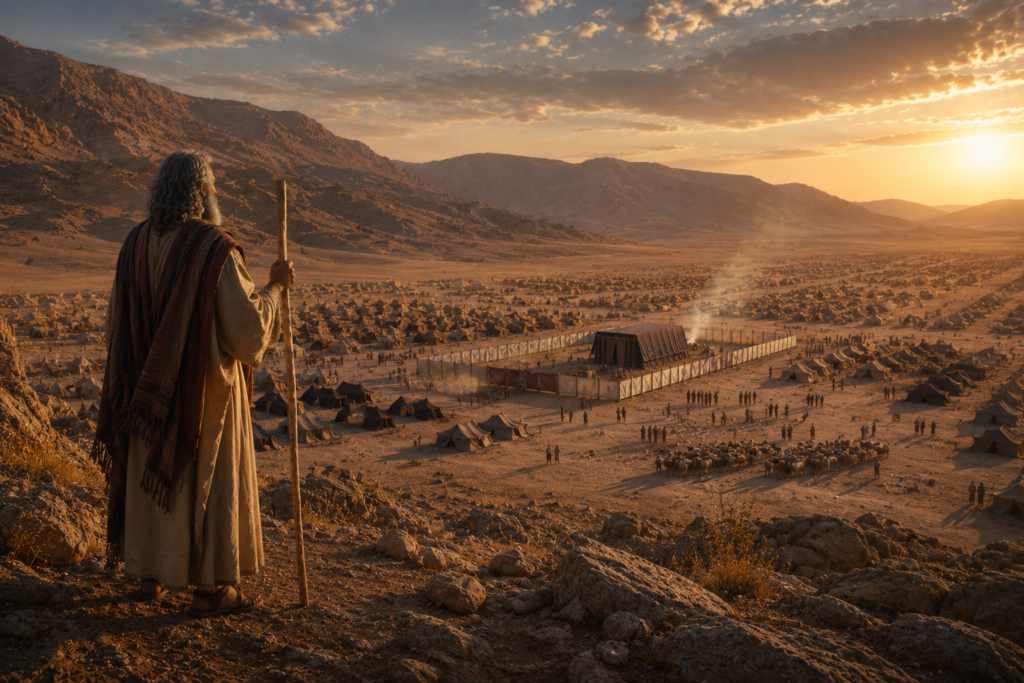
Learning to Trust God in the Wilderness
Welcome to the Numbers study hub — a place to encounter God not only through Israel’s wilderness journey, but through the deeper invitation to trust, obedience, perseverance, and wholehearted dependence upon Him.
Here, you will find free study notes for each chapter of the Book of Numbers, written through the lens of becoming completely transformed — not merely observing the movements of Israel through the wilderness, but allowing their journey to reveal what happens within the human heart through seasons of testing, waiting, transition, and growth.
Numbers is not simply a book of lists, camps, and wilderness wandering.
It is a revelation of how God faithfully leads His people even when they struggle with fear, unbelief, complaining, and resistance.
The book begins with preparation.
The people are counted, organised, and positioned around the presence of God.
Everything centres around His presence dwelling among them.
Yet as the journey unfolds, the wilderness begins exposing what is hidden within the heart.
Fear. Impatience. Pride. Complaining. Distrust. Rebellion.
Again and again, the people struggle to trust the God who has already delivered, provided for, and guided them.
Yet alongside human weakness, another reality continually emerges: God remains faithful.
- He provides manna.
- He guides by cloud and fire.
- He protects.
- He disciplines.
- He restores.
- He continues leading His people forward despite their failures.
Throughout Numbers, a central truth becomes clear:
The wilderness is not only a place of testing — it is a place of formation.
- It is where trust is refined.
- Dependence is deepened.
- Character is revealed.
- And hearts are continually invited back into alignment with God.
We also see powerful contrasts throughout the book:
- Faith versus fear.
- Trust versus unbelief.
- Obedience versus rebellion.
- God’s faithfulness versus human inconsistency.
One of the most defining moments comes when Israel reaches the edge of the Promised Land.
Although the promise stands before them, fear causes an entire generation to shrink back.
This becomes one of the great themes of Numbers: Unbelief can delay what God desires to bring forth.
Yet even then, God’s covenant purposes continue.
A new generation rises. Leadership transitions begin. And God faithfully prepares His people to move forward once again.
These chapters have been approached slowly and prayerfully, with the Holy Spirit as Teacher — revealing not only historical events and wilderness experiences, but the deeper invitation to trust God in seasons that feel uncertain, stretching, or difficult.
As you journey through Numbers, you will begin to see that this is not only a story about wilderness wandering.
It is a story about the human heart.
- A story about learning to trust God when the journey feels long.
- A story about remaining anchored in His presence.
- A story about allowing Him to shape character through every season.
For those who desire to journey even deeper, you will also find optional companion resources available, including printable workbooks, guided journals, and heart-transformation tools designed to help you apply and embody the truths revealed in each chapter.
May this not simply become a study of wilderness journeys, battles, and wandering —
May it become a living encounter with the God who faithfully leads, patiently forms, and continually calls His people to trust Him more deeply.
May it strengthen your faith in uncertain seasons, anchor your heart in His presence, and remind you that even in the wilderness, God is still leading you toward His promises.
With love,
Nicola 💖
Numbers 1 — Ordered Around the Presence of God
Summary of the Chapter
Numbers 1 begins with God speaking to Moses in the wilderness of Sinai after Israel’s deliverance from Egypt.
The people are no longer slaves wandering without direction.
God begins organising, preparing, and positioning them as a covenant people moving toward the Promised Land.
The chapter centres around a census.
Each tribe is counted according to families, clans, and military readiness.
Leaders are appointed from every tribe to assist Moses in this process.
At first glance, the chapter may appear to focus only on numbers and organisation.
Yet something much deeper is being revealed. God sees His people individually and collectively.
Every tribe matters. Every family matters. Every person has a place within the community.
The census also reveals preparation for movement and responsibility.
Israel is being prepared for the journey ahead.
Yet one tribe is treated differently.
The Levites are not counted among the military census because they are set apart for service connected to the tabernacle — the dwelling place of God’s presence.
Their role is to care for and guard the tabernacle. This becomes deeply significant.
At the centre of Israel’s identity and structure is not military strength, wealth, or power.
It is the presence of God. The entire camp is organised around Him.
Numbers 1 reveals that God is intentional, orderly, and deeply relational, positioning His people around His presence and preparing them for the journey ahead.
Key Themes & Lessons
| Theme | Lesson for Heart Transformation |
|---|---|
| Identity | Every person has value and place within God’s purposes. |
| Preparation | God prepares His people before leading them forward. |
| Order | God brings wisdom, structure, and intentionality rather than chaos. |
| Community | God’s people are designed to function together rather than independently. |
| Calling | Different people carry different responsibilities and roles. |
| Presence | God’s presence is meant to remain central within life and community. |
| Stewardship | Responsibility and readiness matter within God’s purposes. |
| Faithfulness | God carefully guides and establishes His people step by step. |
Encouragement
Sister, Numbers 1 reminds you that God is not distant, random, or disconnected from the details of your life.
This chapter reveals a God who sees, counts, organises, and positions His people intentionally.
Every tribe mattered. Every family mattered. Every person had purpose and place.
And the same remains true for you. You are not overlooked within God’s kingdom. He sees your life fully.
This chapter also reminds you that preparation matters.
Before Israel moved forward into future battles and promises, God established order, structure, and readiness.
Sometimes people become frustrated with seasons that feel slow, hidden, or administrative.
Yet often God is preparing inward strength, wisdom, and stability before greater responsibility unfolds.
There is also something deeply beautiful about the Levites being positioned around the tabernacle.
At the centre of the camp stood the presence of God.
This reveals one of the most important truths in Numbers: Life functions best when God remains central.
Not placed at the edge of life, but at the centre of it.
This chapter also reminds you that different people carry different assignments.
Not everyone is called to the same role, yet every role matters within God’s purposes.
Comparison becomes unnecessary when identity is rooted in belonging to Him.
Let this chapter encourage your heart today:
God is intentionally leading your life even when you cannot fully see the larger picture yet.
He is preparing, positioning, and shaping you.
And as you continue keeping His presence at the centre of your life, He will guide your steps with wisdom,
order, purpose, and faithfulness through every season ahead.
Reflection Questions
- How does knowing that God sees and values every detail of my life affect my sense of identity?
- Are there areas where God may currently be preparing or positioning me for future seasons?
- What does it look like for me to keep God’s presence at the centre of my life?
- Am I embracing my unique role and calling without unhealthy comparison to others?
- How can I grow in greater trust toward God’s timing, structure, and preparation within my journey?
Numbers 2 — Living Ordered Around God’s Presence
Summary of the Chapter
Numbers 2 continues the organisation of Israel’s camp as God gives detailed instructions regarding how each tribe is to position itself around the tabernacle.
The chapter describes the arrangement of the tribes on the east, south, west, and north sides of the camp.
Each tribe is carefully placed with its assigned banner and group.
At first glance, the chapter appears highly practical and administrative.
Yet beneath the structure lies a powerful spiritual truth: God’s presence remains at the centre of His people.
The tabernacle is positioned in the middle of the camp, with the Levites surrounding it, and all the tribes arranged around them.
This reveals that Israel’s identity, movement, and community life were designed to revolve around God.
The people were not scattered randomly. There was intentional order, purpose, and structure.
Each tribe had its own position, responsibility, and place within the greater community.
No tribe stood at the centre. God alone occupied that place.
The chapter also reveals unity within diversity.
Although the tribes were distinct, they moved together as one people under God’s direction.
Whenever the camp moved, they followed a specific order established by God.
Numbers 2 reveals that God desires His people to live with order, unity, and lives centred around His presence rather than around self, confusion, or independence.
Key Themes & Lessons
| Theme | Lesson for Heart Transformation |
|---|---|
| God’s Presence | Life functions best when God remains at the centre. |
| Order | God brings intentionality, structure, and wisdom rather than confusion. |
| Identity | Every person has a place and purpose within God’s design. |
| Unity | God’s people are called to move together rather than independently. |
| Humility | No individual belongs at the centre — God alone holds that place. |
| Community | Healthy community reflects cooperation and shared direction. |
| Direction | God guides the movement and positioning of His people. |
| Alignment | Peace grows when life is ordered around God rather than self. |
Encouragement
Sister, Numbers 2 beautifully reminds you that God desires to be at the centre of your life.
Not merely included occasionally. Not placed on the outer edges of life. But central.
At the very centre of Israel’s camp stood the tabernacle — the visible reminder of God’s presence among His people.
Everything else was arranged around Him.
And this chapter quietly asks an important question: What currently sits at the centre of your life?
Fear? Pressure? Success? Control? Other people’s expectations? Or God’s presence?
What sits at the centre eventually shapes everything surrounding it.
This chapter also reveals that God is intentional. The tribes were not scattered randomly.
Every person had place, purpose, and direction.
And even when life feels confusing, God is still able to bring order where there once felt like chaos.
There is also something deeply peaceful about the structure within this chapter.
- The people knew where they belonged.
- They knew who they moved with.
- They knew what surrounded the presence of God.
This reflects the stability that comes when life becomes aligned around Him.
The chapter also reminds you that different people carry different assignments and positions within God’s larger purposes.
Comparison loses power when identity becomes rooted in belonging to Him.
You do not need to force yourself into someone else’s place. God already knows where you belong.
Let this chapter encourage your heart today:
As you continue placing God at the centre of your life, He will bring increasing clarity, order, peace, and direction.
And even when seasons feel uncertain, His presence remains steady — faithfully guiding and positioning you exactly where you need to be.
Reflection Questions
- What currently sits at the centre of my life and most shapes my thoughts and decisions?
- How can I intentionally keep God’s presence more central within my daily routines and priorities?
- Are there areas of my life where I need greater order, alignment, or peace?
- How does knowing that God has purposefully positioned me affect my sense of identity and security?
- In what ways can I better embrace my own unique place within God’s greater purposes without comparison?
Numbers 3 — Set Apart for God’s Presence and Purpose
Summary of the Chapter
Numbers 3 focuses upon the Levites and their special role within Israel’s community.
The chapter begins by recalling Aaron and his sons, who were appointed for priestly service before the Lord.
Attention then shifts toward the tribe of Levi, whom God sets apart for the care and service of the tabernacle.
Unlike the other tribes, the Levites were not assigned military responsibilities or territorial inheritance.
Instead, their calling centred around God’s presence.
They were entrusted with caring for the tabernacle, transporting its furnishings, guarding it, and assisting in worship and service.
This reveals something deeply important:
Some responsibilities are connected not to outward power, but to closeness with God.
The chapter explains that the Levites were chosen in place of the firstborn sons of Israel because God had redeemed Israel’s firstborn during the deliverance from Egypt.
The Levites therefore became a living reminder that the people belonged to God.
The chapter then carefully organises the Levite clans according to their specific responsibilities.
Each family group was assigned distinct tasks connected to the tabernacle.
Again, the emphasis is upon order, purpose, and stewardship.
Nothing connected to God’s presence was to be treated carelessly.
The chapter closes with the redemption price paid for the excess number of firstborn Israelites beyond the number of Levites.
This reflects substitution, belonging, and redemption.
Numbers 3 reveals that God calls people into distinct purposes, values faithful stewardship, and desires His presence to remain central and honoured among His people.
Key Themes & Lessons
| Theme | Lesson for Heart Transformation |
|---|---|
| Calling | God gives unique responsibilities and purposes to different people. |
| Presence | Caring for God’s presence requires reverence and faithfulness. |
| Stewardship | Faithful service matters deeply within God’s kingdom. |
| Redemption | God’s people belong to Him because of His saving work. |
| Order | God establishes intentional structure and responsibility. |
| Holiness | God’s presence is not to be treated casually or carelessly. |
| Identity | Purpose flows from belonging to God. |
| Faithfulness | Quiet service and hidden responsibilities carry great value. |
Encouragement
Sister, Numbers 3 reminds you that every calling within God’s kingdom carries value and purpose.
The Levites were not positioned at the centre because of military strength, status, or public recognition.
Their calling was connected to God’s presence. This reveals something deeply beautiful:
Some of the most important work happens quietly, faithfully, and often unseen by others.
The Levites were entrusted with caring for what was holy.
And in many ways, God still calls people to carry His presence carefully through the way they live, love, serve,
and walk with Him daily.
This chapter also reminds you that purpose flows from belonging.
Before the Levites were assigned responsibilities, they already belonged to God through redemption.
And the same remains true for you.
Your value is not created by performance, visibility, or comparison. It begins with belonging to Him.
There is also something powerful about the detailed responsibilities assigned to each Levite family.
Not everyone carried the same task, yet every assignment mattered.
Comparison becomes unnecessary when people understand that faithfulness — not prominence — is what God values most deeply.
This chapter also gently reminds you to honour God’s presence within your life.
Not casually. Not carelessly. But with reverence, gratitude, and attentiveness.
There is encouragement here for anyone who feels unnoticed or hidden. God sees faithful service.
- The unseen acts of obedience.
- The quiet prayers.
- The consistent care.
- The ordinary moments of faithfulness.
None of it is wasted. Let this chapter encourage your heart today:
God has not overlooked your life or your purpose.
As you continue walking faithfully with Him, honouring His presence, and serving with sincerity, your life will carry meaning, fruitfulness, and quiet strength within His greater purposes.
Reflection Questions
- How does knowing that my value comes from belonging to God rather than performance affect the way I view myself?
- Are there areas where God may be calling me to greater faithfulness or stewardship in this season?
- How can I become more aware of and honour God’s presence within my everyday life?
- Do I struggle with comparison instead of embracing the unique role and purpose God has given me?
- What quiet or unseen acts of faithfulness might God be asking me to continue trusting Him with?
Numbers 4 — Carrying Holy Responsibility With Reverence and Care
Summary of the Chapter
Numbers 4 continues the organisation of the Levites by focusing on the responsibilities of the Kohathites, Gershonites, and Merarites in transporting the tabernacle during Israel’s wilderness journey.
The chapter specifically counts the Levites between the ages of thirty and fifty who were eligible for service.
Each clan received distinct assignments connected to the movement and care of the tabernacle.
The Kohathites were entrusted with carrying the most holy objects, including the ark, lampstand, altar, and sacred furnishings.
Yet before these holy objects could be carried, Aaron and the priests were required to carefully cover them.
The Kohathites were warned not to touch or look directly upon the holy objects improperly.
This reveals the seriousness and reverence connected to God’s presence.
The Gershonites were assigned responsibility for transporting curtains, coverings, and tent materials.
The Merarites were entrusted with the heavier structural components such as frames, posts, bases, and supports.
Again, every responsibility mattered. Some carried sacred furnishings. Others carried structural supports.
Yet all contributed to the movement and functioning of the tabernacle.
The chapter repeatedly highlights careful instruction, responsibility, and accountability.
Nothing connected to God’s presence was to be approached carelessly or casually.
Numbers 4 reveals that God values reverence, faithful stewardship, responsibility, and the willingness to carry what He entrusts to each person with care and obedience.
Key Themes & Lessons
| Theme | Lesson for Heart Transformation |
|---|---|
| Responsibility | God entrusts people with meaningful assignments and stewardship. |
| Reverence | God’s presence should be approached with honour and care. |
| Faithfulness | Every role matters within God’s larger purposes. |
| Order | God brings wisdom, structure, and intentionality to service. |
| Obedience | Careful obedience protects and preserves what is valuable. |
| Community | Different people carry different responsibilities together. |
| Humility | Visible and hidden tasks are equally important before God. |
| Stewardship | What God entrusts to us should be handled carefully and faithfully. |
Encouragement
Sister, Numbers 4 reminds you that God cares deeply about how people carry what has been entrusted to them.
This chapter repeatedly emphasises responsibility, reverence, and faithfulness.
The Levites were not handling ordinary objects. They were entrusted with things connected to God’s presence.
And in many ways, this still reflects the Christian life today.
God entrusts people with relationships, responsibilities, influence, gifts, and opportunities that carry significance.
How these things are handled matters deeply.
This chapter also beautifully reveals that every role has value.
Some Levites carried sacred furnishings. Others carried curtains, posts, or structural supports.
Yet none of the roles were unnecessary. Without the hidden supports, the visible structure could not stand.
This is such an important reminder in a world that often values visibility more than faithfulness.
God sees differently. Quiet obedience matters. Hidden faithfulness matters. Consistent stewardship matters.
There is also something deeply important about the reverence throughout this chapter.
God’s presence was not to be treated casually.
This does not mean fear-driven distance, but loving honour and awareness of His holiness.
The chapter also reveals that carrying responsibility requires wisdom and care.
Not everything should be approached impulsively or carelessly.
Faithfulness often grows through attentiveness, consistency, and humility.
Let this chapter encourage your heart today:
Whatever God has entrusted to you in this season — whether large or small, visible or hidden — it matters deeply to Him.
And as you continue carrying your responsibilities with sincerity, reverence, and faithfulness, your life will quietly help uphold and strengthen God’s purposes in the world around you.
Reflection Questions
- What responsibilities or relationships has God currently entrusted to my care?
- How can I grow in greater faithfulness and stewardship within everyday life?
- Are there hidden or unseen areas of service that I need to value more highly?
- What does reverence for God’s presence practically look like in my daily walk with Him?
- How can I carry my current assignments with greater humility, care, and obedience?
Numbers 5 — Restoring Purity, Honesty, and Peace Within the Community
Summary of the Chapter
Numbers 5 focuses on purity, accountability, honesty, and restoration within the community of Israel.
The chapter begins with instructions regarding individuals who were ceremonially unclean.
Those affected were temporarily placed outside the camp until purification could take place.
This was not about rejection or worthlessness, but about protecting the holiness and health of the community surrounding God’s presence.
Again, the central message remains:
God’s presence dwells among His people, and the community is called to reflect purity and order.
The chapter then shifts toward personal accountability regarding sin against others.
If someone wronged another person through dishonesty or wrongdoing, they were required not only to confess the sin, but also to make restitution.
This reveals that genuine repentance involves more than words alone.
Where possible, restoration and responsibility are part of healing broken trust.
The final section addresses a complex situation involving jealousy and suspicion within marriage.
Although culturally tied to ancient Israelite practices, the deeper principle concerns truth, faithfulness,
and bringing hidden matters before God rather than allowing unresolved suspicion to silently destroy relationships.
Throughout the chapter, God’s concern is not merely outward behaviour, but the protection of trust,
purity, peace, and relational integrity within the community.
Numbers 5 reveals that God desires honesty, accountability, restoration, and lives that reflect purity and integrity within relationships and community life.
Key Themes & Lessons
| Theme | Lesson for Heart Transformation |
|---|---|
| Purity | God’s presence calls His people toward holiness and integrity. |
| Accountability | Genuine repentance involves honesty and responsibility. |
| Restoration | Healing often requires confession and restoration where possible. |
| Integrity | Truthfulness protects relationships and community trust. |
| Community Health | Hidden sin and unresolved conflict affect others around us. |
| Faithfulness | Trust and faithfulness matter deeply within relationships. |
| Honesty | Bringing things into the light protects the heart from corruption. |
| Peace | God desires wholeness and restoration rather than hidden division. |
Encouragement
Sister, Numbers 5 reminds you that God cares deeply about the condition of the heart and the health of relationships.
Throughout this chapter, we see that hidden issues were not meant to remain buried beneath the surface.
Dishonesty. Unresolved wrongs. Suspicion. Broken trust.
These things quietly damage peace if left unaddressed.
And so God continually calls His people toward honesty, confession, and restoration.
This chapter also reveals that true repentance is more than simply feeling regret.
Where possible, it seeks restoration. It takes responsibility. It moves toward healing rather than hiding.
There is also something important about the emphasis on purity throughout the chapter.
God’s desire is not cold perfectionism. It is wholeness.
A healthy community. Healthy relationships. Healthy hearts.
The chapter reminds you that unresolved hidden things eventually affect not only individuals, but the atmosphere around them.
Bringing things honestly before God creates space for healing, peace, and restoration.
There is also encouragement here for anyone carrying guilt, shame, or relational tension.
God’s desire is not condemnation. His desire is restoration.
He invites people out of hiding and into truth because truth brings freedom and healing.
This chapter also gently reminds you of the importance of protecting trust within relationships.
Faithfulness, honesty, and integrity create safety and peace.
Let this chapter encourage your heart today:
You do not need to carry hidden burdens, unresolved guilt, or relational tension alone.
God invites you into honesty, healing, and restoration.
And as you continue walking in truth, integrity, and humility, your heart and relationships can increasingly reflect the peace and wholeness God desires for His people.
Reflection Questions
- Are there areas of my life where I need greater honesty, confession, or accountability?
- Is there any unresolved relationship tension or wrongdoing that may require restoration or healing?
- How can I grow in greater integrity and truthfulness within my daily life?
- What hidden attitudes, fears, or struggles might God be inviting me to bring into the light?
- How does walking in honesty and purity help create peace within both my heart and relationships?
Numbers 6 — Set Apart to God and Covered by His Blessing
Summary of the Chapter
Numbers 6 focuses on consecration, devotion, and God’s blessing upon His people.
The chapter begins with instructions regarding the Nazirite vow — a voluntary commitment where a person chose to set themselves apart to God for a specific period of devotion.
Those taking the vow abstained from wine and anything connected to grapes, avoided cutting their hair,
and remained separate from ceremonial uncleanness connected to death.
These outward practices symbolised inward dedication and separation unto God.
The Nazirite vow reveals a deeper spiritual principle:
God invites people into wholehearted devotion and intentional consecration.
This was not merely about restriction, but about focused surrender and belonging.
The chapter also addresses what happened if the vow was interrupted unexpectedly.
Provision was made for restoration and recommitment.
This reflects God’s understanding of human weakness and His willingness to restore sincere hearts.
The final section of the chapter contains one of the most beautiful blessings in all of Scripture.
God instructs Aaron and his sons to bless the people with these words:
“The Lord bless you and keep you…” “The Lord make His face shine on you…”
“The Lord turn His face toward you and give you peace.”
This blessing reveals God’s heart toward His people. Protection. Favour. Presence. Grace. Peace.
The chapter closes with God declaring: “So they will put My name on the Israelites, and I will bless them.”
Numbers 6 reveals God’s desire for wholehearted devotion and His deep longing to bless, protect, and walk closely with His people.
Key Themes & Lessons
| Theme | Lesson for Heart Transformation |
|---|---|
| Devotion | God invites people into wholehearted surrender and dedication. |
| Consecration | Setting the heart apart for God brings clarity and focus. |
| Restoration | God provides grace and restoration when weakness or interruption occurs. |
| Blessing | God delights in blessing, protecting, and sustaining His people. |
| Presence | God’s favour and presence bring peace and security. |
| Identity | God places His name upon His people in covenant relationship. |
| Surrender | Spiritual growth involves intentional alignment with God. |
| Peace | True peace flows from God’s presence and blessing. |
Encouragement
Sister, Numbers 6 beautifully reveals both the invitation to deeper devotion and the tenderness of God’s blessing over your life.
The Nazirite vow reflects intentional consecration — a heart choosing to be set apart for God.
This chapter reminds you that spiritual growth does not happen accidentally.
It grows through intentional surrender, focus, and relationship.
Not legalistic striving, but willing devotion.
There may be seasons where God invites you to simplify distractions, draw closer, or become more attentive to His voice and presence.
This chapter also brings reassurance regarding weakness and interruption.
Even when vows were disrupted, God provided a path for restoration.
What a beautiful reminder. God understands human weakness.
He is not seeking flawless performance, but sincere hearts willing to return and continue walking with Him.
Then the chapter closes with one of the most comforting blessings in Scripture.
“The Lord bless you and keep you…” What extraordinary tenderness.
God’s heart toward His people is not distant or reluctant.
He desires to:
- Bless you.
- Keep you.
- Shine upon you.
- Be gracious to you.
- Give you peace.
This blessing reveals the atmosphere God desires His people to live within.
Not constant fear, striving, or insecurity. But peace flowing from His presence.
There is also something deeply personal in the phrase:
“The Lord turn His face toward you…” You are not invisible to Him.
His attention, care, and love remain upon you. Let this chapter encourage your heart today:
God’s invitation is not merely toward outward religion, but toward close relationship, devotion,
and trust.
And as you continue drawing near to Him, you will increasingly experience the peace, security, grace,
and blessing that flow from living beneath His faithful presence.
Reflection Questions
- Are there areas where God may be inviting me into deeper devotion or surrender?
- What distractions or habits may be pulling my attention away from closeness with God?
- How does knowing that God desires to bless and keep me affect the way I view Him?
- In what ways have I experienced God’s peace, grace, or protection throughout my life?
- What would it look like for me to live more consciously aware of God’s presence and favour each day?
Numbers 7 — Willing Offerings and Faithful Worship Before God
Summary of the Chapter
Numbers 7 records the offerings brought by the leaders of Israel at the dedication of the tabernacle.
The chapter is lengthy and highly repetitive because each tribal leader brings the same offering before the Lord over twelve consecutive days.
At first glance, the repetition may seem unnecessary. Yet something deeply important is being revealed:
God notices every offering, every act of worship, and every willing act of devotion individually.
The chapter begins with the leaders bringing carts and oxen to assist the Levites in transporting the tabernacle.
The gifts are distributed according to the responsibilities of the Levite clans.
Again, we see wisdom, stewardship, and practical provision connected to God’s work.
The chapter then carefully records each tribe’s offering in full detail.
Although the offerings are identical, God chooses to record each one separately rather than collectively.
This reveals that worship is personal. No offering is lost within the crowd.
Every act of surrender, faithfulness, and generosity matters before God.
The repeated offerings also reflect unity among the tribes.
Each tribe participates willingly in honouring God and dedicating the tabernacle.
At the end of the chapter, Moses enters the tabernacle and hears God speaking to him from above the mercy seat between the cherubim on the ark of the covenant.
This becomes the climax of the chapter.
The offerings, worship, and dedication ultimately centre around relationship with God and His presence among His people.
Numbers 7 reveals that God values willing worship, faithful generosity, unity, and personal devotion offered sincerely before Him.
Key Themes & Lessons
| Theme | Lesson for Heart Transformation |
|---|---|
| Worship | God values sincere and willing offerings from the heart. |
| Generosity | Giving reflects honour, gratitude, and devotion toward God. |
| Faithfulness | Repeated acts of obedience and worship matter deeply to God. |
| Individual Value | God sees each person personally rather than collectively only. |
| Unity | God’s people are called to honour Him together in harmony. |
| Stewardship | Practical support and provision are part of worship and service. |
| Presence | Worship ultimately centres around relationship with God. |
| Devotion | Consistent faithfulness reflects a surrendered heart. |
Encouragement
Sister, Numbers 7 reminds you that God sees every act of worship, faithfulness, and surrender personally.
The repetition throughout this chapter is intentional.
Although each leader brought the same offering, God recorded every one individually.
Why? Because people are not invisible to Him. Every act of devotion matters.
- The quiet prayer.
- The unseen generosity.
- The simple obedience.
- The repeated faithfulness in ordinary days.
None of it is overlooked.
This chapter also reveals that worship is not limited to music or words alone.
Practical generosity, service, and support were also expressions of worship.
Sometimes people underestimate the spiritual value of practical faithfulness.
Yet God sees both the visible and hidden offerings of the heart.
There is also something beautiful about the unity within this chapter.
Each tribe participated together in honouring God. No tribe was excluded. No offering dismissed.
This reflects the beauty of community centred around God’s presence rather than competition or comparison.
The climax of the chapter comes when Moses hears God speaking from the mercy seat.
This reveals the deepest purpose behind all worship: Relationship.
God desires closeness with His people.
Not empty ritual, but genuine connection and communion.
Let this chapter encourage your heart today: Your faithfulness matters more than you realise.
Even when your acts of obedience seem repetitive, small, or unnoticed by others, God sees them fully.
And as you continue bringing your life before Him with sincerity, willingness, and devotion, your worship becomes part of the beautiful ongoing relationship He desires with you.
Reflection Questions
- How does knowing that God sees every act of faithfulness personally affect my perspective?
- In what ways can I offer my daily life as worship to God?
- Are there areas where comparison or discouragement may be affecting my willingness to serve faithfully?
- How can I grow in greater generosity, devotion, or consistency in my walk with God?
- What does genuine relationship with God look like for me beyond outward religious activity?
Numbers 8 — Cleansed, Set Apart, and Ready for Service
Summary of the Chapter
Numbers 8 focuses on the preparation and consecration of the Levites for their service before the Lord.
The chapter begins with instructions regarding the lampstand within the tabernacle.
Aaron is told to position the lamps so they shine toward the front of the lampstand.
This opening image reflects illumination, visibility, and the continual light connected to God’s presence.
The chapter then turns toward the cleansing and dedication of the Levites.
Before they could serve, they underwent a process of purification involving washing, symbolic cleansing, sacrifice, and presentation before the Lord.
The Levites were publicly set apart from among the people for service connected to the tabernacle.
Again, this reveals that serving in God’s presence was not casual or self-appointed.
It involved preparation, consecration, and surrender.
The people laid hands upon the Levites, symbolising identification and transfer of responsibility.
The Levites were then presented before God as belonging to Him in place of the firstborn sons of Israel whom God had spared during the deliverance from Egypt.
The chapter repeatedly emphasises that the Levites were: “Wholly given to Me.”
Their lives were dedicated to God’s purposes and service.
The chapter closes by establishing the age range for active Levite service and explaining that older Levites would assist their brothers even after retiring from heavier responsibilities.
This reveals wisdom, community support, and continued value across different seasons of life.
Numbers 8 reveals that God prepares, cleanses, and sets apart His people for meaningful service and desires lives that reflect surrender, faithfulness, and continual devotion to Him.
Key Themes & Lessons
| Theme | Lesson for Heart Transformation |
|---|---|
| Consecration | God calls His people into lives set apart for Him. |
| Cleansing | Preparation and purification matter in spiritual growth. |
| Service | Serving God flows from surrender and belonging to Him. |
| Light | God’s presence brings illumination and guidance. |
| Identity | God’s people belong fully to Him. |
| Faithfulness | Every season of service carries value and purpose. |
| Community | Different generations support and strengthen one another. |
| Stewardship | God prepares people carefully for what He entrusts to them. |
Encouragement
Sister, Numbers 8 reminds you that God does not merely call people — He also prepares them.
The Levites were not rushed casually into service.
There was cleansing. Preparation. Consecration. Intentional surrender.
And often, God works the same way within our lives.
Before certain responsibilities, opportunities, or assignments unfold, He quietly prepares the heart.
Sometimes these seasons can feel slow or hidden. Yet preparation is never wasted.
This chapter also beautifully reveals that God desires lives that belong fully to Him.
The Levites were described as: “Wholly given to Me.” What a powerful picture of devotion.
Not partial surrender. Not divided loyalty.
But hearts increasingly aligned with God’s presence and purposes.
There is also something significant about the lampstand at the beginning of the chapter.
The light was meant to shine outward.
And in many ways, a life surrendered to God becomes a light to others through love, wisdom, faithfulness,
and peace.
This chapter also carries encouragement regarding different seasons of life.
Older Levites continued assisting even after stepping back from heavier responsibilities.
This reminds you that usefulness and value do not disappear with changing seasons.
Wisdom, support, encouragement, and faithfulness continue carrying great significance.
There is also reassurance here for anyone who feels unprepared or aware of personal weakness.
God is patient in His preparation process.
He shapes, cleanses, teaches, and strengthens over time. Let this chapter encourage your heart today:
God is actively preparing your life for His purposes even in seasons that feel quiet or hidden.
And as you continue surrendering your heart to Him, allowing Him to shape and cleanse what is needed,
your life will increasingly reflect His light, presence, and faithfulness to those around you.
Reflection Questions
- Are there areas where God may currently be preparing or refining my heart?
- What does wholehearted surrender to God practically look like in my current season?
- How can my life reflect God’s light and presence more clearly to others?
- Are there hidden seasons of preparation that I may need to value more deeply?
- How can I continue serving faithfully and meaningfully in the season of life I am currently in?
Numbers 9 — Remembering God’s Faithfulness and Following His Leading
Summary of the Chapter
Numbers 9 focuses on remembrance, obedience, inclusion, and God’s faithful guidance throughout Israel’s wilderness journey.
The chapter begins with God instructing the Israelites to celebrate the Passover one year after their deliverance from Egypt.
This celebration was meant to continually remind the people of God’s rescue, faithfulness, and covenant love.
Even in the wilderness, remembrance remained essential.
The chapter then addresses a situation involving men who were ceremonially unclean because of contact with a dead body and therefore unable to participate in the Passover at the appointed time.
Rather than dismissing them, Moses seeks God’s guidance.
God provides a gracious solution by establishing a second opportunity for those unable to participate due to uncleanness or distance.
This reveals something deeply beautiful:
God desires inclusion and relationship rather than exclusion where possible.
At the same time, the chapter also emphasises responsibility.
Those who deliberately neglected the Passover without valid reason were held accountable because remembrance and covenant participation mattered deeply.
The second half of the chapter shifts toward one of the most significant images in Israel’s wilderness journey:
The cloud covering the tabernacle. By day, the cloud rested over the tabernacle. By night, it appeared as fire.
Whenever the cloud lifted, Israel moved. Whenever it remained, the people stayed camped.
Sometimes the cloud remained only a short time. Other times, many days, months, or longer.
The people learned to move according to God’s timing rather than their own preferences.
Numbers 9 reveals that God desires His people to continually remember His faithfulness, remain responsive to His guidance, and trust His timing even in uncertain seasons.
Key Themes & Lessons
| Theme | Lesson for Heart Transformation |
|---|---|
| Remembrance | Remembering God’s faithfulness strengthens trust and identity. |
| Guidance | God faithfully leads His people step by step. |
| Trust | Following God often requires surrendering personal timing and control. |
| Obedience | Faithfulness involves responding to God’s direction consistently. |
| Inclusion | God desires relationship and makes provision for sincere hearts. |
| Patience | Waiting seasons still carry purpose within God’s leading. |
| Presence | God’s presence remains the source of direction and security. |
| Dependence | God’s people are called to move according to His wisdom rather than self-direction. |
Encouragement
Sister, Numbers 9 beautifully reminds you that God is both faithful to lead and patient with sincere hearts.
The Passover celebration reveals the importance of remembrance.
Life becomes spiritually dangerous when people forget what God has done.
That is why Scripture repeatedly calls people to pause and remember.
- Remember His provision.
- Remember His rescue.
- Remember His faithfulness through previous seasons.
Gratitude strengthens trust.
This chapter also beautifully reveals God’s compassion toward people who sincerely desired relationship with Him.
Rather than excluding those who could not participate in the Passover for valid reasons, God made provision for them.
What a beautiful picture of His heart.
God is not looking for reasons to push sincere people away.
He continually makes space for relationship, restoration, and return.
Then the chapter shifts toward the cloud over the tabernacle.
This becomes one of the clearest pictures of learning to follow God’s leading.
Israel moved when God moved. They stayed when He stayed.
Sometimes the waiting was brief. Sometimes it lasted much longer than expected.
And often, the Christian life feels similar.
There are seasons of movement. Seasons of waiting. Seasons where direction feels clear. And seasons where patience is required.
This chapter reminds you that God’s timing remains trustworthy even when it stretches your understanding.
There is also deep peace in knowing that Israel did not need to manufacture direction for themselves.
God faithfully led them. And He still faithfully leads today. Let this chapter encourage your heart today:
You do not need to force your own way forward through fear or striving.
As you continue remembering God’s faithfulness, remaining attentive to His presence, and trusting His timing, He will guide your life step by step with wisdom, peace, and faithfulness.
Reflection Questions
- What moments of God’s faithfulness do I need to intentionally remember in this season?
- How do I typically respond during seasons of waiting or uncertainty?
- Are there areas where I may be trying to move ahead of God’s timing or direction?
- How can I become more attentive to God’s leading within everyday life?
- What would deeper trust in God’s timing and guidance look like for me right now?
Numbers 10 — Moving Forward Under God’s Direction
Summary of the Chapter
Numbers 10 marks a major transition within Israel’s wilderness journey as the people finally begin moving forward from Mount Sinai toward the Promised Land.
The chapter begins with God instructing Moses to make two silver trumpets.
These trumpets were used to gather the community, signal movement, prepare for battle, and announce times of worship and celebration.
The sound of the trumpets created unity, clarity, and direction among the people.
This reveals an important principle:
God does not lead His people through confusion, but through clear guidance and order.
The chapter then carefully describes the movement of the tribes according to the order God had established earlier.
Each tribe moved in its assigned place around the tabernacle.
Again, the presence of God remained central to the journey.
The cloud lifted from above the tabernacle, and Israel followed.
For the first time since receiving the law at Sinai, the people begin moving forward into a new season.
Moses also invites Hobab, his relative, to journey with Israel and share in God’s goodness and promises.
This reflects the outward invitation of God’s blessing extending beyond Israel alone.
As the ark moved forward, Moses declared: “Rise up, Lord! May Your enemies be scattered…”
And when the ark rested: “Return, Lord, to the countless thousands of Israel.”
These declarations reveal Israel’s dependence upon God’s presence for both movement and rest.
Numbers 10 reveals that God faithfully guides His people forward through changing seasons and invites them to move with trust, unity, and dependence upon His presence.
Key Themes & Lessons
| Theme | Lesson for Heart Transformation |
|---|---|
| Guidance | God faithfully leads His people with clarity and purpose. |
| Movement | Spiritual growth often requires willingness to move when God leads. |
| Order | God brings structure and unity rather than confusion. |
| Dependence | God’s presence remains the source of direction and security. |
| Community | God’s people move together rather than independently. |
| Invitation | God’s goodness is meant to be shared with others. |
| Trust | Following God requires surrendering personal control and timing. |
| Worship | Both movement and rest are connected to God’s presence. |
Encouragement
Sister, Numbers 10 reminds you that God is a God who leads forward.
The wilderness was never meant to become Israel’s permanent home.
There came a moment when the cloud lifted, the trumpets sounded, and it was time to move.
And often, God works similarly within our lives.
There are seasons of preparation. Seasons of waiting. Seasons of formation.
But there are also seasons where God gently calls you to step forward into something new.
This chapter also beautifully reveals that God’s leading is not chaotic.
The people moved with order, unity, and attentiveness to His direction.
Sometimes people feel pressured to force movement through fear, urgency, or comparison.
Yet Numbers 10 reminds you that true spiritual movement flows from following God’s presence rather than striving anxiously ahead.
There is also something deeply reassuring in the repeated focus upon God’s presence.
Israel did not simply move because circumstances changed. They moved because God moved.
His presence remained their source of guidance, protection, and peace.
This chapter also reminds you that movement and rest both require trust.
When the cloud lifted, they followed. When it settled, they stayed.
Both obedience in movement and patience in waiting are part of walking with God.
There is encouragement here for anyone standing at the edge of a new season.
You do not need to navigate it alone.
The same God who prepared you is also faithful to guide you forward.
Let this chapter encourage your heart today: When God leads, you can move with confidence and peace.
You do not need to fear new seasons, unknown paths, or changing circumstances.
As you continue staying close to His presence, He will faithfully direct your steps, bring clarity in confusion, and lead you forward with wisdom and peace.
Reflection Questions
- Are there areas of my life where God may currently be inviting me to move forward in trust?
- How do I usually respond to seasons of transition, change, or uncertainty?
- In what ways can I become more attentive to God’s leading rather than fear or pressure?
- How can I better trust God during both seasons of movement and seasons of waiting?
- What would it look like for God’s presence to remain central in the decisions and direction of my life?
Numbers 11 — Complaining, Craving, and Learning Dependence Upon God
Summary of the Chapter
Numbers 11 reveals one of the first major moments of widespread complaining and dissatisfaction among the Israelites during their wilderness journey.
The chapter begins with the people complaining about their hardships.
Their grumbling displeases the Lord, and fire breaks out at the edge of the camp until Moses intercedes for them.
This reveals how quickly dissatisfaction can spread within a community when hearts lose sight of God’s faithfulness.
Soon after, the people begin craving the food they had in Egypt.
Although God had faithfully provided manna daily, they became dissatisfied with what He was giving them.
Instead, they longed for the comfort and familiarity of the past.
Their complaints reveal something deeper than hunger:
The heart often romanticises the past when trust in the present weakens.
The people cry out for meat, and even Moses becomes overwhelmed by the burden of leading them.
Moses honestly expresses his exhaustion and inability to carry the people alone.
In response, God instructs Moses to appoint seventy elders who will help carry leadership responsibility.
God places His Spirit upon them, revealing that leadership and strength ultimately flow from Him.
God then provides quail in abundance for the people, yet their craving and greed lead to severe consequences.
The chapter closes with a sobering reminder that uncontrolled craving, complaining, and dissatisfaction can damage the heart and distort perspective.
Numbers 11 reveals the dangers of discontentment and self-focused craving while also revealing God’s patience, provision, and willingness to strengthen weary people who honestly depend upon Him.
Key Themes & Lessons
| Theme | Lesson for Heart Transformation |
|---|---|
| Contentment | Gratitude protects the heart from dissatisfaction and complaint. |
| Craving | Uncontrolled desires can distort perspective and weaken trust. |
| Dependence | God desires people to rely upon Him rather than nostalgia or self-focus. |
| Leadership | God provides strength and support for those carrying responsibility. |
| Honesty | God allows space for sincere honesty about weakness and exhaustion. |
| Gratitude | Forgetting God’s provision often leads to unhealthy dissatisfaction. |
| Community Influence | Complaining and negativity spread quickly within groups. |
| Provision | God faithfully provides even when people struggle with trust. |
Encouragement
Sister, Numbers 11 speaks honestly about the human heart during difficult seasons.
The Israelites had experienced extraordinary miracles, deliverance, and provision.
Yet over time, their focus shifted away from gratitude and toward dissatisfaction.
And often, the same struggle still exists within people today.
When life feels stretching, uncomfortable, or repetitive, the heart can begin magnifying what feels lacking instead of remembering God’s faithfulness.
This chapter also reveals how easily the past can appear more appealing during present discomfort.
Israel began longing for Egypt — the very place where they had once suffered.
Why? Because fear, fatigue, and dissatisfaction distort perspective. This is such an important reminder.
The heart must continually guard against romanticising unhealthy places simply because present seasons feel difficult.
There is also deep encouragement in Moses’ honesty.
He openly admitted his exhaustion and weakness before God.
And God responded not with rejection, but with help.
This chapter reminds you that God does not expect you to carry every burden alone.
He provides support, strength, wisdom, and community when needed.
The appointment of the seventy elders also reveals that healthy leadership includes shared responsibility rather than isolated striving.
There is also a sobering warning within this chapter about unchecked craving.
When desires become controlling, gratitude weakens and peace disappears.
Yet God continually invites His people back toward trust and contentment.
Let this chapter encourage your heart today:
Even when your heart feels tired, frustrated, or stretched, God remains patient and faithful.
He invites you to bring your honest struggles before Him, to remember His goodness, and to trust that His provision for your life remains sufficient for the season you are walking through.
Reflection Questions
- Are there areas where dissatisfaction or complaining may be affecting my heart or perspective?
- How can I intentionally cultivate greater gratitude for God’s provision in my current season?
- Are there past situations or seasons I may be romanticising because present challenges feel difficult?
- How do I typically respond when I feel overwhelmed, exhausted, or emotionally stretched?
- What desires or cravings may need to be surrendered more fully to God in order for peace and trust to grow?
Numbers 12 — Humility, Jealousy, and God’s Defence of the Humble
Summary of the Chapter
Numbers 12 centres around conflict, criticism, and the importance of humility within leadership and relationships.
The chapter begins with Miriam and Aaron speaking against Moses because of his Cushite wife.
Yet beneath the surface, their criticism reveals a deeper issue:
Jealousy and dissatisfaction with Moses’ unique leadership role.
They ask: “Has the Lord spoken only through Moses?” “Has He not also spoken through us?”
This reveals a struggle over recognition, position, and authority.
The chapter then makes a remarkable statement: “Now Moses was a very humble man…”
More humble than anyone else on the face of the earth.
Rather than defending himself aggressively, Moses remains quiet, and God Himself intervenes.
God calls Miriam, Aaron, and Moses to the tabernacle and explains that while He speaks to prophets through visions and dreams, His relationship with Moses is uniquely close. Moses speaks with God “face to face.”
The issue therefore becomes not merely criticism of Moses, but disrespect toward God’s appointed leadership and purposes.
As judgment, Miriam becomes leprous.
Aaron immediately recognises their sin, and Moses responds not with bitterness or revenge, but with compassion and intercession.
He cries out: “Please, God, heal her!” Miriam is temporarily placed outside the camp before being restored.
The people do not move forward until she returns.
Numbers 12 reveals the dangers of jealousy, pride, criticism, and comparison while also revealing the beauty of humility, mercy, and intercession.
Key Themes & Lessons
| Theme | Lesson for Heart Transformation |
|---|---|
| Humility | True strength often remains secure and quiet before God. |
| Jealousy | Comparison and envy damage relationships and distort perspective. |
| Leadership | God appoints different roles and responsibilities according to His wisdom. |
| Intercession | Mature hearts respond to failure with mercy and prayer rather than revenge. |
| Honour | Respecting others protects unity and peace within community. |
| Speech | Words carry great power to either build up or damage relationships. |
| Restoration | God disciplines with the goal of restoration rather than destruction. |
| Identity | Security grows when identity is rooted in God rather than comparison. |
Encouragement
Sister, Numbers 12 speaks deeply into the human struggles of comparison, offence, recognition, and criticism.
Miriam and Aaron allowed jealousy and dissatisfaction to influence the way they viewed Moses.
And often, comparison quietly does the same within human hearts today.
When people become overly focused on another person’s role, gift, recognition, or influence, gratitude and peace begin weakening.
This chapter reminds you that God appoints different assignments according to His wisdom.
Not every person carries the same calling, yet every role matters.
There is also something deeply beautiful about Moses’ humility.
He did not rush to defend himself, argue, or retaliate.
He trusted God to handle what was spoken against him.
This reflects a heart secure in relationship with God rather than dependent upon human approval.
The chapter also reveals extraordinary mercy.
Even after Miriam’s criticism, Moses interceded for her healing. What a powerful picture.
Mature spiritual character does not celebrate another person’s failure.
It moves toward compassion, prayer, and restoration.
There is also a sobering reminder regarding the power of words.
Criticism, gossip, and jealousy can spread damage quickly if left unchecked.
That is why guarding the heart matters so deeply.
Let this chapter encourage your heart today:
You do not need to compete for significance, recognition, or value. God sees you fully.
As you remain rooted in humility, gratitude, and secure identity in Him, your heart can remain free from the exhausting burden of comparison and offence.
And as you continue responding to others with grace, wisdom, and mercy, your life will increasingly reflect the character of God.
Reflection Questions
- Are there areas where comparison, jealousy, or offence may be affecting my heart?
- How do I typically respond when I feel misunderstood, overlooked, or criticised?
- What can I learn from Moses’ humility and restraint in difficult situations?
- How can I grow in speaking words that build unity, honour, and encouragement?
- What would it look like for my identity to rest more fully in God rather than human recognition or approval?
Numbers 13 — Fear, Faith, and the Battle Over Perspective
Summary of the Chapter
Numbers 13 marks one of the most defining moments in Israel’s wilderness journey.
After all God had done to bring His people out of Egypt and lead them through the wilderness,
Israel finally arrives at the edge of the Promised Land.
God instructs Moses to send twelve spies, one from each tribe, to explore the land of Canaan.
The spies travel throughout the land and discover exactly what God had promised:
The land is fruitful, abundant, and good.
They even return carrying enormous clusters of grapes as evidence of its richness.
Yet alongside the goodness of the land, they also see fortified cities and powerful inhabitants.
At this moment, the chapter becomes a battle of perspective.
Ten of the spies focus primarily upon the obstacles, fear, and their own weakness.
They declare: “We seemed like grasshoppers in our own eyes…” Fear distorts their perspective.
Although God’s promise stands before them, their focus upon the size of the obstacles overwhelms their trust.
Only Caleb — later joined by Joshua in the following chapter — responds differently.
Caleb says: “We should go up and take possession of the land…” “For we can certainly do it.”
His confidence is not rooted in human strength, but in trust toward God’s faithfulness.
The chapter closes with fear spreading throughout the community as the negative report influences the people.
Numbers 13 reveals how perspective shaped by fear can prevent people from stepping into what God desires, while faith anchored in God’s faithfulness creates courage to move forward despite challenges.
Key Themes & Lessons
| Theme | Lesson for Heart Transformation |
|---|---|
| Perspective | What the heart focuses upon shapes response and direction. |
| Fear | Fear magnifies obstacles and weakens trust in God’s promises. |
| Faith | Trust in God creates courage even when circumstances appear difficult. |
| Influence | Negative perspectives can spread quickly within communities. |
| Courage | Faith moves forward despite uncertainty or intimidation. |
| Promise | God’s promises remain true even when obstacles exist. |
| Identity | Insecurity distorts how people see themselves and their circumstances. |
| Trust | Confidence grows when focus remains upon God rather than limitations. |
Encouragement
Sister, Numbers 13 reveals how deeply perspective affects the direction of life.
The spies all saw the same land. The same fruit. The same cities. The same giants.
Yet they responded completely differently. Why?
Because perspective is shaped not only by circumstances, but by the condition of the heart.
Ten spies allowed fear to become greater than God’s promise.
They focused upon obstacles, limitations, and personal weakness until fear completely distorted their vision.
“We seemed like grasshoppers…” Fear often does this.
It magnifies problems while shrinking confidence, identity, and trust.
And many people still face this same battle today.
The dream looks too large. The situation feels too difficult. The future feels intimidating. Personal weakness feels overwhelming.
Yet Caleb responded differently.
Not because the obstacles were imaginary, but because his focus remained upon God’s faithfulness rather than human limitation.
This chapter also reveals how influential perspective can become within community.
Fear spreads quickly. Discouragement spreads quickly.
That is why guarding what shapes your thinking matters deeply.
There is also encouragement here for anyone standing at the edge of something that feels intimidating or uncertain.
God’s promises do not disappear simply because obstacles exist. Faith does not deny reality.
It simply believes God remains greater than the challenges ahead.
Let this chapter encourage your heart today:
Do not allow fear to define your identity, limit your perspective, or prevent you from moving forward where God is leading.
As you continue focusing upon His faithfulness rather than your limitations, courage will begin rising within your heart.
And what once looked impossible may slowly become the very place where God reveals His strength most clearly.
Reflection Questions
- Are there areas where fear may currently be shaping my perspective more than faith?
- What “giants” or obstacles feel intimidating in my current season of life?
- How can I intentionally focus more upon God’s faithfulness rather than my limitations?
- Whose voices or perspectives are most influencing my thinking right now?
- What would courageous trust in God practically look like in the situation I am currently facing?
Numbers 14 — Unbelief, Intercession, and the Consequences of Fear
Summary of the Chapter
Numbers 14 continues directly from the fearful report brought back by the spies in the previous chapter.
After hearing the negative report, the entire community becomes overwhelmed with fear, complaining, and despair.
The people weep loudly and begin longing to return to Egypt rather than trust God and move forward into the Promised Land.
Fear completely reshapes their perspective.
Instead of remembering God’s faithfulness, deliverance, and provision, they focus only upon the perceived danger ahead.
The people even begin speaking of appointing a new leader to take them back to Egypt.
Joshua and Caleb respond differently.
They plead with the people not to rebel against the Lord and remind them that the land is good and that God is with them.
Yet the community becomes so consumed by fear and unbelief that they threaten to stone Joshua and Caleb.
At this moment, the glory of the Lord appears at the tabernacle.
God speaks about the people’s continual unbelief despite all the signs and wonders they have witnessed.
Moses then intercedes for Israel.
Rather than seeking personal gain or revenge, he pleads for God’s mercy and reputation among the nations.
This becomes one of the most powerful moments of intercession in the wilderness journey.
God forgives the people, yet consequences still remain.
The generation that continually refused to trust God would not enter the Promised Land except for Joshua and Caleb.
Fear and unbelief delayed what God desired to bring forth.
The chapter closes with the people attempting to move forward presumptuously after God had already told them not to go.
Without God’s leading, they experience defeat.
Numbers 14 reveals the destructive power of persistent unbelief and fear, while also revealing the beauty of intercession, God’s mercy, and the importance of trusting Him fully.
Key Themes & Lessons
| Theme | Lesson for Heart Transformation |
|---|---|
| Fear | Fear distorts perspective and weakens trust in God’s faithfulness. |
| Unbelief | Persistent unbelief can delay or hinder spiritual growth and promise. |
| Intercession | Loving leadership seeks mercy and restoration for others. |
| Trust | God desires wholehearted confidence in His presence and promises. |
| Consequences | Choices and attitudes shape future direction and outcomes. |
| Courage | Faith remains steady even when surrounded by fear and opposition. |
| Obedience | Moving outside God’s timing and direction leads toward difficulty. |
| Mercy | God remains compassionate even when people fail and struggle. |
Encouragement
Sister, Numbers 14 honestly reveals how powerful fear and unbelief can become when left unchecked within the heart.
Israel stood at the edge of promise, yet fear caused them to shrink back.
The tragedy was not that obstacles existed.
The tragedy was forgetting who God had already proven Himself to be.
And often, people still wrestle with this same tension today.
Fear focuses upon risk, weakness, and uncertainty.
Faith remembers God’s faithfulness.
This chapter also reveals how quickly fear spreads within communities when perspective shifts away from God.
Complaining, discouragement, and hopelessness began multiplying rapidly among the people.
That is why guarding the heart and mind matters so deeply.
There is also something deeply beautiful about Moses’ response.
Rather than condemning the people, he interceded for them.
He stood in the gap with compassion and mercy.
This reflects mature spiritual love — a heart that desires restoration rather than punishment.
The chapter also carries an important warning about delayed obedience.
After refusing to trust God initially, the people later tried to move forward without His leading.
Timing matters. Faith is not reckless striving. It is responsive trust.
This chapter may feel sobering, yet mercy still shines throughout it.
God remained faithful to His covenant purposes despite human weakness and failure.
And the same remains true today. Let this chapter encourage your heart today:
Do not allow fear to continually pull your heart backward from what God is inviting you into.
When fear rises, remember His faithfulness. Remember His presence. Remember His promises.
And as you continue choosing trust over unbelief, your heart will grow stronger, steadier, and more courageous through every wilderness season you face.
Reflection Questions
- Are there areas where fear or unbelief may currently be preventing me from moving forward with God?
- How do I typically respond when circumstances feel intimidating or uncertain?
- What can I learn from Joshua, Caleb, and Moses about faith, courage, and intercession?
- Are there situations where I may be tempted to act outside God’s timing or direction?
- What past faithfulness of God do I need to intentionally remember in this current season?
Numbers 15 — Grace, Remembrance, and Ongoing Covenant Faithfulness
Summary of the Chapter
Numbers 15 comes immediately after the rebellion and unbelief described in the previous chapter.
Although Israel has failed deeply, God continues speaking about future life in the Promised Land.
This is significant.
Even after judgment and consequences, God’s covenant purposes continue forward.
The chapter begins with instructions regarding offerings and sacrifices that the people are to present once they enter the land God is giving them.
Again, God speaks as though the future promise still stands.
This reveals extraordinary grace and faithfulness.
The offerings described include grain offerings, drink offerings, and fellowship offerings connected to worship, gratitude, and devotion.
The same laws applied both to Israelites and foreigners living among them, reflecting God’s desire for justice and shared covenant responsibility.
The chapter then addresses unintentional sin.
Provision is made for atonement and forgiveness when people sin unknowingly.
Yet deliberate, defiant rebellion is treated differently because it reflects ongoing rejection rather than humble repentance.
The chapter next describes a man gathering wood on the Sabbath in direct violation of God’s command.
This incident highlights the seriousness of openly disregarding covenant faithfulness.
Finally, the chapter closes with instructions regarding tassels placed on the corners of garments.
These tassels served as visible reminders for the people to remember God’s commands and remain faithful rather than following the impulses of their own hearts and eyes.
The chapter concludes:
“So you may remember and obey all My commands and be consecrated to your God.”
Numbers 15 reveals that God remains faithful even after failure and continually provides reminders, grace, and opportunities for His people to remain aligned with Him.
Key Themes & Lessons
| Theme | Lesson for Heart Transformation |
|---|---|
| Grace | God’s covenant faithfulness continues even after failure. |
| Remembrance | Intentional reminders help guard the heart from drifting. |
| Obedience | Faithfulness involves ongoing alignment with God’s ways. |
| Worship | Gratitude and devotion are expressed through worshipful living. |
| Responsibility | Deliberate rebellion hardens the heart and damages relationship. |
| Inclusion | God’s covenant care extends to all who sincerely belong to Him. |
| Consecration | God calls His people to live distinct and devoted lives. |
| Mercy | God continually provides pathways for forgiveness and restoration. |
Encouragement
Sister, Numbers 15 carries a deeply hopeful message after the heaviness of Israel’s rebellion in the previous chapter.
Although the people failed, God immediately begins speaking about their future inheritance.
What a beautiful picture of grace. Human failure did not cancel God’s faithfulness.
And the same remains true today.
This chapter reminds you that even when people stumble, God continues inviting them forward into relationship, growth, and restoration.
There is also something deeply important about the repeated emphasis upon remembrance.
The tassels on the garments acted as visible reminders to keep the people anchored in God’s truth.
Because human hearts drift easily.
Distraction, emotion, pressure, and desire can quietly pull people away from alignment with God.
That is why intentional remembrance matters so deeply.
The chapter also reveals the difference between weakness and hardened rebellion.
God continually made provision for people who sincerely desired restoration and forgiveness.
His heart remains merciful toward humble hearts willing to return.
This chapter also beautifully reveals that worship is not confined to isolated spiritual moments.
The reminders on the garments meant that everyday life itself became connected to covenant awareness.
And in many ways, God still desires His truth to shape ordinary daily living.
There is encouragement here for anyone discouraged by weakness, failure, or inconsistency.
God’s covenant faithfulness remains stronger than human weakness.
He continually calls people back toward alignment, relationship, and life.
Let this chapter encourage your heart today:
Do not allow failure, weariness, or distraction to pull your heart away from God.
- Continue remembering His goodness.
- Continue returning to Him.
- Continue allowing His truth to guide your life.
And as you do, His grace, mercy, and faithfulness will continue shaping your heart with increasing stability, peace, and devotion.
Reflection Questions
- What practical reminders help keep my heart focused upon God throughout everyday life?
- Are there areas where distraction or drifting may be weakening my spiritual focus?
- How does knowing that God remains faithful after failure affect the way I approach Him?
- What habits or patterns help strengthen my daily awareness of God’s presence and truth?
- In what ways is God inviting me into deeper consistency, devotion, or alignment with Him in this season?
Numbers 16 — Rebellion, Pride, and the Danger of Rejecting God’s Order
Summary of the Chapter
Numbers 16 records one of the most serious rebellions during Israel’s wilderness journey.
Korah, along with Dathan, Abiram, and 250 leaders of the community, rise up against Moses and Aaron.
Their complaint appears spiritual on the surface: “All the community is holy…”
“Why then do you set yourselves above the Lord’s assembly?”
Yet beneath the words lies pride, jealousy, and rejection of the leadership and order God had established.
The issue is not merely disagreement with Moses and Aaron.
It is rebellion against God’s appointed structure and authority.
Moses responds with humility, falling facedown before the Lord rather than reacting defensively.
He proposes that God Himself reveal whom He has chosen.
The rebels are instructed to appear before the Lord with censers containing incense.
Moses also warns Korah that the Levites had already been given honourable service before God, yet they desired more.
This reveals how ambition and comparison can distort gratitude and contentment.
The next day, the glory of the Lord appears. God’s judgment falls dramatically.
The earth opens beneath Korah, Dathan, and Abiram, while fire consumes the 250 men offering unauthorized incense.
Yet even after this, the people complain again against Moses and Aaron.
A plague begins spreading through the camp until Aaron runs among the people with incense to intercede.
The chapter says: “He stood between the living and the dead…” And the plague stopped.
Numbers 16 reveals the destructive power of pride, rebellion, and comparison while also revealing the beauty of humility, intercession, and God’s protection of His order and purposes.
Key Themes & Lessons
| Theme | Lesson for Heart Transformation |
|---|---|
| Humility | Pride and self-exaltation lead toward destruction and division. |
| Contentment | Comparison distorts gratitude for the roles God has given. |
| Leadership | God establishes order and responsibility according to His wisdom. |
| Rebellion | Rejecting God’s authority damages both individuals and communities. |
| Intercession | Compassionate leadership stands in the gap for others. |
| Reverence | God’s holiness and calling are not to be approached casually. |
| Gratitude | Faithfulness grows when people value what God has entrusted to them. |
| Mercy | Even during judgment, God still responds to intercession and mercy. |
Encouragement
Sister, Numbers 16 carries both a strong warning and an important invitation for the heart.
At the centre of this rebellion was not simply disagreement, but pride.
Korah and the others became consumed with position, recognition, and comparison.
And often, comparison still quietly damages hearts today.
When people focus more upon what others have, what others carry, or what others are recognised for,
gratitude begins weakening.
This chapter reminds you that God’s wisdom assigns different roles, responsibilities, and seasons according to His purposes.
Faithfulness matters more than prominence.
There is also something deeply beautiful about Moses’ response throughout the chapter.
He repeatedly fell facedown before God rather than reacting defensively or vindictively.
True spiritual strength often expresses itself through humility and dependence upon God rather than self-protection.
The chapter also reveals the seriousness of rebellion and pride.
Unchecked pride hardens the heart and eventually damages relationships, community, and spiritual health.
Yet even within this difficult chapter, mercy still appears.
Aaron ran toward the people to intercede for them during the plague.
“He stood between the living and the dead.”
What a powerful image of compassionate leadership.
Rather than seeking revenge, he moved toward mercy and protection.
This chapter gently reminds you to guard your heart carefully against comparison, resentment,
and ambition that pulls you away from gratitude and trust.
Let this chapter encourage your heart today:
You do not need to strive for significance, position, or recognition.
God sees your life fully.
As you continue walking in humility, gratitude, and faithful obedience, your life will remain steady,
peaceful, and secure within the place God has prepared for you.
Reflection Questions
- Are there areas where comparison, jealousy, or ambition may be affecting my heart?
- How do I usually respond when I feel overlooked, challenged, or misunderstood?
- What can I learn from Moses’ humility and dependence upon God?
- Am I fully valuing the responsibilities and opportunities God has already entrusted to me?
- How can I grow in greater humility, gratitude, and peace within my current season of life?
Numbers 17 — God Confirms What He Establishes
Summary of the Chapter
Numbers 17 follows directly after the rebellion of Korah and the questioning of Moses and Aaron’s leadership.
The chapter centres upon God confirming whom He has chosen and establishing peace after division and rebellion within the community.
God instructs Moses to collect twelve staffs, one from each tribal leader, with each man’s name written upon his staff.
Aaron’s name is written on the staff representing the tribe of Levi.
The staffs are then placed overnight before the Lord in the tabernacle.
God declares that the staff belonging to the man He has chosen will sprout.
This sign would put an end to the ongoing grumbling and rebellion against Moses and Aaron.
The next morning, Aaron’s staff has miraculously budded, blossomed, and produced almonds.
This extraordinary sign reveals God’s clear confirmation of Aaron’s priestly role and leadership.
The staff — once simply a dead piece of wood — suddenly carries life, fruit, and evidence of divine selection.
God then instructs Moses to place Aaron’s staff permanently before the ark of the covenant as a sign and reminder against future rebellion.
The people become overwhelmed with fear and awareness of God’s holiness.
They realise the seriousness of approaching God carelessly or rebelliously.
Numbers 17 reveals that God Himself establishes what He has chosen and that true spiritual authority flows from His life, calling, and confirmation rather than human striving or self-promotion.
Key Themes & Lessons
| Theme | Lesson for Heart Transformation |
|---|---|
| God’s Calling | God confirms and establishes the people He appoints. |
| Authority | True spiritual authority flows from God rather than self-promotion. |
| Fruitfulness | What God brings to life carries lasting fruit and evidence. |
| Humility | God’s purposes are established by His power, not human striving. |
| Peace | God brings clarity to end confusion, division, and rebellion. |
| Reverence | God’s holiness should be approached with honour and humility. |
| Trust | God is able to defend and confirm what He has established. |
| Life | God brings life and fruitfulness from what appears dead or ordinary. |
Encouragement
Sister, Numbers 17 carries a deeply reassuring message:
God is fully capable of confirming and establishing what He has called.
After the rebellion and confusion of the previous chapter, God brings clarity.
Aaron did not need to fight, manipulate, or promote himself.
God Himself confirmed whom He had chosen. This is such an important reminder.
People often feel pressure to strive constantly for recognition, approval, or validation.
Yet Numbers 17 reveals that what God establishes does not ultimately depend upon human striving alone.
Aaron’s staff is especially beautiful imagery.
A dead piece of wood suddenly blossoms, buds, and bears fruit.
What an extraordinary picture of God’s ability to bring life, growth,and fruitfulness where human ability alone could never produce it.
And often, God works similarly within people’s lives.
He brings life where there once felt like dryness. Fruitfulness where there once felt like weakness. Growth where there once felt ordinary or hidden.
This chapter also reminds you that true spiritual authority carries humility rather than self-exaltation.
God’s calling does not need constant self-promotion. His fruit eventually becomes visible.
There is also an important reminder here about reverence.
The people became deeply aware of God’s holiness and presence.
Healthy reverence protects the heart from casualness, pride, and rebellion.
Let this chapter encourage your heart today:
You do not need to anxiously force what God has already placed within your life.
As you continue walking faithfully, humbly, and closely with Him, He is fully able to establish, confirm, and bring fruit from the purposes He has planted within you.
And what He causes to bloom will carry life, beauty, and lasting fruit in the right season.
Reflection Questions
- Are there areas where I may be striving for recognition or validation instead of trusting God’s timing and confirmation?
- How have I seen God bring unexpected growth or fruitfulness within my life?
- What does healthy humility and reverence toward God look like for me in this season?
- Are there areas where God may be asking me to trust Him more deeply to establish His purposes?
- What “dead” or discouraging areas of my life may God still be able to bring life and fruitfulness from?
Numbers 18 — Responsibility, Provision, and Serving Close to God’s Presence
Summary of the Chapter
Numbers 18 continues addressing the priesthood and the responsibilities given to Aaron, his sons, and the Levites following the rebellion and confusion of previous chapters.
The chapter begins with God clearly establishing the responsibilities connected to serving near His presence.
Aaron and the priests are held accountable for the care of the sanctuary and priesthood, while the Levites are assigned to assist them in the work surrounding the tabernacle.
This reveals an important principle:
Greater closeness to responsibility also carries greater accountability.
The Levites are described as a gift given to Aaron and his sons to help serve the tabernacle.
Yet boundaries remain important.
The Levites assist, but only the priests may approach certain holy responsibilities.
Again, God reinforces reverence, order, and careful stewardship regarding His presence.
The chapter then shifts toward provision for the priests and Levites.
Because their work centres around serving God and the community, they are supported through offerings,
tithes, and portions dedicated to the Lord.
Unlike the other tribes, they do not receive a territorial inheritance.
Instead, God declares: “I am your portion and your inheritance.”
This becomes one of the most beautiful statements in the chapter.
Their security, identity, and provision ultimately rest in relationship with God Himself.
The Levites are also instructed to offer a tithe from what they receive, revealing that everyone remains accountable for honouring God with what has been entrusted to them.
Numbers 18 reveals that serving God involves both privilege and responsibility and that true security and inheritance are ultimately found in relationship with Him.
Key Themes & Lessons
| Theme | Lesson for Heart Transformation |
|---|---|
| Responsibility | Greater calling and closeness to God carry greater accountability. |
| Stewardship | God values careful and faithful handling of what He entrusts. |
| Reverence | God’s presence should be approached with honour and humility. |
| Provision | God faithfully provides for those who trust and serve Him. |
| Inheritance | True security is found in God Himself rather than possessions alone. |
| Service | Different people carry different roles within God’s purposes. |
| Generosity | Everyone is called to honour God with what they receive. |
| Dependence | God desires His people to rely upon Him as their ultimate source. |
Encouragement
Sister, Numbers 18 beautifully reminds you that God sees both the privilege and responsibility connected to serving Him.
The priests and Levites were entrusted with sacred responsibilities near God’s presence.
Yet alongside privilege came accountability, reverence, and faithful stewardship.
And in many ways, this still reflects spiritual life today.
Every responsibility, gift, relationship, or opportunity entrusted by God carries purpose and care.
This chapter also contains one of the most comforting truths in Scripture:
“I am your portion and your inheritance.” What a powerful declaration.
The Levites did not receive land like the other tribes. Instead, God Himself became their inheritance.
This reveals a deeper spiritual reality:
No earthly possession, achievement, or security can compare with closeness to God.
Human circumstances shift. Resources change. Seasons change. But God remains steady.
There is also something deeply important about the emphasis upon provision throughout this chapter.
God did not call His people into service while abandoning their needs. He faithfully provided for them.
And the same remains true today. God sees the needs, burdens, and responsibilities carried by His people.
This chapter also reminds you that dependence upon God creates freedom from striving for security solely through outward things.
True peace grows when identity and security become rooted in Him.
Let this chapter encourage your heart today:
Whatever responsibilities God has entrusted to you, He will also provide the grace, strength, wisdom, and provision needed for the season you are walking through.
And as you continue drawing near to Him, you will increasingly discover that His presence truly is your greatest inheritance, security, and source of peace.
Reflection Questions
- What responsibilities or opportunities has God currently entrusted to my care?
- How can I grow in greater faithfulness and stewardship within those responsibilities?
- What does it mean personally for me that God Himself is my “portion and inheritance”?
- Are there areas where I may be relying more upon outward security than upon God’s faithfulness?
- How can I cultivate greater reverence, dependence, and closeness with God in my daily life?
Numbers 19 — Cleansing, Restoration, and God’s Provision for Purity
Summary of the Chapter
Numbers 19 focuses on purification and God’s provision for cleansing after contact with death.
The chapter introduces the instructions regarding the red heifer — a unique sacrifice used in the purification process for those who had become ceremonially unclean through contact with a dead body.
The red heifer was to be without defect and had never been placed under a yoke.
It was sacrificed outside the camp, and its ashes were carefully preserved and later mixed with water for cleansing purposes.
The chapter repeatedly emphasises purification because death represented the effects of sin, brokenness,
and separation from the fullness of life God intended.
Anyone who touched a dead body became ceremonially unclean for seven days and required cleansing before returning fully into community and worship life.
This process reminds Israel that impurity affects both individuals and the wider community.
Yet importantly, God also provides a pathway for restoration.
The chapter may appear highly ceremonial, yet beneath the outward instructions lies a deeper spiritual truth:
God desires cleansing, restoration, and renewed access to relationship with Him.
The chapter also highlights that even those assisting in the purification process themselves required cleansing afterward.
This reflects the reality that human weakness and impurity affect everyone.
Numbers 19 reveals both the seriousness of impurity and God’s gracious provision for cleansing, restoration, and renewed relationship with Him.
Key Themes & Lessons
| Theme | Lesson for Heart Transformation |
|---|---|
| Cleansing | God provides restoration when impurity or brokenness affects life. |
| Holiness | God’s presence calls His people toward purity and reverence. |
| Restoration | God continually makes a way for people to return into fellowship. |
| Death and Brokenness | Sin and brokenness affect both individuals and communities. |
| Grace | God does not leave people trapped in uncleanness without hope. |
| Reverence | Spiritual life should not be approached casually or carelessly. |
| Community | Personal choices and conditions affect others around us. |
| Renewal | God desires ongoing cleansing and renewal of the heart and life. |
Encouragement
Sister, Numbers 19 reminds you that God is deeply concerned not only with holiness, but with restoration.
This chapter repeatedly focuses upon cleansing because impurity and death symbolised the effects of sin,
brokenness, and separation from the fullness of life God desires for His people.
Yet the most beautiful truth within the chapter is this: God always provided a way back.
The people were never left permanently excluded without hope.
There was cleansing. Restoration. Renewed access. And this still reflects God’s heart today.
He does not desire people to remain trapped in guilt, shame, failure, or spiritual distance.
He continually invites them toward cleansing, renewal, and restored relationship.
This chapter also reminds you that brokenness affects everyone.
Even those assisting with purification required cleansing themselves. What a humbling picture.
No human being stands entirely untouched by weakness or need for God’s grace.
This creates compassion rather than superiority.
There is also an important reminder here about taking spiritual health seriously.
The chapter repeatedly reveals that impurity was not ignored or treated casually.
Likewise, the condition of the heart matters deeply.
Hidden bitterness, resentment, unforgiveness, compromise, or ongoing spiritual neglect eventually affect peace, clarity, and closeness with God.
Yet cleansing remains available.
There is encouragement here for anyone carrying heaviness, failure, or discouragement.
God’s desire is not permanent separation. His heart continually moves toward restoration and renewal.
Let this chapter encourage your heart today:
No matter what brokenness, weariness, or struggle you may carry, God remains willing to cleanse, restore, and renew your heart.
And as you continue bringing your life honestly before Him, His grace will continue washing, strengthening,
and restoring you into deeper peace, freedom, and closeness with Him.
Reflection Questions
- Are there areas of my heart or life where I need God’s cleansing or renewal?
- How does knowing that God always provides a pathway for restoration affect the way I approach Him?
- Are there hidden attitudes or unresolved struggles that may be affecting my spiritual peace or closeness with God?
- How can I grow in greater awareness of both God’s holiness and His mercy?
- What would deeper spiritual renewal and restoration look like for me in this current season?
Numbers 20 — Trusting God Fully in Seasons of Pressure and Loss
Summary of the Chapter
Numbers 20 marks a deeply emotional and transitional chapter within Israel’s wilderness journey.
The chapter begins with the death of Miriam, Moses’ sister, at Kadesh.
This brief statement quietly introduces a season marked by grief, change, and mounting pressure.
Soon after, the people begin complaining again because there is no water.
Rather than remembering God’s past faithfulness, they argue with Moses and Aaron and long for the comforts of Egypt once more.
Moses and Aaron fall facedown before the Lord, and God instructs Moses to speak to the rock so that water will come forth for the people.
Yet under the weight of frustration, anger, and pressure, Moses responds differently.
Instead of speaking to the rock as instructed, he strikes it twice with his staff while speaking harshly to the people.
Water still flows, but God tells Moses and Aaron that because they did not trust and honour Him fully before the people, they will not lead Israel into the Promised Land.
This becomes one of the most sobering moments in Moses’ journey.
The chapter then describes Israel requesting passage through Edom, which is refused.
The people are forced to take a longer route. Finally, the chapter closes with the death of Aaron.
His priestly garments are transferred to Eleazar, his son, marking another significant leadership transition.
Israel mourns Aaron for thirty days.
Numbers 20 reveals the weight of leadership, the danger of responding from frustration rather than trust, and the importance of honouring God even under pressure and disappointment.
Key Themes & Lessons
| Theme | Lesson for Heart Transformation |
|---|---|
| Trust | God desires wholehearted trust and obedience even under pressure. |
| Pressure | Difficult seasons reveal what is happening within the heart. |
| Leadership | Spiritual responsibility carries influence and accountability. |
| Grief and Transition | Seasons of loss and change require continued dependence upon God. |
| Frustration | Unresolved frustration can distort responses and decisions. |
| Obedience | Small acts of obedience matter deeply before God. |
| Consequences | Actions can carry lasting effects even when forgiveness remains available. |
| Faithfulness | God remains faithful through changing seasons and leadership transitions. |
Encouragement
Sister, Numbers 20 speaks honestly about the emotional weight people can carry during difficult seasons.
This chapter contains grief, complaining, frustration, pressure, delay, and transition.
And often, life feels much the same.
Moses had carried enormous responsibility for many years.
Yet under intense pressure, his frustration overflowed in a moment that did not fully honour God.
This chapter reminds you that pressure often exposes what is happening beneath the surface of the heart.
That is why bringing exhaustion, frustration, and emotional weariness honestly before God matters so deeply.
There is also something deeply sobering about Moses’ experience.
Even faithful people can stumble when responding from anger, fatigue, or self-reliance instead of trust.
Yet this chapter is not written to produce hopelessness.
It is written to remind people of the importance of remaining dependent upon God — especially in emotionally stretching seasons.
The chapter also carries the heaviness of transition and loss.
Miriam dies. Aaron dies. Leadership shifts. Plans change. And still, God’s purposes continue.
This is such an important reminder. Human seasons change, but God remains faithful.
There is encouragement here for anyone walking through emotionally exhausting or uncertain seasons.
God sees the pressure you carry. He understands grief, fatigue, and discouragement.
And He invites you not to carry these things alone or respond impulsively from overwhelm.
Let this chapter encourage your heart today: When pressure rises, do not pull away from God.
Draw nearer to Him. Allow Him to steady your heart, soften frustration, and renew trust within you.
And even through seasons of grief, delay, or transition, His faithfulness will continue carrying you forward one step at a time.
Reflection Questions
- How do I typically respond when I feel emotionally overwhelmed, pressured, or frustrated?
- Are there areas where exhaustion or discouragement may be affecting my trust in God?
- What can I learn from Moses’ experience about handling pressure and responsibility?
- How has God remained faithful through seasons of grief, disappointment, or transition in my life?
- What practical steps help me remain emotionally and spiritually anchored in God during difficult seasons?
Numbers 21 — Looking to God in the Middle of the Wilderness Journey
Summary of the Chapter
Numbers 21 records a series of victories, struggles, judgments, and breakthroughs as Israel continues journeying through the wilderness toward the Promised Land.
The chapter begins with Israel defeating the Canaanite king of Arad after seeking God’s help and making a vow before Him.
This marks an important contrast to earlier moments of fear and unbelief.
Yet soon afterward, as the journey becomes difficult again, the people fall back into complaining.
They grow impatient and speak against both God and Moses, despising the manna God had faithfully provided.
Their frustration reveals once again how easily discomfort and weariness can distort gratitude and trust.
As judgment, venomous snakes spread throughout the camp, and many people are bitten.
The people then repent and acknowledge their sin.
God instructs Moses to make a bronze serpent and lift it upon a pole.
Anyone who looked upon it in faith would live.
This becomes one of the most powerful symbolic moments in the wilderness journey — later referenced by Jesus Himself as pointing toward salvation and healing through Him.
The chapter then shifts toward renewed movement and progress.
Israel continues travelling, and God provides water once again.
Songs of praise emerge instead of complaining.
The chapter closes with significant military victories over Sihon king of the Amorites and Og king of Bashan.
Israel begins stepping into victories that prepare the way toward the Promised Land.
Numbers 21 reveals both the recurring weakness of the human heart and the extraordinary mercy of God, who continually provides healing, restoration, and victory when His people turn back toward Him in trust.
Key Themes & Lessons
| Theme | Lesson for Heart Transformation |
|---|---|
| Gratitude | Complaining weakens trust and distorts perspective. |
| Repentance | God responds mercifully when people sincerely turn back to Him. |
| Healing | God provides restoration and healing for wounded hearts and lives. |
| Faith | Looking to God in trust brings life and hope. |
| Perseverance | Difficult journeys require ongoing dependence upon God. |
| Victory | God leads His people into breakthrough as they trust Him. |
| Mercy | Even after failure, God continually provides a way forward. |
| Worship | Praise restores perspective and strengthens the heart. |
Encouragement
Sister, Numbers 21 honestly reflects the repeated struggle many people experience during long or difficult seasons.
The people became weary on the journey. And weariness slowly turned into complaining, discouragement, and resentment.
This still happens so easily within human hearts today.
When seasons feel long, progress feels slow, or life feels repetitive, gratitude can weaken if the heart is not intentionally anchored in remembrance and trust.
Yet even in the middle of failure, God’s mercy appears again.
The bronze serpent becomes one of the most extraordinary pictures in Scripture.
The people were not healed by striving harder or pretending they were not wounded.
They were healed by looking toward the provision God gave.
What a powerful spiritual picture.
Healing begins when people turn their focus back toward God rather than remaining consumed by fear, pain, or failure.
This chapter also reveals that repentance opens the door for restoration.
The people acknowledged their sin, and God made a way forward.
His desire was not destruction, but healing.
There is also beautiful contrast later in the chapter. The people move from complaining to singing.
Perspective changes when hearts begin focusing once again upon God’s faithfulness.
And then breakthrough begins unfolding. Victories come. Progress returns. Movement continues.
This chapter reminds you that difficult wilderness seasons do not last forever. God continues leading forward.
Let this chapter encourage your heart today:
When weariness, discouragement, or frustration begin rising within your heart, lift your eyes toward God again.
Remember His faithfulness. Remember His mercy. Remember His provision.
And as you continue turning your focus toward Him, He will bring healing, renewed strength, and fresh courage for the journey ahead.
Reflection Questions
- Are there areas where weariness or discouragement may be affecting my gratitude and trust?
- What helps me refocus upon God’s faithfulness during difficult seasons?
- How have I personally experienced God’s mercy, healing, or restoration after failure?
- Are there situations where I need to intentionally “lift my eyes” toward God again instead of remaining focused upon fear or frustration?
- What victories or signs of progress might God already be bringing into my current season that I need to recognise with gratitude?
Numbers 22 — God’s Protection, Hidden Battles, and the Danger of a Divided Heart
Summary of the Chapter
Numbers 22 introduces the story of Balaam and reveals the unseen spiritual realities surrounding Israel’s journey.
As Israel camps near Moab, Balak king of Moab becomes terrified by the size and strength of the Israelites.
Fearing defeat, Balak sends messengers to Balaam, a diviner known for speaking blessings and curses, offering payment if he will curse Israel.
Balaam initially seeks God regarding the request, and God clearly tells him not to go and not to curse Israel because they are blessed.
Yet when Balak sends more important officials with greater rewards, Balaam’s divided motives begin surfacing.
Although Balaam outwardly seeks God, his heart is increasingly drawn toward honour, reward, and personal gain.
God allows Balaam to go, but only under strict instruction to speak only what God says.
As Balaam journeys, something extraordinary happens.
The angel of the Lord stands in the path opposing him, yet Balaam cannot see it.
Only his donkey sees the danger and repeatedly turns aside.
Balaam becomes angry and strikes the donkey, unaware that the animal is actually protecting his life.
God then miraculously opens the donkey’s mouth to speak to Balaam, and afterward Balaam’s eyes are opened to see the angel standing before him.
The angel warns Balaam that his path is reckless before God.
The chapter closes with Balaam arriving before Balak, yet already recognising that he can only speak what God allows.
Numbers 22 reveals the danger of divided motives, the reality of unseen spiritual protection, and God’s faithfulness in guarding His people and redirecting hearts even when people cannot fully see what He is doing.
Key Themes & Lessons
| Theme | Lesson for Heart Transformation |
|---|---|
| Motives | God sees not only outward actions but the true condition of the heart. |
| Protection | God often protects people from dangers they cannot yet see. |
| Obedience | Partial obedience and divided motives create spiritual danger. |
| Discernment | Human perspective is limited without God’s wisdom and guidance. |
| Greed and Ambition | Desire for reward or recognition can distort spiritual judgment. |
| Humility | God may use unexpected means to correct and redirect people. |
| Sovereignty | God’s purposes cannot ultimately be overturned by human schemes. |
| Awareness | Spiritual reality often extends beyond what people naturally perceive. |
Encouragement
Sister, Numbers 22 reminds you that God sees far more than human eyes can perceive.
Balaam believed he understood the situation clearly.
Yet he was completely unaware that God was protecting him from danger he could not see.
What a powerful reminder.
There are many moments in life where people do not fully understand delays, closed doors, interruptions, or unexpected redirections.
Yet sometimes what feels frustrating is actually God’s protection.
This chapter also speaks deeply about the condition of the heart.
Outwardly, Balaam appeared spiritual and willing to seek God. Yet inwardly, his motives were divided.
The pull of honour, reward, and personal gain slowly clouded his discernment.
And often, the heart still wrestles with these same tensions today.
God cares not only about outward obedience, but about the deeper motives shaping decisions and desires.
There is also something deeply humbling about the donkey seeing what Balaam could not.
God may sometimes use unexpected people, circumstances, interruptions, or limitations to redirect and protect us.
Wisdom grows when the heart remains humble and teachable rather than defensive or self-confident.
This chapter also carries reassurance.
No curse, attack, or human opposition could overturn God’s blessing upon His people.
God remained sovereign and protective over Israel despite the schemes surrounding them.
Let this chapter encourage your heart today:
Even when you cannot fully see what God is doing, He remains faithfully involved in your journey.
He sees dangers you cannot see. He protects in ways you may not recognise. He redirects paths when needed.
And as you continue walking with humility, sincerity, and attentiveness to Him, He will guide your steps with wisdom, protection, and faithful care through every unseen battle along the way.
Reflection Questions
- Are there areas where my motives may need greater honesty or surrender before God?
- How have I seen God’s protection or redirection in situations I did not fully understand at the time?
- Are there frustrations, delays, or interruptions that may actually be serving a protective purpose in my life?
- How can I remain more humble and teachable when circumstances do not make immediate sense?
- What would deeper trust in God’s unseen guidance and protection look like in my current season?
Numbers 23 — God’s Blessing Cannot Be Reversed
Summary of the Chapter
Numbers 23 continues the encounter between Balaam and Balak as Balak attempts to have Israel cursed.
Balak takes Balaam to several high places overlooking the Israelites and prepares sacrifices, hoping Balaam will pronounce a curse over God’s people.
Yet each time Balaam seeks God, God places different words in his mouth.
Instead of cursing Israel, Balaam repeatedly blesses them.
Balaam declares: “How can I curse those whom God has not cursed?”
This becomes one of the central truths of the chapter.
Human schemes, fear, or opposition cannot overturn what God has chosen to bless.
Balaam also describes Israel as a people set apart, numerous, and protected by God.
The chapter repeatedly contrasts Balak’s desire for control with God’s sovereign authority.
Balak becomes increasingly frustrated as each attempted curse turns into blessing.
Balaam then speaks one of the most important declarations about God’s character:
“God is not human, that He should lie…” “Does He speak and then not act?”
This reveals the complete trustworthiness and faithfulness of God.
Unlike human instability, God remains consistent and faithful to His word.
The chapter closes with Balaam once again unable to curse Israel because God’s blessing rests upon them.
Numbers 23 reveals the unchanging faithfulness of God, the security of His blessing, and the reality that His purposes cannot ultimately be overturned by human opposition or manipulation.
Key Themes & Lessons
| Theme | Lesson for Heart Transformation |
|---|---|
| God’s Faithfulness | God remains completely trustworthy and faithful to His word. |
| Blessing | What God blesses cannot ultimately be overturned by human opposition. |
| Sovereignty | God’s purposes stand above human plans and schemes. |
| Identity | God’s people are set apart and secure in His care. |
| Trust | Confidence grows when rooted in God’s unchanging character. |
| Protection | God faithfully guards and watches over His people. |
| Truth | God does not change His mind or act deceitfully. |
| Security | True security is found in God’s promises rather than circumstances. |
Encouragement
Sister, Numbers 23 carries one of the most reassuring messages in Scripture:
God’s faithfulness cannot be overturned by human opposition.
Again and again, Balak attempted to manipulate circumstances against Israel.
Yet every attempt failed because God’s blessing rested upon His people.
What a powerful reminder.
People may oppose. Circumstances may feel uncertain. Fear may rise. Voices may discourage.
But none of these things ultimately hold greater authority than God’s purposes and faithfulness.
This chapter also reveals something deeply comforting about God’s character.
“God is not human, that He should lie…”
Human beings may change, fail, or become inconsistent. But God remains steady.
His promises do not shift with emotion, pressure, or uncertainty.
What He speaks, He is faithful to fulfil.
There is also something important about the repeated attempts of Balak.
Fear often tries repeatedly to convince people that God’s promises will fail.
Yet this chapter reminds you that God’s blessing and purposes are not fragile.
They do not depend upon human manipulation or control.
This chapter also speaks deeply into identity.
Israel was described as set apart and protected by God.
And through Christ, believers today also belong securely within God’s covenant love and care.
There is encouragement here for anyone feeling fearful, opposed, or uncertain.
You do not need to live anxiously trying to control every outcome.
God remains sovereign over what concerns you. Let this chapter encourage your heart today:
God is faithful. His promises remain trustworthy. His blessing is not fragile.
And as you continue placing your trust in His character rather than unstable circumstances, your heart will grow increasingly secure, peaceful, and confident in the God who never fails to keep His word.
Reflection Questions
- Are there areas where fear or uncertainty may be causing me to doubt God’s faithfulness?
- How does knowing that God’s purposes cannot be overturned affect my sense of peace and security?
- What promises or truths from God do I need to hold onto more firmly in this season?
- Are there situations where I may be trying to control outcomes instead of trusting God?
- How can I grow in deeper confidence in God’s unchanging character and faithfulness?
Numbers 24 — God’s Purposes Prevail Beyond Human Opposition
Summary of the Chapter
Numbers 24 continues Balaam’s prophetic encounter with Balak, yet the chapter now reveals even more clearly that God’s purposes cannot be manipulated, controlled, or reversed.
By this stage, Balaam recognises that God is determined to bless Israel.
Rather than seeking omens as before, he turns his attention toward the wilderness camp of Israel.
As he looks upon the people, the Spirit of God comes upon him, and he begins speaking prophetic blessings over Israel.
Balaam describes the beauty, fruitfulness, strength, and favour resting upon God’s people.
He compares Israel to flourishing gardens, well-watered trees, and victorious strength rising above enemies.
Again, the central message becomes clear:
God’s blessing and purposes remain secure because they originate from Him.
Balak becomes furious, realising his plans to curse Israel have completely failed.
Yet Balaam explains that he can only speak what God places within his mouth.
The chapter then expands beyond Israel’s immediate situation into prophetic declarations regarding future nations and rulers.
Balaam speaks of a future ruler symbolised as: “A star will come out of Jacob…” “A sceptre will rise out of Israel…”
This prophecy ultimately points forward beyond Israel’s immediate history toward the coming Messiah and God’s larger redemptive purposes.
The chapter closes with Balaam and Balak parting ways after Balak’s plans are fully frustrated.
Numbers 24 reveals the unstoppable nature of God’s purposes, the beauty of His blessing upon His people, and the certainty that His plans extend far beyond present circumstances.
Key Themes & Lessons
| Theme | Lesson for Heart Transformation |
|---|---|
| God’s Sovereignty | God’s purposes cannot be manipulated or overturned. |
| Blessing | God delights in blessing and establishing His people. |
| Identity | God sees beauty, purpose, and destiny within His people. |
| Faithfulness | God’s plans extend beyond present circumstances into future fulfilment. |
| Trust | Confidence grows when rooted in God’s authority rather than human opposition. |
| Prophecy | God’s promises unfold according to His timing and wisdom. |
| Security | What God establishes remains secure despite external resistance. |
| Hope | God’s greater redemptive purposes continue unfolding across generations. |
Encouragement
Sister, Numbers 24 beautifully reveals that God’s purposes are far greater and more secure than human opposition.
Balak desperately tried to control, manipulate, and reverse what God had already declared.
Yet every attempt failed. Why?
Because what God purposes cannot ultimately be undone by human fear, schemes, or resistance.
This chapter also reveals how differently God sees His people.
As Balaam looked over Israel, he spoke beauty, fruitfulness, strength, and blessing.
And often, God sees far more within people than they currently see within themselves.
- Where people may see weakness, God sees purpose.
- Where people see wilderness, God sees future fruitfulness.
- Where people see limitation, God sees unfolding destiny.
There is also deep reassurance in Balaam’s inability to speak outside God’s authority.
This chapter reminds you that God remains sovereign over your life even when circumstances appear uncertain or opposition arises.
No human plan is ultimately greater than His wisdom and purposes.
The prophecy of the star and sceptre also points beyond the immediate story toward the coming Messiah.
This reveals that God’s plans unfold across generations and far beyond present understanding.
What seems incomplete in one moment may be part of a much greater story God is unfolding over time.
There is encouragement here for anyone feeling uncertain about the future or discouraged by present obstacles.
God’s purposes remain secure. And His plans for your life are not fragile.
Let this chapter encourage your heart today:
You can rest knowing that God remains fully capable of bringing forth what He has spoken and purposed.
As you continue trusting Him, walking faithfully, and remaining anchored in His promises, His purposes will continue unfolding with wisdom, faithfulness, and perfect timing far beyond what fear or opposition can prevent.
Reflection Questions
- Are there areas where fear or opposition may be causing me to doubt God’s purposes for my life?
- How might God see greater beauty, purpose, or potential within me than I currently recognise?
- What helps strengthen my trust that God’s plans remain secure despite uncertain circumstances?
- Are there situations where I need to release control and rest more fully in God’s sovereignty?
- How does knowing that God’s purposes unfold across seasons and generations affect my perspective on present challenges?
Numbers 25 — Compromise, Temptation, and Wholehearted Devotion to God
Summary of the Chapter
Numbers 25 records one of the most spiritually dangerous moments in Israel’s wilderness journey.
While camped at Shittim, the Israelites begin engaging in sexual immorality and idolatry with the women of Moab and Midian.
The people are drawn into pagan worship practices connected to Baal of Peor, participating in sacrifices and false worship.
This moment represents far more than outward behaviour alone.
It reveals the destructive power of compromise and divided devotion.
Israel’s hearts begin turning away from wholehearted loyalty to God and become entangled with the surrounding culture and its practices.
As a result, God’s anger rises against the people, and a plague breaks out among the community.
While the people mourn at the entrance of the tabernacle, an Israelite man openly brings a Midianite woman into the camp in defiance of God’s commands.
Phinehas, the grandson of Aaron, responds decisively to stop the rebellion and impurity spreading through the community.
The plague is stopped, though many have already died.
God then speaks peace and covenant blessing over Phinehas because of his zeal for protecting covenant faithfulness among the people.
The chapter closes by identifying the individuals involved and preparing for future judgment upon Midian.
Numbers 25 reveals the serious danger of spiritual compromise, the destructive nature of divided devotion, and the importance of guarding the heart against influences that slowly pull it away from wholehearted relationship with God.
Key Themes & Lessons
| Theme | Lesson for Heart Transformation |
|---|---|
| Compromise | Small compromises can gradually lead the heart away from God. |
| Devotion | God desires wholehearted loyalty rather than divided affection. |
| Influence | Surrounding influences shape the direction of the heart over time. |
| Purity | God calls His people to remain spiritually and relationally faithful. |
| Idolatry | Anything that replaces God at the centre of life becomes spiritually destructive. |
| Zeal | Genuine love for God desires protection of truth and covenant faithfulness. |
| Consequences | Spiritual compromise affects both individuals and communities. |
| Holiness | God’s people are called to live distinct from destructive cultural patterns. |
Encouragement
Sister, Numbers 25 carries a serious yet deeply important warning about the gradual nature of compromise.
Israel did not suddenly abandon God in one dramatic moment.
The drift began through entanglement, temptation, and divided loyalty.
And often, the heart still drifts in similar ways today. Compromise rarely begins with obvious rebellion.
It often begins subtly:
Small distractions. Unchecked desires. Gradual compromise. Slow movement away from wholehearted devotion.
This chapter reminds you how important it is to guard what influences your heart.
What people continually entertain, normalise, or centre their lives around eventually shapes spiritual direction.
Yet beneath the seriousness of this chapter is also an invitation: Remain wholehearted toward God.
Not through fear-driven striving, but through protecting closeness, love, and alignment with Him.
There is also something important about Phinehas’ response.
His zeal reflected deep concern for protecting covenant faithfulness and the wellbeing of the community.
This chapter is not encouraging harshness toward others, but seriousness regarding the destructive effects of sin and compromise.
God’s desire has always been life, peace, and wholeness for His people.
There is encouragement here for anyone who recognises areas of compromise, drifting, or divided affection within their own heart.
God continually invites people back into wholehearted relationship with Him.
He is not seeking condemnation, but restoration and renewed devotion.
Let this chapter encourage your heart today: Protect what shapes your heart.
- Remain attentive to God’s presence.
- Remain anchored in His truth.
- Remain wholehearted in your love for Him.
And as you continue walking closely with Him, your life will remain increasingly guarded from the subtle compromises that quietly pull hearts away from peace, freedom, and life.
Reflection Questions
- Are there subtle compromises or influences that may be slowly affecting my heart or spiritual focus?
- What currently competes for first place within my thoughts, desires, or devotion?
- How can I intentionally protect my relationship with God from distraction or drift?
- Are there cultural influences or habits I may need to examine more honestly before God?
- What would deeper wholehearted devotion to God practically look like in my current season of life?
Numbers 26 — A New Generation and the Faithfulness of God Across Seasons
Summary of the Chapter
Numbers 26 records a second census of Israel near the end of the wilderness journey.
The first generation that left Egypt has largely passed away following years of wandering, discipline, and unbelief.
Now, a new generation stands preparing to enter the Promised Land.
God instructs Moses and Eleazar the priest to count the people once again according to their tribes and families.
Like the earlier census in Numbers 1, the chapter carefully records the numbers within each tribe.
Yet this census carries a different atmosphere.
It reflects transition, continuation, and the unfolding of God’s promises despite past failure.
The chapter repeatedly highlights that the previous generation — apart from Joshua and Caleb — has died in the wilderness exactly as God had said.
This becomes a sobering reminder that unbelief and disobedience carry consequences.
Yet alongside this seriousness, another reality also emerges: God’s covenant purposes continue.
A new generation rises. The promise still stands. God remains faithful.
The chapter also includes the daughters of Zelophehad, who are mentioned because their father died without sons.
Their story will become significant in the following chapter and reveals God’s concern for justice and inheritance within His people.
The census ultimately prepares Israel for the distribution of the land they are about to inherit.
Numbers 26 reveals both the seriousness of human choices and the steadfast faithfulness of God, who continues leading His purposes forward across generations and seasons.
Key Themes & Lessons
| Theme | Lesson for Heart Transformation |
|---|---|
| Faithfulness | God’s promises continue despite human weakness and failure. |
| New Seasons | God continually raises new beginnings and fresh opportunities. |
| Consequences | Choices shape direction and carry lasting effects. |
| Legacy | One generation’s decisions influence the next generation deeply. |
| Hope | Failure does not cancel God’s larger purposes and plans. |
| Preparation | God prepares His people for future inheritance and responsibility. |
| Continuation | God’s work continues across changing seasons and generations. |
| Identity | Every generation must personally choose trust and obedience. |
Encouragement
Sister, Numbers 26 carries both soberness and hope.
The wilderness generation had experienced incredible miracles, yet many allowed fear and unbelief to shape the direction of their lives.
And the consequences were real.
This chapter honestly reminds you that choices matter. Trust matters. Obedience matters.
Yet the chapter does not end in hopelessness. A new generation now stands ready.
God’s promises continue moving forward. What a beautiful reminder of His faithfulness.
Human weakness, failure, or delay do not ultimately cancel God’s larger purposes.
He continues working across generations, seasons, and circumstances.
This chapter also speaks deeply into the reality of transition. Some seasons close. Others begin.
Life continually moves forward.
And often, God uses even difficult wilderness seasons to prepare hearts for future inheritance and growth.
There is also encouragement in the careful numbering of the people.
Every tribe. Every family. Every person mattered.
God remained attentive to His people individually even within the larger unfolding story.
The mention of Zelophehad’s daughters also quietly reveals God’s concern for justice, inheritance, and the value of individuals who might otherwise be overlooked.
This chapter reminds you that God sees beyond the present moment.
He sees generations. Future fruitfulness. Long-term purposes.
There is encouragement here for anyone discouraged by past mistakes, delays, or wilderness seasons.
God is still able to lead forward. New seasons remain possible.
Let this chapter encourage your heart today: No wilderness season is wasted when surrendered to God.
As you continue trusting Him, learning from past seasons, and remaining open to His leading, He will faithfully prepare and guide you into the next season of growth, inheritance, and purpose He has for your life.
Reflection Questions
- What lessons has God been teaching me through previous wilderness or difficult seasons?
- Are there past fears, disappointments, or failures that I need to release more fully into God’s hands?
- How does knowing that God’s purposes continue across seasons encourage my heart?
- What new season or area of growth may God currently be preparing me for?
- How can I intentionally choose trust and faithfulness in the season I am walking through right now?
Numbers 27 — Inheritance, Courage, and Preparing the Next Generation
Summary of the Chapter
Numbers 27 focuses on justice, inheritance, leadership transition, and God’s faithful preparation for the future.
The chapter begins with the daughters of Zelophehad approaching Moses with a bold and respectful request.
Their father had died without sons, which meant their family inheritance would normally be lost.
The daughters ask that their father’s name and inheritance not disappear from among the people.
Rather than dismissing them, Moses brings the matter before the Lord.
God declares that the daughters are right, and a new legal provision is established allowing inheritance rights in situations where there are no sons.
This reveals God’s concern for justice, fairness, and the preservation of family inheritance.
The chapter then shifts toward Moses’ approaching death.
God tells Moses that he will view the Promised Land from a mountain but will not enter it because of his earlier disobedience at Meribah.
Moses responds not with bitterness or self-focus, but with concern for the people.
He asks God to appoint a new leader so the community will not be “like sheep without a shepherd.”
God instructs Moses to commission Joshua publicly before Eleazar the priest and the whole community.
Joshua is described as a man “in whom is the spirit.”
Moses lays hands upon Joshua, transferring leadership responsibility and authority before the people.
Numbers 27 reveals God’s justice, His concern for future generations, and the importance of preparing faithful leadership for seasons still to come.
Key Themes & Lessons
| Theme | Lesson for Heart Transformation |
|---|---|
| Justice | God cares about fairness, dignity, and wise provision for people. |
| Courage | Faith often requires respectfully stepping forward and speaking honestly. |
| Leadership | Healthy leadership prepares and strengthens future generations. |
| Legacy | Faithful people think beyond themselves toward those who come after them. |
| Humility | Moses prioritised God’s people even while facing personal disappointment. |
| Transition | God faithfully prepares new leaders and new seasons. |
| Wisdom | Seeking God’s guidance brings clarity in difficult situations. |
| Inheritance | God desires His people to walk in the inheritance He has prepared for them. |
Encouragement
Sister, Numbers 27 beautifully reveals God’s care for both individuals and future generations.
The daughters of Zelophehad courageously brought their concern before Moses rather than remaining silent.
And God responded with justice and compassion.
This reminds you that God cares about people who may feel overlooked, forgotten, or without voice.
He sees individuals personally.
This chapter also reveals the humility and maturity of Moses’ heart.
After learning he would not enter the Promised Land, Moses’ primary concern was still the wellbeing of the people.
What a beautiful picture of selfless leadership.
Rather than becoming bitter, he focused upon preparing the next generation.
This chapter reminds you that faithful lives think beyond personal achievement alone.
They invest in future fruitfulness, future people, and future generations.
There is also something deeply reassuring about Joshua’s appointment.
God had already been preparing him long before the public transition occurred.
And often, God prepares future seasons quietly before they fully unfold.
This chapter also carries encouragement for anyone facing transition, change, or unmet expectations.
Moses did not see everything unfold exactly as he once hoped, yet his faithfulness still carried extraordinary purpose and legacy.
God’s work through your life is never limited only to what you personally see completed.
There is encouragement here for anyone wondering whether their faithfulness matters. It does.
The seeds planted today often shape future generations more than we realise.
Let this chapter encourage your heart today:
God remains faithful through every transition, every leadership change, and every new season.
As you continue walking humbly with Him, seeking His wisdom, and investing faithfully in others, your life will carry influence, legacy, and fruitfulness far beyond what you can presently see.
Reflection Questions
- Are there areas where I need greater courage to bring my concerns, desires, or questions honestly before God?
- How can I grow in thinking beyond myself and investing more intentionally into future generations or other people?
- What can I learn from Moses’ humility and faithfulness even in the face of disappointment?
- Are there transitions or new seasons in my life that require greater trust in God’s preparation and timing?
- In what ways might God already be quietly preparing me — or someone around me — for future responsibility or influence?
Numbers 28 — Daily Worship and the Rhythm of Continual Devotion
Summary of the Chapter
Numbers 28 focuses on the regular offerings and worship rhythms God established for Israel.
The chapter outlines daily, weekly, monthly, and seasonal sacrifices that were to be continually presented before the Lord.
The instructions begin with the daily offerings.
Every morning and evening, sacrifices were to be offered consistently before God.
This reveals an important spiritual principle:
Relationship with God was not meant to depend only upon occasional moments of crisis or celebration.
It was to remain continual and ongoing.
The chapter then describes the additional offerings connected to the Sabbath, the beginning of each month,
and major appointed feasts such as Passover and the Festival of Weeks.
Each rhythm created intentional opportunities for remembrance, gratitude, worship, and covenant awareness throughout the year.
These repeated offerings may appear highly ceremonial, yet beneath them lies a deeper invitation:
Build life around regular rhythms of connection with God.
The chapter repeatedly emphasises offerings presented as a “pleasing aroma” before the Lord, reflecting worship, devotion, and surrender.
The consistency of these rhythms also helped shape the identity and spiritual focus of the community.
Worship was not designed to become occasional, emotional, or disconnected from everyday life.
It was woven into daily living and the passing of time itself.
Numbers 28 reveals the importance of regular worship, intentional spiritual rhythms, and a life continually centred around remembering and honouring God.
Key Themes & Lessons
| Theme | Lesson for Heart Transformation |
|---|---|
| Consistency | Spiritual growth is strengthened through regular rhythms of devotion. |
| Worship | Worship is meant to remain ongoing rather than occasional only. |
| Remembrance | Intentional rhythms help keep the heart anchored in God. |
| Devotion | Daily surrender shapes the direction of the heart over time. |
| Gratitude | Regular worship cultivates thankfulness and awareness of God’s goodness. |
| Faithfulness | Small repeated acts of obedience matter deeply to God. |
| Community | Shared rhythms strengthen collective spiritual identity. |
| Presence | God desires continual relationship rather than distant formality. |
Encouragement
Sister, Numbers 28 beautifully reminds you that spiritual life is often shaped more by consistency than by occasional emotional moments.
The daily offerings reveal that relationship with God was designed to remain continual.
- Morning and evening.
- Week after week.
- Season after season.
These rhythms quietly shaped the hearts of God’s people over time.
And often, God still works similarly today.
Transformation usually grows through small, consistent acts of devotion, trust, and surrender repeated faithfully over time.
This chapter also reminds you that worship is not meant to become disconnected from ordinary life.
God desired remembrance woven into everyday living.
Not merely occasional spiritual experiences, but continual awareness of His presence.
There is also something deeply comforting about the regularity within this chapter.
The rhythms remained steady even when circumstances changed.
And healthy spiritual rhythms still bring stability, peace, and grounding during uncertain seasons.
This chapter gently encourages intentionality.
Without intentional rhythms, the heart easily becomes distracted, drifting toward busyness, fear,
or spiritual forgetfulness.
Yet regular moments of prayer, reflection, gratitude, Scripture, and worship continually draw the heart back toward alignment with God.
There is encouragement here for anyone who feels spiritually inconsistent or overwhelmed.
God is not asking for perfection or constant intensity. He is inviting ongoing relationship.
Faithfulness in ordinary daily moments matters deeply. Let this chapter encourage your heart today:
Do not underestimate the power of small, consistent rhythms of drawing near to God.
As you continue creating space for His presence within everyday life, your heart will steadily grow stronger,
more peaceful, more anchored, and increasingly transformed through continual connection with Him.
Reflection Questions
- What regular spiritual rhythms currently help keep my heart connected to God?
- Are there areas where busyness or distraction may be weakening my consistency with God?
- How can I intentionally create more space for worship, gratitude, and reflection within everyday life?
- What small daily habits could help strengthen my spiritual peace and stability?
- How does viewing relationship with God as continual rather than occasional change my perspective on spiritual growth?
Numbers 29 — Worship Through Seasons and Remembering God’s Faithfulness
Summary of the Chapter
Numbers 29 continues outlining the appointed festivals and offerings Israel was to observe throughout the year.
The chapter focuses especially on the seventh month, which contained several significant sacred gatherings and seasons of worship.
The chapter begins with the Feast of Trumpets, a day marked by trumpet blasts, rest, and sacred assembly.
The sounding of the trumpets served as a call to attention, remembrance, and worship before God.
Next comes the Day of Atonement, a deeply solemn day involving repentance, humility, fasting, and atonement.
The people were instructed to deny themselves and approach the day with reverence and seriousness.
This day highlighted the need for cleansing, restoration, and renewed relationship with God.
The chapter then turns toward the Festival of Tabernacles, a joyful celebration lasting seven days.
This feast remembered Israel’s wilderness journey and celebrated God’s provision, faithfulness, and blessing.
The repeated sacrifices throughout the festival reflected ongoing worship, gratitude, and devotion.
The chapter carefully lists the offerings connected to each day, revealing the consistency, intentionality, and structure woven into Israel’s worship life.
Together, these appointed seasons created rhythms of:
Remembrance. Repentance. Celebration. Gratitude. Worship.
Numbers 29 reveals that God desires His people to continually return to Him through rhythms of reflection, humility, celebration, and worship across every season of life.
Key Themes & Lessons
| Theme | Lesson for Heart Transformation |
|---|---|
| Remembrance | Spiritual rhythms help the heart remember God’s faithfulness. |
| Repentance | Humility and honest reflection keep the heart soft before God. |
| Worship | Worship involves both reverence and joyful celebration. |
| Gratitude | Remembering God’s provision strengthens trust and thankfulness. |
| Rhythm | Healthy spiritual life grows through intentional recurring practices. |
| Joy | God desires His people to celebrate His goodness and presence. |
| Reflection | Regular pauses create space for spiritual renewal and alignment. |
| Faithfulness | God remains present and faithful across every season of life. |
Encouragement
Sister, Numbers 29 beautifully reveals that God desires rhythms of worship woven throughout life.
The festivals were not random religious obligations.
They created intentional moments to: Pause. Remember. Reflect. Celebrate. Return.
Because human hearts drift easily without intentional remembrance.
This chapter also reminds you that spiritual life includes different kinds of seasons.
Some moments call for joyful celebration. Others require humility, repentance, and quiet reflection.
Both are necessary parts of healthy relationship with God.
The Feast of Trumpets reminds you to wake up spiritually and remain attentive to God’s presence.
The Day of Atonement reminds you to stay humble, honest, and surrendered before Him.
The Festival of Tabernacles reminds you to celebrate His faithfulness and provision through every wilderness season.
There is something deeply beautiful about this balance.
God is not inviting people only into solemn seriousness. Nor only into celebration.
He invites them into a full relationship that includes gratitude, reflection, joy, repentance, and continual remembrance.
This chapter also reveals the importance of intentional rhythms.
Without pauses for worship and reflection, life easily becomes consumed by distraction, pressure, and forgetfulness.
There is encouragement here for anyone feeling spiritually dry, distracted, or emotionally overwhelmed.
Sometimes the heart simply needs intentional space to reconnect with God again.
Let this chapter encourage your heart today:
Create rhythms that continually bring your heart back into alignment with God.
- Pause regularly.
- Reflect honestly.
- Celebrate His goodness.
- Remember His faithfulness.
And as you continue building your life around His presence, your heart will grow increasingly grounded,
renewed, and strengthened through every changing season you walk through.
Reflection Questions
- What spiritual rhythms currently help me remain connected to God throughout different seasons of life?
- Are there areas where I need greater reflection, repentance, gratitude, or celebration in my relationship with God?
- How can I intentionally create more space to pause and remember God’s faithfulness?
- What wilderness seasons has God faithfully carried me through that I need to celebrate and honour?
- How does regular worship and reflection help strengthen peace, clarity, and spiritual stability within my life?
Numbers 30 — Integrity, Commitment, and the Power of Words
Summary of the Chapter
Numbers 30 focuses on vows, promises, and the importance of integrity in the words people speak before God and others.
The chapter begins with Moses instructing the leaders of Israel regarding vows made to the Lord.
A person who makes a vow is told not to break their word but to fulfil what they have spoken.
This reveals the seriousness of speech and commitment within covenant life.
The chapter then specifically addresses vows made by women within the family structure of ancient Israelite culture.
Fathers or husbands were given authority to confirm or nullify certain vows depending upon the circumstances and timing.
Although these instructions reflect the cultural and social structures of that period, the deeper spiritual principle centres around accountability, wisdom, protection, and the weight of spoken commitments.
Throughout the chapter, words are treated as significant rather than casual.
Promises, agreements, and declarations carry influence and responsibility.
The chapter highlights that wisdom, discernment, and integrity should shape what people commit themselves to.
Numbers 30 reveals that God values honesty, faithfulness, wisdom, and integrity within speech and commitments, and that words carry spiritual and relational weight.
Key Themes & Lessons
| Theme | Lesson for Heart Transformation |
|---|---|
| Integrity | Faithfulness in speech reflects sincerity of heart. |
| Commitment | Words and promises carry responsibility and meaning. |
| Wisdom | Careful discernment should shape commitments and decisions. |
| Accountability | God values honesty and reliability within relationships. |
| Stewardship of Speech | Words hold power to shape trust and relationships. |
| Faithfulness | Keeping commitments reflects stability and maturity. |
| Discernment | Not every emotional impulse should become a binding commitment. |
| Responsibility | Healthy spiritual life includes thoughtful and truthful communication. |
Encouragement
Sister, Numbers 30 reminds you that words matter deeply.
In a world where promises are often made casually and quickly forgotten, this chapter highlights the beauty of integrity, faithfulness, and thoughtful commitment.
God values truthfulness. Not merely outwardly, but from the heart.
This chapter also encourages wisdom regarding commitments.
Not every emotional reaction, moment of pressure, or temporary feeling should become a lifelong obligation.
Healthy discernment matters.
Sometimes people overcommit from guilt, fear, people-pleasing, or emotional intensity, only to later feel trapped or overwhelmed.
This chapter gently reminds you to speak carefully, honestly, and wisely.
There is also something deeply important about reliability.
Faithfulness in small words and commitments builds trust, peace, and stability within relationships and community life.
People flourish in environments where truthfulness and integrity are present.
This chapter also invites reflection upon the condition of the heart behind words.
Are words used carelessly, manipulatively, or impulsively?
Or do they reflect sincerity, wisdom, and faithfulness?
There is encouragement here for anyone who has failed in this area before.
God’s grace still restores, teaches, and matures the heart.
Spiritual growth includes learning how to speak with greater honesty, wisdom, and intentionality over time.
Let this chapter encourage your heart today: Your words carry influence.
As you continue allowing God to shape your speech, commitments, and communication, your life will increasingly reflect integrity, trustworthiness, peace, and spiritual maturity within both your relationship with Him and your relationships with others.
Reflection Questions
- How carefully do I consider the commitments and promises I make?
- Are there areas where I need greater integrity or consistency in my words and actions?
- Do I sometimes speak impulsively from emotion, pressure, or people-pleasing?
- How can I grow in greater wisdom and discernment regarding communication and commitments?
- What would it look like for my words to consistently reflect honesty, peace, and spiritual maturity?
Numbers 31 — Justice, Consequences, and Remaining Faithful to God
Summary of the Chapter
Numbers 31 records Israel’s battle against Midian following the events of spiritual compromise and idolatry described earlier in Numbers 25.
God instructs Moses to take vengeance on Midian because the Midianites had deliberately led Israel into immorality, idolatry, and rebellion against God through the incident involving Baal of Peor.
Twelve thousand men, one thousand from each tribe, are sent into battle under the leadership of Phinehas,
who carries the holy articles and trumpets.
Israel defeats Midian decisively, and Balaam — who had earlier attempted to curse Israel and later counselled compromise — is killed among them.
When the soldiers return, Moses becomes angry because some of the Midianite women who had previously led Israel into sin were spared.
The chapter then describes purification processes for both the soldiers and the spoils of war before returning fully into the community.
Portions of the plunder are distributed among the soldiers, the people, and the Levites, reflecting accountability and stewardship.
At the end of the chapter, the officers report that not one Israelite soldier has been lost in battle.
In gratitude, they voluntarily bring offerings of gold before the Lord as an act of worship and thanksgiving.
Numbers 31 is a difficult and sobering chapter, revealing the seriousness of sin, the consequences of spiritual compromise, and the reality of divine justice within the historical context of Israel’s covenant journey.
At the same time, the chapter also highlights purification, gratitude, and God’s faithfulness in protecting His people.
Key Themes & Lessons
| Theme | Lesson for Heart Transformation |
|---|---|
| Consequences | Sin and spiritual compromise carry serious effects. |
| Faithfulness | God protects and preserves His people through difficult battles. |
| Purification | Restoration and cleansing remain important after conflict and brokenness. |
| Gratitude | Recognising God’s protection produces worship and thankfulness. |
| Justice | God takes seriously influences that lead people into destruction. |
| Holiness | God calls His people to remain distinct and devoted to Him. |
| Stewardship | Blessings and victories are to be handled with honour and responsibility. |
| Dependence | Victory ultimately comes through God’s strength rather than human ability. |
Encouragement
Sister, Numbers 31 is one of the more difficult chapters in Scripture because it reveals the seriousness of sin,
spiritual compromise, and the destructive influence of leading others away from God.
The chapter reminds you that compromise is never harmless.
What began earlier as temptation and idolatry in Numbers 25 eventually produced devastating consequences.
This reveals how deeply God desires to protect His people from paths that destroy life, peace, and relationship with Him.
At the same time, this chapter also reminds you that God faithfully protects and preserves His people through difficult seasons and spiritual battles.
The victory did not ultimately come through Israel’s strength alone, but through God’s faithfulness.
There is also something important about the purification process after the battle.
Even after victory, the people still required cleansing and restoration.
This reflects an important spiritual principle:
Difficult seasons, conflicts, and battles can affect the heart deeply, and restoration afterward matters.
The chapter also closes with gratitude.
The officers recognised God’s protection and voluntarily brought offerings before Him.
Gratitude protects the heart from pride after seasons of breakthrough or success.
There is encouragement here even within a difficult chapter.
God’s heart is always toward protecting, preserving, and restoring His people.
He takes seriously the things that destroy human flourishing because He desires life and wholeness for His people.
Let this chapter encourage your heart today:
Guard your heart carefully from influences, patterns, or compromises that slowly pull you away from closeness with God.
And through every battle, difficulty, or season of spiritual conflict, remember that God remains faithful to strengthen, protect, cleanse, and restore those who continue walking closely with Him.
Reflection Questions
- Are there influences, habits, or compromises that may be quietly affecting my spiritual life or relationship with God?
- How have I experienced God’s protection or faithfulness during difficult seasons or battles?
- Are there areas where I may need emotional, spiritual, or relational healing after past struggles?
- How can gratitude help protect my heart from pride or spiritual drift?
- What practical steps help me remain spiritually strong and closely connected to God during challenging seasons?
Numbers 32 — Settling Early or Fully Following God
Summary of the Chapter
Numbers 32 centres around a significant decision made by the tribes of Reuben and Gad as Israel prepares to enter the Promised Land.
These tribes notice that the land east of the Jordan River is suitable for their large flocks and livestock.
They approach Moses requesting permission to settle there rather than crossing into the Promised Land with the rest of Israel.
At first, Moses responds strongly.
He fears their decision will discourage the other tribes just as the earlier unbelief of the spies had done decades before.
The memory of Israel shrinking back in fear at Kadesh still weighs heavily upon him.
Moses warns them not to repeat the same failure that delayed Israel’s inheritance.
The tribes of Reuben and Gad then clarify their intentions.
They promise to help lead Israel into battle alongside the other tribes before returning to settle their families and livestock east of the Jordan.
Moses accepts their proposal on the condition that they faithfully fulfil this commitment.
The agreement is then formally established before Eleazar, Joshua, and the leaders of Israel.
The chapter closes by describing the cities rebuilt and settled by the tribes of Reuben, Gad, and half the tribe of Manasseh.
Numbers 32 reveals the importance of wholehearted commitment, the influence of personal choices upon others, and the need to remain faithful to both God and community responsibilities.
Key Themes & Lessons
| Theme | Lesson for Heart Transformation |
|---|---|
| Commitment | Faithfulness involves following through on responsibilities and promises. |
| Influence | Personal choices affect the faith and direction of others. |
| Community | God’s people are called to support one another rather than live independently. |
| Responsibility | Blessing should not lead to neglecting shared responsibilities. |
| Trust | God calls His people to move forward rather than settle prematurely in fear or comfort. |
| Integrity | True faithfulness keeps commitments even when sacrifice is required. |
| Leadership | Wise leaders consider the long-term spiritual impact of decisions. |
| Inheritance | God desires His people to fully enter what He has prepared for them. |
Encouragement
Sister, Numbers 32 speaks deeply into the tension between comfort and wholehearted obedience.
The tribes of Reuben and Gad saw land that looked suitable and beneficial.
And there was nothing inherently wrong with recognising practical opportunity.
Yet Moses immediately recognised a deeper danger:
Would settling early cause the people to stop short of fully following God together?
This chapter gently asks an important question:
Am I settling for what feels comfortable, safe, or immediately beneficial rather than fully following where God may be leading?
Sometimes people stop at partial obedience because the current place feels easier, less risky, or more secure.
Yet God often invites His people into deeper trust and fuller inheritance than comfort alone would choose.
This chapter also beautifully highlights community responsibility.
Reuben and Gad were not permitted to separate themselves selfishly from the needs of the other tribes.
Faithfulness involved helping others reach their inheritance too. This remains deeply important today.
Spiritual life is not meant to become isolated or self-focused.
The choices people make affect families, communities, and future generations.
There is also encouragement in the tribes’ willingness to fulfil their commitments.
Integrity matters. Faithfulness matters.
Following through on responsibilities reflects maturity and trustworthiness.
This chapter also reminds you that God’s promises often require perseverance and continued movement rather than premature settling.
There may be seasons where comfort tempts the heart to stop growing, trusting, or stepping forward.
Yet God’s invitation often stretches beyond immediate convenience.
Let this chapter encourage your heart today:
Do not settle merely for what feels easiest if God is inviting you deeper into trust, growth, or purpose.
And as you continue walking faithfully, supporting others, and honouring your commitments, God will continue leading you toward the fullness of what He has prepared for your life.
Reflection Questions
- Are there areas where I may be tempted to settle for comfort rather than fully follow God’s leading?
- How do my choices and decisions affect the people around me spiritually and relationally?
- Am I faithfully honouring the commitments and responsibilities entrusted to me?
- What would deeper trust and wholehearted obedience look like in my current season?
- How can I better support and encourage others in their own spiritual journey and growth?
Numbers 33 — Remembering the Journey and God’s Faithful Leading
Summary of the Chapter
Numbers 33 records the stages of Israel’s wilderness journey from Egypt to the edge of the Promised Land.
Moses carefully documents each place where the Israelites travelled, camped, and moved throughout their long journey under God’s direction.
At first glance, the chapter may appear to be simply a list of locations.
Yet beneath the record lies something deeply important: Every stage of the journey mattered.
Every movement. Every delay. Every wilderness season. Every place of testing, provision, discipline, and breakthrough.
God had been present through all of it.
The chapter begins by recalling Israel’s departure from Egypt after God’s powerful deliverance from slavery.
The nations around them witnessed God’s judgment upon Egypt and His faithfulness toward His people.
The journey then unfolds stage by stage through wilderness locations, revealing how long, complex, and stretching the process had been.
The chapter closes with God instructing Israel regarding entering the Promised Land.
The people are commanded to remove the idolatrous influences from the land and not allow compromise to remain among them.
God warns that if they fail to remove these influences, they will become ongoing sources of trouble, temptation, and spiritual compromise.
Numbers 33 reveals the importance of remembering God’s faithfulness throughout every stage of life’s journey and remaining wholehearted rather than allowing compromise to remain within the heart or community.
Key Themes & Lessons
| Theme | Lesson for Heart Transformation |
|---|---|
| Remembrance | Reflecting on past seasons reveals God’s faithfulness across the journey. |
| Journey | Spiritual growth unfolds through many stages and seasons over time. |
| Faithfulness | God remains present through both wilderness and breakthrough seasons. |
| Perseverance | Growth often develops slowly through ongoing dependence upon God. |
| Cleansing | Compromise and unhealthy influences should not be allowed to remain unchecked. |
| Obedience | Entering God’s promises requires wholehearted trust and faithfulness. |
| Reflection | Looking back helps strengthen present trust and future confidence. |
| Transformation | God shapes hearts progressively throughout the journey of life. |
Encouragement
Sister, Numbers 33 beautifully reminds you that every season of your journey matters to God.
This chapter carefully records each stage of Israel’s wilderness journey — not because locations alone were important, but because God had been faithfully present through every stage.
And often, life feels much the same.
There are seasons of freedom and breakthrough. Seasons of wilderness and waiting. Seasons of testing, growth, loss, provision, and transition.
Yet through all of them, God remains present.
This chapter also reminds you that spiritual growth is usually a process rather than an instant transformation.
Israel’s journey unfolded slowly across many stages.
And often, God shapes hearts gradually through repeated experiences of trust, dependence, correction, and faithfulness.
There is also something deeply powerful about remembrance.
Looking back allows people to recognise:
- God carried me there.
- God provided there.
- God sustained me there.
- God taught me there.
Even difficult seasons often become places of transformation when viewed through the lens of God’s faithfulness.
The warning about compromise at the end of the chapter is also important.
Unremoved compromise eventually creates ongoing difficulty and spiritual weakness.
God’s desire is not restriction, but protection and freedom.
There is encouragement here for anyone who feels weary from the length of the journey.
God has not forgotten you in the process. Every season still carries purpose.
Let this chapter encourage your heart today:
Take time to reflect upon the journey God has already carried you through.
- Remember His faithfulness.
- Remember His provision.
- Remember His sustaining grace.
And as you continue walking forward with Him, He will faithfully complete the work of transformation He has been unfolding through every stage of your journey.
Reflection Questions
- As I look back over my life, where can I clearly see God’s faithfulness through different seasons and transitions?
- Are there wilderness seasons or difficult experiences that God may have used to shape and strengthen my heart?
- Is there any compromise, unhealthy influence, or unresolved area in my life that I need to address more honestly before God?
- How can intentional remembrance of God’s past faithfulness strengthen my trust for the future?
- What would it look like for me to continue walking faithfully with God through every stage of my current journey?
Numbers 34 — Boundaries, Inheritance, and the Faithfulness of God’s Promise
Summary of the Chapter
Numbers 34 focuses on the boundaries of the Promised Land and the leaders appointed to oversee its distribution among the tribes of Israel.
As Israel stands at the edge of entering the land, God clearly defines the borders of the inheritance He is giving His people.
The chapter carefully describes the southern, western, northern, and eastern boundaries of Canaan.
This reveals that the inheritance was not vague or uncertain.
God had intentionally prepared a place for His people.
The land was not something Israel created for themselves.
It was a gift flowing from God’s covenant promise and faithfulness.
The chapter then lists the leaders appointed to help divide the land among the tribes.
Eleazar the priest, Joshua, and representatives from each tribe were chosen for this responsibility.
Again, the chapter highlights order, wisdom, shared leadership, and stewardship.
Each tribe would receive its allotted inheritance according to God’s instruction.
The chapter also distinguishes between the tribes who had already received land east of the Jordan and those who would inherit within Canaan itself.
Throughout the chapter, God’s faithfulness quietly stands at the centre.
After years of wandering, testing, delay, and preparation, the inheritance now stands before the people with clarity and certainty.
Numbers 34 reveals that God faithfully prepares inheritance, boundaries, and purpose for His people and that His promises unfold with wisdom, intentionality, and order.
Key Themes & Lessons
| Theme | Lesson for Heart Transformation |
|---|---|
| Inheritance | God prepares purpose, provision, and inheritance for His people. |
| Faithfulness | God fulfils what He promises across seasons and generations. |
| Boundaries | Healthy boundaries create order, clarity, and protection. |
| Stewardship | God entrusts responsibilities that should be handled wisely and faithfully. |
| Leadership | Shared wisdom and accountability strengthen community life. |
| Identity | God’s people are called to live within the place and purpose He prepares. |
| Preparation | God’s promises unfold progressively through seasons of growth and waiting. |
| Order | God establishes structure and intentionality rather than confusion. |
Encouragement
Sister, Numbers 34 beautifully reminds you that God is intentional.
The Promised Land was not random, undefined, or uncertain.
God carefully established boundaries, inheritance, and provision for His people.
And often, God works similarly within life today. He is not leading aimlessly.
Even when the journey feels long, He remains purposeful and faithful.
This chapter also reminds you that inheritance is part of God’s heart for His people.
Not merely material inheritance, but spiritual inheritance:
Peace. Identity. Purpose. Relationship. Belonging. Fruitfulness.
God desires His people to walk within the life He has prepared for them.
There is also something deeply important about boundaries throughout this chapter.
Boundaries were not restrictions designed to limit life. They created clarity, protection, and order.
Healthy spiritual, emotional, and relational boundaries still serve similar purposes today.
This chapter also reveals the value of wise leadership and shared responsibility.
The land was distributed carefully and accountably rather than chaotically or selfishly.
God values wisdom, fairness, and stewardship.
There is encouragement here for anyone who feels uncertain about the future or frustrated by the pace of the journey.
Israel wandered for many years before arriving at this moment. Yet God’s promise still stood.
Delay did not cancel His faithfulness. Let this chapter encourage your heart today:
God has not forgotten the promises, purposes, or inheritance connected to your life.
As you continue walking faithfully with Him, He will guide you with wisdom, establish healthy boundaries,
and lead you into the fullness of what He has lovingly prepared for you in His perfect timing.
Reflection Questions
- How have I seen God’s faithfulness unfolding gradually across different seasons of my life?
- Are there areas where I need healthier spiritual, emotional, or relational boundaries?
- What inheritance or purpose may God be inviting me to step into more fully in this season?
- How can I grow in greater trust when God’s promises seem delayed or still unfolding?
- What would wise and faithful stewardship look like regarding the opportunities and responsibilities God has entrusted to me?
Numbers 35 — Justice, Mercy, and the Value of Human Life
Summary of the Chapter
Numbers 35 focuses on the cities assigned to the Levites and the establishment of cities of refuge throughout the land of Israel.
The chapter begins with God instructing Israel to provide towns and surrounding pasturelands for the Levites among the territories of the tribes.
Although the Levites did not receive a large territorial inheritance like the other tribes, God ensured they were provided for and integrated throughout the nation.
The chapter then introduces the cities of refuge — special cities where a person who accidentally caused another person’s death could flee for protection until a fair trial could take place.
These cities protected individuals from immediate revenge and ensured justice was handled carefully rather than through uncontrolled anger or impulsive retaliation.
A distinction is made between intentional murder and accidental death.
Intentional violence carried severe consequences, while accidental situations required investigation, mercy,
and due process.
This reveals that God values both justice and compassion.
Human life is treated as deeply sacred throughout the chapter.
The shedding of innocent blood is taken seriously because people are created in God’s image, and violence damages both individuals and the community.
The cities of refuge also reveal God’s desire to provide protection, fairness, and restoration where possible.
Numbers 35 reveals God’s heart for justice, mercy, protection, and the sacred value of human life within community life and relationships.
Key Themes & Lessons
| Theme | Lesson for Heart Transformation |
|---|---|
| Justice | God values fairness, truth, and wise judgment. |
| Mercy | Compassion and protection matter alongside accountability. |
| Human Dignity | Human life carries sacred value and significance. |
| Protection | God desires safety and refuge for vulnerable people. |
| Wisdom | Careful discernment matters when responding to conflict or wrongdoing. |
| Community | Healthy communities require both justice and mercy. |
| Accountability | Actions carry consequences and should be handled responsibly. |
| Refuge | God provides safety, grace, and protection for those in need. |
Encouragement
Sister, Numbers 35 beautifully reveals that God cares deeply about both justice and mercy.
The cities of refuge were established because human anger, pain, and conflict can easily spiral into destruction without wisdom and protection.
God desired fairness, truth, and careful discernment rather than impulsive reaction.
This chapter reminds you that human life carries profound value. People are not disposable or insignificant.
Every life matters deeply to God.
There is also something deeply comforting about the idea of refuge.
God made provision for protection and safety for those who needed it.
And spiritually, God still remains a refuge today. A place of safety. Grace. Protection. Restoration.
This chapter also reminds you that wisdom matters greatly in conflict and difficult situations.
Not every situation is identical. Not every failure comes from the same motives.
Healthy discernment requires humility, patience, and careful understanding rather than quick judgment.
There is also important balance throughout the chapter.
Mercy does not eliminate accountability. And justice should not become cruel or vengeful.
God’s heart holds both truth and compassion together.
There is encouragement here for anyone carrying regret, fear, relational wounds, or conflict.
God’s desire is not chaos, revenge, or destruction. He desires healing, wisdom, protection, and restoration.
Let this chapter encourage your heart today:
God sees your pain, your struggles, and your need for both truth and mercy.
As you continue seeking His wisdom, your heart can increasingly reflect His balance of compassion, justice,
grace, and peace within your relationships and community life.
Reflection Questions
- How can I grow in responding to conflict or difficult situations with greater wisdom and discernment?
- Are there areas where I need to extend greater mercy while still valuing truth and accountability?
- How does knowing that God values human life so deeply affect the way I view myself and others?
- In what ways has God been a refuge, protector, or safe place for me during difficult seasons?
- What would it look like for my relationships and responses to reflect more of God’s balance of justice, grace, and compassion?
Numbers 36 — Preserving Inheritance and Walking in Wise Obedience
Summary of the Chapter
Numbers 36 concludes the Book of Numbers by returning to the issue first raised by the daughters of Zelophehad in Numbers 27.
Leaders from the tribe of Manasseh approach Moses with a concern regarding inheritance.
They explain that if Zelophehad’s daughters marry men from other tribes, their inherited land would eventually transfer to another tribe, altering the tribal inheritance boundaries established by God.
Moses brings the matter before the Lord, and God provides instruction.
The daughters are permitted to marry whomever they choose, provided they marry within their own tribal clan so that the inheritance remains within the tribe of Manasseh.
The daughters obey faithfully, and the inheritance remains preserved according to God’s design.
The chapter closes by stating: “These are the commands and regulations the Lord gave…”
This ending quietly brings the wilderness journey to its conclusion as Israel stands ready to enter the Promised Land.
The chapter may appear highly administrative, yet beneath it lies important spiritual truths about stewardship, wisdom, faithfulness, and preserving what God entrusts to His people.
Numbers 36 reveals the importance of wise stewardship, honouring God’s design, and faithfully protecting the inheritance and responsibilities entrusted across generations.
Key Themes & Lessons
| Theme | Lesson for Heart Transformation |
|---|---|
| Stewardship | God calls people to wisely protect what has been entrusted to them. |
| Inheritance | Spiritual and generational inheritance carries deep value. |
| Obedience | Faithful obedience often preserves long-term blessing and stability. |
| Wisdom | Wise decisions consider future impact and responsibility. |
| Freedom and Responsibility | Personal freedom works together with wise stewardship. |
| Legacy | Choices made today influence future generations. |
| Faithfulness | Small acts of obedience contribute to long-term fruitfulness. |
| Order | God’s instructions create protection, stability, and continuity. |
Encouragement
Sister, Numbers 36 quietly closes the wilderness journey with an important reminder:
What God entrusts to people should be handled with wisdom and care.
The concern in this chapter was not merely about land.
It was about preserving inheritance, identity, and future stability for generations to come.
And often, the same principle still applies spiritually today.
God entrusts people with many things:
Relationships. Influence. Truth. Family. Calling. Faith. Opportunities. Responsibility.
And wise stewardship helps preserve these things with integrity and care.
This chapter also beautifully balances freedom and responsibility.
The daughters were free to marry whom they desired, yet wisdom still guided how their choices affected the wider community and future inheritance.
Healthy spiritual maturity often requires considering not only personal preference, but long-term impact and faithfulness.
There is also something deeply encouraging about the daughters’ continued obedience and trust.
Their story began with courage in bringing their request before Moses, and it ends with faithful cooperation and wisdom.
This reflects hearts willing to walk in both trust and obedience.
The chapter quietly reminds you that seemingly small decisions often shape larger future outcomes.
Faithfulness in ordinary choices matters more than people sometimes realise.
And through all these final chapters, God’s steady faithfulness remains visible.
After years of wilderness wandering, preparation, failure, growth, and refinement, the people now stand ready to enter the inheritance God promised.
Let this chapter encourage your heart today: God is faithful to complete what He begins.
As you continue walking with wisdom, honouring what He has entrusted to you, and making decisions rooted in faithfulness rather than impulse, your life will increasingly reflect stability, fruitfulness, and lasting spiritual inheritance for both your own journey and those who follow after you.
Reflection Questions
- What responsibilities, relationships, or opportunities has God currently entrusted to my care?
- How can I grow in greater wisdom and stewardship regarding the decisions I make?
- Are my current choices helping preserve long-term spiritual health, peace, and fruitfulness?
- What kind of spiritual inheritance or legacy do I desire to leave for future generations?
- How does knowing that God faithfully completes His purposes encourage me in my current season?
Completion Note — The Wilderness Journey and the God Who Faithfully Leads
From deliverance to preparation, from testing to transformation, from wandering to readiness, the Book of Numbers reveals one powerful truth:
God remains faithful to lead His people even through the wilderness seasons of life.
Numbers is not merely a record of travel, battles, censuses, and wilderness events.
It is a revelation of the human heart being formed through the journey with God.
- We see a people delivered from slavery… Yet still learning trust.
- A people carried by God’s presence… Yet often wrestling with fear, complaint, and unbelief.
- A people continually invited into deeper dependence, obedience, and covenant relationship.
Throughout the wilderness journey, one reality becomes unmistakably clear: God never abandons His people.
Even when they complain… Even when they fear… Even when they fail… His presence remains.
- The cloud still leads.
- The tabernacle still stands at the centre.
- Provision still comes.
- Mercy still appears.
- Guidance still continues.
And within every wilderness moment, God is doing something deeper than simply moving people geographically.
He is shaping hearts.
Numbers reveals that transformation often happens slowly — through repeated opportunities to trust, obey, surrender, and remember.
- The wilderness becomes a place where motives are exposed…
- Where fear confronts faith…
- Where dependence replaces self-reliance…
- And where identity is formed through continual relationship with God.
Again and again, the people stand at crossroads:
- Trust or fear.
- Gratitude or complaint.
- Obedience or compromise.
- Faith or unbelief.
And through it all, God patiently continues leading forward.
This book also reveals the importance of God’s presence remaining central.
- The camp is built around Him.
- The people move when He moves.
- They stop when He stops.
The wilderness journey was never meant to be navigated independently from God’s guidance.
Neither is life today.
Numbers reminds us that God does not simply desire outward obedience alone.
He desires hearts that trust Him fully.
- He desires people who remember His faithfulness…
- Who guard against compromise…
- Who remain devoted through both waiting and breakthrough seasons…
- And who continue following Him even when the journey feels long or uncertain.
And as the book closes, a new generation stands ready at the edge of inheritance.
The wilderness has not been wasted.
- Lessons have been learned.
- Hearts have been refined.
- Preparation has taken place.
What began with deliverance now stands ready for promise.
And this becomes the invitation for every believer: Do not despise the wilderness seasons.
- God is still present there.
- Still teaching there.
- Still refining there.
- Still leading there.
Because the wilderness is not the end of the story.
It is often the place where trust is formed, identity is strengthened, and hearts are prepared for the fullness of what God has promised.
And as you continue walking with Him — through every stage, every delay, every lesson, and every victory — you will discover that the same God who led Israel through the wilderness is still faithfully leading His people today.
With wisdom. With patience. With mercy. And with unwavering faithfulness toward every promise He has spoken.
Overall Summary of Numbers
1. Big-Picture Summary
The Book of Numbers is a journey through the wilderness — a journey of testing, transformation, dependence, and learning to trust God fully.
It begins with preparation and order.
Israel is counted, organised, and positioned around the tabernacle with God’s presence at the centre of the camp.
Yet although the people have been delivered from Egypt, the deeper work of transformation within the heart is still unfolding.
Again and again, Numbers reveals that the wilderness is not simply a place of wandering.
It is a place of exposure. A place of testing. A place where hearts are revealed.
At its core, Numbers asks a defining question:
Will God’s people trust Him fully through the wilderness journey, or will fear, unbelief, and compromise pull them away from His promises?
Throughout the book, we repeatedly see the tension between faith and fear.
The people witness God’s provision, guidance, and miracles. Yet they continually wrestle with:
Complaining. Craving. Jealousy. Unbelief. Rebellion. Compromise. Fear of the future.
Again and again, the people stand at moments of decision:
- Trust or fear.
- Gratitude or complaint.
- Obedience or compromise.
- Faith or unbelief.
And throughout every stage of the journey, one truth remains steady:
God remains faithful even when His people struggle.
- The cloud still leads.
- The tabernacle still stands at the centre.
- Mercy still appears.
- Provision still comes.
- God’s covenant purposes continue moving forward.
Numbers reveals that wilderness seasons are often where God shapes hearts most deeply.
The wilderness becomes the place where:
- Dependence replaces self-reliance.
- Faith is tested.
- Character is formed.
- Identity is strengthened.
- Trust is learned.
We see this through key moments:
- The organisation of the camp around God’s presence.
- The consecration of worship and service.
- The complaints and rebellion of the people.
- The spies and the refusal to trust God at the edge of the Promised Land.
- The intercession of Moses.
- The rebellion of Korah.
- The bronze serpent lifted in the wilderness.
- The blessings spoken through Balaam instead of curses.
- The raising of a new generation.
- The preparation of Joshua for leadership.
- The final preparation to enter the land of promise.
Again and again, Numbers reveals: God’s faithfulness continues through every wilderness season.
The book closes with a new generation standing at the edge of inheritance.
The wilderness has not been wasted. God has been preparing His people all along.
And the invitation remains: Do not despise the wilderness seasons.
- God is still present there.
- Still leading there.
- Still teaching there.
- Still refining there.
- Still preparing hearts for promise.
Numbers shows that spiritual transformation often happens slowly — through continual dependence upon the God who faithfully leads His people through every stage of the journey.
2. Chapter-by-Chapter Summary
| Chapter | Summary |
|---|---|
| 1 | Israel is counted and organised around God’s presence for the wilderness journey. |
| 2 | The tribes are arranged around the tabernacle with God at the centre of the camp. |
| 3 | The Levites are set apart for service and stewardship of the tabernacle. |
| 4 | The Levites are assigned responsibilities for transporting and caring for holy things. |
| 5 | God establishes instructions regarding purity, restoration, and integrity within the community. |
| 6 | The Nazirite vow and priestly blessing reveal devotion and God’s desire to bless His people. |
| 7 | Tribal leaders bring offerings for the dedication of the tabernacle. |
| 8 | The Levites are cleansed and consecrated for service before the Lord. |
| 9 | Israel celebrates Passover and learns to follow God’s leading through the cloud. |
| 10 | The wilderness journey officially begins as the people move under God’s direction. |
| 11 | Complaining and craving reveal the dangers of discontentment and unbelief. |
| 12 | Miriam and Aaron oppose Moses, revealing the dangers of jealousy and pride. |
| 13 | The spies explore the Promised Land, yet fear overwhelms most of the people. |
| 14 | Israel refuses to trust God and is sentenced to wander in the wilderness. |
| 15 | God continues giving instructions about worship, remembrance, and covenant faithfulness. |
| 16 | Korah’s rebellion reveals the dangers of pride and rejecting God’s order. |
| 17 | Aaron’s staff buds, confirming God’s chosen leadership. |
| 18 | The responsibilities and provision for priests and Levites are established. |
| 19 | The red heifer purification process reveals God’s provision for cleansing and restoration. |
| 20 | Miriam and Aaron die, and Moses strikes the rock in frustration instead of trusting God fully. |
| 21 | God provides healing through the bronze serpent and gives victory in battle. |
| 22 | Balaam’s journey reveals God’s unseen protection and the danger of divided motives. |
| 23 | God turns intended curses into blessing over Israel. |
| 24 | Balaam prophesies blessing and future hope over God’s people. |
| 25 | Israel falls into compromise, idolatry, and immorality at Baal of Peor. |
| 26 | A new generation is counted as Israel prepares to enter the Promised Land. |
| 27 | The daughters of Zelophehad receive inheritance rights and Joshua is prepared for leadership. |
| 28 | Daily, weekly, and seasonal offerings establish rhythms of worship and devotion. |
| 29 | The appointed festivals reveal rhythms of remembrance, repentance, and celebration. |
| 30 | Instructions regarding vows emphasise integrity and faithfulness in speech. |
| 31 | Israel defeats Midian and learns the seriousness of spiritual compromise. |
| 32 | Reuben and Gad request land east of the Jordan while committing to support the other tribes. |
| 33 | Israel’s wilderness journey is reviewed stage by stage as a testimony of God’s faithfulness. |
| 34 | The boundaries of the Promised Land are established. |
| 35 | Cities of refuge reveal God’s heart for justice, mercy, and protection. |
| 36 | Inheritance laws are finalised to preserve tribal inheritance and future stability. |
3. Major Movements in Numbers
| Movement | Chapters | Focus | Transformation Thread |
|---|---|---|---|
| 1. Preparation Around God’s Presence | 1–10 | Israel is organised and prepared for the journey | Life flourishes when centred around God’s presence |
| 2. Wilderness Testing and Unbelief | 11–14 | Complaining, fear, and rebellion emerge | The wilderness exposes the condition of the heart |
| 3. Holiness, Leadership, and Restoration | 15–21 | God establishes worship, cleansing, leadership, and healing | God remains faithful despite human failure |
| 4. Blessing, Protection, and Warning | 22–25 | Balaam’s story and Israel’s compromise | God protects His people while warning against divided devotion |
| 5. Preparation for Inheritance | 26–36 | A new generation prepares to enter the Promised Land | God faithfully prepares His people for promise and inheritance |
4. Key Themes and Lessons
| Theme | Transformation Lesson |
|---|---|
| God’s Presence | Life is meant to remain centred around God’s presence and guidance. |
| Trust | Fear and unbelief prevent people from fully walking in God’s promises. |
| Wilderness Seasons | God uses wilderness seasons to shape faith, identity, and dependence. |
| Faithfulness | God remains faithful even when people struggle or fail. |
| Obedience | Spiritual growth develops through trust-filled obedience. |
| Remembrance | Remembering God’s faithfulness strengthens courage and gratitude. |
| Holiness | God calls His people into lives of devotion and alignment with Him. |
| Leadership | Humble leadership trusts God and intercedes for others faithfully. |
| Community | The spiritual condition of individuals affects the wider community. |
| Inheritance | God prepares His people for the fullness of His promises. |
5. Encouragement
Sister, Numbers is not merely a book about wandering in the wilderness.
It is a book about the God who faithfully walks with His people through the wilderness.
Again and again, this book reminds you: God does not abandon His people in difficult seasons.
Even when fear rises… Even when the journey feels long… Even when the heart struggles with trust… His presence remains.
The cloud still leads. Mercy still appears. Provision still comes.
Numbers reminds you that wilderness seasons are often where God forms the deepest transformation.
- The wilderness reveals what needs healing.
- It teaches dependence.
- It strengthens trust.
- It prepares hearts for inheritance.
This book also reminds you that God’s promises remain steady even when the journey feels delayed.
A generation may struggle. Fear may slow progress. Yet God’s faithfulness continues.
And as you continue walking with Him — through every wilderness season, every lesson, every delay, and every breakthrough — you will discover that the same God who faithfully led Israel is still faithfully leading His people today.
Patiently. Wisely. Mercifully. And always toward the fullness of His promises.
Reflection Questions
- What wilderness seasons has God used to shape and strengthen my faith?
- Are there areas where fear, complaining, or unbelief may be affecting my trust in God?
- How can I become more aware of God’s presence and guidance in everyday life?
- What lessons or areas of growth might God currently be developing within me through this season?
- How does remembering God’s past faithfulness strengthen my confidence for the future?