
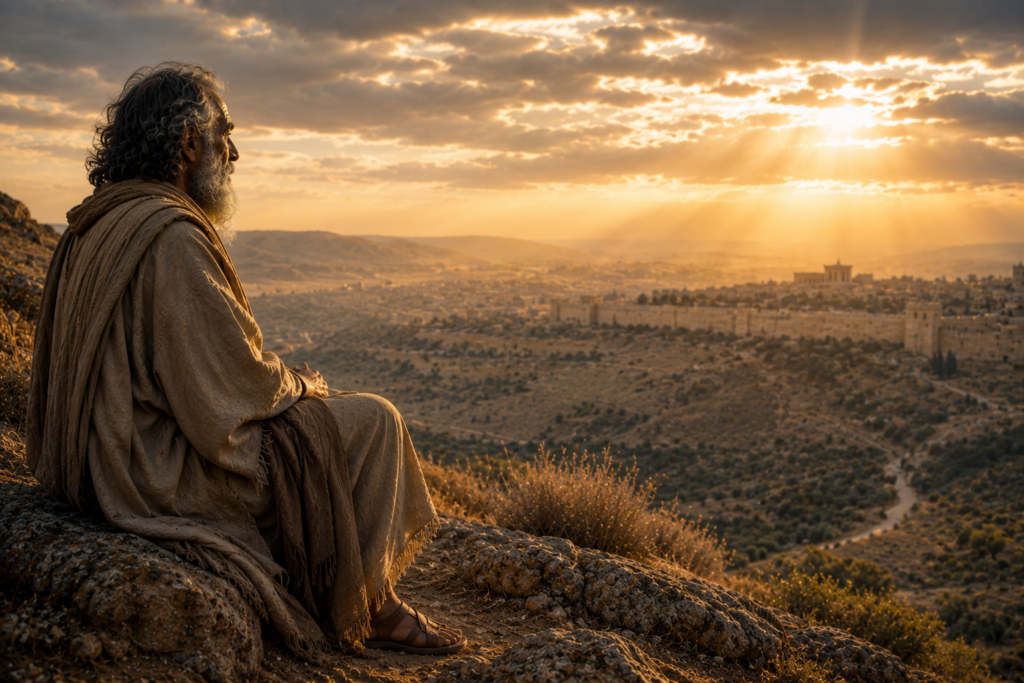
The Holy One Who Calls Hearts Back to Him
Welcome to the Isaiah study hub — a place to encounter God not only through prophetic warnings, visions, and promises, but through the deeper invitation to surrender, restoration, holiness, and wholehearted trust in Him.
Here, you will find free study notes for each chapter of the Book of Isaiah, written through the lens of becoming completely transformed — not merely studying prophetic declarations and historical events, but allowing the words of Isaiah to reveal the condition of the human heart and the extraordinary mercy of God toward His people.
Isaiah is not simply a book of prophecy, judgement, and future promises.
It is a revelation of the holiness of God, the blindness of human pride, and the relentless love of a Father continually calling His people back to Himself.
The book begins with confrontation.
God speaks to a people who continue outward religious practices while their hearts drift far from Him.
Although they maintain ceremonies and sacrifices, injustice, pride, idolatry, rebellion, and spiritual blindness have deeply taken root within the nation.
Yet even in correction, God’s heart is not destruction. It is restoration.
Again and again throughout Isaiah, we see both warning and invitation existing side by side.
- God exposes sin.
- He confronts pride.
- He reveals the emptiness of idols.
- He calls out injustice.
- Yet He also comforts.
- He restores.
- He heals.
- He promises redemption.
- He continually invites His people to return to Him.
Throughout Isaiah, a central truth becomes clear:
God is not merely seeking outward obedience — He desires transformed hearts that truly know Him.
Again and again, Isaiah reveals the contrast between human self-sufficiency and humble dependence upon God.
- Pride versus surrender.
- Fear versus trust.
- Religious activity versus genuine intimacy with God.
- Earthly kingdoms versus God’s eternal Kingdom.
- Human weakness versus God’s sovereign power.
One of the most powerful revelations throughout Isaiah is the repeated unveiling of the coming Messiah.
Long before Jesus walked the earth, Isaiah prophetically reveals the suffering servant, the Prince of Peace, the One who would carry sin, heal brokenness, and reconcile humanity back to God.
These prophecies become some of the clearest and most breathtaking pictures of Jesus found anywhere in the Old Testament.
Yet Isaiah is not only a book about future redemption. It is also a book about present transformation.
Again and again, God calls His people to stop striving in their own wisdom and to fully trust Him instead.
We see this beautifully when Isaiah himself encounters the holiness of God.
Standing before the Lord, Isaiah becomes deeply aware of his own uncleanness.
Yet instead of rejection, God brings cleansing, restoration, and commissioning.
This becomes one of the great themes of Isaiah: When hearts truly encounter God, transformation begins.
These chapters have been approached slowly and prayerfully, with the Holy Spirit as Teacher — revealing not only prophetic events and historical warnings, but the deeper invitation to become people who trust God fully, walk in humility, and reflect His heart in every area of life.
As you journey through Isaiah, you will begin to see that this is not only a book about nations, judgement, exile, and prophecy.
It is a story about the heart.
- A story about returning to God when distractions and idols pull us away.
- A story about learning to trust Him above human understanding.
- A story about surrendering pride and allowing Him to purify and restore us.
- A story about hope rising even in the midst of darkness.
For those who desire to journey even deeper, you will also find optional companion resources available, including printable workbooks, guided journals, and heart-transformation tools designed to help you apply and embody the truths revealed in each chapter.
May this not simply become a study of prophecy, warnings, and future promises —
May it become a living encounter with the Holy One who heals, restores, refines, and lovingly calls His people back into alignment with Him.
May it deepen your trust in God’s sovereignty, strengthen your confidence in His promises, and awaken your heart to the beauty of walking humbly and intimately with Him.
With love,
Nicola 💖
Isaiah 1 — The Invitation to Return to God
Summary of the Chapter
Isaiah 1 begins with a powerful revelation of God confronting His people concerning the condition of their hearts.
Although Judah continues outward religious practices, sacrifices, festivals, and ceremonies, their hearts have drifted far from Him.
The chapter opens with God calling heaven and earth as witnesses against His people.
Like a loving Father grieving over rebellious children, God speaks of how He has raised and cared for Israel, yet they continue turning away from Him.
The nation is spiritually sick.
Corruption, injustice, violence, pride, and empty religion have spread throughout the land.
Although the people continue performing religious acts, their worship has become disconnected from genuine love, obedience, and intimacy with God.
God makes a striking declaration:
He no longer delights in empty sacrifices when the heart remains unchanged.
This reveals one of the central truths of Isaiah:
God desires transformed hearts more than outward religious performance.
Yet even in the midst of strong correction, God’s mercy continually shines through.
Again and again, God invites His people to return.
He calls them to repentance, cleansing, justice, compassion, and restored relationship with Him.
One of the most beautiful invitations appears in verse 18:
“Though your sins are like scarlet, they shall be as white as snow.”
God is not exposing their condition in order to reject them.
He is exposing it so healing and restoration can begin.
The chapter also contrasts two paths before the people:
- Obedience and trust leading to life and restoration.
- Rebellion and resistance leading to destruction and brokenness.
Isaiah 1 reveals both the seriousness of drifting from God and the extraordinary mercy of a Father who continually calls His people back into relationship with Himself.
Key Themes & Lessons
| Theme | Lesson for Heart Transformation |
|---|---|
| Heart Condition | God looks beyond outward actions and sees the true condition of the heart. |
| True Worship | Genuine relationship with God matters more than empty religious activity. |
| Repentance | God lovingly calls His people to return when they drift away. |
| Mercy | God’s desire is restoration, cleansing, and healing rather than condemnation. |
| Justice | God cares deeply about compassion, righteousness, and defending the vulnerable. |
| Transformation | God desires inward change, not merely outward behaviour modification. |
| Choice | Human beings continually choose between surrender to God or resistance against Him. |
| Hope | No heart is beyond God’s ability to restore and cleanse. |
Encouragement
Sister, Isaiah 1 reveals something deeply important about the heart of God.
He is not seeking perfect outward performance while hearts quietly remain burdened, distant, wounded, proud, fearful, or disconnected from Him.
God desires truth within the inner person.
This chapter reminds us that it is possible to appear spiritually active outwardly while inwardly feeling exhausted, distracted, hardened, or far from intimacy with God.
Yet rather than walking away from His people, God lovingly confronts what is unhealthy because He desires restoration.
His correction flows from love, not rejection.
One of the most beautiful realities in Isaiah 1 is that God does not hide from brokenness.
He invites people to bring it into the light so healing can begin.
“Though your sins are like scarlet, they shall be as white as snow.”
What an extraordinary picture of mercy.
God is not intimidated by failure, weakness, regret, shame, or seasons of drifting.
He invites hearts to return.
This chapter also reminds you that true worship is far deeper than outward routine.
- God desires relationship.
- He desires surrender.
- He desires authenticity.
- He desires hearts that trust Him genuinely.
There is also a strong invitation within this chapter to care about what God cares about.
- Justice.
- Compassion.
- Mercy.
- Integrity.
- Humility.
- Love toward others.
Transformation is never meant to remain private and inward only.
As hearts grow closer to God, His nature begins shaping how people treat others as well.
Let this chapter encourage your heart today:
No matter how distant, weary, confused, or spiritually dry a season may feel, God’s invitation still stands.
Return to Him.
- He is still willing to cleanse.
- Still willing to restore.
- Still willing to heal.
- Still willing to transform.
His mercy remains greater than human failure.
And when hearts respond to Him sincerely, He is fully able to bring renewal, restoration, and deep inner transformation once again.
Reflection Questions
- Are there areas where my outward life appears stronger spiritually than my inward relationship with God truly feels?
- What might God currently be revealing within my heart that He desires to heal, cleanse, or transform?
- How can I grow in genuine intimacy with God rather than simply maintaining spiritual routine?
- Are there areas of compassion, justice, humility, or integrity that God may be inviting me to strengthen?
- What does it personally mean for me to receive God’s mercy and fully believe that restoration is possible through Him?
Isaiah 2 — The Exaltation of God Above All Things
Summary of the Chapter
Isaiah 2 begins with a breathtaking vision of future restoration and the establishment of God’s kingdom.
Isaiah sees a day when the mountain of the Lord’s house will be lifted above every other mountain, and nations from all over the earth will come seeking God’s wisdom, truth, and ways.
Instead of conflict and war, peace will flow from God’s reign.
Weapons of destruction will be transformed into tools for cultivation and life.
Humanity will learn war no more.
This opening vision reveals God’s ultimate desire — not destruction, division, and pride, but restoration, peace, righteousness, and alignment with Him.
Yet immediately after this beautiful vision, the chapter shifts into confrontation.
Isaiah reveals how far the people have drifted from God’s ways in the present.
The nation has become filled with pride, self-sufficiency, wealth, idols, human achievement, and dependence upon worldly power rather than trust in God.
Instead of looking to the Lord, the people have become captivated by material prosperity, military strength, false worship, and the elevation of human wisdom.
One of the major themes of the chapter becomes the danger of pride.
Again and again, Isaiah warns that everything humanity exalts above God will eventually be humbled.
Human arrogance cannot stand before the holiness and majesty of God.
The chapter repeatedly points toward a coming day when God alone will be exalted.
- Human pride will collapse.
- False security will fail.
- Idols will be abandoned.
- And people will finally recognise the greatness and sovereignty of God.
Isaiah 2 reveals both the beauty of God’s future kingdom and the deep invitation for hearts to stop trusting in temporary earthly things and return to wholehearted dependence upon Him.
Key Themes & Lessons
| Theme | Lesson for Heart Transformation |
|---|---|
| God’s Kingdom | God’s ultimate plan is peace, restoration, and righteousness under His reign. |
| Pride | Human pride and self-exaltation separate hearts from dependence upon God. |
| Idolatry | Anything elevated above God eventually becomes unstable and empty. |
| Trust | True security is found in God rather than wealth, power, or human systems. |
| Humility | God continually calls His people to walk humbly before Him. |
| Eternal Perspective | Earthly achievements and temporary successes cannot compare to God’s eternal kingdom. |
| Surrender | Hearts flourish when God alone remains central and exalted. |
| Hope | God’s future restoration remains greater than present darkness and brokenness. |
Encouragement
Sister, Isaiah 2 lovingly reminds us how easy it is for the human heart to slowly place confidence in things other than God.
- Sometimes people trust in finances.
- Sometimes in success.
- Sometimes in control, knowledge, relationships, appearance, status, productivity, or human approval.
Yet this chapter gently reveals that anything placed above God eventually becomes unstable ground to stand upon.
Only God remains unshakable.
One of the most beautiful parts of this chapter is the opening vision of peace.
God’s heart has always been restoration.
His kingdom is not built upon fear, striving, chaos, pride, or destruction.
It is a kingdom of peace, righteousness, healing, wisdom, and wholeness.
This vision becomes deeply comforting in seasons where the world feels uncertain, heavy, divided, or overwhelming.
Isaiah reminds us that history is not moving toward chaos without purpose.
- God is still sovereign.
- His kingdom still stands.
- And His purposes will ultimately prevail.
This chapter also speaks deeply about humility. Human beings naturally drift toward self-dependence.
There can be a subtle temptation to feel secure because of achievements, possessions, intelligence, influence, routines, or outward stability.
Yet Isaiah gently exposes how fragile human pride truly is. Only God can sustain the soul fully.
There is freedom in no longer needing to carry the weight of being self-sufficient.
Humility is not weakness.
It is the peaceful recognition that God alone is worthy to be exalted and trusted completely.
Let this chapter encourage your heart today:
You do not need to build your life upon temporary things that cannot ultimately hold you together.
- God Himself is your security.
- God Himself is your peace.
- God Himself is your stability.
As you continue surrendering pride, fear, self-reliance, and misplaced trust, your heart becomes increasingly anchored in the unshakable kingdom of God.
And no matter how unstable the world around you may appear, His kingdom remains steady, eternal, and full of peace.
Reflection Questions
- Are there areas where I may be placing trust in temporary earthly things more than in God?
- What forms of pride or self-sufficiency might God be gently revealing within my heart?
- How does the vision of God’s future kingdom bring peace and perspective to my current season?
- What does true humility and dependence upon God look like in my everyday life?
- How can I intentionally keep God exalted at the centre of my heart, decisions, and priorities?
Isaiah 3 — When Human Strength Cannot Sustain the Soul
Summary of the Chapter
Isaiah 3 continues God’s warning to Judah and Jerusalem concerning the consequences of pride, rebellion, injustice, and spiritual corruption.
The chapter reveals what happens when people and nations move away from dependence upon God and instead place trust in human strength, leadership, status, and outward appearances.
God declares that He will remove the things the people rely upon for stability and security.
Leaders, warriors, judges, advisers, skilled workers, and providers will all be removed or weakened.
The nation will experience confusion, instability, disorder, and fear.
Instead of wise and mature leadership, immaturity and selfishness will rise.
Relationships within society begin breaking down.
- People oppress one another.
- Respect disappears.
- Pride increases.
- And the community becomes fractured and unstable.
Isaiah reveals that outward collapse often reflects deeper inward spiritual decline.
The chapter also highlights the corruption of Jerusalem’s leaders.
Rather than protecting and caring for the people, many leaders have used their position selfishly and unjustly.
God confronts those who exploit the vulnerable while pursuing personal comfort, wealth, and status.
Later in the chapter, Isaiah addresses the pride and vanity that have grown among the women of Zion.
The focus is not simply external beauty itself, but the deeper issue of hearts becoming consumed with appearance, status, luxury, self-exaltation, and outward identity while neglecting humility and dependence upon God.
Isaiah warns that everything built upon pride, self-glory, and outward appearance will eventually fade.
- Human beauty fades.
- Human status fades.
- Earthly security fades.
Only what is rooted in God remains secure.
Isaiah 3 reveals the fragility of human self-reliance and the deep need for hearts, leaders, and communities to remain grounded in humility, righteousness, and dependence upon God.
Key Themes & Lessons
| Theme | Lesson for Heart Transformation |
|---|---|
| Dependence | True stability comes from God rather than human systems or strength. |
| Leadership | God values wise, humble, and righteous leadership. |
| Pride | Self-exaltation eventually leads to instability and emptiness. |
| Humility | Hearts flourish when identity is rooted in God rather than appearance or status. |
| Justice | God cares deeply about how people treat the vulnerable and powerless. |
| Consequences | Spiritual drift eventually affects every area of life and community. |
| Identity | Outward appearance cannot replace inward transformation and character. |
| Security | Earthly success and human approval cannot fully sustain the soul. |
Encouragement
Sister, Isaiah 3 gently reminds us how fragile human strength truly is when separated from dependence upon God.
So much of modern life encourages people to build identity upon appearance, success, productivity, control, possessions, influence, or human approval.
Yet underneath all these things, the human heart still longs for true security, peace, and stability.
This chapter reveals that outward strength alone cannot hold the soul together. Only God can do that.
One of the deeper invitations within Isaiah 3 is the call to humility.
God is not condemning people simply for having beauty, leadership, influence, or resources.
Rather, He lovingly exposes what happens when hearts begin depending upon those things more than upon Him.
Pride slowly shifts the centre of trust away from God and onto self.
Yet self-reliance eventually becomes exhausting because human beings were never created to carry life independently from God.
This chapter also speaks powerfully about leadership and influence.
Whether within families, friendships, ministry, workplaces, or communities, God cares deeply about how people use influence and responsibility.
Leadership rooted in selfishness, pride, or control creates instability.
But leadership rooted in humility, wisdom, compassion, and integrity brings life and safety to others.
There is also a deeply freeing truth hidden within this chapter:
Your worth is not determined by outward appearance, social status, achievement, or human recognition.
Those things constantly shift and fade.
But identity rooted in belonging to God remains secure.
Let this chapter encourage your heart today:
You do not need to strive endlessly to hold your life together through outward strength alone.
God never asked you to build your identity upon temporary things that cannot fully sustain you.
As you continue surrendering pride, comparison, fear, and self-dependence, He steadily anchors your heart in something far deeper — His presence, His wisdom, His truth, and His unchanging love.
And when life around you feels unstable or uncertain, you can remain secure knowing that true peace is found not in human strength, but in wholehearted dependence upon God.
Reflection Questions
- Are there areas where I may be relying more upon outward security than upon God Himself?
- What forms of pride, comparison, or self-reliance might God be gently revealing within my heart?
- How do I personally define identity, worth, and security?
- In what ways can I grow in humility, wisdom, and integrity within my relationships and responsibilities?
- How can I become more deeply anchored in God’s presence rather than temporary external things?
Isaiah 4 — The Beauty of God’s Cleansing and Covering
Summary of the Chapter
Isaiah 4 begins in the aftermath of the warnings and judgement described in the previous chapters.
The pride, self-reliance, and corruption of the nation have led to devastation, loss, and deep instability.
Yet in the middle of this sobering reality, Isaiah introduces a beautiful shift toward hope, restoration, and renewal.
The chapter points forward to a future remnant — a people who remain after the refining process of judgement and cleansing.
Those who are left are described as holy and belonging to the Lord.
God promises that He will wash away impurity, cleanse His people, and restore righteousness within them.
This cleansing is not merely external. It is a deep spiritual purification of the heart.
One of the most beautiful images in the chapter is the description of “the Branch of the Lord.”
This points prophetically toward the coming Messiah — Jesus — through whom beauty, fruitfulness, restoration, and life would come forth.
What once appeared ruined and barren would again become beautiful through God’s work.
Isaiah also describes God’s protective presence resting over Mount Zion.
Just as God once led Israel through the wilderness with a cloud by day and fire by night, His presence will again cover and protect His people.
The chapter closes with imagery of shelter, refuge, shade, and protection from storms and heat.
Isaiah 4 reveals that although God lovingly confronts sin and pride, His ultimate desire is always restoration, cleansing, holiness, and renewed intimacy with His people.
Key Themes & Lessons
| Theme | Lesson for Heart Transformation |
|---|---|
| Cleansing | God lovingly purifies and restores hearts that return to Him. |
| Hope | God brings renewal even after seasons of brokenness and failure. |
| Holiness | God calls His people into deeper transformation and purity of heart. |
| Restoration | God is able to rebuild what once seemed ruined or barren. |
| God’s Presence | His presence brings covering, protection, guidance, and safety. |
| Refinement | Difficult seasons can become places of spiritual purification and growth. |
| Identity | Those who belong to God are marked by His restoring work within them. |
| Refuge | God Himself becomes a shelter and safe place for His people. |
Encouragement
Sister, Isaiah 4 carries such a beautiful reminder that God’s correction is never meant to end in hopelessness.
His goal is always restoration.
Even after seasons of failure, pride, confusion, wandering, or brokenness, God still desires to cleanse, heal, and renew hearts.
This chapter reveals the tenderness of God toward those who return to Him.
Sometimes people fear exposure because they worry that if God truly sees every weakness, struggle, wound, or failure, rejection will follow.
Yet Isaiah reveals the opposite.
- God cleanses in order to restore.
- He refines in order to heal.
- He purifies in order to draw hearts closer to Himself.
One of the deepest comforts within this chapter is the image of God’s covering presence.
Just as the cloud and fire remained with Israel in the wilderness, God promises His presence as shelter, refuge, and protection.
This becomes deeply important during seasons where life feels uncertain, vulnerable, overwhelming, or emotionally exhausting.
God does not simply restore people and then leave them alone to sustain themselves. He remains near.
- He covers.
- He guides.
- He protects.
- He shelters.
This chapter also reminds you that barren seasons are not the end of the story.
Sometimes life passes through painful refinement where old patterns, false identities, unhealthy dependencies, pride, or misplaced trust are exposed.
Although uncomfortable, these seasons often become places where God is creating deeper beauty and fruitfulness within the heart.
The “Branch of the Lord” points beautifully toward Jesus — the One through whom true restoration and transformation become possible.
Where humanity could not cleanse itself fully, God Himself provided the way through Christ.
Let this chapter encourage your heart today: God is not finished with your story.
No matter what feels broken, weary, barren, or incomplete, He is able to bring beauty, cleansing, restoration, and new life.
- His presence still covers His people.
- His mercy still restores.
- And His heart still desires intimacy, wholeness, and transformation for all who draw near to Him.
Reflection Questions
- Are there areas of my life where God may currently be bringing cleansing, healing, or refinement?
- How does knowing that God’s correction flows from love change the way I view difficult seasons?
- In what ways have I experienced God as a refuge, shelter, or covering in my life?
- Are there barren or painful areas where I need to trust God for restoration and new growth?
- How can I grow in deeper intimacy with God’s presence rather than relying upon my own strength?
Isaiah 5 — The Vineyard That Was Meant to Bear Good Fruit
Summary of the Chapter
Isaiah 5 begins with a powerful parable describing God’s relationship with His people through the image of a vineyard.
God is portrayed as a loving vineyard owner who carefully prepares fertile ground, plants choice vines, builds protection around the vineyard, and provides everything necessary for healthy fruitfulness.
Yet despite His care, the vineyard produces wild and bitter fruit instead of good fruit.
Isaiah then reveals that the vineyard represents Israel and Judah.
God had lovingly formed, protected, provided for, and called His people into righteousness and covenant relationship with Him.
Yet instead of justice, compassion, humility, and faithfulness, the nation produced corruption, violence, greed, pride, injustice, selfishness, and spiritual rebellion.
The chapter reveals God’s grief over a people who continually resist His ways despite His goodness toward them.
Isaiah then pronounces a series of warnings, often called “woes,” exposing specific areas of sin within the nation.
- The people pursue wealth and possessions while neglecting God.
- They chase pleasure and indulgence without spiritual awareness.
- They justify evil and distort truth.
- Pride and self-deception increase.
- Justice becomes corrupted.
- And many begin trusting their own wisdom above God’s wisdom.
Again and again, Isaiah reveals how hearts slowly drift when God no longer remains central.
The chapter ultimately warns that continued rebellion and spiritual blindness lead to destruction, instability, and separation from the protection and blessing of walking in alignment with God.
Yet beneath the warnings is a deeper truth:
God’s desire has always been for His people to bear the beautiful fruit of lives transformed by relationship with Him.
Isaiah 5 reveals both the seriousness of spiritual drift and the loving heart of God who longs for hearts to reflect His goodness, righteousness, and character.
Key Themes & Lessons
| Theme | Lesson for Heart Transformation |
|---|---|
| Fruitfulness | God desires lives that reflect His character and goodness. |
| Stewardship | God lovingly provides opportunities, guidance, and care for His people. |
| Responsibility | Human beings are responsible for how they respond to God’s invitation and truth. |
| Pride | Self-reliance and pride distort spiritual vision and wisdom. |
| Justice | God deeply values righteousness, compassion, and integrity. |
| Spiritual Drift | Hearts slowly drift when intimacy with God is neglected. |
| Truth | Calling evil good and good evil leads to confusion and destruction. |
| Transformation | Genuine relationship with God produces inward and outward fruitfulness. |
Encouragement
Sister, Isaiah 5 carries both a loving warning and a beautiful invitation.
The image of the vineyard reveals how deeply God cares for His people. He is not distant or uninterested.
Like a loving gardener, He nurtures, protects, waters, prepares, and patiently tends the lives of those He loves.
This chapter reminds us that God’s desire has never been mere outward religion or rule-following.
He longs for lives that genuinely reflect His nature.
Lives marked by love. Humility. Integrity. Compassion. Truth. Justice. Faithfulness. And intimacy with Him.
One of the deeper invitations within Isaiah 5 is the call to honestly examine the fruit growing within our lives.
Not from shame or fear, but from love and self-awareness.
Sometimes people focus heavily on outward appearances while quietly neglecting the inner condition of the heart.
Yet fruit eventually reveals what is being cultivated internally.
This chapter also warns about how subtly spiritual drift can happen.
Hearts rarely move far from God suddenly.
Often it happens gradually through distraction, pride, self-sufficiency, compromise, constant busyness, misplaced priorities, or becoming more captivated by worldly pursuits than by intimacy with God.
Isaiah lovingly reminds us that truth matters.
When cultures or individuals begin redefining good and evil according to personal preference rather than God’s wisdom, confusion and instability naturally increase.
Yet even in these warnings, God’s heart remains restorative.
He does not expose unhealthy fruit to condemn people.
He exposes it so transformation can begin.
The beautiful reality of the Gospel is that God does not simply demand fruitfulness from human effort alone.
Through relationship with Him, He changes hearts from the inside out.
As people remain connected to Him, His nature begins growing within them naturally.
Let this chapter encourage your heart today: God is still patiently tending the garden of your life.
He has not abandoned the areas still growing, healing, or maturing.
As you continue drawing close to Him, surrendering pride, distractions, compromise, and self-reliance, He faithfully produces deeper fruit within your heart.
And over time, your life increasingly begins reflecting the beauty of His character, His love, and His transforming presence.
Reflection Questions
- What kind of spiritual fruit is currently growing within my life and heart?
- Are there distractions, compromises, or priorities that may be slowly pulling my attention away from intimacy with God?
- In what ways might God be inviting me into deeper integrity, humility, compassion, or truth?
- Are there areas where pride or self-reliance may be affecting my spiritual growth?
- How can I remain more deeply connected to God so His character naturally grows within my life?
Isaiah 6 — The Holiness of God and the Surrendered Heart
Summary of the Chapter
Isaiah 6 records one of the most powerful encounters with God found in Scripture.
The chapter begins during a season of uncertainty following the death of King Uzziah.
In the midst of national instability, Isaiah receives a vision of the Lord seated upon His throne — high, exalted, and full of majesty.
The temple is filled with His glory.
Seraphim surround Him, crying continually:
“Holy, holy, holy is the Lord Almighty; the whole earth is full of His glory.”
The scene reveals the overwhelming holiness, purity, authority, and greatness of God.
As Isaiah stands before the holiness of the Lord, he suddenly becomes deeply aware of his own uncleanness and human weakness.
He cries out in humility, recognising the condition of both himself and the people around him.
Yet instead of destruction or rejection, God responds with cleansing.
A burning coal from the altar touches Isaiah’s lips, symbolising purification, forgiveness, and restoration.
His guilt is removed and his sin is atoned for.
Then comes one of the most significant moments in the chapter.
God asks: “Whom shall I send? And who will go for Us?”
Isaiah responds with wholehearted surrender: “Here am I. Send me!”
The chapter then reveals the difficult assignment Isaiah would carry — speaking truth to people whose hearts had become hardened and resistant to God.
Although many would refuse to listen initially, God’s purposes would still continue through a faithful remnant.
Isaiah 6 reveals that true transformation begins when human hearts encounter the holiness of God, receive His cleansing, and surrender fully to His purposes.
Key Themes & Lessons
| Theme | Lesson for Heart Transformation |
|---|---|
| Holiness | God is completely pure, holy, and worthy of awe and reverence. |
| Encounter | Genuine encounters with God reveal both His greatness and the true condition of the heart. |
| Humility | Awareness of God’s holiness produces humility rather than pride. |
| Cleansing | God lovingly purifies and restores those who come before Him honestly. |
| Grace | God responds to repentant hearts with mercy rather than rejection. |
| Surrender | Transformation leads to willingness and obedience toward God’s calling. |
| Calling | God invites ordinary people into His purposes after cleansing and restoration. |
| Faithfulness | Obedience matters even when others do not immediately respond. |
Encouragement
Sister, Isaiah 6 beautifully reveals that transformation begins not through striving harder, but through truly encountering God.
When Isaiah saw the Lord in His holiness, something profound happened within his heart.
The presence of God exposed everything false, prideful, shallow, or self-reliant.
Yet what is remarkable is that God did not expose Isaiah in order to shame him.
He exposed him in order to cleanse and restore him.
This chapter reminds us that God’s holiness is not meant to push people away in fear.
It is meant to awaken hearts to truth, humility, surrender, and intimacy with Him.
Sometimes people carry deep fear that if God fully saw every weakness, failure, insecurity, wound, or hidden struggle, rejection would follow.
Yet Isaiah 6 reveals the opposite. Where there is humility and honesty before God, grace flows.
- God cleanses.
- God restores.
- God commissions.
One of the most beautiful parts of this chapter is Isaiah’s response after receiving cleansing: “Here am I. Send me!”
True surrender becomes possible when people understand they are loved and restored by God rather than condemned by Him.
This chapter also reminds us that calling often flows out of intimacy with God, not performance.
Isaiah did not earn his calling through perfection.
He encountered God, received mercy, and responded with willingness.
There is also encouragement here for seasons where obedience feels difficult or misunderstood.
Isaiah’s assignment would not always produce immediate visible results.
Yet faithfulness still mattered deeply to God.
Sometimes obedience is measured not by outward success, but by remaining surrendered and faithful to what God has asked.
Let this chapter encourage your heart today: God is not looking for flawless people.
He is looking for surrendered hearts willing to encounter Him honestly.
As you draw near to Him, He lovingly reveals what needs healing, cleansing, and transformation — not to condemn you, but to restore you more deeply into who He created you to be.
And as His grace transforms your heart, you too become increasingly able to say: “Here am I, Lord. Send me.”
Reflection Questions
- What does God’s holiness reveal about areas of my heart that may need healing, cleansing, or surrender?
- Do I tend to approach God with fear of rejection or confidence in His mercy and grace?
- What might wholehearted surrender to God look like in my current season of life?
- Are there areas where God may be inviting me into greater obedience or faithfulness?
- How can I cultivate deeper intimacy with God rather than simply outward spiritual activity?
Isaiah 7 — Choosing Trust Over Fear
Summary of the Chapter
Isaiah 7 takes place during a time of great political fear and uncertainty for the kingdom of Judah.
King Ahaz and the people of Jerusalem are terrified because enemy nations have formed an alliance against them.
The threat of invasion causes deep anxiety, insecurity, and panic throughout the nation.
Into this fearful situation, God sends Isaiah to speak to King Ahaz.
God lovingly encourages Ahaz not to fear the enemy alliance because their plans will ultimately not succeed.
The Lord invites Ahaz to stand firm in faith rather than being controlled by fear and human reasoning.
One of the central declarations of the chapter comes when God says:
“If you do not stand firm in your faith, you will not stand at all.”
This becomes one of the great themes of Isaiah 7:
Fear destabilises the heart, but trust in God brings stability.
God then graciously offers Ahaz a sign to strengthen his faith. Yet Ahaz refuses.
Although his response outwardly appears humble, inwardly he has already decided to place his trust in political alliances and human solutions rather than depending fully upon God.
Even so, God still gives a prophetic sign:
“The virgin will conceive and give birth to a son, and will call Him Immanuel.” Immanuel means “God with us.”
This prophecy points both to immediate reassurance for Judah and ultimately to the coming Messiah — Jesus Christ — through whom God Himself would dwell among humanity.
The chapter closes by describing the consequences of Judah’s misplaced trust.
Because Ahaz chooses human alliances over dependence upon God, hardship and devastation will eventually come upon the land.
Isaiah 7 reveals the constant tension between fear and faith, self-reliance and dependence upon God, and the deep invitation to trust that God remains present even during uncertain seasons.
Key Themes & Lessons
| Theme | Lesson for Heart Transformation |
|---|---|
| Trust | Stability comes through trusting God rather than fear-driven human solutions. |
| Fear | Fear distorts perspective and tempts hearts toward self-reliance. |
| Faith | God calls His people to stand firm in faith during uncertainty. |
| God’s Presence | “Immanuel” reveals that God desires to remain with His people. |
| Dependence | Human strategies alone cannot replace wholehearted trust in God. |
| Invitation | God lovingly offers reassurance and guidance to fearful hearts. |
| Choice | People continually choose whether to trust God or rely solely upon themselves. |
| Hope | God’s promises remain secure even in unstable seasons. |
Encouragement
Sister, Isaiah 7 speaks powerfully into seasons where life feels uncertain, overwhelming, or frightening.
The people of Judah were surrounded by threats, instability, and fear.
Everything around them appeared unsafe. And honestly, many people understand that feeling deeply.
- There are seasons where circumstances feel larger than personal strength.
- Where uncertainty creates anxiety.
- Where the future feels unclear.
- Where fear quietly tempts the heart toward panic, striving, or desperate attempts to regain control.
Yet into this atmosphere, God speaks a simple but powerful invitation: Stand firm in faith.
This does not mean pretending challenges do not exist.
It means refusing to allow fear to become the master of the heart.
Fear often pushes people toward frantic self-reliance.
It tempts people to believe they must carry everything themselves, solve everything immediately, or control outcomes in their own strength.
This is exactly what King Ahaz did.
Rather than fully trusting God, he leaned upon human alliances and earthly solutions.
Yet Isaiah reveals that external solutions cannot fully stabilise an internally fearful heart.
Only trust in God can do that.
One of the most comforting revelations in this chapter is the name Immanuel — “God with us.”
God did not promise His people a life completely free from difficulty. He promised His presence within it.
This changes everything.
- You are not abandoned in uncertain seasons.
- You are not carrying your future alone.
- You are not unseen in your fears.
God remains present.
This chapter also reminds us that faith is often a daily decision.
- Sometimes trust is not dramatic.
- Sometimes it looks like quietly refusing to surrender to fear one thought at a time.
- Sometimes it means choosing prayer over panic. Peace over striving. Surrender over control.
Let this chapter encourage your heart today:
No matter what uncertainty surrounds you, God remains with you.
- His presence is steadier than fear.
- His wisdom is greater than human understanding.
- And His faithfulness is stronger than the instability of circumstances.
As you continue anchoring your heart in Him, He will strengthen you to stand firm even when life feels uncertain around you.
Reflection Questions
- What fears or uncertainties may currently be affecting my heart and thoughts?
- Are there areas where I am relying more upon human control or solutions than upon trust in God?
- What does it personally mean for me to live with the awareness that God is “with me”?
- How can I practically strengthen my faith during uncertain or stressful seasons?
- What would standing firm in trust rather than fear look like in my current situation?
Isaiah 8 — Anchored in God When Fear Spreads Everywhere
Summary of the Chapter
Isaiah 8 continues the unfolding crisis facing Judah as fear, political instability, and approaching invasion spread throughout the nation.
God instructs Isaiah to record prophetic warnings concerning coming judgement and the consequences of the people’s continued refusal to trust Him fully.
The chapter includes the symbolic naming of Isaiah’s son, which serves as a prophetic sign that rapid destruction and invasion are approaching.
Although these warnings are serious, the deeper issue underneath them is not merely political danger — it is the condition of the people’s hearts.
Instead of trusting God, many have chosen fear, human alliances, conspiracy thinking, and dependence upon earthly solutions.
God specifically warns Isaiah not to join in the fear and panic spreading through the culture around him.
Rather than fearing what others fear, Isaiah is called to honour God as holy and place his trust fully in Him.
This becomes one of the central themes of the chapter:
The people of God are called to remain anchored in trust even when fear and confusion spread throughout society.
Isaiah also speaks about God becoming either a sanctuary or a stumbling stone depending upon how people respond to Him.
- For those who trust Him, He becomes safety, refuge, and stability.
- For those who reject Him, they stumble because they refuse His ways.
The chapter further contrasts seeking God’s wisdom versus seeking guidance through fear-driven spiritual practices and human sources disconnected from God.
Isaiah urges the people to turn toward God’s truth rather than becoming consumed by darkness, confusion, and deception.
The chapter closes with a sobering picture of people wandering in distress and darkness because they have rejected God’s guidance and light.
Yet even within the heaviness of Isaiah 8, there remains a quiet invitation:
God Himself can still become a sanctuary for hearts willing to trust Him.
Key Themes & Lessons
| Theme | Lesson for Heart Transformation |
|---|---|
| Trust | God calls His people to trust Him rather than surrender to fear. |
| Fear | Fear spreads easily when hearts lose sight of God’s sovereignty. |
| God’s Presence | God becomes a sanctuary and place of refuge for those who trust Him. |
| Discernment | God’s truth provides stability in seasons of confusion and deception. |
| Holiness | Reverence for God brings perspective and peace during uncertainty. |
| Culture | Believers are called not to be consumed by the fear surrounding them. |
| Light | God’s wisdom leads hearts out of darkness and confusion. |
| Dependence | Seeking God’s voice brings greater security than relying on worldly sources alone. |
Encouragement
Sister, Isaiah 8 feels incredibly relevant for seasons where fear, uncertainty, confusion, and anxiety seem to spread everywhere around us.
The people in Isaiah’s day were overwhelmed by threats, rumours, instability, and national uncertainty.
Fear had become contagious.
Yet in the middle of that atmosphere, God gave Isaiah a very different instruction:
“Do not fear what they fear.”
This is such an important invitation for the heart.
Fear has a way of pulling people into constant striving, panic, overthinking, worst-case scenarios, and emotional exhaustion.
It quietly convinces people that safety can only come through controlling outcomes, gathering more information, or finding human certainty.
Yet Isaiah 8 reminds us that true stability is not found in perfectly controlled circumstances.
It is found in remaining anchored in God.
One of the most comforting truths in this chapter is that God desires to become a sanctuary for His people.
A sanctuary is a place of refuge. Safety. Rest. Shelter. Peace.
God never promised that the world would always feel stable or predictable.
But He continually offers His presence as a steady place for the soul.
This chapter also carries a strong invitation regarding where people seek wisdom and guidance.
Fear often pushes people to search endlessly for answers, reassurance, predictions, or certainty from every possible source.
Yet Isaiah reminds us that hearts remain healthiest when rooted first in God’s truth and wisdom.
There is a profound peace that comes from learning to quiet the noise and return the heart to God’s presence.
This chapter does not encourage denial or pretending difficulties do not exist.
Rather, it teaches that fear does not need to rule the heart even when uncertainty exists externally.
Let this chapter encourage your heart today:
You do not need to carry the emotional weight of the world upon your shoulders.
God remains sovereign even when circumstances feel unstable.
He is still your sanctuary. Still your refuge. Still your wisdom. Still your peace.
And as you continue fixing your heart upon Him rather than becoming consumed by fear around you, He will steady your mind, strengthen your faith, and guide you safely through uncertain seasons.
Reflection Questions
- What fears or anxieties currently try to pull my heart away from peace and trust in God?
- How can I practically keep my focus anchored in God rather than in surrounding fear or uncertainty?
- In what ways have I experienced God as a sanctuary or refuge during difficult seasons?
- Are there sources of fear, confusion, or distraction that may be affecting my spiritual peace and discernment?
- What would it look like for me to trust God more deeply with the uncertainties I currently face?
Isaiah 9 — The Light That Breaks Through the Darkness
Summary of the Chapter
Isaiah 9 begins with one of the most hope-filled and prophetic passages in the entire book of Isaiah.
After chapters filled with warnings, fear, darkness, and coming judgement, Isaiah suddenly reveals a beautiful promise of light, joy, and restoration.
The people walking in darkness will see a great light.
Those living under oppression, grief, fear, and heaviness will experience freedom and deliverance.
Isaiah describes joy breaking forth like a great harvest celebration and the ending of oppression and warfare.
This prophetic hope ultimately points toward the coming Messiah — Jesus Christ.
One of the most well-known passages in Isaiah appears here:
“For unto us a child is born, unto us a son is given…”
Isaiah then reveals the names and nature of this coming King:
- Wonderful Counsellor.
- Mighty God.
- Everlasting Father.
- Prince of Peace.
Unlike earthly rulers whose leadership often becomes corrupted by pride, fear, or selfishness, this coming King would establish a kingdom marked by justice, righteousness, peace, wisdom, and endless stability.
Yet alongside this hope, the chapter also continues confronting the pride and stubbornness of Israel.
Despite warnings and difficulties, many people refuse to return to God.
Pride, arrogance, injustice, violence, and spiritual blindness continue increasing throughout the nation.
Again and again, Isaiah describes how people continue resisting God’s correction rather than humbling themselves and returning to Him.
The chapter ultimately contrasts two realities:
- The deep darkness created by human pride and rebellion.
- And the extraordinary light, hope, peace, and restoration found through God’s coming salvation.
Isaiah 9 reveals that no matter how dark circumstances become, God’s light remains greater than the darkness.
Key Themes & Lessons
| Theme | Lesson for Heart Transformation |
|---|---|
| Hope | God brings light and restoration even in seasons of deep darkness. |
| Jesus the Messiah | Jesus is the promised King who brings peace, wisdom, and salvation. |
| Light | God’s presence overcomes spiritual darkness, fear, and hopelessness. |
| Peace | True peace flows from God’s kingdom rather than external circumstances alone. |
| Pride | Pride prevents hearts from responding to God’s correction and mercy. |
| Restoration | God’s desire is to bring healing, freedom, and renewal to His people. |
| Leadership | Jesus models perfect leadership rooted in righteousness and love. |
| Faithfulness | God’s promises remain secure despite human failure and instability. |
Encouragement
Sister, Isaiah 9 carries one of the most comforting reminders in all of Scripture:
Darkness is never the final word when God is present.
There are seasons in life where circumstances can feel emotionally heavy, uncertain, painful, or deeply discouraging.
Sometimes people walk through grief. Fear. Confusion. Disappointment. Exhaustion. Loneliness. Or seasons where hope itself feels difficult to hold onto.
Yet Isaiah speaks directly into darkness with a promise of light.
- Not temporary distraction.
- Not superficial positivity.
- But the deep, steady light of God’s presence breaking into human brokenness.
This chapter points beautifully toward Jesus — the One who entered a hurting world to bring peace, healing, wisdom, restoration, and reconciliation back to humanity.
Every title given to Him in this chapter reveals something deeply personal about His heart toward people.
Wonderful Counsellor — He brings wisdom and guidance when hearts feel confused.
Mighty God — He remains strong and sovereign when people feel weak or overwhelmed.
Everlasting Father — He carries the tenderness, protection, and faithful love of a perfect Father.
Prince of Peace — He brings peace that goes far deeper than circumstances alone.
This chapter also reminds us that pride can quietly keep hearts trapped in unnecessary darkness.
Sometimes people resist surrender because they want control, independence, or self-protection.
Yet true peace comes through allowing God to lead, heal, and transform the heart.
One of the most beautiful truths within Isaiah 9 is that God’s light shines brightest in the very places that once felt hopeless.
The Gospel itself is built upon this reality. Jesus entered human darkness in order to bring life.
Let this chapter encourage your heart today:
No matter how heavy a season may feel, God’s light is still able to reach you.
- His peace is still available.
- His wisdom is still present.
- His hope is still alive.
- And His promises remain steady even when emotions or circumstances feel uncertain.
The light of Christ is stronger than fear, discouragement, confusion, or darkness.
And as you continue drawing near to Him, His presence will steadily bring clarity, healing, peace, and renewed hope into every area of your life.
Reflection Questions
- Are there areas of my life that currently feel heavy, dark, uncertain, or hopeless?
- Which aspect of Jesus revealed in this chapter do I most need to lean into right now — Wonderful Counsellor, Mighty God, Everlasting Father, or Prince of Peace?
- Are there forms of pride, self-reliance, or resistance that may be preventing deeper surrender to God?
- How have I personally experienced God bringing light or hope into difficult seasons before?
- What would it look like for me to trust God more deeply as my source of peace and stability today?
Isaiah 10 — God Remains Sovereign Over Human Pride
Summary of the Chapter
Isaiah 10 continues confronting the injustice, pride, and corruption that had spread throughout Israel and Judah.
The chapter opens with strong warnings against leaders and rulers who abuse their power, create unjust laws, and exploit vulnerable people for personal gain.
God specifically confronts those who oppress the poor, neglect justice, and use authority selfishly rather than protecting and caring for others.
This reveals how deeply God cares about righteousness, integrity, compassion, and justice within both leadership and society.
The chapter then shifts to the rising power of Assyria.
God allows Assyria to become an instrument of discipline against Israel because of the nation’s continued rebellion and spiritual drift.
Yet although Assyria is being used within God’s purposes, the Assyrian empire itself becomes filled with arrogance, pride, self-glory, and self-dependence.
The king of Assyria believes his own strength, wisdom, and power are responsible for his success.
He exalts himself rather than recognising God’s sovereignty.
Isaiah makes it clear that no human power exists independently from God’s authority.
Even mighty nations remain accountable before Him.
Because of Assyria’s pride, judgement will eventually come upon them as well.
Throughout the chapter, Isaiah continually reveals a central truth:
God remains sovereign over human history, nations, leaders, and earthly power.
No amount of human pride, political strength, military power, or worldly success can ultimately stand above Him.
Yet even in the midst of discipline and national upheaval, Isaiah offers hope.
A faithful remnant will remain.
God will preserve those who continue trusting Him, and restoration will eventually come.
Isaiah 10 reveals both the danger of prideful self-exaltation and the steady sovereignty of God who remains in control even when the world appears unstable.
Key Themes & Lessons
| Theme | Lesson for Heart Transformation |
|---|---|
| Justice | God cares deeply about righteousness and protecting the vulnerable. |
| Pride | Human pride and self-glory eventually lead to downfall. |
| Sovereignty | God remains sovereign over nations, leaders, and history itself. |
| Humility | Wisdom grows when hearts recognise dependence upon God. |
| Accountability | All people and powers remain accountable before God. |
| Trust | God’s people are called to trust Him even during unstable seasons. |
| Remnant | God faithfully preserves those who continue walking with Him. |
| Hope | God’s purposes continue unfolding even through difficult circumstances. |
Encouragement
Sister, Isaiah 10 reminds us that even when the world feels chaotic, unjust, unstable, or overwhelming, God has not lost control.
There are seasons where human systems feel deeply disappointing.
- Leadership can fail.
- People can misuse power.
- Injustice can feel heavy.
- And circumstances can appear frightening or uncertain.
Yet this chapter repeatedly points back to the sovereignty of God.
Human beings may believe they hold ultimate power, but only God truly does.
One of the strongest warnings in this chapter concerns pride.
The king of Assyria believed his success came entirely from his own strength, wisdom, and ability.
This reflects a temptation deeply woven into human nature — the desire for self-sufficiency and self-glory apart from God.
Yet Isaiah reveals how fragile human pride truly is.
No amount of achievement, influence, intelligence, status, or power can replace dependence upon God.
This chapter also brings deep reassurance for hearts carrying fear about world events, uncertainty, injustice, or instability.
- God sees what is happening.
- God understands fully.
- And God remains sovereign even when circumstances feel confusing to human understanding.
This does not mean everything happening is good.
But it does mean nothing exists outside His awareness or ultimate authority.
One of the most comforting themes within Isaiah 10 is the promise of the remnant.
Even during seasons of judgement, upheaval, or widespread spiritual drift, God preserves those whose hearts remain anchored in Him.
Faithfulness still matters. Quiet obedience still matters. Humility still matters. Trust still matters.
God sees every surrendered heart.
This chapter also invites personal reflection about leadership and influence within everyday life.
Whether within families, friendships, workplaces, ministry, or community, God cares deeply about how people use influence and responsibility.
True leadership reflects humility, integrity, compassion, and dependence upon God rather than pride or control.
Let this chapter encourage your heart today:
You do not need to fear as though human circumstances are greater than God’s sovereignty.
The world may feel unstable at times, but God remains steady.
- He is still ruling.
- Still guiding history.
- Still preserving His people.
- Still working through circumstances beyond human understanding.
And as you continue walking humbly and trusting Him deeply, your heart can remain anchored in peace even when the world around you feels uncertain.
Reflection Questions
- Are there areas where pride or self-reliance may be quietly affecting my heart or decisions?
- How does remembering God’s sovereignty change the way I respond to uncertainty or injustice?
- In what ways can I reflect humility, integrity, and compassion within areas of influence or responsibility?
- Am I allowing fear about world events or circumstances to affect my peace and trust in God?
- What does remaining faithful and anchored in God look like in my current season of life?
Isaiah 11 — The Peaceful Kingdom of the Coming King
Summary of the Chapter
Isaiah 11 continues the beautiful prophetic revelation of the coming Messiah and the restoration God desires to bring to His people.
The chapter begins with the image of “a shoot” growing from the stump of Jesse.
Although the royal line of David appeared cut down and weakened, God promises that new life will arise from what seemed broken and diminished.
This prophecy points directly to Jesus Christ — the coming King who would arise from the family line of David.
Unlike earthly rulers often marked by pride, corruption, or human weakness, this King would be filled with the Spirit of the Lord.
Isaiah describes Him as carrying wisdom, understanding, counsel, might, knowledge, and reverence for God.
His leadership would not be based on outward appearances, human opinion, or selfish ambition.
Instead, He would rule with perfect righteousness, justice, truth, and compassion.
The chapter then unfolds into a breathtaking picture of peace and restoration within God’s kingdom.
- Natural enemies peacefully dwell together.
- Violence and destruction cease.
- Creation itself is restored into harmony.
- And the earth becomes filled with the knowledge of the Lord.
This imagery symbolises the complete healing, reconciliation, and restoration that flow from God’s reign.
Isaiah also describes God gathering His scattered people back together.
Division, exile, and separation will not have the final word.
God’s restorative purposes will prevail.
One of the central themes of Isaiah 11 is that the reign of God’s Messiah brings peace, healing, justice, unity, and restoration far deeper than human systems could ever produce.
Isaiah 11 reveals the beauty of God’s future kingdom and the hope of complete restoration through Christ.
Key Themes & Lessons
| Theme | Lesson for Heart Transformation |
|---|---|
| Jesus the Messiah | Jesus is the righteous King filled with God’s Spirit and wisdom. |
| Restoration | God brings new life out of places that once appeared cut down or hopeless. |
| Peace | God’s kingdom produces reconciliation, harmony, and lasting peace. |
| Righteousness | True leadership flows from wisdom, justice, humility, and truth. |
| Hope | God’s promises remain alive even when circumstances seem barren. |
| Healing | God’s ultimate plan includes deep restoration for people and creation itself. |
| Unity | God desires reconciliation and gathering rather than division and separation. |
| God’s Kingdom | God’s reign brings wholeness far beyond what human systems can achieve. |
Encouragement
Sister, Isaiah 11 carries such extraordinary hope for weary hearts.
The chapter begins with a stump — something cut down, reduced, and seemingly lifeless.
Yet from that very place, new life begins growing again.
This becomes such a beautiful picture of how God works.
Human beings often look at broken situations, painful seasons, disappointments, losses, or areas that feel barren and assume hope is gone.
But God specialises in bringing life where people least expect it. Nothing is beyond His ability to restore.
This chapter also reveals the nature of Jesus so beautifully.
He is not harsh, unstable, prideful, self-seeking, or led by appearances.
- He leads with wisdom.
- Compassion.
- Righteousness.
- Peace.
- Truth.
- And perfect understanding.
So many people carry distorted views of leadership because of painful experiences with human authority, disappointment, control, or betrayal.
Yet Isaiah 11 reminds us that Jesus is entirely different from broken human leadership.
His rule brings life and peace to the soul.
One of the most comforting themes within this chapter is peace.
The imagery of creation itself becoming peaceful symbolises the complete healing and wholeness found in God’s kingdom.
This peace is far deeper than the absence of conflict alone.
- It is restoration.
- Harmony.
- Safety.
- Wholeness.
- And reconciliation flowing from God’s presence.
This chapter also reminds us that God’s timing often unfolds gradually like growth from a shoot or branch.
Sometimes transformation feels slower than expected. Yet hidden growth is still growth.
God continues working beneath the surface even when progress feels quiet or unseen.
Let this chapter encourage your heart today:
No matter what currently feels broken, barren, delayed, or reduced within your life, God is still able to bring forth new life.
- His peace is still greater than chaos.
- His restoration is still greater than loss.
- And His kingdom is still steadily unfolding both within hearts and throughout creation itself.
As you continue anchoring your hope in Christ, He will gently grow deeper peace, wisdom, healing, and wholeness within every area of your life.
Reflection Questions
- Are there areas of my life that currently feel barren, cut down, or hopeless where I need to trust God for restoration?
- How does the character of Jesus revealed in this chapter affect the way I view God’s leadership over my life?
- What does true peace and wholeness through God’s kingdom look like in my everyday life?
- In what ways may God currently be growing new life within me, even if it feels slow or hidden?
- How can I cultivate greater trust in God’s ability to restore what seems broken or unfinished?
Isaiah 12 — Drawing Deeply From the Wells of Salvation
Summary of the Chapter
Isaiah 12 is a beautiful chapter of praise, gratitude, and joyful trust in God following the promises of restoration revealed in the previous chapters.
After many chapters containing warnings, correction, and calls to repentance, Isaiah now responds with worship and thanksgiving for God’s salvation, mercy, and faithfulness.
The chapter begins with a personal declaration of gratitude.
Although God’s anger and correction had once been experienced because of sin and rebellion, His comfort, restoration, and salvation now become the focus.
This reveals a powerful truth:
God’s ultimate desire is not judgement, but reconciliation and restored relationship with His people.
Isaiah then declares: “Surely God is my salvation; I will trust and not be afraid.”
This becomes one of the central themes of the chapter.
True peace and confidence flow from knowing that God Himself is the source of salvation, strength, and security.
The chapter continues with one of the most beautiful images in Isaiah:
“With joy you will draw water from the wells of salvation.”
This picture symbolises the deep spiritual life, refreshment, healing, and renewal found in relationship with God.
Just as water sustains physical life, God’s presence and salvation sustain the soul.
Isaiah calls the people to praise God openly, proclaim His goodness among the nations, and rejoice because the Holy One of Israel dwells among them.
Isaiah 12 reveals the joy, peace, gratitude, and deep security that grow within hearts anchored in God’s salvation and presence.
Key Themes & Lessons
| Theme | Lesson for Heart Transformation |
|---|---|
| Salvation | God Himself is the source of salvation, restoration, and security. |
| Trust | Trust in God replaces fear with peace and confidence. |
| Worship | Gratitude naturally flows from recognising God’s goodness and faithfulness. |
| Joy | Deep spiritual joy grows through relationship with God. |
| God’s Presence | God’s nearness brings comfort, strength, and peace. |
| Restoration | God’s correction ultimately points toward healing and reconciliation. |
| Refreshment | God refreshes and renews hearts like living water. |
| Testimony | God’s goodness is meant to be shared and proclaimed to others. |
Encouragement
Sister, Isaiah 12 feels like a deep breath after many chapters of warning, correction, and heaviness.
It reminds us that God’s heart has always been restoration.
His desire is not to leave people trapped in fear, shame, striving, or spiritual exhaustion.
He desires healing, peace, intimacy, and joyful relationship with Him.
One of the most comforting declarations in this chapter is: “I will trust and not be afraid.”
Fear loses much of its power when hearts become deeply anchored in the character and faithfulness of God.
This does not mean life suddenly becomes free from uncertainty or challenges.
It means the soul no longer needs to carry those burdens alone.
God Himself becomes strength and stability.
The image of drawing water from the wells of salvation is especially beautiful.
Human beings often try to satisfy spiritual thirst through achievement, control, approval, distractions, comfort, productivity, relationships, or constant striving.
Yet none of those things can fully satisfy the deeper thirst of the soul. Only God can do that.
This chapter gently invites hearts to stop living spiritually dehydrated.
God’s presence is not meant to be approached occasionally like a distant obligation.
He invites ongoing closeness, refreshment, nourishment, and relationship.
There is also something deeply healing about worship and gratitude within difficult seasons.
Isaiah praises God not because life had always been easy, but because God remained faithful through it all.
Gratitude shifts the heart away from constant fear and back toward the steady goodness of God.
This chapter also reminds us that God’s salvation is not merely about future eternity.
His saving work touches hearts now.
- He restores peace.
- He renews strength.
- He heals wounded places.
- He comforts fearful hearts.
- And He continually draws people deeper into intimacy with Himself.
Let this chapter encourage your heart today: You do not need to live spiritually exhausted, fearful, or empty.
There are deep wells of peace, strength, joy, wisdom, and refreshment available in God’s presence.
As you continue drawing near to Him daily, He will nourish your soul, steady your heart, and remind you again and again that He Himself is your salvation, your peace, and your unfailing source of life.
Reflection Questions
- Are there areas of fear or anxiety where God may be inviting me into deeper trust?
- What does it personally mean for me to draw from the “wells of salvation” in my everyday life?
- Have I been trying to satisfy deeper spiritual needs through things other than intimacy with God?
- In what ways can I grow in gratitude and worship even during challenging seasons?
- How have I personally experienced God bringing refreshment, comfort, or peace into my life?
Isaiah 13 — When Human Kingdoms Fall but God Remains
Summary of the Chapter
Isaiah 13 begins a series of prophecies concerning the nations surrounding Israel and Judah.
The chapter focuses specifically on Babylon — a powerful empire that would eventually rise to great strength, influence, and pride.
Although Babylon was not yet at the height of its power during Isaiah’s time, God reveals its future downfall long before it fully rises.
The chapter describes a coming day of judgement against Babylon because of its arrogance, cruelty, pride, violence, and rebellion against God.
Isaiah portrays nations gathering for battle as God brings judgement upon human pride and earthly power.
The imagery throughout the chapter is intense and sobering, revealing the shaking of kingdoms, fear spreading among people, and the collapse of what once seemed strong and untouchable.
One of the major themes within Isaiah 13 is the temporary nature of human empires and worldly power.
Babylon appeared mighty, wealthy, secure, and invincible.
Yet no human kingdom can ultimately stand above God’s sovereignty.
Everything built upon pride, oppression, self-glory, and rebellion eventually collapses.
The chapter repeatedly emphasises “the day of the Lord” — a time when God confronts evil, pride, injustice, and human arrogance.
Yet beneath the judgement is a deeper revelation of God’s holiness and justice.
God is not indifferent toward cruelty, corruption, oppression, or evil.
He sees fully, and He remains righteous in all His ways.
Isaiah 13 ultimately reveals the fragility of human power and the enduring reality that God alone remains eternal, sovereign, and unshakable.
Key Themes & Lessons
| Theme | Lesson for Heart Transformation |
|---|---|
| Sovereignty | God remains above every human kingdom, system, and power. |
| Pride | Pride and self-exaltation eventually lead to downfall. |
| Justice | God does not ignore evil, oppression, or corruption. |
| Temporary Power | Earthly success and worldly strength are ultimately fragile. |
| Humility | Human beings flourish when they remain humble before God. |
| Accountability | Nations and individuals remain accountable before God. |
| Reverence | God’s holiness invites awe, humility, and surrender. |
| Eternal Perspective | Only God’s kingdom remains fully secure and everlasting. |
Encouragement
Sister, Isaiah 13 reminds us that no earthly power, system, achievement, or circumstance is greater than God.
Babylon appeared unstoppable.
It looked powerful, secure, wealthy, and untouchable from a human perspective.
Yet Isaiah reveals how temporary human strength truly is when separated from humility and dependence upon God.
This chapter becomes deeply important because human hearts naturally drift toward placing security in temporary things.
People often feel safest when circumstances appear stable, finances feel secure, plans seem predictable, or systems appear strong.
Yet Isaiah gently reminds us that only God Himself is truly unshakable. Everything else eventually changes.
This chapter also reassures hearts that God sees injustice fully.
There are moments in life where evil, corruption, pride, or cruelty can seem overwhelming or unanswered.
Yet Isaiah reveals that God is never indifferent toward these things.
His justice may not always unfold according to human timing, but nothing escapes His awareness.
One of the deeper invitations within this chapter is the call to humility and eternal perspective.
Human culture often celebrates self-exaltation, independence, status, influence, and power.
Yet God continually calls hearts back toward surrender, humility, reverence, and dependence upon Him.
This does not mean fearing God in terror.
It means recognising His greatness, holiness, wisdom, and authority above all human understanding.
Isaiah 13 also reminds us not to anchor our ultimate hope in worldly systems alone.
- Governments change.
- Cultures shift.
- Economies fluctuate.
- Human strength rises and falls.
But God remains steady. His kingdom remains eternal. His character remains faithful.
Let this chapter encourage your heart today:
You do not need to place the full weight of your security upon unstable earthly things.
God alone is able to hold your heart steady through changing seasons, uncertain circumstances, and the rise and fall of human systems around you.
As you continue fixing your eyes upon Him rather than temporary worldly security, your heart can rest in the peace of knowing that His kingdom will never fail.
Reflection Questions
- Are there areas where I may be placing too much security in temporary earthly systems or circumstances?
- What forms of pride or self-dependence might God be gently revealing within my heart?
- How does remembering God’s sovereignty affect the way I view world events or uncertainty?
- In what ways can I cultivate greater humility and eternal perspective within my daily life?
- What does it practically look like for me to build my life more fully upon God’s unshakable kingdom?
Isaiah 14 — The Fall of Pride and the Freedom of Humility
Summary of the Chapter
Isaiah 14 continues the prophecy concerning Babylon, yet the chapter also expands into a deeper revelation about the nature and consequences of pride.
The chapter begins with a promise that God will eventually restore and show compassion toward His people.
Although they have experienced suffering, oppression, and exile, restoration will come because God’s covenant purposes remain faithful.
Isaiah then describes the downfall of the king of Babylon through poetic imagery and prophetic language.
The ruler who once terrified nations, exalted himself, and oppressed others will ultimately fall.
Those who once feared him will stand amazed at how temporary his power truly was.
The chapter repeatedly exposes the emptiness of self-exaltation and human pride.
One of the most striking sections describes the desire to ascend higher and make oneself like God.
This passage has often been associated both with the prideful king of Babylon and symbolically with the rebellion of Satan himself.
At its core, the passage reveals the destructive nature of pride — the desire for self-glory, independence from God, control, and self-exaltation.
Yet Isaiah makes it clear that pride inevitably leads downward rather than upward.
Everything built upon arrogance, self-sufficiency, and rebellion eventually collapses.
The chapter later turns toward judgement against Assyria and Philistia, again reinforcing the truth that no nation or human power exists outside God’s sovereignty.
Isaiah 14 ultimately reveals the contrast between pride and humility, self-exaltation and surrender, temporary earthly power and the eternal authority of God.
Key Themes & Lessons
| Theme | Lesson for Heart Transformation |
|---|---|
| Pride | Self-exaltation separates hearts from dependence upon God. |
| Humility | True strength is found through surrender and humility before God. |
| Restoration | God remains faithful to restore and care for His people. |
| Sovereignty | No human ruler, power, or kingdom stands above God’s authority. |
| Temporary Power | Earthly status, influence, and power are ultimately fragile. |
| Dependence | Human beings were created to live in relationship with God, not independence from Him. |
| Freedom | Humility frees the heart from striving, comparison, and self-glory. |
| Justice | God sees oppression and eventually brings accountability. |
Encouragement
Sister, Isaiah 14 reveals one of the deepest struggles within the human heart — the temptation toward pride and self-exaltation.
Pride is not always loud or obvious.
Sometimes it appears as control. Self-sufficiency. The constant need to prove worth. The refusal to surrender. Or the exhausting pressure of trying to carry life independently from God.
At its core, pride pulls the heart away from peaceful dependence upon Him.
This chapter gently reminds us how fragile human greatness truly is apart from God.
The king of Babylon appeared untouchable. Powerful. Admired. Feared. Yet his strength was temporary.
Isaiah reveals that everything built upon pride eventually becomes unstable because human beings were never designed to replace God at the centre of their lives.
There is actually deep freedom in humility. Humility is not weakness, worthlessness, or passivity.
It is the peaceful recognition that God alone is God — and we are safe in His hands.
Humility frees people from constantly striving to control outcomes, defend themselves, compare themselves, or build identity upon status and achievement.
One of the beautiful themes within this chapter is restoration.
Even while exposing pride and judgement, God still speaks hope over His people.
This reveals His heart so clearly. God does not humble people in order to destroy them.
He humbles hearts in order to restore them into life, truth, and relationship with Him.
This chapter also reminds us that oppression, injustice, and evil never escape God’s awareness.
There are seasons where hurtful people, corrupt systems, or painful situations may appear powerful for a time.
Yet Isaiah reassures us that human evil is never ultimate. God remains sovereign.
And His justice will ultimately prevail.
Let this chapter encourage your heart today:
You do not need to live under the exhausting burden of self-sufficiency or self-exaltation.
God never asked you to become your own source of security, identity, or control.
As you continue surrendering pride, striving, fear, and independence, He gently leads your heart into deeper peace, humility, freedom, and trust.
And in that surrendered place, you will discover that God Himself is more than enough to sustain you.
Reflection Questions
- Are there subtle forms of pride, control, or self-sufficiency that God may be revealing within my heart?
- What does true humility before God look like in my current season of life?
- Are there areas where I have been building identity or security upon temporary things?
- How does knowing that God remains sovereign over all human power affect my peace and trust?
- In what ways can I grow in deeper surrender and dependence upon God each day?
Isaiah 15 — The Grief of a World Apart From God
Summary of the Chapter
Isaiah 15 contains a prophecy concerning Moab, a nation neighbouring Israel.
The chapter paints a deeply sorrowful picture of devastation, mourning, fear, and loss as judgement comes upon the land.
Cities fall into ruin. People flee in panic. Crying and weeping spread throughout the nation. The land becomes desolate and overwhelmed with grief.
Unlike some prophetic passages that focus heavily on confrontation, Isaiah 15 carries a strong tone of sorrow and compassion.
Isaiah does not speak with cold detachment.
Instead, the grief and heartbreak of the situation are deeply felt throughout the chapter.
The suffering of Moab becomes a picture of the pain and instability that unfold when human pride, self-reliance, and separation from God continue unchecked.
The chapter also reveals the fragility of earthly security.
Moab had trusted in its cities, resources, strength, and prosperity.
Yet all these things quickly become unstable in the face of judgement and upheaval.
Human security proves temporary and unable to fully protect the soul.
Another important theme within the chapter is the emotional weight of suffering.
Isaiah openly describes mourning, tears, despair, and anguish.
This reveals that God is not emotionally distant from human pain.
Even within judgement, there is grief over brokenness and loss.
Isaiah 15 ultimately reveals the sorrowful consequences of life separated from God’s ways while also showing the compassion and tenderness of God toward human suffering.
Key Themes & Lessons
| Theme | Lesson for Heart Transformation |
|---|---|
| Human Fragility | Earthly security and human strength are ultimately temporary. |
| Grief | God sees and understands human sorrow and suffering. |
| Compassion | The heart of God is not cold or indifferent toward pain. |
| Dependence | True security is found in God rather than external stability. |
| Pride | Self-reliance apart from God eventually leads to instability. |
| Mourning | Grief honestly acknowledged can draw hearts toward deeper dependence upon God. |
| Mercy | Even within judgement, God’s compassion remains visible. |
| Eternal Perspective | Temporary earthly things cannot fully sustain the human soul. |
Encouragement
Sister, Isaiah 15 reminds us that God is not emotionally detached from human pain.
Sometimes people mistakenly imagine God as distant, unmoved, or unconcerned about suffering.
Yet this chapter carries deep sorrow and compassion within it.
The grief of Moab is not described casually. The heartbreak is real.
This becomes deeply comforting for anyone walking through seasons of loss, disappointment, uncertainty, exhaustion, grief, or emotional pain.
God sees suffering fully. He is not indifferent to tears. Not unmoved by heartbreak. Not disconnected from human weakness.
One of the deeper invitations within this chapter is recognising how fragile earthly security truly is.
Human beings naturally look for stability in finances, possessions, plans, relationships, achievements, routines, or external comfort.
Yet life has a way of reminding people how quickly circumstances can change.
Isaiah gently reminds us that only God remains fully steady and unshakable.
This chapter also validates grief itself.
Sometimes people feel pressure to hide sorrow, rush healing, or appear spiritually strong while inwardly struggling.
Yet Scripture repeatedly reveals that honest grief is not weakness.
God created human emotions. He welcomes honesty before Him.
There is something deeply healing about bringing pain openly into God’s presence rather than carrying it alone.
Isaiah 15 also quietly reminds us that pride and self-sufficiency cannot ultimately protect the heart from brokenness.
Human strength has limits.
And sometimes difficult seasons reveal how deeply we need God’s comfort, wisdom, and sustaining presence.
Yet even within sorrow, God remains near. He remains compassionate. Steady. Faithful. And present.
Let this chapter encourage your heart today:
If you are walking through grief, uncertainty, disappointment, or emotional heaviness, you do not need to pretend you are unaffected.
God sees your heart fully. He is gentle toward weary souls.
And as you continue bringing your pain honestly before Him, He will slowly strengthen, comfort, and carry you through seasons that feel too heavy to navigate alone.
Reflection Questions
- Are there areas of grief, disappointment, or emotional pain that I need to bring honestly before God?
- Have I been placing too much security in temporary external things rather than in God Himself?
- How does knowing that God cares deeply about human suffering affect the way I approach Him?
- In what ways can difficult seasons deepen my dependence upon God rather than harden my heart?
- What would it look like for me to allow God to comfort and sustain me in my current season?
Isaiah 16 — Humility, Refuge, and the Invitation to Return
Summary of the Chapter
Isaiah 16 continues the prophecy concerning Moab, yet alongside the warnings and coming devastation, the chapter carries a deeper invitation toward humility, refuge, and surrender.
The chapter begins with Moab seeking safety and protection during a time of crisis.
Isaiah describes refugees fleeing destruction and searching for shelter and mercy.
There is a strong appeal for compassion, protection, and kindness toward those who are vulnerable and displaced.
This reveals God’s concern not only for justice, but also for mercy and care toward those experiencing suffering and instability.
Isaiah then points toward the hope of a future righteous throne established in love, faithfulness, and justice.
This prophetic image ultimately points toward the coming Messiah — Jesus Christ — whose kingdom would be marked by compassion, righteousness, and peace.
Yet despite the invitation toward humility and refuge, the chapter reveals that Moab’s pride remains a major barrier.
Moab is described as proud, arrogant, boastful, and self-exalting.
The nation struggles to humble itself fully before God.
This pride ultimately contributes to its downfall and sorrow.
The chapter closes with deep mourning over the devastation that will come upon Moab.
- The vineyards dry up.
- Joy fades.
- Celebration disappears.
- And the nation’s strength weakens.
Isaiah himself expresses grief over Moab’s suffering, again revealing the compassion woven throughout these prophecies.
Isaiah 16 ultimately reveals both the danger of pride and the beautiful invitation to find refuge, humility, mercy, and security in God rather than in self-reliance or worldly strength.
Key Themes & Lessons
| Theme | Lesson for Heart Transformation |
|---|---|
| Humility | Pride prevents hearts from fully surrendering to God’s protection and wisdom. |
| Refuge | God offers safety, mercy, and shelter for those who turn toward Him. |
| Compassion | God values kindness and care toward vulnerable and hurting people. |
| Pride | Self-exaltation creates instability and separation from God. |
| Mercy | God’s heart continually extends invitation rather than delighting in destruction. |
| Righteous Leadership | True leadership is marked by love, justice, faithfulness, and compassion. |
| Surrender | Peace grows when hearts release self-reliance and return to God. |
| Grief | God is not emotionally detached from human suffering and loss. |
Encouragement
Sister, Isaiah 16 carries such a tender invitation toward humility and refuge in God.
At the centre of this chapter is a quiet but powerful truth:
Human pride often keeps people from receiving the very help, peace, and protection they deeply need.
Pride does not always appear as obvious arrogance.
- Sometimes it appears as resistance to surrender.
- The need to stay in control.
- The refusal to become vulnerable.
- Or the belief that everything must be carried alone.
Yet Isaiah gently reveals how exhausting self-reliance becomes over time.
Moab struggled to humble itself fully before God, even while experiencing instability and loss.
And honestly, many people understand this struggle deeply.
Human beings often want peace while still holding tightly to control.
Yet true refuge is found not through greater control, but through surrender into God’s care.
One of the most beautiful themes within this chapter is compassion.
God cares deeply about the vulnerable, displaced, grieving, and weary.
This reflects His heart so clearly.
He is not drawn only toward the strong, successful, or outwardly stable.
He draws near to hurting people.
This chapter also points beautifully toward the coming King — Jesus — whose throne would be established in faithful love, righteousness, justice, and mercy.
Unlike broken human leadership rooted in pride or selfishness, His leadership brings safety and peace to the soul.
Isaiah 16 reminds us that humility is not humiliation. Humility is the doorway into rest.
It is the place where hearts finally stop carrying burdens they were never created to hold alone.
Let this chapter encourage your heart today:
You do not need to protect yourself through constant striving, control, or self-sufficiency.
God remains a refuge for weary hearts.
- He is gentle toward those who come honestly before Him.
- Compassionate toward weakness.
- Steady in uncertainty.
- And faithful in every season.
As you continue surrendering pride and allowing yourself to rest more deeply in His care, you will discover increasing peace, safety, and stability within His presence.
Reflection Questions
- Are there areas where pride or self-reliance may be preventing deeper surrender to God?
- What does finding refuge in God practically look like in my current season?
- How can I grow in greater humility, vulnerability, and dependence upon God?
- In what ways can I reflect God’s compassion toward vulnerable or hurting people around me?
- What burdens might God be inviting me to stop carrying alone and fully entrust to Him?
Isaiah 17 — When Earthly Strength Fails but God Still Calls the Heart Back
Summary of the Chapter
Isaiah 17 contains a prophecy concerning Damascus and the northern kingdom of Israel.
The chapter describes coming devastation, loss, and weakening as a result of continued rebellion, idolatry, and misplaced trust.
- Cities would become desolate.
- Strength would fade.
- And what once appeared secure would become fragile and unstable.
The imagery throughout the chapter reflects decline and emptiness.
Yet Isaiah also describes a small remnant remaining, like a few olives left on a tree after harvest.
This becomes an important picture throughout Isaiah:
Even in judgement and shaking, God preserves those whose hearts return to Him.
One of the central themes of the chapter is misplaced dependence.
The people had turned toward idols, human alliances, military strength, and the work of their own hands rather than remembering the God who created and sustained them.
Isaiah reveals that forgetting God eventually leads to spiritual emptiness and instability because human beings were never designed to live independently from Him.
The chapter also highlights the temporary nature of worldly success and security.
What people build apart from God may appear strong for a season, but it cannot ultimately sustain the soul.
Near the end of the chapter, Isaiah contrasts the noise and chaos of the nations with the authority of God.
Although nations rage and turmoil spreads like roaring waters, God simply speaks, and they are scattered.
This reveals His complete sovereignty over human events and worldly instability.
Isaiah 17 ultimately reveals both the fragility of life apart from God and the ongoing invitation to remember, return to, and depend upon Him fully.
Key Themes & Lessons
| Theme | Lesson for Heart Transformation |
|---|---|
| Dependence | Human beings flourish when rooted in relationship with God. |
| Remembrance | Forgetting God leads to spiritual emptiness and instability. |
| Temporary Security | Earthly strength and success cannot fully sustain the soul. |
| Remnant | God faithfully preserves hearts that continue turning toward Him. |
| Sovereignty | God remains fully sovereign over nations, chaos, and instability. |
| Idolatry | Anything placed above God eventually leaves the heart empty. |
| Humility | Human weakness reveals the deep need for God’s sustaining presence. |
| Restoration | God continually calls hearts back to Himself even after seasons of drifting. |
Encouragement
Sister, Isaiah 17 gently reminds us how easy it is for the human heart to slowly drift into dependence upon temporary things.
Sometimes people place security in routines, finances, relationships, plans, health, productivity, achievements, or external stability.
None of these things are wrong in themselves.
Yet when they quietly become the primary source of security instead of God, the soul eventually becomes unsettled and weary.
This chapter reveals that human beings were created to remain deeply connected to God.
When hearts slowly move away from that connection, spiritual dryness and instability naturally follow.
Yet one of the most beautiful truths within Isaiah 17 is that God never stops calling hearts back to Himself.
Even in the middle of loss, shaking, or consequences, a remnant remains.
God preserves those whose hearts continue turning toward Him.
This chapter also speaks powerfully into seasons where life feels uncertain or fragile.
There are moments when circumstances suddenly shift and people realise how little control they truly have over many areas of life.
While this can feel frightening, it can also become an invitation into deeper dependence upon God.
Human weakness often becomes the place where people encounter God’s strength most deeply.
The closing imagery of roaring nations becoming quiet before God is especially comforting.
The world can feel loud, chaotic, fearful, and unstable at times.
Yet Isaiah reminds us that God is not overwhelmed by human turmoil.
He remains sovereign. Steady. Calm. And fully aware.
This chapter also lovingly invites reflection about what the heart truly remembers and focuses upon daily.
People naturally move toward whatever they continually fix their attention upon.
When intimacy with God becomes neglected, other things slowly take His place.
Yet restoration begins when hearts intentionally return their focus to Him again.
Let this chapter encourage your heart today:
No matter how unstable circumstances may feel, God remains your steady foundation.
He is still calling hearts back into intimacy, trust, and dependence upon Him.
And as you continue remembering Him, seeking Him, and anchoring your heart in His presence, you will discover a peace and stability that external circumstances alone could never provide.
Reflection Questions
- Are there areas where I may be depending more upon temporary security than upon God?
- Have there been seasons where I slowly drifted from deeper intimacy with God without fully realising it?
- What helps me intentionally keep my heart focused upon God daily?
- How does remembering God’s sovereignty affect the way I respond to uncertainty or instability?
- In what ways might God currently be inviting me into deeper dependence and trust in Him?
Isaiah 18 — Waiting Quietly Before the Sovereign God
Summary of the Chapter
Isaiah 18 contains a prophecy concerning Cush, a distant and powerful nation known for its strength, influence, and international activity.
The chapter describes messengers travelling across the waters and nations observing world events with tension and anticipation.
Although political movement and human activity fill the scene, God Himself remains calm, observant, and fully sovereign over everything unfolding.
One of the most striking aspects of this chapter is God’s posture.
While nations hurry, strategise, and react anxiously, God speaks of quietly watching from His dwelling place.
He is neither panicked nor uncertain. He sees the full picture clearly.
This becomes one of the major themes of Isaiah 18:
Human beings often become restless and fearful in uncertain times, yet God remains steady, patient, and fully in control.
The chapter also uses agricultural imagery of pruning and cutting back before harvest.
This symbolises God’s timing, wisdom, and authority in dealing with nations and human pride.
He knows precisely when to act and how to accomplish His purposes.
Nothing unfolds outside His awareness or sovereignty.
Yet the chapter does not end only with judgement.
It closes with a beautiful picture of people from distant nations eventually bringing worship and honour to the Lord.
Even nations far from Israel are ultimately invited into recognition of God’s greatness and sovereignty.
Isaiah 18 reveals the calm authority of God over the chaos of the world and the invitation for human hearts to rest in His wisdom, timing, and sovereignty rather than being consumed by fear or striving.
Key Themes & Lessons
| Theme | Lesson for Heart Transformation |
|---|---|
| Sovereignty | God remains fully in control over nations, history, and world events. |
| Patience | God’s timing is wise, purposeful, and never rushed. |
| Rest | Hearts can remain peaceful when anchored in God’s sovereignty. |
| Trust | Human striving cannot replace dependence upon God’s wisdom. |
| Perspective | God sees the full picture far beyond human understanding. |
| Humility | Human power and activity remain limited before God’s authority. |
| Worship | All nations are ultimately invited to recognise and honour God. |
| Stillness | Spiritual peace grows through quiet trust rather than anxious striving. |
Encouragement
Sister, Isaiah 18 carries such a calming reminder for anxious and weary hearts.
The world often feels loud, rushed, uncertain, and emotionally overwhelming.
People constantly analyse events, fear outcomes, anticipate problems, and strive to control what feels unpredictable.
Yet in the middle of all the movement and noise, Isaiah reveals something deeply comforting:
God is not anxious.
- He is not panicked by world events.
- Not overwhelmed by uncertainty.
- Not reacting fearfully to human instability.
- He sees fully.
- Knows fully.
- And remains completely sovereign.
There is something deeply healing about recognising that God does not carry the emotional chaos that human beings often carry.
- His wisdom is steady.
- His timing is perfect.
- And His understanding extends far beyond human perspective.
This chapter also gently exposes how quickly fear can push people into restless striving.
Sometimes people feel they must constantly figure everything out, prepare for every possibility, solve every uncertainty, or carry the weight of outcomes themselves.
Yet Isaiah 18 reminds us that God never asked human beings to carry the burden of sovereignty.
That responsibility belongs to Him alone.
One of the most beautiful invitations within this chapter is learning quiet trust.
Not passive avoidance. Not denial. But peaceful confidence in God’s wisdom and authority even when the full picture is unclear.
There is a spiritual maturity that develops when hearts learn to remain still before God rather than constantly reacting to fear, pressure, or uncertainty.
This chapter also reminds us that God’s purposes extend far beyond what people can currently see.
Even distant nations are ultimately drawn into His redemptive purposes.
God is continually working on a scale far greater than human understanding.
Let this chapter encourage your heart today:
You do not need to carry the pressure of controlling everything around you.
God is already fully aware of every detail, every uncertainty, every future outcome, and every circumstance unfolding in your life and in the world.
As you continue quieting your heart before Him, trusting His timing, and surrendering anxious striving, you will increasingly discover the deep peace that comes from resting in the sovereignty of God.
Reflection Questions
- Are there areas of my life where fear or uncertainty are causing anxious striving or overthinking?
- What does quiet trust in God practically look like in my current season?
- How does remembering God’s sovereignty affect my emotional peace and stability?
- Are there burdens I may be carrying that God never intended me to hold alone?
- How can I cultivate greater stillness, surrender, and trust in God’s wisdom and timing?
Isaiah 19 — God Over Nations, Fear, and Human Wisdom
Summary of the Chapter
Isaiah 19 contains a prophecy concerning Egypt, one of the most powerful and influential nations of the ancient world.
Egypt was known for its wisdom, wealth, military strength, culture, and long history of human achievement.
Yet Isaiah reveals that even mighty Egypt remains fully under God’s authority.
The chapter begins with vivid imagery of the Lord coming against Egypt.
Fear, confusion, division, and instability spread throughout the nation.
- Civil conflict increases.
- Leadership weakens.
- The economy suffers.
- And the wisdom Egypt once trusted begins to fail.
Isaiah specifically highlights the collapse of human wisdom and self-reliance.
The advisers and wise men of Egypt become confused and unable to provide true answers or stability.
This becomes one of the major themes of the chapter:
Human wisdom separated from God ultimately reaches its limits.
The chapter also describes the devastating impact upon the Nile River and Egypt’s economy.
Because Egypt depended heavily upon the Nile for survival, agriculture, and prosperity, the drying of the waters symbolises the collapse of earthly security and human dependence upon natural strength alone.
Yet remarkably, the chapter does not end with destruction.
A beautiful shift occurs as Isaiah reveals that Egypt will one day turn toward the Lord.
God will make Himself known to the Egyptians, and healing and restoration will follow.
The chapter concludes with a breathtaking vision of reconciliation between Egypt, Assyria, and Israel — former enemies united together in worship of God.
This reveals the extraordinary scope of God’s redemptive heart.
His desire is not only judgement, but healing, reconciliation, and restoration even for the nations once far from Him.
Isaiah 19 reveals both the limitations of human strength and the incredible mercy of God who invites all people into restoration and relationship with Him.
Key Themes & Lessons
| Theme | Lesson for Heart Transformation |
|---|---|
| Sovereignty | God remains Lord over every nation, system, and human power. |
| Human Wisdom | Human understanding alone cannot fully sustain or guide the soul. |
| Dependence | True security is found in God rather than external stability. |
| Restoration | God’s heart ultimately desires healing and reconciliation. |
| Humility | Human strength and self-reliance eventually reveal their limitations. |
| Reconciliation | God desires unity and peace even among former enemies. |
| Mercy | God extends grace and invitation far beyond human expectations. |
| Hope | God can transform even places once marked by fear or separation. |
Encouragement
Sister, Isaiah 19 reminds us how quickly human beings place confidence in things that ultimately cannot fully hold life together.
Egypt trusted in its wisdom. Its economy. Its influence. Its strength. Its history. Its leaders.
Yet Isaiah reveals how fragile all human systems become when separated from dependence upon God.
This chapter speaks deeply into the human tendency to search for security in external stability.
People often feel safest when circumstances appear predictable and under control.
Yet life has a way of exposing the limits of human wisdom and self-sufficiency.
This is not meant to create fear.
It is meant to redirect hearts back toward God — the only truly unshakable foundation.
One of the most beautiful parts of this chapter is that God’s heart toward Egypt ultimately becomes restorative.
Even after judgement, God still invites healing.
This reveals something extraordinary about His nature. God’s correction is never separated from mercy.
He desires restoration far more than destruction.
This chapter also offers tremendous hope regarding reconciliation and healing within relationships, communities, and even nations.
Former enemies who once stood divided are pictured worshipping God together.
What human beings believe could never heal, God is fully able to restore.
Nothing is beyond His ability to redeem.
Isaiah 19 also gently reminds us that worldly wisdom alone cannot satisfy the deeper needs of the soul.
People may accumulate knowledge, resources, strategies, or accomplishments, yet still carry fear, instability, confusion, or emptiness internally.
Only God brings true peace and wholeness.
Let this chapter encourage your heart today:
You do not need to place the weight of your peace entirely upon human systems, external stability, or perfect understanding.
God remains sovereign even when circumstances feel uncertain or fragile.
- He is still able to guide.
- Still able to heal.
- Still able to restore.
- And still able to bring reconciliation and peace into situations that once appeared hopeless.
As you continue placing your trust more deeply in Him, your heart will increasingly discover the stability that only His presence can provide.
Reflection Questions
- Are there areas where I may be relying more upon human understanding or external stability than upon God?
- How does remembering God’s sovereignty affect the way I respond to uncertainty or instability?
- Are there relationships or situations where I need to trust God’s ability to bring healing and reconciliation?
- What limitations of human wisdom or self-reliance has God been revealing within my life?
- How can I cultivate deeper dependence upon God as my true source of peace and stability?
Isaiah 20 — The Danger of Misplaced Trust
Summary of the Chapter
Isaiah 20 records a striking prophetic act given by God to Isaiah during a time of political uncertainty and growing fear among the nations.
God instructs Isaiah to walk barefoot and stripped of his outer garments for three years as a visible sign and warning to the people.
This unusual prophetic act symbolised the coming humiliation, captivity, and downfall of Egypt and Cush — nations that many people in Judah hoped would provide military protection and security against Assyria.
The people of Judah had begun placing their confidence in political alliances and human strength rather than fully trusting God.
They believed Egypt’s power and influence could save them from danger.
Yet through Isaiah’s prophetic sign, God reveals that even these mighty nations would eventually be led away defeated, vulnerable, and powerless.
The message becomes unmistakably clear: Human security apart from God is fragile and unreliable.
The chapter ends with the people realising that the nations they trusted could not ultimately rescue them.
This creates a sobering question: If the very things people depend upon fail, where will true security be found?
Isaiah 20 reveals the danger of misplaced trust and the deep invitation to anchor security, hope, and confidence fully in God rather than in temporary human strength or external solutions.
Key Themes & Lessons
| Theme | Lesson for Heart Transformation |
|---|---|
| Trust | True security is found in God rather than human systems or alliances. |
| Human Weakness | Earthly strength and worldly power are ultimately fragile. |
| Dependence | God continually calls His people into deeper reliance upon Him. |
| Fear | Fear often tempts hearts to seek false security outside of God. |
| Obedience | Isaiah’s willingness to obey God demonstrates humility and surrender. |
| Humility | Human pride and confidence in worldly strength eventually collapse. |
| Discernment | Not every solution that appears strong or logical provides true safety. |
| Stability | God alone remains unshakable when external supports fail. |
Encouragement
Sister, Isaiah 20 speaks deeply into the human tendency to search for security in visible, external things when fear rises.
Judah looked toward Egypt because Egypt appeared strong. Capable. Impressive. Protective.
And honestly, people still do this today in many different ways.
Human hearts naturally look for something tangible to hold onto during uncertainty.
- Finances.
- Plans.
- Relationships.
- Control.
- Human wisdom.
- Stability.
- Predictability.
- Or people who seem strong enough to rescue us from difficulty.
Yet Isaiah 20 gently reveals that even the strongest earthly supports have limitations.
Anything placed in the position that belongs to God eventually proves unable to fully carry the weight of human security.
This chapter is not teaching that practical wisdom or wise planning are wrong.
Rather, it reveals the deeper question of where the heart ultimately places its trust.
Fear often pushes people toward frantic dependence upon external solutions while neglecting deeper dependence upon God.
Yet true peace cannot come from human strength alone.
One of the most beautiful parts of this chapter is actually Isaiah’s obedience.
His prophetic assignment was uncomfortable, humbling, and likely misunderstood by many people.
Yet Isaiah remained willing to obey God even when it looked unusual or difficult.
This reveals the kind of surrendered trust that grows through intimacy with God.
Sometimes obedience requires letting go of the need for human approval, visible certainty, or comfortable control.
This chapter also reminds us that God lovingly exposes misplaced trust not to shame people, but to redirect them toward what is truly secure.
He desires freedom for the heart.
- Freedom from fear-driven striving.
- Freedom from false security.
- Freedom from carrying burdens human beings were never designed to hold alone.
Let this chapter encourage your heart today:
You do not need to build your peace entirely upon temporary external things that can shift and change.
- God remains steady when circumstances are uncertain.
- He remains faithful when human systems feel fragile.
- And He remains present even when visible supports disappoint or fail.
As you continue placing your trust more deeply in Him, your heart will increasingly discover the security, peace, and stability that only God can truly provide.
Reflection Questions
- Are there areas where fear may be causing me to place too much trust in external security or human solutions?
- What does genuine dependence upon God look like in my current season?
- Are there forms of misplaced trust or false security that God may be gently revealing within my heart?
- How can I grow in greater obedience and surrender even when God’s leading feels uncomfortable or unclear?
- What helps anchor my heart in God’s faithfulness when circumstances feel uncertain?
Isaiah 21 — Staying Spiritually Awake in Times of Uncertainty
Summary of the Chapter
Isaiah 21 contains a series of prophecies concerning Babylon, Edom, and Arabia during seasons of turmoil, invasion, and uncertainty.
The chapter carries a strong atmosphere of tension, watchfulness, and emotional heaviness as nations face coming upheaval and instability.
The first section focuses on Babylon.
Isaiah receives a troubling vision describing destruction, fear, and the collapse of what once appeared powerful and secure.
Even while people continue feasting, celebrating, and living as though everything is stable, danger is already approaching.
The famous declaration comes: “Babylon has fallen, has fallen.”
This reveals once again the fragility of human empires and earthly security apart from God.
The chapter then shifts toward the imagery of a watchman standing alert upon the walls.
The watchman waits attentively, watching carefully for what is approaching and faithfully reporting what he sees.
This becomes one of the major spiritual themes of the chapter:
God calls His people to remain spiritually awake, discerning, and attentive rather than spiritually asleep or distracted.
The prophecy concerning Edom reflects a longing for hope during darkness.
A voice cries out asking how long the night will last.
The response reveals that morning is coming, yet darkness still remains for a time.
This reflects the tension many people experience while waiting for restoration, clarity, or breakthrough during difficult seasons.
The chapter concludes with warnings concerning Arabia, where survival becomes difficult and security quickly fades.
Throughout all the prophecies, Isaiah continually reveals the instability of worldly security and the importance of remaining spiritually alert and anchored in God during uncertain times.
Isaiah 21 ultimately reveals the need for spiritual discernment, watchfulness, and steadfast trust in God even while the world around us experiences instability and change.
Key Themes & Lessons
| Theme | Lesson for Heart Transformation |
|---|---|
| Spiritual Watchfulness | God calls His people to remain spiritually awake and discerning. |
| Temporary Security | Earthly systems and human strength are ultimately fragile. |
| Discernment | Spiritual attentiveness helps hearts remain anchored in truth. |
| Hope | Even during darkness, God’s purposes and restoration are still unfolding. |
| Patience | Some seasons require faithful endurance while waiting for clarity or breakthrough. |
| Dependence | True security is found in God rather than outward stability. |
| Faithfulness | Remaining spiritually attentive matters even during uncertain seasons. |
| Sovereignty | God sees and understands what is unfolding long before people do. |
Encouragement
Sister, Isaiah 21 speaks tenderly into seasons where life feels uncertain, emotionally heavy, or spiritually exhausting.
There are moments where people long for clarity.
Long for relief. Long for answers. Long for the “morning” after a long season of darkness, confusion, grief, or waiting.
The question asked in this chapter feels deeply human: “How much longer will the night last?”
Many people quietly carry that same question within their hearts.
Yet Isaiah 21 reminds us that even when full understanding has not yet arrived, God remains fully aware of what is unfolding. Nothing surprises Him.
One of the most important invitations within this chapter is spiritual watchfulness.
The world constantly pulls people toward distraction, numbness, busyness, fear, or spiritual dullness.
Yet God calls His people to remain awake in heart and spirit.
This does not mean living in anxiety or constant suspicion.
It means remaining attentive to God’s presence, truth, wisdom, and direction rather than becoming spiritually disconnected.
The image of the watchman is especially powerful.
A watchman stays alert not because he lives in panic, but because he understands the importance of awareness.
Spiritually, this looks like remaining grounded in prayer, truth, wisdom, discernment, and intimacy with God even while life feels uncertain around us.
This chapter also acknowledges that some seasons contain both promise and waiting simultaneously.
Morning is coming — yet night may not fully disappear immediately.
Sometimes healing, restoration, clarity, or breakthrough unfold gradually rather than instantly.
Yet God remains faithful within the waiting.
Isaiah 21 also reminds us how quickly worldly security can collapse.
This is not meant to create fear, but freedom.
When hearts stop placing ultimate trust in temporary things, they become far more deeply anchored in God’s unshakable presence.
Let this chapter encourage your heart today:
If you are walking through a season that feels uncertain, dark, or emotionally tiring, God has not abandoned you.
Morning will come.
- His wisdom is still guiding you.
- His presence is still near.
- And His faithfulness remains steady even while you wait.
As you continue staying spiritually awake, anchored in truth, and attentive to His voice, He will strengthen your heart and faithfully carry you through every uncertain season ahead.
Reflection Questions
- Are there areas where I may have become spiritually distracted, weary, or disconnected?
- What does spiritual watchfulness practically look like in my everyday life?
- How do I respond emotionally during seasons of waiting, uncertainty, or delayed answers?
- Are there temporary things I may be relying upon too heavily for security or peace?
- How can I remain anchored in God’s presence and truth during difficult or uncertain seasons?
Isaiah 22 — When God Calls for Surrender but Hearts Choose Self-Reliance
Summary of the Chapter
Isaiah 22 contains a prophecy concerning Jerusalem during a time of crisis, fear, and approaching invasion.
The city is filled with anxiety and frantic activity as people attempt to protect themselves from coming danger.
Instead of turning wholeheartedly toward God in humility and repentance, many respond through fear-driven self-reliance and outward preparation alone.
The people strengthen walls. Store water. Inspect weapons. And make strategic plans for survival.
Yet Isaiah reveals a deeper problem beneath all their activity:
“They did not look to the One who made it, or have regard for the One who planned it long ago.”
This becomes one of the central themes of the chapter.
Human effort without dependence upon God cannot fully secure the heart.
God had invited the people into humility, repentance, surrender, and renewed trust in Him.
Yet many instead chose distraction, denial, self-indulgence, and temporary pleasure in the face of uncertainty.
The chapter also contains a warning concerning Shebna, a leader marked by pride, self-promotion, and self-glory.
Rather than using his position with humility and stewardship, he focused upon personal status and legacy.
Isaiah contrasts him with Eliakim, who is described as a more faithful and trustworthy servant.
This reveals another important theme within the chapter:
God values humble, faithful stewardship rather than self-exalting leadership.
Isaiah 22 ultimately reveals the danger of outward self-reliance without inward surrender and the invitation to return to dependence upon God during seasons of fear and uncertainty.
Key Themes & Lessons
| Theme | Lesson for Heart Transformation |
|---|---|
| Dependence | Human effort alone cannot replace trust and surrender to God. |
| Humility | God honours humble hearts more than self-exalting ambition. |
| Fear | Fear often pushes people toward frantic self-reliance. |
| Repentance | God continually invites hearts back into alignment with Him. |
| Stewardship | Leadership and responsibility are meant to be carried faithfully and humbly. |
| Self-Reliance | External preparation cannot fully stabilise an inwardly fearful heart. |
| Wisdom | True wisdom begins with recognising dependence upon God. |
| Surrender | Peace grows when hearts return to trust rather than control. |
Encouragement
Sister, Isaiah 22 speaks so deeply into the human tendency to try to hold life together through control, preparation, striving, and self-reliance when fear rises.
Jerusalem faced a genuine crisis.
And honestly, many people respond similarly when life feels uncertain.
They work harder. Plan more. Think constantly. Try to solve everything immediately. Or attempt to create security through outward control.
Yet Isaiah gently reveals that even wise preparation becomes incomplete when hearts quietly disconnect from dependence upon God.
The issue was not that the people prepared practically.
The deeper issue was that they “did not look to the One” who ultimately held their lives in His hands.
This chapter lovingly reminds us that peace is not found merely through controlling circumstances.
Peace flows from trust in God.
One of the most important invitations within Isaiah 22 is the call to inward surrender.
Sometimes people become so focused on fixing external situations that they neglect the deeper condition of the heart.
Fear-driven striving can quietly exhaust the soul.
Yet God continually invites people back into intimacy, humility, prayer, trust, and dependence upon Him.
The contrast between Shebna and Eliakim is also deeply revealing.
Shebna pursued personal status, recognition, and self-glory.
Eliakim reflected faithful stewardship and humility.
This reminds us that God values faithfulness far more than outward impressiveness.
Human culture often celebrates visibility, status, and self-promotion.
Yet God looks at the heart.
This chapter also offers comfort for seasons where life feels overwhelming or unstable.
You do not need to carry the full responsibility of holding everything together perfectly.
God never asked you to become your own source of safety, wisdom, or control.
Let this chapter encourage your heart today:
You can release the exhausting burden of trying to control every outcome alone.
- God sees what you are facing fully.
- He remains present within uncertainty.
- And He is able to guide you with wisdom far beyond human striving.
As you continue returning your heart to Him, surrendering fear and self-reliance, He will steady your soul with His peace, wisdom, and faithful presence through every season ahead.
Reflection Questions
- Are there areas where fear may be pushing me toward unhealthy striving or self-reliance?
- What does genuine dependence upon God look like in the middle of practical responsibilities and challenges?
- Are there hidden desires for control, recognition, or self-protection that God may be revealing within my heart?
- How can I cultivate greater humility, surrender, and trust during uncertain seasons?
- What burdens might God be inviting me to stop carrying alone and place more fully into His hands?
Isaiah 23 — When Earthly Success Cannot Satisfy the Soul
Summary of the Chapter
Isaiah 23 contains a prophecy concerning Tyre, a wealthy and influential trading city known for commerce, luxury, prosperity, and international influence.
Tyre had become powerful through economic success, trade networks, and material wealth.
From a human perspective, the city appeared secure, admired, and untouchable.
Yet Isaiah reveals that even great wealth and worldly success cannot stand permanently apart from God.
The chapter describes the coming downfall and humiliation of Tyre.
- Trade collapses.
- Merchants mourn.
- Economic security weakens.
- And the city’s pride is brought low.
What once appeared stable and prosperous becomes fragile and uncertain.
One of the central themes of the chapter is the temporary nature of worldly success and material prosperity.
Tyre had built its identity and security upon wealth, achievement, influence, and commercial success.
Yet Isaiah reveals how quickly external security can fade.
Human prosperity cannot ultimately provide lasting peace, purpose, or spiritual stability.
The chapter also highlights God’s sovereignty over human ambition and worldly systems.
Even economic power and global influence remain under His authority.
Yet remarkably, the prophecy concludes with a future picture of restoration.
After a period of judgement and humbling, Tyre would not be completely forgotten.
Its wealth would eventually be redirected toward purposes honouring God rather than self-glory alone.
This reveals an important truth: God is not against provision, work, or resources themselves.
He confronts pride, self-sufficiency, and hearts that place ultimate trust in worldly success rather than in Him.
Isaiah 23 ultimately reveals the emptiness of building identity upon temporary external success and the invitation to anchor life in God rather than material security or worldly achievement.
Key Themes & Lessons
| Theme | Lesson for Heart Transformation |
|---|---|
| Temporary Wealth | Material success and earthly prosperity are ultimately fragile. |
| Identity | True identity cannot be built upon achievement, status, or possessions. |
| Pride | Prosperity can quietly lead hearts toward self-sufficiency and independence from God. |
| Sovereignty | God remains Lord over economies, success, and human ambition. |
| Stewardship | Resources are healthiest when surrendered to God’s purposes. |
| Humility | Lasting peace comes through dependence upon God rather than worldly success. |
| Restoration | God can redeem and redirect even areas once rooted in pride or self-focus. |
| Eternal Perspective | Spiritual riches matter far more than temporary external gain. |
Encouragement
Sister, Isaiah 23 speaks deeply into a world constantly chasing success, security, productivity, achievement, and material stability.
Tyre appeared impressive from every outward perspective. Successful. Influential. Prosperous. Admired.
Yet underneath it all, the chapter reveals a deeper truth:
External success cannot fully satisfy or secure the human soul.
This does not mean wealth, business, productivity, or wise stewardship are wrong.
God is not against provision or meaningful work.
The deeper issue is where the heart ultimately places its identity, security, and trust.
Human culture often teaches people to measure worth through accomplishment, income, influence, possessions, appearance, or outward success.
Yet Isaiah gently reminds us how temporary these things truly are.
Circumstances can shift quickly. What once felt stable can suddenly feel fragile.
This chapter becomes a loving invitation to build life upon something far deeper than external achievement alone.
One of the most beautiful truths within Isaiah 23 is that God can redeem and redirect even areas of life once rooted in unhealthy ambition or misplaced priorities.
His goal is not merely to remove things. It is to restore hearts into healthy alignment with Him.
This chapter also brings freedom from the exhausting pressure to constantly prove worth through performance.
You were never created to build your identity entirely upon productivity or outward success.
Your value already exists because you belong to God.
There is deep peace in no longer needing external achievement to define personal worth.
Isaiah 23 also reminds us to hold earthly blessings with open hands.
Resources become healthiest when viewed as stewardship rather than identity.
When hearts remain surrendered to God, provision can become a tool for love, generosity, wisdom, and blessing rather than pride or self-glory.
Let this chapter encourage your heart today:
You do not need to build your security upon temporary worldly success in order to feel safe, valuable, or complete.
God Himself remains your true source of identity, stability, and purpose.
And as you continue surrendering your heart, your ambitions, your resources, and your future into His hands, He will guide you into a life rooted not merely in outward success, but in lasting peace, wisdom, and eternal significance.
Reflection Questions
- Are there areas where I may be placing too much identity or security in achievement, finances, or outward success?
- How does God want me to view provision, work, and resources differently?
- Are there hidden forms of pride or self-sufficiency that success may be producing within my heart?
- What does living with an eternal perspective look like in my everyday life?
- How can I steward my resources, gifts, and opportunities in ways that honour God more fully?
Isaiah 24 — When Everything Shakes but God Remains
Summary of the Chapter
Isaiah 24 contains a sweeping vision of worldwide judgement and shaking.
Unlike earlier chapters focused primarily on individual nations, this chapter expands to describe the effects of human rebellion, corruption, and separation from God across the whole earth.
The chapter portrays a world experiencing devastation, emptiness, mourning, instability, and collapse.
Social order breaks down. Joy fades. The earth itself appears shaken and weakened under the weight of human sin and brokenness.
Isaiah reveals that no group of people is exempt from the effects of spiritual corruption.
- Rich and poor.
- Leaders and ordinary people.
- Servants and masters.
- All humanity is affected.
One of the major themes throughout the chapter is the fragility of earthly stability.
The things people often rely upon — systems, celebrations, prosperity, culture, and human strength — all prove temporary and vulnerable when disconnected from God.
The chapter also highlights how humanity has violated God’s ways, broken covenant relationship, and pursued lives apart from His wisdom and holiness.
The result is emptiness, confusion, and instability spreading throughout creation itself.
Yet even in the midst of worldwide shaking, hope remains.
Scattered throughout the chapter are glimpses of worship, praise, and faithful people still honouring God.
A remnant remains who continue recognising His glory even during difficult circumstances.
The chapter concludes with a vision of the Lord reigning in glory upon Mount Zion.
This reveals one of the deepest truths in Isaiah 24:
Although earthly systems may shake, God’s kingdom remains unshakable.
Isaiah 24 ultimately reveals the temporary nature of worldly security and the eternal stability found only in God’s reign and presence.
Key Themes & Lessons
| Theme | Lesson for Heart Transformation |
|---|---|
| Fragility | Earthly systems and human stability are ultimately temporary. |
| Sovereignty | God remains sovereign even when the world feels unstable or shaken. |
| Consequences | Separation from God leads to emptiness and disorder. |
| Worship | Faithful hearts continue praising God even during difficult seasons. |
| Eternal Perspective | God’s kingdom is more enduring than temporary worldly structures. |
| Dependence | True security is found in God rather than external stability. |
| Hope | Even during shaking, God preserves a faithful remnant. |
| Restoration | God’s ultimate reign brings lasting peace, order, and righteousness. |
Encouragement
Sister, Isaiah 24 speaks powerfully into seasons where the world feels unstable, uncertain, or emotionally overwhelming.
There are moments in life where people realise how fragile human systems truly are.
- Circumstances shift.
- Plans change.
- Security feels uncertain.
- And things once considered dependable suddenly feel vulnerable.
This chapter acknowledges that reality honestly.
Yet it also points toward something far deeper: God remains steady when everything else shakes.
One of the most comforting truths within Isaiah 24 is that God’s peace is not dependent upon perfect earthly circumstances.
Human beings often search for security through predictability, control, financial stability, routines, or external certainty.
Yet life continually reveals that no earthly structure can fully carry the weight of ultimate security.
Only God can do that.
This chapter also reminds us that spiritual emptiness naturally grows when humanity moves away from God’s wisdom and presence.
The instability described is not merely external.
It reflects deeper spiritual disconnection from the One who sustains life itself.
Yet even within widespread shaking, a remnant continues worshipping.
This is deeply important. Faithfulness remains possible even during unstable seasons.
People can still praise. Still trust. Still remain anchored in God when circumstances feel uncertain around them.
This chapter also invites an eternal perspective.
The world constantly changes. Human systems rise and fall. Cultures shift. But God’s kingdom remains unshakable.
His truth remains steady. His character remains faithful. And His presence remains available.
There is deep peace in learning to anchor the heart in something eternal rather than temporary.
Let this chapter encourage your heart today:
Even when life feels uncertain or the world around you appears unstable, God remains fully sovereign and unshaken.
You do not need to carry fear as though temporary circumstances are ultimate.
- His kingdom still stands.
- His presence still sustains.
- And His peace is still available for every heart willing to remain anchored in Him.
As you continue fixing your eyes upon God rather than the instability around you, He will steady your heart with deeper trust, hope, and peace through every season ahead.
Reflection Questions
- Are there areas where I may be placing too much security in temporary earthly stability?
- How do I typically respond emotionally when life feels uncertain or shaken?
- What helps keep my heart anchored in God during difficult or unstable seasons?
- In what ways can I cultivate a deeper eternal perspective rather than becoming consumed by temporary circumstances?
- How can I continue growing in worship, trust, and faithfulness even during challenging seasons?
Isaiah 25 — The God Who Swallows Up Death Forever
Summary of the Chapter
Isaiah 25 is a beautiful chapter of praise, worship, and triumphant hope following the descriptions of worldwide shaking and judgement in the previous chapter.
Isaiah responds by glorifying God for His faithfulness, sovereignty, wisdom, and saving power.
The chapter celebrates the truth that God remains trustworthy and victorious even when human systems fail and the world feels unstable.
Isaiah praises God for bringing down proud and oppressive powers while becoming a refuge for the weak, poor, and vulnerable.
This reveals the compassionate heart of God toward those who are weary, afflicted, or overwhelmed.
He is described as a shelter from storms, heat, and distress — a safe place for hurting hearts.
One of the most breathtaking sections of the chapter describes a future feast prepared by God for all peoples.
This feast symbolises joy, restoration, fellowship, abundance, and complete reconciliation with Him.
The chapter then moves into one of the greatest promises in Scripture: “He will swallow up death forever.”
God promises to remove tears, disgrace, sorrow, and suffering.
This points ultimately toward the victory of Jesus Christ through resurrection and eternal life.
The chapter also describes the joy of those who waited faithfully for God.
They rejoice because He has saved them and fulfilled His promises.
Meanwhile, prideful opposition is brought low, again reinforcing the contrast between humility and self-exaltation throughout Isaiah.
Isaiah 25 ultimately reveals the victory, comfort, restoration, and eternal hope found in God’s kingdom and presence.
Key Themes & Lessons
| Theme | Lesson for Heart Transformation |
|---|---|
| Worship | Praise flows from recognising God’s faithfulness and sovereignty. |
| Refuge | God becomes a shelter and safe place for weary hearts. |
| Hope | God’s promises extend beyond present suffering into eternal restoration. |
| Victory | God ultimately triumphs over death, sorrow, and brokenness. |
| Comfort | God tenderly cares for those who are hurting or vulnerable. |
| Restoration | God’s kingdom brings healing, joy, and reconciliation. |
| Humility | Pride is temporary, but humble trust in God leads to life. |
| Eternal Life | God’s salvation reaches beyond earthly circumstances into eternity. |
Encouragement
Sister, Isaiah 25 carries such deep comfort and hope for the heart.
After chapters describing instability, judgement, and human brokenness, this chapter lifts the eyes toward God’s final victory and restoration.
- It reminds us that sorrow is not eternal.
- Fear is not eternal.
- Brokenness is not eternal.
- Death itself is not eternal.
God’s restoration is greater.
One of the most beautiful revelations within this chapter is that God becomes a refuge for weary people.
Life can feel emotionally heavy at times.
People carry grief. Disappointment. Loss. Fear. Exhaustion. Loneliness. And seasons that stretch the soul deeply.
Yet Isaiah describes God as a shelter from the storm.
A safe place. A covering. A refuge where hearts can rest.
This chapter also reveals God’s tenderness. “He will wipe away the tears from all faces.”
What an extraordinary picture of His heart. God is not detached from human suffering.
- He sees every tear fully.
- Every heartbreak.
- Every hidden burden.
- Every disappointment.
And His final plan is not endless pain, but complete restoration.
The promise that God will swallow up death forever points beautifully toward Jesus and the hope of resurrection.
- Because of Christ, suffering does not have the final word.
- Fear does not have the final word.
- And death itself does not have the final word.
This chapter also encourages patient trust.
The people rejoice because they waited for God and discovered His faithfulness.
Sometimes life contains long seasons of waiting where promises feel delayed or answers seem unclear.
Yet Isaiah reminds us that God remains faithful even within the waiting.
One day His restoration will be complete.
Let this chapter encourage your heart today:
No matter what sorrow, grief, uncertainty, or weariness you may currently carry, God’s story for His people ends in restoration, joy, healing, and eternal life.
- He remains your refuge today.
- Your comfort today.
- And your future hope forever.
As you continue anchoring your heart in Him, He will gently strengthen your faith, comfort your soul, and remind you that His victory is far greater than any darkness you currently face.
Reflection Questions
- What burdens, griefs, or fears do I need to bring honestly into God’s refuge and care?
- How does the promise of God’s ultimate restoration affect the way I view present difficulties?
- In what ways have I experienced God as a shelter or comfort during painful seasons?
- Are there areas where I need to patiently trust God’s faithfulness even while waiting?
- How can I cultivate deeper hope in God’s eternal promises rather than becoming consumed by temporary struggles?
Isaiah 26 — Perfect Peace for the Heart That Trusts God
Summary of the Chapter
Isaiah 26 is a beautiful song of trust, worship, and confident dependence upon God.
Following the promises of restoration and victory in the previous chapters, Isaiah now describes the peace, stability, and security found within God’s kingdom.
The chapter begins with the image of a strong city whose salvation and protection come from God Himself.
Unlike earthly cities built merely upon walls and human strength, this city is secure because its foundation rests in God’s righteousness and faithfulness.
Isaiah then declares one of the most comforting promises in Scripture:
“You will keep in perfect peace those whose minds are steadfast, because they trust in You.”
This becomes one of the central themes of the chapter.
True peace is not found through perfect circumstances, but through steadfast trust in God.
The chapter repeatedly contrasts the stability of those who trust God with the instability of prideful self-reliance.
God humbles what is exalted in human pride, yet He lifts up those who walk humbly and depend upon Him.
Isaiah also describes the longing of faithful hearts seeking God during difficult seasons.
Even in times of waiting, discipline, or hardship, the people continue turning toward Him rather than away from Him.
The chapter acknowledges that life still contains pain, struggle, and seasons where restoration feels delayed.
Yet hope remains because God’s purposes continue unfolding.
Toward the end of the chapter, Isaiah points toward resurrection and future restoration.
God’s people are promised life beyond death itself.
The chapter closes with an invitation to trust God’s protection and sovereignty while His purposes unfold upon the earth.
Isaiah 26 ultimately reveals the deep peace, stability, and hope available to hearts fully anchored in trust and dependence upon God.
Key Themes & Lessons
| Theme | Lesson for Heart Transformation |
|---|---|
| Peace | True peace flows from trusting God rather than controlling circumstances. |
| Trust | Steadfast dependence upon God stabilises the heart. |
| Humility | God honours humble reliance rather than prideful self-sufficiency. |
| Faithfulness | God remains trustworthy through every season of life. |
| Hope | God’s promises extend beyond present suffering and even beyond death itself. |
| Perseverance | Faith continues seeking God even during waiting or hardship. |
| Security | God Himself becomes the foundation and protection of His people. |
| Resurrection | God’s restoration ultimately overcomes death and brokenness. |
Encouragement
Sister, Isaiah 26 carries one of the deepest invitations to peace found anywhere in Scripture.
Human beings often search endlessly for peace through external stability.
People think peace will finally come when circumstances improve, finances feel secure, relationships become easier, uncertainty disappears, or life becomes more predictable.
Yet Isaiah reveals something far deeper:
Peace is not primarily the absence of difficulty. It is the presence of trust.
“You will keep in perfect peace those whose minds are steadfast, because they trust in You.”
This does not mean faithful people never experience stress, grief, uncertainty, or emotional struggle.
Rather, it means the heart gradually becomes steadier when anchored in God instead of being controlled entirely by circumstances.
One of the most beautiful truths within this chapter is that peace grows through trust.
- Not through having every answer.
- Not through controlling every outcome.
- But through learning to rest in the character and faithfulness of God.
This chapter also acknowledges that waiting seasons can feel difficult.
Isaiah speaks honestly about longing, perseverance, and continuing to seek God while restoration unfolds gradually.
- Sometimes healing takes time.
- Answers take time.
- Transformation takes time.
Yet faithful hearts continue turning toward God even in the waiting.
There is also deep comfort in knowing that God’s promises extend beyond temporary earthly life itself.
The hope of resurrection reminds us that God’s restoration is ultimately complete and eternal.
Nothing broken remains broken forever in His kingdom.
Isaiah 26 also gently exposes how exhausting pride and self-reliance can become.
Human beings were never designed to carry life independently from God. There is freedom in surrender.
Freedom in no longer needing to control everything alone.
Let this chapter encourage your heart today:
You do not need to wait for perfect circumstances before experiencing deeper peace.
God’s peace is available even in uncertain seasons because it flows from His unchanging presence rather than external stability.
As you continue fixing your thoughts upon Him, surrendering fear, and trusting His faithfulness one day at a time, He will steady your heart with a peace far deeper than circumstances alone could ever provide.
Reflection Questions
- What circumstances currently challenge my peace or tempt me toward fear and overthinking?
- What does steadfast trust in God practically look like in my everyday life?
- Are there areas where I am trying to carry control or responsibility that God never intended me to hold alone?
- How can I cultivate a mind that remains more deeply fixed upon God rather than anxious circumstances?
- In what ways does the hope of God’s ultimate restoration strengthen my faith during difficult seasons?
Isaiah 27 — The God Who Guards, Prunes, and Restores His Vineyard
Summary of the Chapter
Isaiah 27 continues the theme of God’s final victory, restoration, and faithful care for His people.
The chapter begins with imagery of God defeating Leviathan — a powerful symbolic creature representing chaos, evil, and opposition to God.
This reveals God’s complete authority over every force of darkness, disorder, and spiritual rebellion.
Nothing opposing His purposes can ultimately stand.
The chapter then shifts into a beautiful song about God’s vineyard.
Earlier in Isaiah, the vineyard symbolised Israel’s failure to produce good fruit.
But now the tone is entirely different.
God speaks tenderly about guarding, watering, protecting, and continually caring for His vineyard Himself.
This reveals a powerful truth: God’s desire is not abandonment, but restoration and fruitfulness.
He lovingly tends His people so that they may grow and flourish again.
The chapter also speaks about pruning and discipline.
God’s correction is not portrayed as uncontrolled anger or destruction, but as measured refinement designed to remove idolatry and restore hearts back into right relationship with Him.
Isaiah makes it clear that God does not discipline without purpose.
His goal is cleansing, healing, and renewed fruitfulness.
Another important theme is the gathering of God’s scattered people.
Those who were separated, exiled, or distant will one day be gathered back together in worship before the Lord.
This points toward both physical restoration for Israel and the broader redemptive work of God drawing people back into relationship with Himself.
Isaiah 27 ultimately reveals God’s victory over evil, His faithful care for His people, and His ongoing work of refining, restoring, and gathering hearts back to Himself.
Key Themes & Lessons
| Theme | Lesson for Heart Transformation |
|---|---|
| Victory | God ultimately overcomes evil, chaos, and spiritual opposition. |
| Restoration | God lovingly restores what once appeared broken or unfruitful. |
| Care | God continually watches over and tends the lives of His people. |
| Refinement | God’s discipline is designed for healing, cleansing, and growth. |
| Fruitfulness | God desires hearts that flourish through intimacy with Him. |
| Protection | God faithfully guards and sustains those who belong to Him. |
| Gathering | God continually draws scattered hearts back into relationship with Himself. |
| Hope | God’s restoring work continues even after seasons of failure or wandering. |
Encouragement
Sister, Isaiah 27 carries such a tender and reassuring picture of God’s heart toward His people.
The image of the vineyard is especially beautiful.
God does not speak as a distant owner uninterested in the condition of His vineyard.
He speaks as a loving caretaker who watches over it continually.
- He waters it.
- Guards it.
- Protects it.
- And tends it carefully.
This reveals something deeply comforting:
God has not abandoned the areas of your life still growing, healing, or maturing.
Sometimes people become discouraged by areas where they still feel weak, unfinished, or unfruitful.
Yet Isaiah 27 reminds us that spiritual growth is often a process lovingly nurtured by God over time.
He remains patient.
One of the most important themes in this chapter is refinement.
Pruning can feel uncomfortable because it involves God removing things that hinder deeper life and fruitfulness.
- Old patterns.
- False dependencies.
- Pride.
- Fear.
- Distractions.
- Or unhealthy attachments.
Yet pruning is not punishment rooted in rejection. It is loving refinement rooted in restoration.
God prunes because He desires greater life, health, and fruitfulness within His people.
This chapter also brings tremendous hope for anyone who feels scattered, distant, weary, or spiritually dry.
God is continually gathering hearts back to Himself.
His desire is not permanent separation. It is reconciliation, intimacy, and restoration.
The opening picture of God defeating Leviathan is also deeply comforting.
- Chaos does not ultimately win.
- Darkness does not ultimately win.
- Fear does not ultimately win.
God remains victorious over every force opposing His goodness and purposes.
Let this chapter encourage your heart today: God is still faithfully tending the vineyard of your life.
Even in seasons where growth feels slow or refinement feels difficult, He remains near, patient, and intentional.
He sees the full picture of who you are becoming.
And as you continue surrendering your heart to His care, He will steadily bring deeper healing, peace, freedom, and fruitfulness into every area of your life.
Reflection Questions
- Are there areas of my life where God may currently be bringing pruning, refinement, or deeper healing?
- How does knowing that God lovingly tends and cares for my life affect my trust in Him?
- Are there distractions, fears, or unhealthy attachments that may be hindering spiritual fruitfulness?
- In what ways have I experienced God gathering or restoring me after difficult seasons?
- What helps me remain connected to God so His life can continue growing within me?
Isaiah 28 — Building Life Upon the Sure Foundation
Summary of the Chapter
Isaiah 28 begins with a warning against the pride, drunkenness, and spiritual blindness of Ephraim, the northern kingdom of Israel.
The leaders and people had become self-confident, indulgent, and resistant to God’s wisdom and correction.
Their pride blinded them to their true condition, and they trusted in temporary pleasures and human security rather than in God.
Isaiah describes their glory as fading like a dying flower — beautiful for a moment, yet quickly passing away.
The chapter then shifts toward Jerusalem and Judah, where similar spiritual problems are emerging.
Many leaders had become careless, spiritually dull, and resistant to truth.
Instead of humbly listening to God, they mocked His warnings and treated His instruction lightly.
One of the major themes throughout the chapter is the danger of prideful self-reliance and the refusal to remain teachable before God.
Isaiah reveals that people often seek false security through human agreements, worldly strategies, or superficial peace rather than genuine trust in God.
Yet in the middle of these warnings comes one of the most important promises in Isaiah:
“See, I lay a stone in Zion, a tested stone, a precious cornerstone for a sure foundation.”
This prophetic cornerstone ultimately points toward Jesus Christ — the secure and unshakable foundation upon which true life can be built.
Everything else eventually shifts or collapses, but what is built upon God remains secure.
The chapter closes with agricultural imagery showing the wisdom and intentionality of God.
A farmer knows how to prepare soil, plant correctly, and harvest wisely according to purpose and timing.
Likewise, God works wisely and intentionally within the lives of His people.
Isaiah 28 ultimately reveals the contrast between unstable human pride and the lasting security found in humble trust and obedience to God.
Key Themes & Lessons
| Theme | Lesson for Heart Transformation |
|---|---|
| Foundation | Jesus Christ is the only truly secure foundation for life. |
| Pride | Pride and self-reliance blind hearts to truth and wisdom. |
| Teachability | Humble hearts remain open to God’s correction and instruction. |
| Wisdom | God works intentionally and wisely within every season of life. |
| Security | False peace and worldly security cannot fully sustain the soul. |
| Humility | Stability grows through surrender and dependence upon God. |
| Refinement | God patiently shapes lives according to His purposes and timing. |
| Trust | Hearts anchored in God remain steady during shaking and uncertainty. |
Encouragement
Sister, Isaiah 28 carries such an important invitation for the heart:
What foundation is your life truly built upon?
Human beings naturally search for security through many different things.
- Control.
- Achievement.
- Finances.
- Relationships.
- Productivity.
- Approval.
- Comfort.
- Or carefully constructed plans.
Yet Isaiah gently reminds us that anything built apart from God eventually proves unstable.
Only Christ remains a sure foundation.
One of the deepest warnings within this chapter concerns pride and spiritual dullness.
Pride often makes people resistant to correction, wisdom, or deeper surrender.
Sometimes hearts quietly believe they already know enough, can manage alone, or do not need deeper dependence upon God.
Yet humility keeps the heart soft, teachable, and open to transformation.
This chapter also beautifully reveals that God works intentionally within people’s lives.
The imagery of farming reminds us that growth happens in seasons.
- Preparation seasons.
- Planting seasons.
- Pruning seasons.
- Harvest seasons.
Not every season feels the same. Yet God understands exactly what is needed for each stage of growth.
Sometimes people become discouraged because transformation feels slow or uncomfortable.
Yet Isaiah reminds us that God is not careless with the lives of His people.
He works wisely, patiently, and purposefully.
One of the most comforting truths in this chapter is the promise of the cornerstone.
Jesus remains steady when life feels uncertain.
- He remains faithful when emotions fluctuate.
- When plans change.
- When circumstances shake.
- When human strength feels insufficient.
This chapter also gently exposes the temptation to seek “false peace” through external comforts rather than genuine trust in God.
True peace is not found through avoidance, denial, distraction, or outward stability alone.
It grows through building life deeply upon Christ.
Let this chapter encourage your heart today:
You do not need to carry the pressure of building your life upon unstable foundations that constantly shift beneath you.
God has already provided a secure cornerstone through Jesus Christ.
As you continue anchoring your identity, trust, decisions, and future in Him, your heart will become increasingly steady, peaceful, and resilient through every changing season of life.
Reflection Questions
- What foundations am I currently building my sense of security and identity upon?
- Are there areas where pride or self-reliance may be making my heart less teachable?
- How have I experienced God shaping and refining my life through different seasons?
- What does it practically look like for me to build my life more deeply upon Christ as my foundation?
- Are there forms of “false peace” or temporary security that God may be inviting me to release?
Isaiah 29 — When God Awakens Hearts Beyond Empty Religion
Summary of the Chapter
Isaiah 29 begins with a warning concerning Jerusalem, referred to symbolically as Ariel.
Although the city continues religious activities and outward worship, the people have become spiritually blind, distant, and resistant to God internally.
The chapter reveals a growing disconnect between outward religion and genuine heart transformation.
God allows pressure, difficulty, and humbling circumstances to come upon Jerusalem in order to expose the deeper spiritual condition of the people.
The city that once felt secure would experience fear, confusion, and distress.
Yet even in the midst of shaking, God promises that enemies will ultimately not prevail because His purposes for His people still remain.
One of the most important themes in the chapter appears when God says:
“These people honour Me with their lips, but their hearts are far from Me.”
This reveals that outward spiritual activity alone cannot replace authentic intimacy and surrender to God.
Religion without genuine heart connection becomes empty and powerless.
The chapter also describes spiritual blindness and dullness.
People hear truth without truly understanding it.
They see outwardly yet remain spiritually unaware inwardly.
Human wisdom and self-reliance have obscured deeper dependence upon God.
Yet Isaiah also prophesies a coming restoration.
- The deaf will hear.
- The blind will see.
- The humble will rejoice in God once again.
- And hearts will awaken to truth and understanding.
This points beautifully toward the transforming work of God through Christ — opening blind eyes, softening hardened hearts, and restoring intimacy with Him.
Isaiah 29 ultimately reveals the danger of empty religion and the beautiful invitation into genuine spiritual awakening, humility, and heartfelt relationship with God.
Key Themes & Lessons
| Theme | Lesson for Heart Transformation |
|---|---|
| Heart Transformation | God desires genuine intimacy rather than outward religion alone. |
| Spiritual Blindness | Pride and self-reliance can dull spiritual understanding. |
| Humility | Humble hearts remain open to God’s wisdom and truth. |
| Awakening | God is able to restore spiritual sight, understanding, and sensitivity. |
| Authenticity | True worship flows from sincere love and surrender to God. |
| Dependence | Human wisdom alone cannot replace intimacy with God. |
| Restoration | God lovingly restores hearts that return to Him. |
| Hope | Spiritual dryness and blindness are not beyond God’s ability to heal. |
Encouragement
Sister, Isaiah 29 carries such a loving invitation into genuine heart relationship with God.
One of the deepest warnings in this chapter is not against outward wickedness alone, but against outward spirituality without inward intimacy.
It is possible to maintain routines, appearances, knowledge, or religious habits while the heart quietly becomes weary, distracted, hardened, or distant from God.
Yet God lovingly exposes this not to shame people, but to awaken them.
He desires real relationship.
- Real surrender.
- Real trust.
- Real intimacy.
- Real transformation.
This chapter also speaks tenderly to those who feel spiritually dry, numb, confused, or disconnected.
Sometimes life becomes so busy, stressful, painful, or exhausting that spiritual sensitivity gradually dulls without people fully realising it.
- Hearts become overwhelmed.
- Faith feels mechanical.
- And intimacy with God feels distant.
Yet Isaiah 29 reminds us that God is able to awaken hearts again.
- He restores spiritual sight.
- He softens hardened places.
- He renews understanding.
- And He brings life back into weary souls.
One of the most beautiful themes within this chapter is humility.
Pride often causes people to depend heavily upon their own understanding, opinions, control, or external appearances.
Yet humble hearts remain teachable and open before God.
Humility creates space for deeper transformation.
This chapter also reminds us that God is not impressed by performance alone.
He looks beneath appearances and sees the true condition of the heart.
And remarkably, He still invites people closer.
Even spiritual blindness is not final when hearts turn toward Him.
The promises of restoration in this chapter are deeply hopeful.
- The blind seeing.
- The deaf hearing.
- The humble rejoicing again.
God specialises in restoring what once felt spiritually lifeless or distant.
Let this chapter encourage your heart today:
You do not need to settle for outward religion without inward intimacy.
God desires genuine closeness with you.
And no matter how weary, distracted, confused, or spiritually dry you may feel at times, He is fully able to awaken your heart again, renew your spiritual sensitivity, and draw you deeper into authentic relationship with Him.
Reflection Questions
- Are there areas where my outward spiritual life may feel stronger than my inward intimacy with God?
- Have stress, distraction, fear, or busyness affected my spiritual sensitivity or connection with God?
- What does authentic worship and genuine relationship with God personally look like for me?
- Are there forms of pride or self-reliance that may be affecting my spiritual openness and teachability?
- How can I intentionally create space for deeper intimacy, surrender, and spiritual renewal with God?
Isaiah 30 — Returning to God Instead of Running Ahead in Fear
Summary of the Chapter
Isaiah 30 contains a strong warning to Judah for seeking security through an alliance with Egypt instead of trusting God.
Faced with fear and uncertainty because of the threat of Assyria, the people hurried toward human solutions and political strategies without first seeking the Lord.
They believed Egypt’s strength could protect them.
Yet God reveals that this alliance would ultimately bring disappointment rather than true security.
One of the major themes throughout the chapter is the danger of fear-driven self-reliance.
Instead of resting in trust and dependence upon God, the people rushed ahead trying to secure safety through worldly wisdom and human control.
God describes their plans as being carried out “without consulting Me.”
This reveals how easily fear can push hearts into striving apart from intimacy with God.
The chapter also exposes the people’s resistance to truth.
Many preferred comforting words over honest correction and spiritual reality.
Rather than humbly receiving God’s wisdom, they desired messages that allowed them to remain comfortable and unchanged.
Yet even in the midst of correction, God’s mercy shines powerfully throughout the chapter.
One of the most beautiful declarations appears in verse 15:
“In repentance and rest is your salvation, in quietness and trust is your strength.”
This becomes one of the central truths of Isaiah 30.
Strength is not found through frantic striving or fearful control, but through quiet trust and surrendered dependence upon God.
The chapter continues with promises of restoration, guidance, healing, and compassion for those who return to Him.
God promises to be gracious, to guide His people, and to restore what has been broken.
Isaiah 30 ultimately reveals the contrast between anxious self-reliance and the deep peace found through returning, resting, and trusting in God.
Key Themes & Lessons
| Theme | Lesson for Heart Transformation |
|---|---|
| Trust | True strength is found through quiet dependence upon God. |
| Fear | Fear often pushes hearts toward striving and self-reliance. |
| Rest | God invites His people into spiritual rest rather than anxious striving. |
| Guidance | God lovingly leads and directs surrendered hearts. |
| Repentance | Returning to God brings restoration and renewed peace. |
| Truth | Humble hearts remain willing to receive God’s wisdom and correction. |
| Mercy | God remains gracious and compassionate toward those who return to Him. |
| Healing | God restores and rebuilds what fear and self-reliance have damaged. |
Encouragement
Sister, Isaiah 30 speaks so tenderly into the exhausting human tendency to run ahead in fear trying to hold everything together alone.
When uncertainty rises, many people instinctively move into striving mode.
- They overthink.
- Research endlessly.
- Try to control outcomes.
- Make hurried decisions.
- Or seek external solutions without first resting in God’s presence.
This is exactly what Judah did. Fear drove them toward Egypt rather than toward deeper trust in God.
Yet Isaiah reveals something deeply freeing: “In quietness and trust is your strength.”
What an extraordinary invitation.
God never designed human beings to live under constant internal pressure, anxiety, or self-reliant striving.
He invites hearts into rest. Not passivity. Not irresponsibility. But peaceful dependence upon Him.
One of the most beautiful truths within this chapter is that God remains gracious even when people make fearful or imperfect decisions.
His correction flows from love, not rejection.
Again and again, He invites His people back into relationship, trust, and surrender.
This chapter also reveals how difficult truth can sometimes feel when fear is present.
People often prefer reassurance that allows them to stay comfortable rather than wisdom that calls them deeper into surrender and transformation.
Yet God’s truth always leads toward greater peace and freedom, even when it initially feels confronting.
The promise of God’s guidance throughout this chapter is deeply comforting.
“He will guide you.” “You will hear a voice behind you saying, ‘This is the way; walk in it.’”
God does not abandon surrendered hearts to figure life out alone. He leads gently, faithfully, and patiently.
This chapter also reminds us that rest is deeply spiritual.
Many people carry chronic inner tension because they feel personally responsible to manage every possible outcome.
Yet quiet trust allows the nervous system, mind, and soul to gradually settle in the safety of God’s sovereignty.
Let this chapter encourage your heart today:
You do not need to run ahead in fear or carry the exhausting burden of trying to control everything alone.
- God invites you into quiet trust.
- Into deeper rest.
- Into surrendered dependence upon His wisdom and faithfulness.
And as you continue returning your heart to Him rather than striving anxiously for security, He will guide, strengthen, heal, and steady you through every uncertain season ahead.
Reflection Questions
- Are there areas where fear may be causing me to strive, overcontrol, or run ahead without resting in God?
- What does “quietness and trust” practically look like in my current season?
- How do I usually respond when life feels uncertain or overwhelming?
- Am I willing to receive God’s truth and guidance even when it challenges my fears or preferences?
- What would deeper spiritual rest and dependence upon God look like in my everyday life?
Isaiah 31 — Trusting God Instead of Human Strength
Summary of the Chapter
Isaiah 31 continues the warning against Judah’s dependence upon Egypt for protection and security.
Faced with the threat of Assyria, the people placed their confidence in military alliances, horses, chariots, and human power rather than fully trusting God.
From a human perspective, Egypt appeared strong, impressive, and capable of rescue.
Yet Isaiah reveals that human strength, no matter how powerful it seems, remains limited and fragile compared to the sovereignty of God.
The chapter contrasts human ability with God’s unmatched power and faithfulness.
Egyptians are human, not divine. Their horses are flesh, not spirit.
This becomes one of the central truths of the chapter:
Human strength cannot replace dependence upon God.
Isaiah lovingly calls the people to return to the Lord instead of continuing in fear-driven self-reliance and misplaced trust.
The chapter also describes God’s protective care over Jerusalem using powerful imagery.
God is portrayed like a lion fearless before opposition and like birds hovering protectively over their young.
These pictures reveal both His strength and tenderness toward His people.
God promises that He Himself will defend, protect, rescue, and preserve those who trust in Him.
Isaiah again calls the people to abandon idols and return wholeheartedly to God.
False securities and misplaced dependencies cannot ultimately save the heart.
The chapter concludes with the promise that Assyria will eventually fall — not by mere human strength, but by the hand of God.
Isaiah 31 ultimately reveals the contrast between fearful dependence upon human solutions and peaceful trust in God’s power, protection, and faithfulness.
Key Themes & Lessons
| Theme | Lesson for Heart Transformation |
|---|---|
| Trust | True security is found in God rather than human strength or external systems. |
| Dependence | Human ability has limits, but God remains fully sovereign and faithful. |
| Fear | Fear often pushes hearts toward misplaced trust and self-reliance. |
| Protection | God lovingly watches over and defends His people. |
| Surrender | Hearts flourish when they return fully to dependence upon God. |
| Idolatry | False securities cannot ultimately provide lasting peace or safety. |
| Strength | God’s strength is greater than every earthly power or circumstance. |
| Faithfulness | God remains committed to rescuing and sustaining His people. |
Encouragement
Sister, Isaiah 31 speaks so beautifully into the human desire for visible security during uncertain seasons.
Judah looked toward Egypt because Egypt seemed strong.
It felt safer to trust what could be seen, measured, and controlled.
And honestly, many people still struggle with this today.
Human beings naturally feel drawn toward visible forms of security.
Finances. Plans. Relationships. Control. Knowledge. Preparedness. Or strong external systems.
Yet Isaiah gently reminds us that even the strongest earthly supports remain limited.
Only God is truly unshakable.
One of the most comforting truths within this chapter is the tenderness of God’s protection.
The imagery of birds hovering protectively over their young is deeply beautiful.
God is not distant from the struggles, fears, or vulnerabilities of His people.
He watches over them carefully. Tenderly. Faithfully.
This chapter also reminds us that fear often drives unhealthy dependence upon external things.
Fear convinces people they must secure themselves entirely through human effort alone.
Yet Isaiah reveals that true peace comes not through perfect external control, but through trust in God’s faithfulness.
The repeated call to “return” is especially important.
God continually invites hearts back into relationship with Him whenever they drift toward fear-driven self-reliance.
His desire is not condemnation. It is restoration and deeper trust.
This chapter also reveals that idols are not always carved statues.
Anything the heart depends upon more deeply than God can quietly become a false security.
Yet false securities eventually disappoint because they were never designed to carry the full weight of the soul.
Let this chapter encourage your heart today:
You do not need to place the full burden of your security upon temporary human strength or external systems.
God Himself remains your protector, defender, and refuge.
- He sees every uncertainty you face.
- Every fear.
- Every hidden burden.
And as you continue returning your trust to Him rather than to fear-driven striving, He will steady your heart with His peace, strength, and faithful care through every season ahead.
Reflection Questions
- Are there areas where fear may be causing me to place greater trust in human strength or external security than in God?
- What false securities or dependencies might God be inviting me to release?
- How does the imagery of God’s protective care affect the way I view His presence in my life?
- What does wholehearted trust in God practically look like in my current season?
- How can I continue returning my heart to deeper dependence upon God each day?
Isaiah 32 — The Peaceful Fruit of Righteousness
Summary of the Chapter
Isaiah 32 presents a beautiful contrast between the instability caused by selfishness, foolishness, and corruption and the peace that flows from righteous leadership and God’s transforming presence.
The chapter begins with a vision of a righteous king and faithful leaders who govern with justice, wisdom, integrity, and compassion.
This ultimately points toward the reign of the Messiah — Jesus Christ — whose leadership brings safety, refuge, clarity, and peace to His people.
Under righteous leadership, people are no longer spiritually blind or confused.
- Truth becomes clearer.
- Hearts become more discerning.
- And wisdom replaces deception and foolishness.
Isaiah also exposes the difference between noble character and selfish living.
Foolishness, deceit, greed, and exploitation are contrasted with generosity, integrity, and righteousness.
The chapter reveals that outward appearances do not define true character. God sees the heart.
The middle section of the chapter warns complacent and comfortable people who feel secure while ignoring deeper spiritual realities.
Isaiah reminds them that external comfort can quickly disappear when hearts are disconnected from God.
Yet the chapter shifts beautifully toward hope and restoration.
God promises that His Spirit will one day be poured out from on high.
- The wilderness will become fruitful.
- Justice and righteousness will flourish.
- And peace will flow from lives aligned with God.
One of the most beautiful declarations in the chapter says: “The fruit of righteousness will be peace.”
This reveals one of the central themes of Isaiah 32:
True peace grows from lives rooted in God’s righteousness, wisdom, and presence.
Isaiah 32 ultimately reveals the transforming work of God’s Spirit and the peace, stability, and fruitfulness that flow from lives surrendered to Him.
Key Themes & Lessons
| Theme | Lesson for Heart Transformation |
|---|---|
| Righteousness | God’s ways produce peace, stability, and wholeness. |
| Leadership | Godly leadership reflects wisdom, justice, compassion, and integrity. |
| Discernment | Spiritual clarity grows through intimacy with God. |
| Character | True character matters more than outward appearance or status. |
| Complacency | Comfort without dependence upon God can create spiritual dullness. |
| The Holy Spirit | God’s Spirit brings transformation, fruitfulness, and renewal. |
| Peace | Lasting peace flows from alignment with God’s righteousness. |
| Restoration | God is able to transform barren places into fruitful life. |
Encouragement
Sister, Isaiah 32 carries such a peaceful and hope-filled vision of the kind of life God desires for His people.
One of the deepest truths within this chapter is that righteousness produces peace.
Human beings often search for peace through external comfort, control, avoidance of problems, or carefully managed circumstances.
Yet Isaiah reveals that lasting peace flows much deeper than external stability alone.
True peace grows from hearts aligned with God.
- It grows through intimacy with Him.
- Through integrity.
- Through wisdom.
- Through surrender.
- And through allowing His Spirit to transform the inner life.
This chapter also speaks gently about spiritual complacency.
Sometimes people become comfortable externally while inwardly drifting from deeper dependence upon God.
- Life becomes routine.
- Faith becomes passive.
- And spiritual sensitivity slowly dulls.
Yet God lovingly awakens hearts not to create fear, but to draw people back into deeper life and intimacy with Him.
One of the most beautiful promises in this chapter is the outpouring of God’s Spirit.
Where hearts once felt dry, barren, exhausted, or fruitless, God brings renewal.
He transforms wilderness places into fruitful life.
This is such a hopeful picture for anyone walking through spiritually dry or emotionally weary seasons.
God is able to restore life where growth once felt impossible.
The imagery of refuge and safety under righteous leadership also points beautifully toward Jesus.
So many people carry wounds from broken human leadership, injustice, selfishness, or instability.
Yet Christ leads entirely differently. His leadership brings peace to the soul. Safety. Wisdom. And rest.
This chapter also reminds us that true character matters deeply.
Human culture often focuses heavily on appearances, achievement, status, or outward image.
Yet God looks beneath appearances into the heart.
He values integrity, generosity, humility, and righteousness flowing from genuine transformation.
Let this chapter encourage your heart today:
God desires far more for you than merely surviving life with external stability alone.
He desires deep inner peace, fruitfulness, wisdom, and wholeness flowing from relationship with Him.
And as His Spirit continues transforming your heart, even barren or weary places within your life can begin flourishing again with His peace, strength, and life.
Reflection Questions
- Are there areas where I may be seeking peace through external comfort rather than deeper alignment with God?
- How have I experienced God bringing renewal or fruitfulness into dry or difficult seasons?
- Are there signs of spiritual complacency or passivity that God may be gently revealing within my heart?
- What qualities of Christ’s leadership bring the greatest comfort or healing to me personally?
- How can I become more open and responsive to the transforming work of God’s Spirit in my life?
Isaiah 33 — The Lord Is Our Strength, Stability, and Peace
Summary of the Chapter
Isaiah 33 begins with a warning against those who deal treacherously and use destruction, violence, and oppression for selfish gain.
Although powerful nations and leaders may appear successful for a season, Isaiah reveals that injustice and pride will ultimately face God’s judgement.
The chapter then shifts into a heartfelt cry for God’s mercy.
Isaiah expresses deep dependence upon the Lord during a time of fear, instability, and national distress.
The people recognise that human strength alone cannot save them.
One of the central themes of the chapter becomes the contrast between worldly fear and the stability found in God’s presence.
Isaiah describes God rising in power and majesty, bringing justice, righteousness, and deliverance.
The nations tremble before Him, yet His people find safety and security in His rule.
One of the most beautiful declarations in the chapter says:
“He will be the sure foundation for your times, a rich store of salvation and wisdom and knowledge; the fear of the Lord is the key to this treasure.”
This reveals that true stability does not come from outward circumstances alone, but from relationship with God.
The chapter also describes the character of those who dwell securely with God.
- They walk in integrity.
- Speak truthfully.
- Reject injustice and corruption.
- And live with reverence toward God.
Isaiah then paints a hopeful vision of Zion restored — a peaceful place where God Himself reigns as Judge, Lawgiver, and King.
His presence becomes the source of protection, healing, forgiveness, and lasting peace.
Isaiah 33 ultimately reveals that God Himself is the true source of stability, wisdom, security, and peace for surrendered hearts.
Key Themes & Lessons
| Theme | Lesson for Heart Transformation |
|---|---|
| Stability | God remains the sure foundation during uncertain seasons. |
| Dependence | Human strength is limited, but God’s power and wisdom are sufficient. |
| Integrity | God values truthful, righteous, and humble living. |
| Reverence | Reverence for God brings wisdom, security, and spiritual stability. |
| Peace | God’s presence brings lasting peace beyond external circumstances. |
| Justice | God sees injustice fully and remains righteous in all His ways. |
| Security | True safety is found in God rather than worldly strength. |
| Restoration | God desires to restore His people into peace, healing, and wholeness. |
Encouragement
Sister, Isaiah 33 carries such deep reassurance for hearts living through uncertain, overwhelming, or emotionally heavy seasons.
One of the most comforting truths within this chapter is that God Himself becomes the “sure foundation” for His people.
Human life often feels fragile.
- Circumstances shift unexpectedly.
- Plans change.
- People disappoint.
- And situations can quickly become uncertain or unstable.
Yet Isaiah reminds us that while many earthly things fluctuate, God remains steady.
- His wisdom does not fail.
- His presence does not abandon.
- His faithfulness does not weaken.
This chapter also beautifully reveals that peace is not merely found through external safety.
True peace flows from intimacy with God.
People often believe stability will come only once every circumstance is resolved perfectly.
Yet Isaiah points toward something deeper:
God Himself becomes stability for the soul even while external uncertainty still exists.
The description of integrity throughout this chapter is also deeply important.
God cares not only about outward survival, but about the condition of the heart.
- Truthfulness.
- Integrity.
- Humility.
- Justice.
- Compassion.
- These things matter deeply because they reflect His nature growing within His people.
One of the most encouraging aspects of Isaiah 33 is the picture of God reigning personally over His people.
He is not distant from their struggles. He becomes their Judge, King, Protector, Healer, and Provider.
This reminds us that we were never meant to carry life independently from Him.
The promise of forgiveness and healing near the end of the chapter is especially tender.
God’s heart has always been restoration.
Even after failure, weakness, fear, or wandering, He still desires closeness with His people.
Let this chapter encourage your heart today:
No matter how uncertain your circumstances may feel, God remains your steady foundation.
You do not need to carry the weight of stabilising everything through your own strength alone.
As you continue anchoring your heart in His presence, walking in humility and trust, He will strengthen your soul with wisdom, peace, and stability that rise far above changing circumstances.
Reflection Questions
- What circumstances currently challenge my sense of peace or stability?
- How does viewing God as my “sure foundation” affect the way I handle uncertainty?
- Are there areas where God may be inviting me into deeper integrity, humility, or trust?
- What helps anchor my heart in God’s presence during stressful or unstable seasons?
- How can I grow in greater dependence upon God rather than relying solely upon my own strength or understanding?