
Book of Ezra – Set 1 (Chapters 1–6)
Theme: Return, Rebuilding, and Renewal
1. Summary of the Chapters
Chapters 1–2 – The Call to Return
After seventy years in Babylonian exile, the word of the Lord is fulfilled.
God moves the heart of King Cyrus of Persia to issue a decree:
“The Lord, the God of Heaven, has given me all the kingdoms of the earth, and He has appointed me to build Him a house at Jerusalem in Judah.”
Cyrus not only permits the Jews to return — he commands it and funds it.
He returns the gold and silver temple treasures that Nebuchadnezzar had stolen, and the exiles, led by Zerubbabel and Jeshua the high priest, begin their journey home.
This marks the beginning of God’s restoration plan — not just of a building, but of a people.
They are returning to identity, purpose, and worship.
The list of returning families in Chapter 2 might seem tedious, but it’s profoundly symbolic — every name declares that God remembers His people, even in captivity.
Not one soul is forgotten.
Chapters 3–4 – Rebuilding the Altar and Facing Opposition
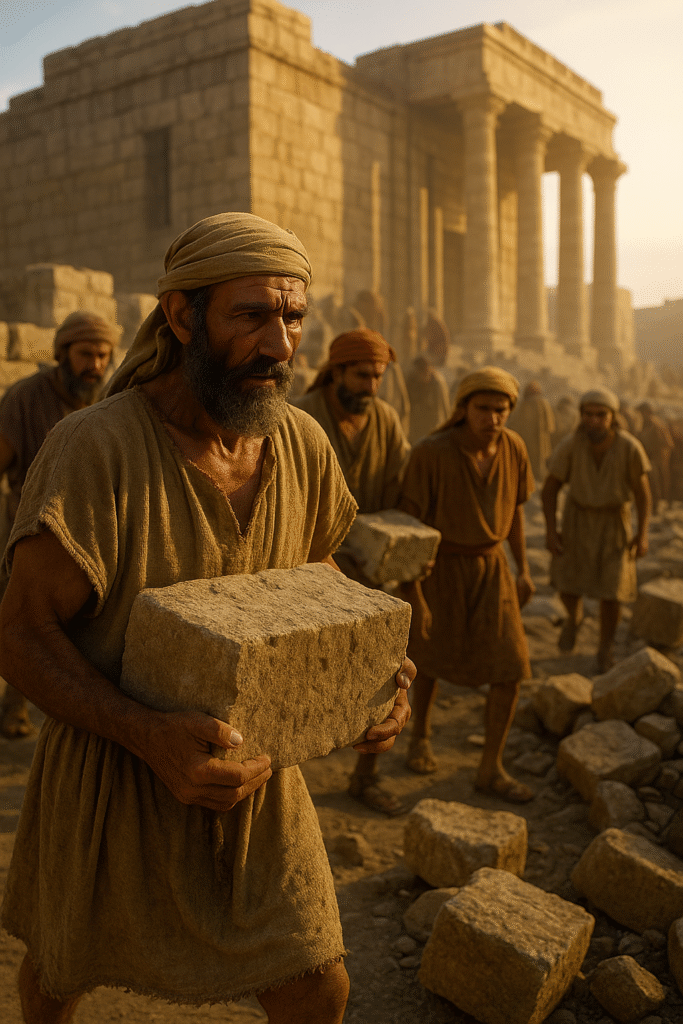
Once in Jerusalem, the first thing the people rebuild is not the walls or the homes, but the altar.
Before any structure rises, worship is restored.
They offer burnt offerings morning and evening, re-establishing the rhythm of relationship with God.
Then they lay the foundation of the Temple.
When it is completed, the younger generation shouts for joy while the older priests weep — both sounds mingling together as a single chorus of worship and remembrance.
It’s a reminder that God meets every generation where they are — both in new beginnings and in restoration of what was lost.
But as soon as the work begins, opposition arises.
Enemies of Judah offer to “help” build, but when their offer is refused, they turn hostile.
They spread lies, intimidate the builders, and finally send accusations to the Persian king.
The construction halts — God’s people face frustration and delay.
Yet in Heaven’s perspective, this pause is not failure — it’s formation.
God is teaching them endurance and faithfulness in the waiting.
Chapters 5–6 – The Word of the Lord Revives the Work
After years of discouragement, the prophets Haggai and Zechariah rise with a fiery word from the Lord:
“Be strong and work, for I am with you!”
Their words reignite hope.
Zerubbabel and Jeshua resume building the Temple despite opposition.
When the local officials report it to King Darius, he searches the royal archives and finds Cyrus’s original decree.
Not only does Darius confirm their right to build — he commands that the cost be paid from royal funds!
God turns the hearts of kings to fulfill His promise.
In the sixth year of Darius’s reign, the Temple is completed and dedicated with great joy.
Sacrifices are offered, priests are appointed, and the Passover is celebrated once again.
What began in ruins now radiates with restored worship, renewed covenant, and rejoicing hearts.
2. Key Themes and Lessons
| Theme | Lesson |
|---|---|
| God’s Faithfulness to His Promises | Even after exile, His word stands. He never forgets His covenant people. |
| The Power of Worship First | Worship reorders priorities — before we rebuild life’s structures, we must rebuild our altar to God. |
| Opposition and Perseverance | Resistance is not a sign of failure but of purpose. God forms strength in the struggle. |
| Prophetic Encouragement | God still sends voices to reignite purpose when faith grows weary. |
| Joy in Restoration | True joy is found not in what we build, but in being rebuilt by Him. |
3. Encouragement
Oh, I love this book — because it’s a comeback story!
You can almost hear Heaven cheering as the exiles start walking home.
Cyrus doesn’t even know God personally, but his heart gets stirred by God’s Spirit.
That’s how powerful the Word is —
it can move kings, stir nations, and break seventy years of captivity in a moment.
Why? Because God never forgets what He promises.
The people return — not as slaves, not as survivors — but as sons and daughters coming home.
They don’t start by rebuilding their walls, they start by rebuilding their worship.
That’s huge! Because worship is what restores perspective.
Before we fix what’s broken around us, we must rekindle what’s alive within us.
When they lay the foundation, some shout, and some weep — and both are holy sounds.
God honours the joy of new beginnings and the tears of restoration.
He’s not just building a Temple — He’s rebuilding hearts that had forgotten how to hope.
Then comes opposition.
You’d think if God’s in it, it should be easy, right?
But the truth is, opposition often means you’re advancing something eternal.
They tried to stop them with fear, accusation, and delay — and that’s exactly how the enemy still works.
But listen, delay is not denial.
When the prophets speak again, the fire comes back.
That’s what happens when you remember why you started — when you realise God’s still with you.
And by the end, they finish. They celebrate. They worship.
Because what God starts, He always finishes — even if it takes a different generation to see it.
The altar’s burning, the Temple’s standing, and the people are free again.
That’s redemption in motion.
So sister, if something in your life feels delayed — don’t despair.
He’s still stirring kings and prophets on your behalf.
Your ‘rebuilding season’ isn’t proof of failure; it’s proof that God’s promises are alive in you.
Lift your eyes — the foundation is already laid. The glory’s coming back!”
4. Reflection Questions
- What promises has God spoken that I’ve stopped believing because of delay?
- Have I rebuilt my “altar” — my personal place of worship and surrender — before rebuilding my plans?
- How do I respond when opposition comes: in fear, or in faith that God will vindicate His Word?
- Who are the “prophetic voices” God may be sending in my life to reignite hope?
- What would it look like for me to celebrate the small foundations God is already laying in my story?
Book of Ezra – Set 2 (Chapters 7–10)
Theme: Rebuilding the Heart — Returning to Covenant Faithfulness
1. Summary of the Chapters
Chapters 7–8 – Ezra’s Return and the Journey of Faith
Decades have passed since the Temple was rebuilt.
The people live in Jerusalem, but their spiritual devotion has waned.
Into this moment, Ezra, a priest and skilled scribe, is chosen by God to lead the second return from Babylon.
The Bible says:
“The hand of the Lord was upon him because he had set his heart to study the Law of the Lord, and to do it, and to teach His statutes in Israel.” (Ezra 7:10)
This verse defines Ezra’s life — he doesn’t just know God’s Word, he lives it and teaches it.
Under the decree of King Artaxerxes, Ezra is given permission, provisions, and protection to return to Jerusalem with more exiles.
Before they depart, Ezra gathers the people by the river Ahava.
He proclaims a fast, humbling everyone before God to seek His protection for the dangerous journey.
Ezra could have asked the king for soldiers, but he instead says:
“The hand of our God is upon all who seek Him for good.”
And so they travel — not in human strength, but in divine confidence.
Their faith is rewarded; God preserves them all the way to Jerusalem.
When they arrive, they rest three days and offer sacrifices of gratitude.
The physical journey is over, but the spiritual journey of renewal is just beginning.
Chapters 9–10 – Confronting Sin and Restoring Covenant Holiness
Shortly after arriving, Ezra learns that many of the people — even priests and leaders — have married foreign women from pagan nations.
This wasn’t about ethnicity; it was about idolatry and spiritual compromise.
Their marriages had opened doors to the same sins that once led to exile.
Ezra’s reaction is heart-wrenching:
He tears his clothes, falls on his knees, and weeps before God in deep repentance — not just for himself, but for the whole nation.
His prayer is one of the most powerful in Scripture:
“O my God, I am too ashamed and humiliated to lift my face to You, for our iniquities have risen higher than our heads.” (Ezra 9:6)
The people gather around him, trembling. His grief convicts their hearts.
Then Shecaniah, one of the leaders, speaks up and says:
“We have been unfaithful, but there is still hope for Israel.”
And with that hope, a national repentance begins.
Under Ezra’s leadership, the people make a covenant to separate themselves from the sin that had polluted their worship.
They confess, mourn, and take practical steps to realign their lives with God’s holiness.
The book ends not with despair, but with restoration — hearts purified, worship renewed, and a people once again belonging wholly to the Lord.
It’s the story of God not just rebuilding walls or temples, but restoring integrity, devotion, and covenant love in His people.
2. Key Themes and Lessons
| Theme | Lesson |
|---|---|
| Holiness and Heart Restoration | True revival doesn’t end with rebuilt structures — it transforms hearts to reflect God’s nature. |
| The Power of God’s Word | The Word reforms, convicts, and restores when received with humility and obedience. |
| Repentance as Renewal | Repentance is not condemnation — it is the pathway to life, purity, and restored intimacy with God. |
| Leadership Rooted in Integrity | Ezra models what it means to lead through example — to live the Word before teaching it. |
| God’s Mercy in Correction | Divine correction is never rejection; it’s God’s call to come home. |
3. Encouragement
Oh, sister, this part of Ezra hits deep —
because it’s not just about rebuilding the Temple anymore, it’s about rebuilding you.
See, God isn’t after perfect systems — He’s after pure hearts.
He’s not just looking for a standing building; He’s looking for a standing people who reflect His nature.
Ezra comes into the picture with one agenda: to bring the people back to truth.
He’s not a celebrity leader or a political hero — he’s a man who’s fallen in love with the Word of God.
And that’s where it starts — when your heart burns for truth more than comfort.
When he hears about the sin in the land, he doesn’t lash out — he falls on his face.
Come on, that’s leadership in the Kingdom!
He doesn’t pray from pride; he prays from brokenness.
He carries the weight of others’ failures before God with tears, not anger.
And Heaven responds to that kind of humility every time.
When the people see his heart, they begin to weep too.
You see, repentance isn’t just turning from something — it’s returning to Someone.
That’s why Shecaniah says, ‘There is still hope!’
Yes, there is! Because the moment a heart humbles itself, Heaven rushes in with mercy.
God isn’t shocked by their sin — He’s waiting to restore them.
And He doesn’t just patch things up — He rebuilds what was broken with grace stronger than before.
That’s what holiness really is: not performance, but partnership.
It’s saying, ‘Father, I don’t want anything in me that doesn’t look like You.’
And He answers that prayer with joy!
By the end of Ezra, the nation isn’t just restructured — it’s reborn.
They’ve moved from exile to encounter, from compromise to covenant.
And that’s what He’s doing in you too — not just changing what you do, but transforming who you are.
4. Reflection Questions
- Have I allowed any “foreign influences” — attitudes, habits, or compromises — to mix with my devotion to God?
- How can I cultivate a heart like Ezra’s — one that studies, lives, and teaches the Word from love, not duty?
- In what areas is God calling me to rebuild from the inside out rather than the outside in?
- How can repentance become a lifestyle of joy, not shame, in my walk with God?
- What would it look like for me to lead others — like Ezra — through humility, prayer, and example?
Book of Ezra – Overview Summary
Theme: The God Who Restores His People and Rebuilds Their Hearts
1. Summary of the Book
The Book of Ezra is a powerful portrait of restoration — not only of a Temple, but of a covenant relationship. It picks up where 2 Chronicles ends, with God fulfilling His promise to bring His people home from exile. Through royal decrees, prophetic voices, and courageous hearts, God begins to rebuild both a place of worship and a people of holiness.
Ezra teaches that true restoration always begins with a return to God’s Word and a revival of worship from the heart.
Chapters 1–6 – Rebuilding the Temple
The story begins in 539 BC, when King Cyrus of Persia is stirred by God’s Spirit to allow the exiled Jews to return to Jerusalem. He even commands that the Temple of the Lord be rebuilt and returns the sacred treasures that had been taken by Babylon.
Led by Zerubbabel and Jeshua, the first group of exiles journey home. Their first act is not to fortify the city but to rebuild the altar — restoring daily worship before restoring the structure.
They then lay the foundation of the Temple, and the sound of rejoicing and weeping fills the air. The older generation remembers Solomon’s splendour, while the younger celebrates a new beginning — together forming one symphony of redemption.
But as the work progresses, opposition arises. Adversaries accuse them before the Persian court, and construction halts for years. Yet God does not forget. He sends Haggai and Zechariah to awaken their faith with prophetic encouragement:
“Be strong and work, for I am with you,” says the Lord.
With renewed courage, they rebuild. Under King Darius, the project is revived, funded, and completed.
The Temple is dedicated with great joy, and the Passover is celebrated once again — marking a nation reborn in worship.
Chapters 7–10 – Rebuilding the People
Sixty years later, under King Artaxerxes, a new leader rises — Ezra, a priest and scholar of God’s Law. He is described as:
“A scribe skilled in the Law of Moses, who had set his heart to study, to do, and to teach.”
Ezra leads a second group of exiles back to Jerusalem, not to rebuild walls but to rebuild hearts. His mission is spiritual renewal — to restore obedience to the Word and purify the people’s devotion.
He calls for fasting and prayer before the journey, demonstrating faith in God’s protection rather than military strength.
Upon arriving, Ezra discovers that many leaders have intermarried with pagan nations, reopening doors to idolatry. His heart breaks — he tears his garments, falls to his knees, and prays a prayer of deep repentance on behalf of the people.
This humble cry sparks a movement of national repentance. The people confess their sins, renew their covenant, and commit to separating from all that compromises their holiness.
The book closes not with exile or destruction, but with a renewed covenant, purified hearts, and a people ready to walk again in the fear and favour of the Lord.
2. Key Themes and Lessons
| Theme | Lesson |
|---|---|
| God’s Faithful Restoration | God keeps His promises, restoring not only what was lost but the hearts of those who lost it. |
| Worship Before Work | True rebuilding begins with returning to the altar — relationship before reconstruction. |
| Opposition and Perseverance | Resistance refines resolve; God’s purposes are unstoppable when rooted in His Word. |
| Leadership Through Integrity | Ezra models servant leadership: learning, living, and teaching the Word with humility. |
| Repentance and Renewal | Revival flows from repentance — when hearts realign with God’s truth, restoration follows. |
3. Encouragement
Oh, this book preaches redemption from start to finish!
You can feel the Father’s heart all over it — He never gave up on His people, even when they sat in exile.
Think about it — seventy years had passed. Generations had come and gone.
Yet God stirs the heart of a pagan king to say, ‘Go rebuild My house.’
Why? Because covenant love doesn’t have an expiry date.
And when they finally step back into Jerusalem, what’s the first thing they rebuild? The altar.
Come on — that’s everything!
Before the walls, before the Temple, before the routines — they restore worship.
Because God doesn’t just want their productivity; He wants their presence.
Then opposition hits. Letters, threats, delays — sound familiar?
But Heaven’s decree is stronger than any human one.
When prophets speak, faith rises again, and the work resumes.
And when the Temple is finished, the people rejoice —
not because of bricks and gold, but because the glory of belonging to God has come back to them.
Then years later, Ezra arrives.
He’s not rebuilding structures — he’s rebuilding souls.
He carries the Word like fire in his bones.
And when he prays, he doesn’t blame —
he identifies with the brokenness of his people and intercedes with compassion.
That’s what grace looks like — not pointing fingers, but lifting hearts.
And what happens? Revival breaks out.
Repentance sweeps the land, and God restores purity where compromise once lived.
Sister, that’s what He’s doing today.
He’s calling us out of exile — not just from places, but from mindsets, habits, and fears that keep us from Him.
He’s rebuilding His temple — not one made of stone, but of living hearts filled with His Spirit.
You are that temple.
You are that restoration project that proves His faithfulness never ends.
So don’t just rebuild your life — rebuild your altar.
Return to worship. Return to the Word.
And watch Him fill your story with glory again.
4. Reflection Questions
- In what ways has God stirred my heart to rebuild something that once felt lost or broken?
- Have I rebuilt my “altar” — my personal devotion and daily communion with God — before anything else?
- How can I respond to opposition with faith rather than fear, trusting that God’s purpose cannot be stopped?
- Am I allowing the Word of God to reform my thoughts, habits, and heart the way Ezra modelled?
- Where might God be calling me to repent and realign with His covenant love so that restoration can flow freely again?