
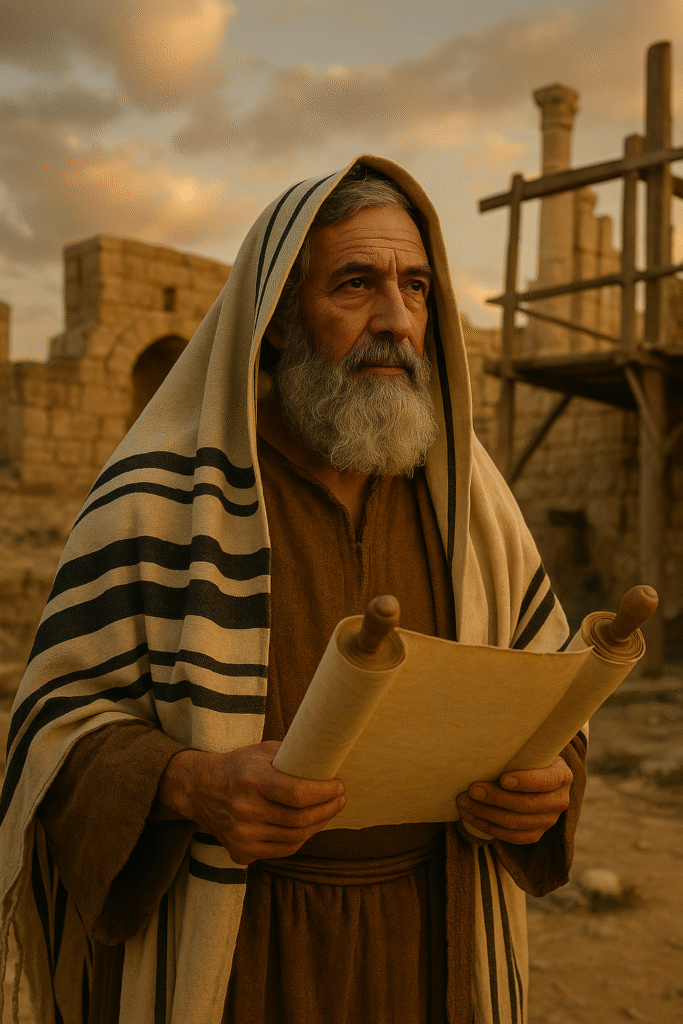
The Book of Zechariah – Set 1 (Chapters 1–2: Return to Me, and I Will Return to You)
Theme: God’s Call to Return and His Promise of Divine Protection and Glory
1. Summary of Chapters 1–2
Chapter 1 – A Call to Return
Zechariah begins with a message from the Lord:
“Return to Me,” declares the Lord Almighty, “and I will return to you.” (1:3)
God reminds the people that their ancestors ignored the prophets and suffered because of it. But now, He extends mercy—His desire is not to punish, but to restore.
Vision 1: The Man Among the Myrtle Trees (1:7–17)
Zechariah sees a man riding a red horse among myrtle trees with horses behind him. These horses represent angelic messengers who patrol the earth and report that it is at rest.
God responds with compassion:
“I am very jealous for Jerusalem… My house will be rebuilt in it.” (1:14–16)
Though Israel had been disciplined, God now promises:
✅ Mercy
✅ Restoration
✅ Prosperity
✅ His presence returning to Zion
Vision 2: The Four Horns and Four Craftsmen (1:18–21)
- The four horns represent powers (nations) that scattered God’s people.
- The craftsmen are agents of God who come to terrify and overthrow those powers.
God is declaring: The oppressors will be cut down; My people will be defended.
Chapter 2 – The Measuring Line and God’s Glory
Vision 3: The Man with the Measuring Line
A man measures Jerusalem, indicating God’s intention to rebuild and enlarge it.
But the angel declares:
“Jerusalem will be a city without walls because of the great number of people and animals in it.” (2:4)
This means:
- God will expand His people beyond physical boundaries.
- Protection will not come from physical walls but from God Himself.
“And I Myself will be a wall of fire around it,” declares the Lord, “and I will be its glory within.” (2:5)
A Call to Flee Babylon and Come Home
God calls His people still living in exile to come out of worldly systems and return to His presence:
“Come, Zion! Escape, you who live in Daughter Babylon!” (2:7)
The Lord Will Dwell With His People
God promises:
“Shout and be glad, Daughter Zion. For I am coming, and I will live among you.” (2:10)
This points prophetically to:
- God’s presence in the rebuilt Temple
- The day when Messiah (Jesus) would come
- The future Kingdom when God dwells with His people forever
2. Key Themes and Lessons
| Theme | Lesson |
|---|---|
| Return to God | God’s heart is always restoration. When we return, He responds immediately with presence and mercy. |
| God’s Jealous Love | God is passionately committed to His people and will not allow them to remain oppressed. |
| Divine Protection | God Himself becomes a wall of fire around His people—our safety is found in His presence. |
| Kingdom Expansion | God’s future plan is greater than before—His Kingdom is expansive, global, and glorious. |
| God Dwelling with His People | The ultimate promise of Zechariah: God Himself will live among His people. |
3. Encouragement
Oh this is powerful!
God isn’t calling His people back with anger—He is calling them with love.
‘Return to Me, and I will return to you.’ That’s not a threat—that’s a promise!
God is not focused on where you’ve been; He’s focused on where He wants to take you!
He shows Zechariah visions of horses, horns, and craftsmen to say: ‘I see the injustice. I know what hurt you.
But I am coming to defend you, rebuild you, and dwell with you.’
Come on—this is not just about ancient Jerusalem. This is about you. God is saying:
“I will be your protection. I will be your glory. I will be your dwelling.”
You don’t need to build walls around your life for safety. You don’t need control, fear, or self-preservation.
God Himself is your wall of fire!
And what’s the ultimate promise? ‘I am coming, and I will live among you.’
That’s Jesus. That’s the Holy Spirit. That’s revival fire!
So sister, don’t hold back. Return fully to Him.
The moment you move toward Him—He runs toward you with glory and protection!
4. Reflection Questions
- Are there areas of my life where God is calling me to “return” to Him more fully?
- Have I placed my trust in human walls of security, or in God who is a wall of fire around me?
- Do I see God as eager to restore me, or do I believe He is reluctant or distant?
- Where might God be expanding my territory spiritually, calling me to dream bigger with Him?
- How can I make room in my heart for God to “live among me” in a deeper way?
The Book of Zechariah – Set 2 (Chapters 3–4: Cleansing, Commissioning, and Empowerment by the Spirit)
Theme: Restored by Mercy, Empowered by the Spirit — not by human strength, but by the Lord’s Spirit
Chapter 3 – Vision of Joshua the High Priest: Cleansed and Commissioned
The Heavenly Courtroom (3:1–5)
Joshua the high priest stands before the Angel of the Lord, clothed in filthy garments—representing the sin and defilement of the people.
Satan stands at his right side to accuse him.
But the Lord rebukes Satan:
“The Lord rebuke you, Satan! The Lord who has chosen Jerusalem, rebuke you!” (3:2)
Joshua is then cleansed:
- His filthy garments are removed.
- He is clothed in rich robes and given a clean turban.
This represents God’s righteousness covering His people, not based on merit, but on grace.
Commissioning (3:6–10)
Joshua is called to walk in God’s ways and govern His house.
Then a prophetic promise:
“I am going to bring My servant, the Branch.” (3:8)
The Branch is a messianic title—referring to Jesus Christ.
God also promises:
“I will remove the sin of this land in a single day.” (3:9)
This points to the cross—where Jesus would bring complete atonement once and for all.
Chapter 4 – Vision of the Lampstand and Olive Trees: Not by Might, Nor by Power
Vision of the Golden Lampstand (4:1–3)
The prophet sees:
- A golden lampstand with seven lamps
- Two olive trees supplying oil directly into the lamp
This represents continual supply of the Holy Spirit—God’s Church shining with His light, fueled not by human effort but by divine power.
God’s Word to Zerubbabel (4:6–10)
God speaks a defining message:
“Not by might nor by power, but by My Spirit,” says the Lord Almighty. (4:6)
Zerubbabel, who began the rebuilding of the Temple, is assured that the work will be completed—not by human strength, but by God’s Spirit.
Even mountains of opposition will be flattened:
“Who are you, O great mountain? Before Zerubbabel you shall become a plain!” (4:7)
God then declares:
“Do not despise the day of small beginnings, for the Lord rejoices to see the work begin.” (4:10)
The Meaning of the Two Olive Trees (4:11–14)
The two olive trees represent two anointed ones—priests and kings empowered by God, ultimately pointing to the royal-priesthood of Christ and the Spirit-filled Church.
2. Key Themes and Lessons
| Theme | Lesson |
|---|---|
| Spiritual Cleansing | God removes sin not through human effort but through His grace and righteousness. |
| Victory over Accusation | Satan accuses, but God defends and restores His chosen people. |
| Messiah Revealed | The Branch foreshadows Jesus, who removes sin in one day. |
| Empowerment by the Holy Spirit | God’s work is accomplished not by human ability but by His Spirit. |
| Encouragement for the Discouraged | Small beginnings are precious to God—He sees the end from the start. |
| God’s Sovereignty Over Obstacles | What seems like a mountain will become a plain before the Lord’s anointed. |
3. Encouragement
Oh man, this is powerful!
Joshua is standing there filthy, accused by Satan, totally unworthy. But what does God do?
He doesn’t remind Joshua of his past—He rebukes the accuser and clothes Joshua in righteousness.
Come on—that’s the Gospel!
You are not defined by the dirt of your past—you are defined by the robe of righteousness God places on you!
Then we see the Branch—Jesus—who removes the sin of the land in a single day.
That’s Calvary. That’s finished. That’s grace.
And then God speaks to Zerubbabel:
‘Not by might, not by power, but by My Spirit!’
This is not a motivational quote—it’s a Kingdom law.
You were never meant to live the Christian life in your own strength.
The same Spirit that raised Jesus is the oil that fuels your lamp. You shine because He supplies.
So if you feel weak today, good! You’re in the perfect position for the Holy Spirit to do what only He can do.
And don’t despise small beginnings—because God sees the seed and already celebrates the fruit.
4. Reflection Questions
- Do I allow the enemy’s accusations to define me, or do I receive God’s cleansing and righteousness?
- Where am I trying to serve God in my own strength instead of relying on His Spirit?
- What “small beginnings” in my life might God be rejoicing over right now?
- How does the promise that God will remove sin “in a single day” deepen my faith in the finished work of Jesus?
- Where is God asking me to see mountains not as barriers—but as plains He will level?
The Book of Zechariah – Set 3 (Chapters 5–6: Purification, Judgment, and the Coronation of the Messiah-King)
Theme: God removes wickedness, establishes justice, and reveals the coming reign of the Messiah
1. Summary of Chapters 5–6
Chapter 5 – Purging Sin from the Land
Vision 4: The Flying Scroll (5:1–4)
Zechariah sees a massive flying scroll, 30 feet long and 15 feet wide, representing the law and God’s righteous judgment.
- One side declares judgment on thieves.
- The other side condemns those who swear falsely in God’s name.
Meaning:
God is cleansing the land from sin — both sins against others (theft) and sins against God (false oaths). His covenant community must be purified to host His presence.
“I will send it out… It will remain in that house and destroy it, both its timbers and its stones.” (5:4)
Wickedness cannot coexist with God’s glory.
Vision 5: The Woman in the Basket (5:5–11)
Zechariah sees a measuring basket (an ephah), containing a woman personifying wickedness. The basket is sealed with a lead cover and carried by two winged women to the land of Shinar (Babylon).
Meaning:
God is removing wickedness from among His people and sending it back to its place of origin and rebellion — Babylon (symbol of worldly corruption). This is a prophetic picture of final judgment and the separation of God’s people from evil systems.
Chapter 6 – The Four Chariots and the Coronation of the Priest-King
Vision 6: The Four Chariots (6:1–8)
Zechariah sees four chariots coming out from between two bronze mountains (mountains representing God’s unshakable authority).
The horses represent the four spirits of heaven going throughout the earth to execute God’s judgment and bring divine order.
“These are the four spirits of heaven, going out from standing in the presence of the Lord of the whole earth.” (6:5)
This reveals God’s sovereign rule over the nations — nothing escapes His governance.
The Crowning of Joshua the High Priest (6:9–15)
God instructs Zechariah to take silver and gold and make a crown to place on the head of Joshua the high priest.
This is unusual — priests were not normally crowned. This act is symbolic.
Then the Lord proclaims:
“Here is the man whose name is the Branch… He will build the temple of the Lord… He will be clothed with majesty and will sit and rule on His throne. And He will be a priest on His throne.” (6:12–13)
Meaning:
This is a prophetic foreshadowing of Jesus Christ, who is both King and High Priest.
He will:
- Build the true temple (the Body of Christ)
- Reign in righteousness
- Bring peace between God and humanity as our eternal priest
“Those who are far away will come and help to build the temple of the Lord.” (6:15) — a prophetic promise of the Gentiles being brought into God’s Kingdom.
2. Key Themes and Lessons
| Theme | Lesson |
|---|---|
| Purification from Sin | God removes wickedness from His people so that His glory can dwell among them. |
| Judgment and Justice | God’s judgments are righteous and restore order in the earth. |
| The Defeat of Worldly Systems | Wickedness is exiled to Babylon — symbolizing God’s ultimate victory over evil. |
| Sovereignty Over the Nations | The four chariots show God actively governing world affairs. |
| Messiah as King and Priest | The crowning of Joshua foreshadows Jesus, the One who combines kingship and priesthood, bringing peace and restoration. |
| Inclusion of the Nations | God’s plan includes people from afar — Gentiles joining in His redemptive work. |
3. Encouragement
Oh, this is loaded with prophetic destiny!
First, we see God cleansing the land. Why?
Not because He’s angry at His people — but because He wants them free from everything that stands between them and His presence.
God hates wickedness because wickedness blinds His children from knowing who they are in Him!
Then comes the vision of the Branch — Jesus — crowned as both King and Priest. That’s our Jesus!
He doesn’t just rule over us; He mediates for us.
He reigns with absolute authority and yet intercedes with absolute love.
Come on — the crown on Joshua’s head is not about a man; it’s a prophetic declaration:
‘The Messiah is coming. He will build His temple — and that temple is you.’
And look at this — it says people from far away will join in the building. That’s us!
We are living stones being built into a spiritual house.
So sister, don’t be discouraged by what God is removing from your life.
If He’s lifting something away, it’s because He’s making room for His glory.
The Branch is reigning. The temple is rising. And you are part of His eternal blueprint.
4. Reflection Questions
- Is there any area of my life where God is calling me to let go of compromise so His presence can increase?
- Do I truly believe that God rules over the nations—that nothing is out of His control?
- How does it change my identity to know that Jesus is both my King and my High Priest?
- Am I willing to be part of God’s temple—allowing Him to shape me into a dwelling place of His glory?
- Where is God asking me to see purification not as punishment, but as preparation for greater intimacy?
The Book of Zechariah – Set 4 (Chapters 7–8: True Fasting, Future Glory, and God Dwelling with His People)
Theme: God calls His people from empty religion into authentic relationship—promising restoration, prosperity, and His abiding presence
1. Summary of Chapters 7–8
Chapter 7 – The Question of Fasting: Ritual vs. Relationship
A delegation from Bethel asks the priests and prophets whether they should continue fasting as they have done for 70 years during exile.
God responds—not with a rule, but with a heart-check.
“When you fasted… was it really for Me?” (7:5)
Their fasting had become empty ritual. God reminds them of the prophets’ earlier message:
✅ Administer true justice
✅ Show mercy and compassion
✅ Do not oppress widows, orphans, foreigners, or the poor
✅ Do not devise evil in your hearts against one another (7:9–10)
But their ancestors hardened their hearts, leading to exile. God is now calling this new generation to walk in true obedience rooted in love—not outward performance.
Chapter 8 – The Promise of Restoration and God’s Future Dwelling
This chapter is filled with ten prophetic declarations of blessing—each beginning with “This is what the Lord Almighty says…”
God proclaims:
“I am very jealous for Zion; I am burning with jealousy for her.” (8:2)
And:
“I will return to Zion and dwell in Jerusalem. Then Jerusalem will be called the Faithful City.” (8:3)
A Vision of Peaceful Restoration:
- Old men and women will sit in the streets — symbol of long life and safety.
- Children will play in the streets — symbol of joy, hope, and future.
“It may seem marvelous to the remnant of this people at that time, but will it seem marvelous to Me?” (8:6)
— God is saying: What seems impossible to you is not impossible for Me.
The Nations Will Come:
Many peoples and mighty nations will flock to Jerusalem to seek the Lord.
“In those days ten people from all languages and nations will take firm hold of one Jew by the hem of his robe and say, ‘Let us go with you, because we have heard that God is with you.’” (8:23)
This is a prophetic picture of:
- The global revival of the last days
- The inclusion of the Gentiles
- The Church filled with God’s presence so powerfully that nations are drawn to His glory
2. Key Themes and Lessons
| Theme | Lesson |
|---|---|
| True Worship vs. Empty Ritual | God desires hearts of obedience and compassion, not religious performance. |
| God’s Passion for His People | His jealousy is not anger—it is protective love, longing to dwell intimately with His people. |
| Restoration and Peace | God promises security, joy, and prosperity to His redeemed community. |
| Faith Beyond Human Possibility | What seems too hard for us is simple for God—He delights in miraculous restoration. |
| Global Revival | God will draw the nations to Himself as His presence rests on His people. |
3. Encouragement
Oh, this is so rich!
God isn’t after your ritual—He’s after your heart.
He’s not asking, ‘Did you fast enough?’ He’s asking, ‘Did you love well? Did you reflect My nature to the world?’
Come on—fasting, prayer, worship—they are all beautiful when they are expressions of relationship.
But when they become religious duty, we miss the whole point.
And look at God’s heart in chapter 8—He’s burning with jealousy for His people.
That means He refuses to let you settle for distance. He wants to be with you, live among you, walk with you!
He paints a picture of peace—elderly sitting peacefully in the streets, children laughing and playing.
That’s the Kingdom! That’s what it looks like when God is in the midst of His people.
And then the nations come. Why?
Because the presence of God is so real, so tangible, that people say, ‘We know God is with you—take us with you!’
Sister, that’s your calling.
Not to perform religion, but to host His presence.
To be so filled with Him that your life becomes an invitation to the world.
4. Reflection Questions
- Are there any spiritual practices in my life that have become routine instead of relational?
- What does it look like for me to walk in true justice, mercy, and compassion in daily life?
- Do I believe that God passionately longs to be with me—that He is jealous for me, not against me?
- Where am I limiting God by thinking something is too difficult or too far gone to be restored?
- How might God want to use my life to draw others to Him because His presence is evident in me?
The Book of Zechariah – Set 5 (Chapters 9–11: The King, the Shepherd, and Israel’s Response)
Theme: The Coming of the Messiah—A King Who Brings Peace and a Shepherd Who Is Rejected
1. Summary of Chapters 9–11
Chapter 9 – The Coming King of Peace
This chapter begins with judgments against surrounding nations (Hadrach, Damascus, Tyre, Sidon, Philistia), declaring that God will strip them of pride and power. Yet amid judgment comes an incredible announcement of hope:
“Rejoice greatly, Daughter Zion! Shout, Daughter Jerusalem! See, your King comes to you, righteous and victorious, lowly and riding on a donkey…” (9:9)
This is fulfilled in Jesus’ triumphal entry into Jerusalem (Matthew 21:4–5).
The King comes not for war but to:
- Proclaim peace to the nations
- Set prisoners free
- Establish His rule from sea to sea
This is a prophetic declaration of Christ’s first coming and His peaceful kingdom.
Chapter 10 – God Promises Restoration
God calls His people to seek Him rather than rely on idols or false shepherds.
“From the Lord comes the spring rain.” (10:1)
He promises:
- To strengthen Judah
- To save His people
- To gather His scattered flock
- To defeat their oppressors
God Himself will be their Shepherd—the One who gathers, restores, and leads them into blessing.
Chapter 11 – The Rejected Shepherd
This is one of the most prophetic and emotionally powerful passages in Scripture.
The Prophet Acts Out a Symbolic Drama
Zechariah is told to shepherd a flock marked for slaughter. He takes two staffs:
- One named Favour (Grace)
- One named Union
But the flock rejects him.
Then Zechariah says:
“So they paid me thirty pieces of silver.” (11:12)
The Lord instructs him to throw it “to the potter in the house of the Lord” (11:13)—exactly what happened when Judas betrayed Jesus (Matthew 27:3–7).
This chapter reveals:
- Israel’s rejection of the Messiah
- The breaking of God’s covenant of protection
- The scattering of the flock
- A prophetic warning of a future false shepherd
2. Key Themes and Lessons
| Theme | Lesson |
|---|---|
| Messiah the King | Jesus comes not with earthly force, but in humility, to bring peace and salvation. |
| Messiah the Shepherd | God Himself cares for His people, gathering the lost and healing the broken. |
| The Cost of Rejection | To reject the Shepherd is to forfeit favour and unity. |
| Prophetic Fulfillment | Zechariah 9–11 contains some of the most precise prophecies of Christ’s life, ministry, betrayal, and rejection. |
| Hope Beyond Rejection | Even when rejected, God’s redemptive plan continues—there remains a remnant and future restoration. |
3. Encouragement
Oh this is breathtaking!
We see Jesus all over these chapters—your King comes to you humble, not demanding worship, but inviting hearts.
He’s not riding a war horse, He’s riding a donkey—because He’s not coming to crush people, He’s coming to rescue them!
But He’s not just a King—He’s a Shepherd.
He gathers the lost, strengthens the weak, restores the broken.
Come on! This is our Jesus—He doesn’t stand far off; He steps right into the mess to lead us out.
And yes, there’s heartbreak—He’s rejected, betrayed for thirty pieces of silver.
But don’t miss this: even rejection couldn’t stop God’s love.
The broken staff of “Favour” wasn’t the end—it was the opening for a new covenant sealed in Christ’s blood.
Sister, Zechariah shows us:
- The humility of Jesus
- The faithfulness of God
- The tragedy of rejection
- And the unstoppable plan of redemption
So what’s our response? Not fear. Worship. Because the King has come—and He is coming again in glory!
4. Reflection Questions
- How does seeing Jesus as the humble King on a donkey shape my understanding of His nature and mission?
- Am I following Jesus as my Shepherd, or resisting His leadership in any area of my life?
- What might I be clinging to (comfort, control, pride) that resembles the rejection of God’s favour?
- How does knowing prophecy was fulfilled in exact detail strengthen my confidence in God’s Word?
- What does it mean to me personally that my King brings peace—not by force, but through His presence and Spirit?
The Book of Zechariah – Set 6 (Chapters 12–14: The Pierced Messiah, Final Battle, and the Reign of the King)
Theme: From Mourning to Majesty — Israel Sees the Messiah, the Nations are Judged, and the Lord Becomes King Over All the Earth
1. Summary of Chapters 12–14
Chapter 12 – Israel’s Deliverance and the Revelation of the Pierced One
- God proclaims He will make Jerusalem “a cup of staggering” to the surrounding nations (12:2).
- All nations gather against Jerusalem, but God Himself fights for her.
“On that day I will set out to destroy all the nations that attack Jerusalem.” (12:9)
Then comes one of the most stunning prophecies in all of Scripture:
“They will look on Me, the One they have pierced, and they will mourn for Him…” (12:10)
This is fulfilled in Jesus’ crucifixion (John 19:37). At the end of the age, Israel will recognise Jesus as the Messiah and enter into deep national repentance. This mourning is not condemnation—it is the moment of revelation and salvation.
Chapter 13 – Cleansing and Refinement
- A fountain is opened for the house of David to cleanse from sin and impurity (13:1) — symbolising the atoning blood of Christ.
- Idolatry and false prophecy will be removed from the land.
- God will refine His people like gold through fire.
“They will call on My name and I will answer them. I will say, ‘They are My people,’ and they will say, ‘The Lord is our God.’” (13:9)
This is the purification of the remnant — the faithful who truly belong to the Lord.
Chapter 14 – The Day of the Lord and the Reign of the Messiah
- The nations gather for a final battle against Jerusalem.
- The Lord Himself comes to fight, and His feet stand on the Mount of Olives (14:4), splitting it in two. This is a prophetic vision of the second coming of Jesus.
“Then the Lord my God will come, and all the holy ones with Him.” (14:5)
- A new era is established:
- Living waters flow from Jerusalem (symbolising the Holy Spirit and eternal life).
- The Lord becomes King over the whole earth.
- All nations come to Jerusalem to worship the King and celebrate the Feast of Tabernacles.
- Even everyday objects (“bells of the horses,” “cooking pots”) will be inscribed “HOLY TO THE LORD”, showing God’s glory filling all things.
2. Key Themes and Lessons
| Theme | Lesson |
|---|---|
| Jesus Revealed as the Pierced Messiah | Salvation comes when we see Christ for who He truly is. |
| Repentance Leads to Restoration | God’s plan for His people includes conviction, cleansing, and renewed covenant. |
| God’s Final Victory | The nations may gather in rebellion, but the Lord Himself will intervene. |
| The Second Coming | Jesus will return physically to the Mount of Olives to establish His reign. |
| Holiness in All Things | The Kingdom of God transforms everything—every nation, every household, every ordinary object will be filled with His glory. |
| Eternal Worship | All nations will bow to King Jesus and worship Him in unity. |
3. Encouragement
Oh my goodness, this is the gospel and the Kingdom in full display!
You see Jesus—not just as the suffering Servant—but as the returning King!
They look on Him whom they have pierced—that’s Jesus on the cross.
And instead of judgment, what comes? Repentance. Love. Restoration.
God doesn’t reveal Jesus to shame them—He reveals Jesus to save them.
Then comes the greatest turnaround in history—what began in mourning turns into the reign of the Messiah!
The Lord Himself stands on the Mount of Olives, and every false throne falls, every enemy is silenced, and the whole earth becomes His sanctuary.
Come on! This is not a fairy tale—this is your future! This is the destiny of the Church and the nations.
And notice this: everything becomes holy. Why?
Because God’s presence fills all in all.
This is what we were created for—not religion, not ritual—but the fullness of union with God in a world restored.
Sister, lift your eyes. The pierced One is also the reigning One.
And if you belong to Him, you are on the side of eternal victory!
4. Reflection Questions
- What does it mean for me personally that Jesus was “pierced” for my sins?
- What areas of my heart is God currently refining, not to condemn me, but to purify me?
- Do I live with the reality of Christ’s return in view — or have I become focused only on temporary things?
- How does the vision of all nations worshipping the King shape my view of the future and my calling today?
- Am I allowing God to write “HOLY TO THE LORD” over every part of my life?
Overview of the Book of Zechariah
Theme: From Ruin to Glory — The Coming Messiah and the Restoration of God’s People
1. Summary of the Book
The Book of Zechariah is one of the most prophetic and hope-filled books in the Bible, given to a discouraged people who had returned from exile to a land in ruins. While Haggai focused on the external rebuilding of the Temple, Zechariah speaks to the heart and destiny of God’s people.
Zechariah’s message is one of:
- Return – “Return to Me, and I will return to you,” says the Lord (1:3)
- Restoration – God promises to rebuild Jerusalem and dwell in their midst
- Renewal – God cleanses His people and fills them with His Spirit
- Revelation – Zechariah unfolds the future plan of God through eight night visions, symbolic acts, and prophetic oracles that point directly to the coming Messiah
Zechariah contains some of the clearest Old Testament prophecies of Jesus Christ:
- The Branch, who will build the Temple of God and reign as King and Priest (6:12–13)
- The humble King, riding on a donkey (9:9)
- The betrayal for thirty pieces of silver (11:12–13)
- The pierced Messiah, mourned by His people (12:10)
- The fountain opened to cleanse from sin (13:1)
- The Second Coming, as His feet stand on the Mount of Olives (14:4)
- The final reign of the Lord over all the earth (14:9)
It is a book that begins with a broken people and ends with a reigning King. From the ashes of exile rises a vision of eternal glory.
2. Key Themes and Lessons
| Theme | Lesson |
|---|---|
| Return to God | God invites His people to turn back to Him with open hearts. |
| The Presence of God | God’s greatest promise is not a building, but His dwelling among His people. |
| Jesus the Messiah | Zechariah reveals Jesus as Priest, King, Shepherd, and Savior. |
| Cleansing and Righteousness | God removes our sin and clothes us with His righteousness. |
| Empowerment by the Spirit | “Not by might, nor by power, but by My Spirit” — God’s work is accomplished through His presence, not human effort. |
| Future Glory | What God is building in the end will be greater than anything seen before. |
| Final Victory | God will judge the nations, save Israel, and establish His everlasting Kingdom. |
3. Encouragement
Oh, this book is alive with Jesus!
It shows God’s heart on full display — not a distant judge, but a loving Father calling His children home, cleansing them, restoring them, and promising to live among them.
Zechariah isn’t just history — it’s a prophetic roadmap of redemption.
We see Jesus coming in humility, rejected and pierced… but we also see Him returning in glory, reigning forever!
And the best part? You are part of this story.
You are the temple He is building.
You are the one He clothes in righteousness.
You are filled with His Spirit to shine His light to the nations.
Zechariah reminds us: no matter how broken things may look right now — the final chapter ends in victory, glory, and unshakable hope.
So lift your eyes. The Branch has come.
The Shepherd has laid down His life. The King is returning.
And the Lord will be King over all the earth.
4. Reflection Questions
- Where is God inviting me to return to Him in deeper surrender and relationship?
- Do I live with the awareness that Jesus is both my King and my High Priest, interceding for me even now?
- How does the promise “Not by might, nor by power, but by My Spirit” change how I face challenges?
- Am I living with a vision of Christ’s return and the establishment of His eternal Kingdom?
- After seeing how precisely Zechariah’s prophecies were fulfilled in Jesus’ first coming, how can I live with greater confidence in His promises for the future?