
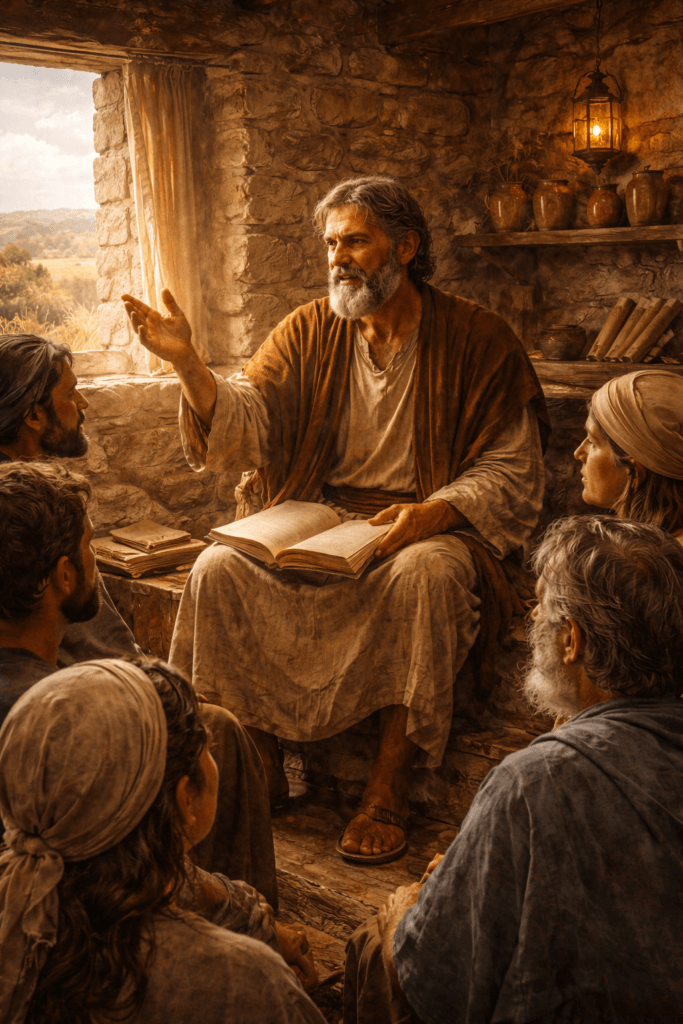
Titus — Sound Doctrine, Steady Leadership, and a Life That Reflects Grace
Order in the Church, Integrity in the World
Introduction
Welcome to the Titus Study Hub — a pastoral instruction on order, leadership, and visible transformation.
Paul writes to Titus, his trusted co-worker, who has been left in Crete to strengthen and establish the church.
Crete was known for instability, immorality, and deception. The culture was inconsistent.
Truth was often compromised.
The church needed structure. It needed leadership. It needed clarity.
Titus is written to:
• Establish godly leadership
• Protect sound doctrine
• Confront false teaching
• Shape visible integrity
• Reveal how grace transforms behaviour
This letter is not theoretical. It is practical.
It reveals that belief and behaviour are connected.
Sound doctrine produces steady living. Grace produces visible change. Leadership protects health.
Titus reminds us: The gospel does not merely save privately. It shapes publicly.
Christ did not redeem us to remain disordered. He redeemed us to reflect Him.
Titus 1 — Appointing Leaders and Protecting Truth
Character Matters in the House of God
Summary
Paul begins by affirming his apostolic calling — grounded in the faith of God’s elect and the knowledge of truth that leads to godliness.
Truth is not abstract. It produces transformation.
Paul reminds Titus why he was left in Crete: To set in order what remains. To appoint elders in every town.
Leadership is not optional. It stabilises community.
Paul outlines qualifications for elders:
• Blameless in character
• Faithful in family
• Self-controlled
• Upright
• Hospitable
• Not arrogant or quick-tempered
• Not greedy for gain
• Holding firmly to sound doctrine
Why? Because leaders must both encourage through truth and refute those who distort it.
False teachers were upsetting households. They spoke for financial gain. They distorted grace.
Paul does not soften the issue.
Truth must be protected. Leadership must be anchored in character.
Grace must not be twisted into permission.
He quotes a cultural proverb about Cretans being unreliable — then affirms that correction is necessary so believers may become sound in faith.
The chapter ends with a sobering statement: “They claim to know God, but by their actions they deny Him.”
Knowledge without transformation is incomplete.
Chapter 1 anchors this truth: Sound doctrine produces sound living.
Key Identity Realities
| Truth | Identity Proclamation |
|---|---|
| Truth Leads to Godliness | My belief shapes my behaviour. |
| Leadership Is Sacred | Character matters in God’s house. |
| Integrity Reflects the Gospel | My life visibly represents Christ. |
| Grace Does Not Excuse Disorder | I am transformed, not tolerated. |
| Correction Protects Health | Loving confrontation strengthens faith. |
| I Am Called to Soundness | Stability marks my walk with God. |
| Knowing God Produces Change | My faith is lived, not claimed. |
| Order Reflects Honour | Structure supports spiritual growth. |
Encouragement
Sister, grace is not fragile. It does not collapse under accountability. It flourishes within it.
You are not called to merely claim Christ. You are called to reflect Him.
Character is not legalism. It is alignment.
Sound doctrine stabilises your heart. Integrity strengthens your influence. Order protects your growth.
Do not fear correction. It is not condemnation. It is cultivation.
Your life matters. Your consistency matters. Your leadership — whether public or private — matters.
Grace trains. Grace strengthens. Grace transforms.
And truth produces beauty in behaviour.
Reflection Questions
- Is there alignment between what I believe and how I live?
- Where might God be refining my character?
- Do I view correction as threat or protection?
- How does integrity influence those around me?
- What does “holding firmly to sound doctrine” look like in my daily rhythms?
Titus 2 — Grace That Trains and Hope That Shapes
Sound Doctrine Made Visible
Summary
Titus 2 moves from appointing leaders to shaping daily life.
Paul instructs Titus: “Teach what is consistent with sound doctrine.”
Truth is not merely believed. It is lived.
Paul speaks to different groups within the church:
• Older men — self-controlled, worthy of respect, steady in faith
• Older women — reverent in behaviour, teachers of what is good
• Younger women — loving, faithful, wise in conduct
• Younger men — disciplined and self-controlled
• Titus himself — an example of integrity, dignity, and sincerity
• Bondservants — trustworthy, faithful, honourable
Why such practical instruction? Because the gospel is meant to be visible.
Our lives either:
• Honour the Word
• Silence accusation
• Make the gospel attractive
Or they distort it.
Then Paul anchors everything in one of the most powerful grace statements in the New Testament:
“The grace of God has appeared… teaching us to say ‘No’ to ungodliness and worldly passions, and to live self-controlled, upright, and godly lives in this present age.”
Grace is not permission. Grace is power.
Grace trains. Grace disciplines. Grace transforms desire.
And we live this way while waiting for: “The blessed hope — the appearing of the glory of our great God and Saviour, Jesus Christ.”
Christ gave Himself:
• To redeem us
• To purify us
• To make us His own
• To form a people eager to do good
Titus 2 reveals: Grace does not lower the standard. Grace empowers you to live it.
Key Identity Realities
| Truth | Identity Proclamation |
|---|---|
| Sound Doctrine Produces Visible Fruit | My life reflects what I believe. |
| Grace Is a Teacher | I am being trained by divine empowerment. |
| Self-Control Is Spirit-Enabled | Discipline flows from transformation. |
| Every Season Has Purpose | My age and stage matter in God’s design. |
| Integrity Protects the Gospel | My conduct can honour Christ publicly. |
| I Am Redeemed and Purified | I belong to Him completely. |
| Hope Shapes Behaviour | I live responsibly while I wait. |
| I Am Eager for Good Works | Grace awakens purposeful action in me. |
Encouragement
Sister, grace is not soft. It is strong enough to reshape your instincts. Strong enough to reorder your desires. Strong enough to stabilise your conduct.
You are not striving to behave better to earn love. You are responding to love that has already redeemed you.
Christ purified you not only from sin — but for purpose.
Self-control is not restriction. It is strength under direction.
Hope is not escapism. It is clarity about what matters now.
You are part of a redeemed people. You are being trained by grace. You are being formed into visible beauty.
Let your life make the gospel believable.
Not forced. Not pressured. But transformed.
Reflection Questions
- Where is grace currently teaching me to say “No”?
- In what areas is God shaping self-control in me?
- Does my conduct make the gospel clearer to those around me?
- How does hope in Christ’s return influence my priorities today?
- What good works is grace stirring me to pursue eagerly?
Titus 3 — Saved by Mercy, Renewed by the Spirit
Grace That Restores and Produces Good Works
Summary
Titus 3 moves from visible behaviour to the foundation beneath it.
Paul reminds believers to:
• Be subject to authorities
• Be ready for every good work
• Speak evil of no one
• Avoid quarrelling
• Be gentle
• Show humility toward all people
Why? Because we were once the same. Paul does not allow superiority.
“We ourselves were once foolish, disobedient, deceived…”
Transformation begins with remembering mercy.
Then comes one of the most powerful gospel declarations in Scripture:
“When the kindness and love of God our Saviour appeared, He saved us — not because of righteous things we had done, but because of His mercy.”
Salvation is not earned. It is mercy.
We are saved:
• Through the washing of rebirth
• Through renewal by the Holy Spirit
• Poured out generously through Jesus Christ
We are justified by grace. We become heirs with the hope of eternal life.
And then the thread returns: Those who trust in God should be careful to devote themselves to good works.
Good works are not the cause of salvation. They are the fruit of it.
Paul closes with practical wisdom: Avoid foolish controversies. Reject divisive behaviour. Grace produces unity.
Titus 3 anchors everything: Mercy is the source. Renewal is the process. Good works are the overflow.
Key Identity Realities
| Truth | Identity Proclamation |
|---|---|
| I Was Once Lost | I remember mercy and reject pride. |
| Salvation Is Mercy | I am saved by grace, not performance. |
| I Am Washed and Renewed | The Spirit is actively transforming me. |
| Justified by Grace | My standing is secure in Christ. |
| I Am an Heir | My future is anchored in hope. |
| Good Works Flow From Salvation | I live purposefully because I am redeemed. |
| Kindness Reflects the Gospel | Gentleness displays transformation. |
| Unity Protects Health | I reject division and pursue peace. |
Encouragement
Sister, never forget where you came from. Not to relive shame. But to magnify mercy.
You were not rescued because you performed well. You were not justified because you tried harder. You were saved because kindness appeared.
The kindness and love of God stepped into your story.
You were washed. You were renewed. You were justified. You were made an heir.
Mercy is your foundation. So do not grow proud. Do not grow harsh. Do not grow argumentative.
Gentleness reflects gratitude. Good works are not pressure. They are overflow.
When you live kindly, when you refuse division, when you choose humility, when you remain steady — you are displaying renewal.
The Spirit is not finished with you. He is actively shaping you.
And the same mercy that saved you sustains you.
You are not striving. You are responding.
Saved by mercy. Renewed by grace. Devoted to what is good.
Reflection Questions
- Do I regularly remember that my salvation began with mercy, not merit?
- Is there any area where pride has replaced gratitude?
- How does understanding renewal by the Spirit change how I view my growth process?
- Am I devoted to good works from pressure — or from joyful overflow?
- Is there any divisiveness, argument, or harshness I need to release in order to protect unity?
Completion Note — Grace That Trains and Mercy That Restores
From leadership to lifestyle, from doctrine to daily conduct, from structure to Spirit-renewal, the letter to Titus reveals one stabilising truth: Grace does not leave you as you were.
Titus begins with order — qualified leaders, sound doctrine, integrity in God’s house.
But it does not end with structure. It ends with mercy.
We are reminded that truth is not abstract. It produces godliness.
Grace is not passive. It trains.
Hope is not escapism. It shapes behaviour.
And salvation is not earned. It is mercy.
“You were once foolish… but when the kindness and love of God appeared, He saved you.”
Titus guards the church from two extremes: Disorder without accountability. Legalism without grace.
Instead, it presents a steady path: Sound leadership. Visible integrity. Grace-shaped living. Spirit-led renewal. Devotion to good works.
Through Christ we see the fullness of this letter:
Redeemed. Purified. Renewed. Justified. Made heirs.
You were not rescued into chaos. You were restored into purpose.
You were not forgiven to remain unchanged. You were renewed to reflect Him.
Grace trains you. Mercy anchors you. Hope steadies you. The Spirit renews you.
And good works flow — not from pressure, but from transformation.
At the heart of Titus stands this beautiful assurance: You are saved by mercy. You are being renewed by the Spirit. You are called to live visibly transformed.
Grace has appeared. Grace is training you. Grace will complete what it began.
And your life, shaped by mercy, becomes a testimony of His kindness.
Titus — Overall Summary
1. Big-Picture Summary
Titus is a letter about order, character, and visible transformation.
It declares that: Grace does not produce disorder — it produces godliness.
The Lord establishes leadership. The Lord trains through grace. The Lord redeems for good works. The Lord restores by mercy.
While Crete was unstable and morally compromised, Paul calls the church to clarity, structure, and integrity.
The book moves through:
• Establishing qualified leadership
• Protecting sound doctrine
• Teaching grace-shaped living
• Training believers across life stages
• Grounding behaviour in mercy and renewal
Titus teaches us that: Grace is not passive forgiveness — it is active transformation.
For the unstable, it brings order. For the immature, it brings training. For the proud, it brings mercy.
At its core stands this steady truth:
“He saved us — not because of righteous things we had done, but because of His mercy.”
2. Chapter-by-Chapter Summary
| Chapter | Summary |
|---|---|
| 1 | Leaders must be established in character and doctrine. Truth must be protected. Knowing God must result in visible integrity. |
| 2 | Grace trains believers in every life stage. Sound doctrine produces godly behaviour while we wait for Christ’s appearing. |
| 3 | Salvation is rooted in mercy and renewal by the Spirit. Good works flow from grace, not performance. Unity and gentleness reflect transformation. |
3. Major Movements
| Movement | Focus | Transformation Thread |
|---|---|---|
| Establishing Order | Leadership and structure | Stability protects growth |
| Training by Grace | Visible godliness | Grace empowers discipline |
| Rooted in Mercy | Salvation by renewal | Identity produces good works |
| Visible Integrity | Conduct honours Christ | Belief shapes behaviour |
| Guarding Unity | Avoiding division | Grace preserves community |
Titus moves from order → training → renewal → visible fruit → unity.
4. Key Themes and Identity Lessons
| Theme | Identity Lesson |
|---|---|
| Leadership Requires Character | Integrity strengthens influence. |
| Truth Leads to Godliness | Doctrine shapes daily living. |
| Grace Is a Teacher | I am being trained, not merely forgiven. |
| Hope Motivates Holiness | Expectation shapes behaviour. |
| Salvation Is Mercy | My identity is secure in grace. |
| Renewal Is Ongoing | The Spirit continues transforming me. |
| Good Works Are Fruit | I live purposefully because I am redeemed. |
| Unity Protects Health | Division weakens witness. |
5. Encouragement
Sister, Titus is steady. It reminds you that grace is not chaotic. Grace is formative.
You are not saved into disorder. You are redeemed into purpose.
Character matters. Integrity matters. Gentleness matters. Good works matter.
Not because you are striving to earn love — but because you are living from mercy.
You were washed. You were renewed. You were justified. You are an heir.
So live visibly. Live gently. Live purposefully.
Grace has appeared. Grace is training you. Grace is producing beauty in behaviour.
And mercy is the foundation beneath it all.
6. Reflection Questions
- Do I see grace as empowerment or merely forgiveness?
- Where is the Spirit currently renewing my thinking or behaviour?
- Does my life reflect the mercy I have received?
- Am I devoted to good works as an overflow of gratitude?
- How can I protect unity and stability within my community?