
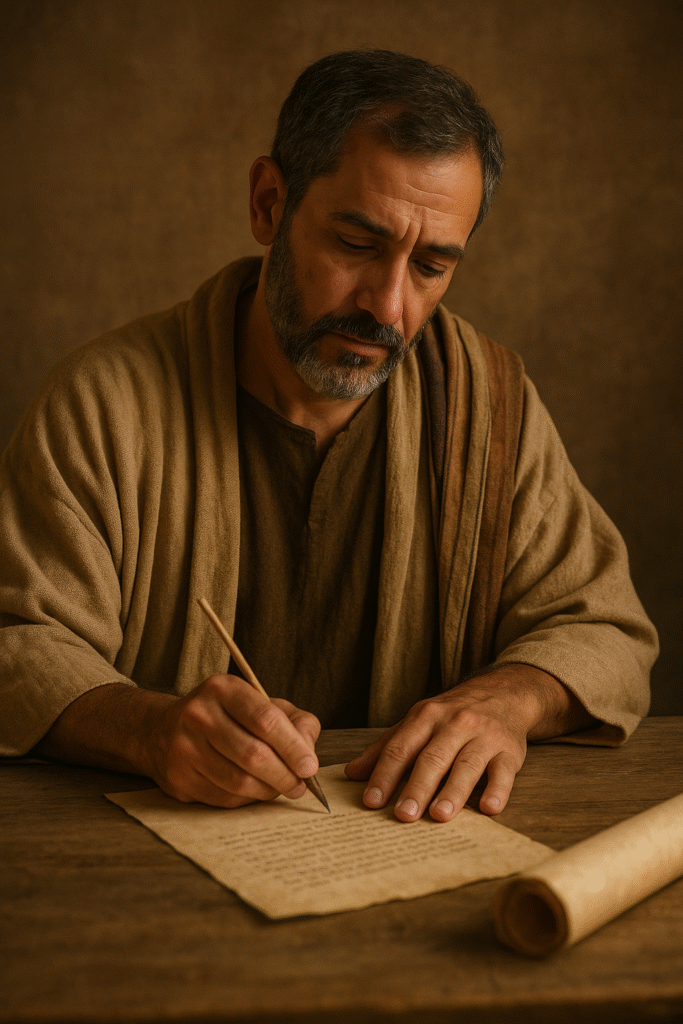
Philemon Study – Full Set (Single Chapter)
Forgiveness, Reconciliation, and Gospel Relationships
1. Summary of the Chapter
Paul writes a personal letter to Philemon regarding Onesimus, a runaway slave who has since become a believer through Paul’s ministry. Paul appeals to Philemon to receive Onesimus back not as a slave but as a beloved brother in Christ. Paul offers to cover any wrong or debt Onesimus owes and appeals on the basis of love rather than command. He closes with confidence that Philemon will do even more than asked, and he sends greetings from his companions.
2. Key Themes and Lessons
| Theme | Lesson |
|---|---|
| Power of the Gospel | The gospel transforms relationships and identities. |
| Appeal of Love | True Christian influence comes through love, not coercion. |
| Forgiveness and Reconciliation | In Christ, broken relationships can be restored. |
| Equality in Christ | Social and earthly divisions are overcome in spiritual family. |
| Living the Gospel | Faith is shown by how we treat others with grace and mercy. |
3. Encouragement
Paul could have commanded Philemon, but instead he appealed in love—because love is the gospel.
Onesimus wasn’t just a runaway—he was now a brother in Christ.
That’s what grace does—it changes identity, it restores what was broken.
And Paul said, ‘If he owes you anything, put it on my account.’
That’s Christ in action—He took what we owed and paid it in full.
Sister, that’s how you live too. You don’t just forgive—you restore.
You don’t see people for what they’ve done—you see them for who they are in Him.
That’s the gospel alive in relationships.
4. Reflection Questions
- How does the gospel call me to see others differently, beyond social or worldly labels?
- Where is God asking me to appeal in love rather than demand my way?
- Who in my life needs forgiveness and reconciliation, and how can I extend it?
- How does Paul’s willingness to “cover the debt” point me to Christ’s work for me?
- How can I live out the gospel more fully in my relationships today?
Overall Summary of Philemon
1. Big-Picture Summary
Philemon is Paul’s shortest and most personal letter, written to a Christian leader named Philemon about his runaway slave, Onesimus. After meeting Paul and becoming a believer, Onesimus was no longer to be treated as a slave but as a brother in Christ.
Instead of commanding Philemon, Paul appeals on the basis of love, urging forgiveness, reconciliation, and a transformed relationship rooted in the gospel. He even offers to pay any debt Onesimus owes, pointing to Christ’s work of paying our debt before God.
Philemon is a beautiful picture of how the gospel reshapes relationships—turning division into unity, slavery into brotherhood, and debt into grace.
2. Major Movements
- Greeting and Thanksgiving (vv. 1–7): Paul commends Philemon’s love and faith.
- Paul’s Appeal (vv. 8–16): Receive Onesimus not as a slave but as a brother.
- Offer to Pay the Debt (vv. 17–21): Paul models Christ’s sacrificial love.
- Closing Greetings (vv. 22–25): Fellowship and blessing in the Lord.
3. Key Themes and Lessons
| Theme | Lesson |
|---|---|
| Gospel Transformation | The gospel changes identities and relationships. |
| Love over Command | True Christian influence appeals through love, not force. |
| Forgiveness and Reconciliation | Christ’s love restores what was broken. |
| Equality in Christ | In the family of God, social barriers fall away. |
| Substitution and Grace | Paul covering Onesimus’s debt mirrors Christ’s sacrifice. |
4. Encouragement
Philemon shows the gospel in action—it’s not just about words, it’s about lives transformed.
Onesimus ran away a slave, but came back a brother. That’s what grace does.
And Paul says, ‘If he owes anything, put it on me.’
That’s Jesus right there—He took your debt, paid it in full, and gave you His life.
Sister, that’s how you now see others. Not for their past, not for their mistakes, but for their value in Him.
The gospel doesn’t just reconcile you to God—it reconciles you to people.
Live in that love, and let your relationships preach Christ.
5. Reflection Questions
- How does the gospel reshape the way I see and treat others in my life?
- Where do I need to choose love over demanding my own way?
- Who in my relationships needs forgiveness and reconciliation from me?
- How does Christ’s payment of my debt inspire me to extend grace to others?
- What would it look like for my relationships to become living pictures of the gospel?