
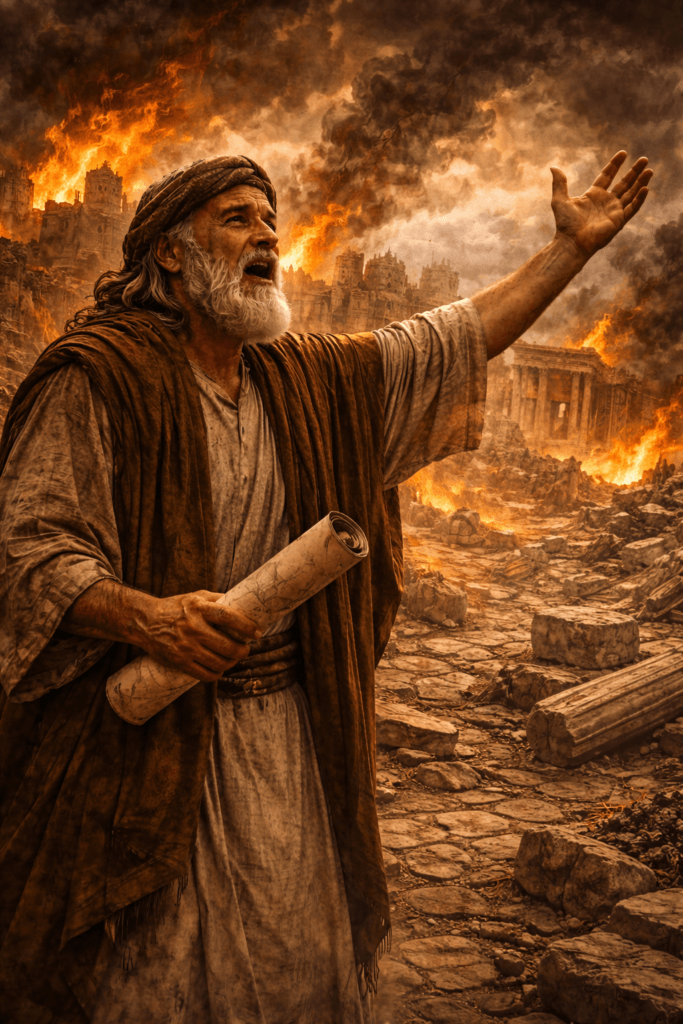
Nahum — The Lord Is Just, Jealous for His People, and Sovereign Over Nations
The Fall of Oppression and the Assurance of Refuge
Introduction
Welcome to the Nahum Study Hub — a prophetic declaration against Nineveh, the capital of Assyria.
If Jonah revealed Nineveh’s repentance, Nahum reveals Nineveh’s return to corruption and its eventual downfall.
This book is not merely about ancient cities. It is about justice.
Assyria had become brutal, violent, and oppressive. They terrorised nations. They crushed the vulnerable.
Nahum proclaims: God has seen. God will act. God will restore.
It reveals what happens when:
• Arrogance exalts itself
• Oppression becomes systemic
• Violence goes unchecked
• Divine patience reaches its limit
• Justice intervenes
Nahum is fierce — but it is protective.
It reminds God’s people: Your oppressor is not sovereign. The Lord is.
Nahum 1 — The Character of God: Justice and Refuge
Summary
Nahum opens with a powerful declaration: “The Lord is a jealous and avenging God.”
He is slow to anger. Great in power. He will not leave the guilty unpunished.
Storm and whirlwind describe His authority. Mountains quake. The earth trembles.
Yet in the middle of intensity comes comfort: “The Lord is good, a refuge in times of trouble.”
This dual revelation stabilises the heart. Justice and refuge coexist.
Nineveh will fall. God’s people will be freed.
Key Identity Realities
| Truth | Identity Proclamation |
|---|---|
| God Is Just | I trust His righteous judgment. |
| God Is Slow to Anger | Patience is part of His mercy. |
| God Does Not Ignore Evil | Injustice is never overlooked. |
| God Is My Refuge | I am sheltered in His strength. |
| Divine Jealousy Protects Covenant | He fiercely guards what belongs to Him. |
| Sovereignty Is Unshaken | Storms do not dethrone Him. |
| Justice and Goodness Coexist | His power does not cancel His compassion. |
| Refuge Is Personal | He cares for those who trust Him. |
Encouragement
Sister, do not fear God’s justice. It protects you.
If injustice has touched your life, remember: He sees. He defends. He restores.
The Lord is not passive. He is powerful. And He is good.
Reflection Questions
- Do I see God’s justice as protective or threatening?
- Where do I need to trust Him as refuge?
- Have I confused patience with indifference?
- What does it mean that God is jealous for His honour?
- How does knowing He defends covenant bring stability?
Nahum 2 — The Collapse of Arrogance
Summary
The siege of Nineveh is described vividly. Shields flash red. Chariots race. Gates collapse. Panic spreads.
The once-mighty lion (symbol of Assyria) is silenced. Power evaporates.
Fortresses fail. Wealth is plundered. Confidence dissolves.
Nahum reveals: Strength without righteousness cannot endure.
Key Identity Realities
| Truth | Identity Proclamation |
|---|---|
| Pride Falls | Exaltation without righteousness cannot endure. |
| Earthly Power Is Temporary | No empire is ultimate. |
| Corrupt Strength Weakens | Power without integrity collapses. |
| Fear Is Not Final | What intimidates today may fall tomorrow. |
| God Governs Nations | History answers to Him. |
| False Security Fails | Fortresses cannot replace righteousness. |
| Violence Reaps Consequence | Cruelty carries return. |
| Stability Is Found in God Alone | My confidence is not in systems. |
Encouragement
Sister, no arrogant system is permanent. What looks invincible may already be trembling.
Do not envy the powerful who lack integrity. Pride cannot stand.
Reflection Questions
- Have I ever envied success without righteousness?
- Where might pride be quietly forming in my own heart?
- Do I trust that corrupt systems eventually collapse?
- How do I respond when power intimidates me?
- What does true strength look like?
Nahum 3 — The End of Oppression
Summary
Nineveh’s violence is exposed: Lies. Plunder. Bloodshed. Cruelty. The imagery is graphic.
Their sorcery and manipulation are uncovered.
Other nations mock their fall. No one grieves. The wound is fatal. Oppression ends.
Nahum closes without restoration for Nineveh. Judgment is final.
Key Identity Realities
| Truth | Identity Proclamation |
|---|---|
| Oppression Is Seen | My suffering is not invisible to God. |
| Justice Brings Closure | Evil does not reign indefinitely. |
| Manipulation Is Exposed | Hidden corruption is uncovered. |
| Judgment Can Be Final | Persistent rebellion has consequence. |
| I Am Not Called to Avenge | Justice belongs to the Lord. |
| Bitterness Is Not My Burden | I can release retaliation to Him. |
| God Restores Peace | Oppression does not have the final word. |
| The Lord Reigns | Sovereignty outlasts cruelty. |
Encouragement
Sister, this chapter is heavy — but it carries relief. God does not ignore cruelty forever.
If you have endured injustice, know this: Your story is not forgotten.
Justice may delay — but it will not disappear.
Reflection Questions
- Where do I need to release my desire for personal vengeance?
- How does divine justice free me from carrying bitterness?
- Do I believe oppression truly ends?
- Where do I need to trust God’s timing?
- What does living from refuge look like today?
Completion Note — The Lord Reigns
Nahum is not about revenge. It is about justice.
It reveals a God who is: Powerful. Patient. Protective. Righteous.
Nineveh falls. Empires crumble. Oppression ends.
But this remains steady: “The Lord is good, a refuge in times of trouble.”
Justice is not cruelty. It is protection.
For the proud, Nahum is sobering. For the faithful, it is stabilising.
You do not need to fight for supremacy. You do not need to avenge injustice.
The Lord reigns. And He defends His people.
1. Big-Picture Summary
Nahum is a prophecy of judgment against Nineveh.
It declares that: God is slow to anger — but He will not leave the guilty unpunished.
The Lord is jealous for His honour and protective of His covenant.
While Nineveh trusted in military power and fortified walls, God declares their downfall certain.
The book moves through:
• The character of God
• The certainty of judgment
• The vivid imagery of collapse
• The relief of God’s people
Nahum teaches us that: Justice may delay, but it does not disappear.
For the arrogant, it is terrifying. For the oppressed, it is relief.
At its core stands this steady truth:
“The Lord is good, a refuge in times of trouble. He cares for those who trust in Him.”
2. Chapter-by-Chapter Summary
| Chapter | Summary |
|---|---|
| 1 | Nahum describes the character of God — jealous, avenging, powerful, yet good and a refuge for those who trust Him. Nineveh’s downfall is declared. |
| 2 | The siege and destruction of Nineveh are vividly portrayed. The once-mighty empire collapses. |
| 3 | Nineveh’s violence and cruelty are exposed. The city is mocked in its fall. No one mourns its destruction. Justice is final. |
3. Major Movements
| Movement | Focus | Transformation Thread |
|---|---|---|
| The Character of God | Justice and refuge | God is both powerful and protective |
| The Fall of Arrogance | Military collapse | Pride cannot stand |
| The End of Oppression | Exposure of cruelty | Violence reaps consequence |
Nahum moves from revelation → confrontation → completion.
4. Key Themes and Identity Lessons
| Theme | Identity Lesson |
|---|---|
| God Is Jealous for Justice | He defends what belongs to Him. |
| Divine Patience Has Limits | Mercy is not endless tolerance. |
| Pride Falls | Arrogance collapses under judgment. |
| Oppression Is Seen | No injustice is invisible to God. |
| Refuge Is Available | Those who trust are sheltered. |
| Sovereignty Over Nations | Empires rise and fall under God’s authority. |
| Violence Reaps Consequence | What is sown in cruelty returns. |
| Relief Follows Judgment | Justice restores peace for the faithful. |
5. Encouragement
Sister, Nahum may feel intense — but it is deeply stabilising.
If you have ever watched injustice prosper, if you have seen cruelty go unchecked, if you have felt powerless under arrogant systems — Nahum speaks comfort.
God is not indifferent.
He is patient — not passive. He is powerful — not absent. He is just — not delayed beyond purpose.
You are not responsible to correct history. You are called to trust the One who governs it.
Release vengeance. Release anxiety. Release comparison. The Lord is your refuge.
What looks invincible today may already be trembling.
Justice may feel slow — but it is certain.
The Lord reigns. And He cares for those who trust Him.
6. Reflection Questions
- Where have I felt burdened by injustice that I need to release to God?
- Do I truly believe that God addresses corruption in His timing?
- Have I ever envied the success of those who lack integrity?
- What does it mean for me personally that God is my refuge?
- How can trusting His justice free me from bitterness or fear?