
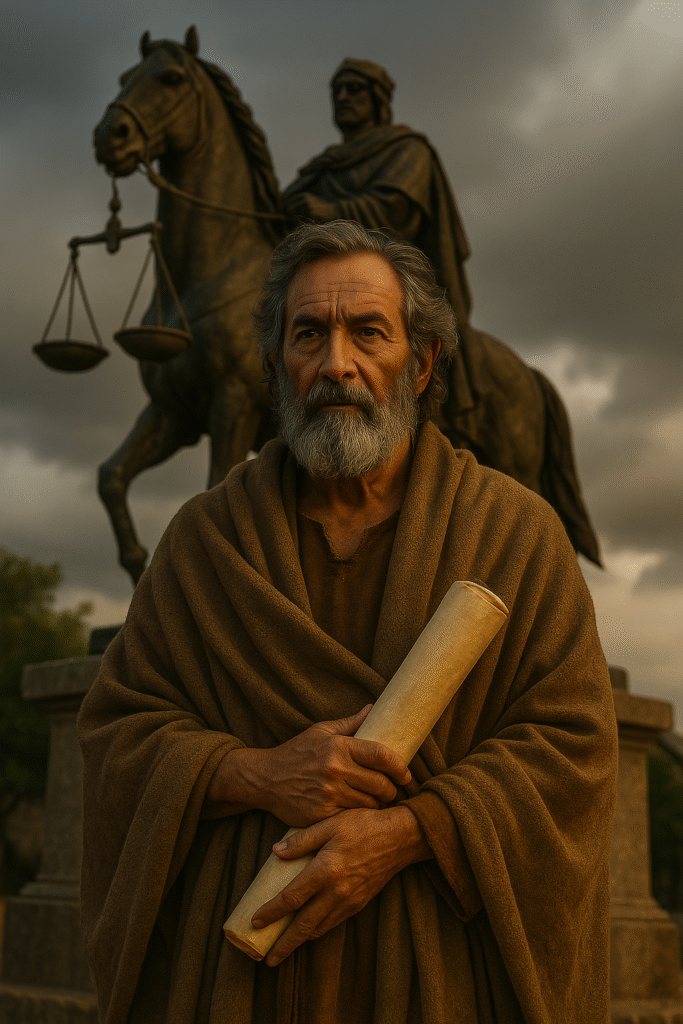
Book of Micah – Set 1 (Chapters 1–3)
Theme: Judgment Against Injustice and Corrupt Leadership — God Exposes Sin Before He Restores
1. Summary of the Chapters
Chapter 1 – God Comes to Judge Samaria and Judah
Micah begins with a dramatic vision of the Lord descending from His holy temple to judge the earth. The mountains melt beneath Him — His presence is unstoppable.
- Samaria (capital of Israel) will be destroyed for idolatry and immorality.
- Judah (southern kingdom) is warned that judgment is coming to her gates as well.
Micah weeps over the coming destruction, showing that prophetic judgment is not cold condemnation — it is shared grief from the heart of God.
Chapter 2 – Woe to the Oppressors
Micah confronts those who:
- Plot evil in their beds,
- Seize land from the poor,
- Take advantage of the powerless.
God declares:
“Woe to those who plan iniquity… when morning’s light comes, they carry it out because it is in their power.” (2:1)
False prophets rise up, telling people only what they want to hear — promising peace while ignoring sin.
Yet the chapter ends with a beautiful promise:
God will one day gather the remnant like sheep and lead them out with the Lord at their head.
Chapter 3 – Judgment on Corrupt Leaders
Micah directly charges Israel’s leaders and prophets:
- Leaders who tear apart God’s people for their own gain.
- Priests who teach only for money.
- Prophets who prophesy good if they are paid, and disaster if not.
These leaders exploit instead of defend; they consume the flock they were called to shepherd.
“They build Zion with bloodshed.” (3:10)
But God declares that because of them, Jerusalem will be plowed like a field, the temple destroyed — a prophecy later fulfilled in 586 BC.
2. Key Themes and Lessons
| Theme | Lesson |
|---|---|
| God’s Justice Against Sin | God will not ignore corruption, greed, or injustice among His people. |
| Judgment Begins with God’s House | Leaders who mislead God’s flock will be held to account. |
| False Security is Dangerous | Religious appearance cannot protect those whose hearts are far from God. |
| The Compassion of the Prophet | True prophecy weeps over judgment — it speaks truth with God’s heart. |
| The Hope of a Remnant | Even in judgment, God promises to gather a remnant under His leadership. |
3. Encouragement
Oh, this is such a wake-up call! Micah is not angry — he is heartbroken.
God isn’t exposing sin to shame His people, but to heal them. You can’t restore what you won’t reveal.
He sees people using power to benefit themselves instead of serving others.
And God says, ‘That’s not My heart. You are called to reflect Me.’
Come on — leadership in God’s Kingdom is never about control; it’s about compassion.
Never about taking; always about giving.
When leaders distort that, God steps in — because His people are precious to Him!
But don’t miss the hope at the end of chapter 2.
God says, ‘I will gather the remnant. I Myself will go before them.’ That’s Jesus!
Even in judgment, God is pointing to restoration.
So what’s the takeaway?
God exposes what is broken in order to bring us into freedom.
He doesn’t just want a people who appear religious —
He wants a people whose hearts reflect His justice, mercy, and love.”
4. Reflection Questions
- Are there areas in my life where I am acting in self-interest instead of God’s love and justice?
- How do I respond when God exposes sin — with defensiveness, or with repentance that leads to freedom?
- Do I use my influence (in family, ministry, community) to serve others or to serve myself?
- What does it look like for Jesus, the true Shepherd, to lead my life today?
- How can I position myself among the remnant — those who humbly follow God’s heart in times of shaking?
Book of Micah – Set 2 (Chapters 4–5)
Theme: The Coming Kingdom of God and the Promised Messiah
1. Summary of the Chapters
Chapter 4 – The Mountain of the Lord and the Reign of Peace
Micah gives a breathtaking vision of the future:
- In the last days, the mountain of the Lord’s house will be established above all nations.
- People from every nation will stream to it, saying: “Teach us His ways, so that we may walk in His paths.” (4:2)
From Jerusalem:
- The law will go forth
- The Lord Himself will judge between many peoples
- Weapons will be turned into tools of peace “Nation will not take up sword against nation, nor will they train for war anymore.” (4:3)
This chapter also speaks of a time when God will gather the lame, the exiled, and the afflicted — and make them a strong nation under His eternal kingship.
Chapter 5 – The Promise of the Ruler from Bethlehem
This is one of the most important Messianic prophecies in Scripture:
“But you, Bethlehem Ephrathah… out of you will come for Me one who will be ruler over Israel, whose origins are from old, from ancient times.” (5:2)
This ruler is:
- Born in Bethlehem (fulfilled in Jesus)
- Of eternal origin (divine nature)
- Shepherd and King over His people
- Brings peace and security from enemy nations
Even though Israel will face hardship and exile, God promises a coming Deliverer who will shepherd His flock in the strength of the Lord.
2. Key Themes and Lessons
| Theme | Lesson |
|---|---|
| The Reign of the Messiah | God promises a future King who will bring justice, peace, and eternal rule — fulfilled in Jesus Christ. |
| Universal Worship of God | All nations will seek the Lord; His Kingdom is global, not limited to Israel. |
| Peace and Restoration | God will end warfare and restore the broken and exiled to a place of strength. |
| The Humble Birth of the King | God chooses the lowly town of Bethlehem — highlighting the humility of His plan. |
| Hope Beyond Judgment | Even in times of discipline, God’s promises stand firm; His ultimate plan is restoration and peace. |
3. Encouragement
Oh, this is amazing! Micah just finished declaring judgment — and now he lifts our eyes to Jesus!
It’s like God is saying, ‘Yes, I am dealing with injustice now, but look ahead — a King is coming!’
And this isn’t just any king. This is the Shepherd-King, the One whose origins are from eternity.
That’s why we know it’s talking about Christ.
Think about it — Bethlehem, a tiny, insignificant town.
God doesn’t choose the impressive or the proud. He chooses the humble. Why?
Because His Kingdom is not built on man’s strength, but on God’s love.
Micah sees a day when nations stop fighting… when swords become plowshares… when people dwell in peace under the reign of Jesus Himself.
And don’t miss this: God says He will gather the lame, the broken, the rejected — and make them a strong nation.
Come on! That’s redemption! That’s God’s heart!
So what’s the message? Judgment is temporary — the Kingdom is eternal.
Chaos may fill the earth now — but the King is coming, and His Kingdom will have no end.
And guess what? If you’re in Christ, you are already part of that Kingdom!
4. Reflection Questions
- Do I live daily with the awareness that Jesus is not just my Saviour, but my King?
- How does the promise of Christ’s eternal Kingdom shape the way I view current world events?
- Do I find hope in knowing God gathers the broken and makes them strong?
- In what ways can I live as an ambassador of Christ’s peace and justice today?
- How does the humility of Christ’s birth in Bethlehem inspire me to value humility in my own life?
Book of Micah – Set 3 (Chapters 6–7)
Theme: God’s Righteous Charge, True Religion, and the Triumph of His Mercy
1. Summary of the Chapters
Chapter 6 – God’s Case Against Israel and the Call to True Religion
God speaks like a judge calling the mountains as witnesses. He asks His people, “What have I done to burden you?” reminding them of His faithfulness in delivering them from Egypt.
The people respond by asking what they must offer — burnt offerings? Thousands of rams? Firstborn children?
God answers with one of the clearest statements of true faith:
“He has shown you, O man, what is good;
and what does the Lord require of you
but to do justice, love mercy,
and walk humbly with your God?” (6:8)
God then condemns their dishonesty, violence, and deceit, declaring that consequences will follow.
Chapter 7 – The Prophet’s Lament and God’s Final Victory
Micah laments the moral decay around him—there is corruption everywhere, even in families. But then he makes a declaration of unshakable faith:
“But as for me, I watch in hope for the Lord,
I wait for God my Saviour;
my God will hear me.” (7:7)
Israel will fall because of sin, but will rise because of God’s mercy.
Micah looks ahead to a day when:
- God will shepherd His people again,
- The nations will be humbled,
- God will display wonders like He did in Egypt.
The book ends with one of the greatest declarations of God’s character:
“Who is a God like You,
who pardons sin
and forgives transgression…
You do not stay angry forever
but delight to show mercy.” (7:18)
“You will again have compassion on us;
You will tread our sins underfoot
and hurl all our iniquities into the depths of the sea.” (7:19)
This is restoration, forgiveness, and covenant love on full display.
2. Key Themes and Lessons
| Theme | Lesson |
|---|---|
| True Worship | God desires justice, mercy, and humility more than outward rituals. |
| God’s Faithfulness | Even when God’s people are unfaithful, He remains steadfast to His covenant promises. |
| Personal Trust in God | In a corrupt world, the righteous choose to wait on God with hope. |
| The Triumph of Mercy | God delights in showing mercy and casting sins away forever. |
| Restoration Through Grace | The final destiny of God’s people is not judgment, but restoration and peace through His love. |
3. Encouragement
Oh, this is powerful! Micah just showed us the entire heart of God in two chapters.
In chapter 6, God says, ‘Stop trying to impress Me with offerings—give Me your heart!’ You can bring sacrifices all day long, but He’s after something deeper: a life that reflects His nature. Justice, mercy, humility—that’s what love looks like when it’s lived.
Then chapter 7—wow! Micah looks around and sees darkness everywhere, but he refuses to be discouraged. ‘As for me, I will wait on the Lord; my God will hear me.’ That’s faith! That’s what it looks like to live by promise, not by sight.
And then it ends with this incredible truth: God doesn’t just forgive—He delights in mercy. He throws our sins into the depths of the sea. Come on! That means God is not holding your past over your head. He’s not tolerating you—He loves you, He chose you, and He celebrates restoring you.
Micah shows us that yes, God must confront sin—but His final word is always mercy, covenant, and love. That’s the God we serve!”
4. Reflection Questions
- Am I living out true worship—expressed in justice, mercy, and humility—or am I relying on outward religious acts?
- When I look at the world’s corruption, do I respond with despair or with Micah’s declaration: “My God will hear me”?
- Do I believe that God truly delights in showing me mercy?
- How can I reflect God’s heart of compassion to those who least deserve it?
- What does it look like for me to wait on the Lord with confident hope in this season?
Overview of the Book of Micah
Theme: From Judgment to Hope — The God Who Confronts Injustice and Restores His People Through the Messiah
1. Summary of the Book
The Book of Micah is a powerful prophetic message delivered during a time of great corruption in both Israel (the northern kingdom) and Judah (the southern kingdom). Social injustice, oppression of the poor, idolatry, and corrupt leadership had become widespread. Yet in the midst of stern warnings, Micah delivers some of the clearest prophecies of the coming Messiah and the future Kingdom of God.
Micah has three major movements:
- Judgment on sin — God confronts idolatry, injustice, and corruption (Chapters 1–3).
- Hope through the coming Kingdom and Messiah — promises of peace, restoration, and the Messiah born in Bethlehem (Chapters 4–5).
- God’s final plea and promise of mercy — a call to true worship and a prophetic declaration of God’s unfailing love (Chapters 6–7).
Micah reveals a God who must judge sin because He is righteous, yet who delights in mercy because He is love.
2. Key Themes and Lessons
| Theme | Lesson |
|---|---|
| Corruption Exposed | God holds nations and leaders accountable for injustice and oppression. |
| True Religion | God does not desire empty rituals, but hearts that practice justice, love mercy, and walk humbly with Him. (Micah 6:8) |
| The Coming Messiah | Micah prophesies that the ruler of all will be born in Bethlehem and will shepherd His people in the strength of the Lord (Micah 5:2–4). |
| Judgment and Restoration | Though judgment comes because of sin, God promises to gather a remnant and establish His eternal Kingdom of peace. |
| God’s Mercy Triumphs | God casts sins into the depths of the sea and delights in steadfast love (Micah 7:18–19). |
3. Encouragement
Oh, the Book of Micah is a masterpiece of God’s heart!
It’s like watching a loving Father confront lies and injustice—not to condemn, but to bring His children back into truth.
Micah shows us that God will not tolerate oppression, pride, or hypocrisy.
He tears down everything built on human pride… but only so He can rebuild on the foundation of truth, justice, and mercy.
Then Micah lifts our eyes to the King who is coming—Jesus, born in Bethlehem, eternal in nature, humble in birth, glorious in reign.
Micah sees past the sin of his time and into the eternal hope of the Messiah’s Kingdom.
And it ends with one of the most powerful declarations in the whole Bible:
“Who is a God like You, who pardons sin and delights in mercy!”
This is our God!
He doesn’t just forgive — He delights in showing mercy.
He doesn’t just restore — He rejoices in gathering the broken and making them whole.
Micah reveals that God’s final word is not judgment—it’s redemption.
The righteous Judge is also the merciful Redeemer. And in Christ, we live in the fullness of that promise.
4. Reflection Questions
- Am I practicing true worship — walking in justice, mercy, and humility — or relying on outward appearance?
- How does the prophecy of Christ’s birth in Bethlehem strengthen my faith in God’s sovereign plan?
- Do I truly believe that God delights in showing me mercy?
- Where might God be calling me to stand against injustice or misuse of power in my own sphere of influence?
- How can I live today with the hope and confidence that God’s Kingdom will prevail over every form of darkness?