
Leviticus Study – Set 1 (Chapters 1–7)
The Way of Approach: Offerings and Atonement
1. Summary of the Chapters
- Chapter 1 – The Burnt Offering:
God begins by instructing Moses about offerings that allow the people to draw near to Him. The burnt offering, made from a bull, sheep, goat, or bird, symbolises total surrender and atonement. The entire animal is consumed on the altar — a sweet aroma to the Lord — reflecting a life fully given to Him. - Chapter 2 – The Grain Offering:
This offering of fine flour, oil, and frankincense represents thanksgiving and dedication. It is offered without leaven or honey — both symbols of corruption — and seasoned with salt, symbolising covenant purity and permanence. - Chapter 3 – The Peace Offering:
A fellowship or thanksgiving offering symbolising communion and gratitude. The fat, considered sacred, is burned for the Lord, while the rest is shared in a meal — a picture of restored relationship and shared fellowship between God and His people. - Chapter 4 – The Sin Offering:
When anyone sins unintentionally, whether priest, leader, or ordinary person, they are to bring a sin offering. The blood is sprinkled and poured, symbolising cleansing and forgiveness. God provides a way for His people to be restored even when they fall short. - Chapter 5–6 – The Guilt Offering:
For sins involving dishonesty, deception, or misuse of sacred things, the guilt offering restores both relationship and justice. Restitution must be made — with an added fifth — emphasising that reconciliation requires both repentance and repair. - Chapter 6–7 – The Priestly Duties and Portions:
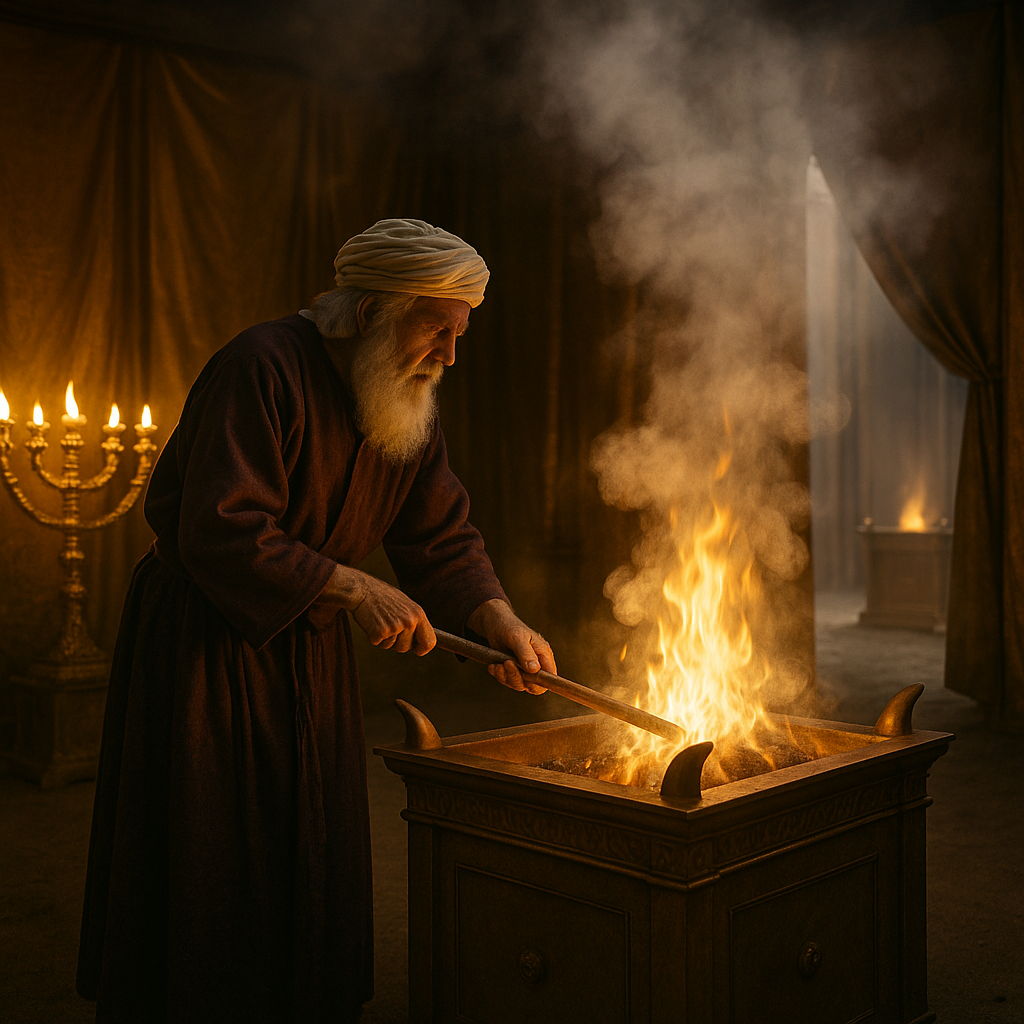
God gives further instructions to the priests concerning how offerings are to be handled, reminding them that every act of worship must be treated with reverence. Fire must continually burn on the altar — a symbol of unending devotion.
2. Key Themes and Lessons
| Theme | Lesson |
|---|---|
| Holiness Begins with Atonement | God’s presence requires cleansing, but He graciously provides the way. |
| Surrender and Gratitude | The offerings express total dependence on God — surrender (burnt), gratitude (grain), fellowship (peace). |
| Forgiveness and Restoration | Every type of offering reveals a facet of Jesus’ finished work: His blood redeems, restores, and reconciles. |
| Justice and Mercy | Sin always costs something, but grace makes a way for restoration. |
| Continuous Devotion | The altar’s fire was never to go out — a picture of our continual love and communion with God. |
3. Encouragement
“This book isn’t about rituals; it’s about relationship!
God’s teaching His people how to live close to Him — how to stay aware of His presence.
Every offering points to Jesus.
The burnt offering says, ‘I’m Yours completely.’
The grain offering says, ‘Everything I have is from You.’
The peace offering says, ‘We’re one again.’
The sin and guilt offerings show that mercy isn’t cheap — it cost blood, it cost life.
But here’s the joy — Jesus fulfilled every one of them!
He’s the burnt offering (total surrender),
the grain offering (our provision),
the peace offering (our fellowship),
the sin offering (our cleansing), and
the guilt offering (our restoration).
So now, you don’t bring animals — you bring yourself.
You live consumed in love, and the fire never goes out.
That’s holiness — a heart always burning with Him.
4. Reflection Questions
- What do the different offerings reveal about the character and compassion of God?
- How can I live today with the same wholehearted surrender symbolised by the burnt offering?
- How does understanding Jesus as the fulfilment of every sacrifice affect my view of forgiveness and grace?
- In what ways can I “keep the fire burning” in my daily walk — through prayer, worship, or love?
- What does restitution look like in my relationships when I have wronged others?
Leviticus Study – Set 2 (Chapters 8–10)
The Priesthood Consecrated and the Holiness of God Revealed
1. Summary of the Chapters
- Chapter 8 – The Consecration of Aaron and His Sons:
Moses gathers the entire congregation to witness the consecration of Aaron and his sons for the priesthood. Aaron is clothed with garments of beauty and glory — the ephod, breastplate, robe, and turban — and anointed with oil. Sacrifices are offered for atonement and ordination, symbolising purification and dedication. The priests remain at the entrance of the Tent of Meeting for seven days as a sacred initiation into lifelong service before God. - Chapter 9 – The Priestly Ministry Begins:
On the eighth day, Aaron offers sacrifices on behalf of himself and the people. He follows every instruction exactly as God commanded. When the offerings are made, the glory of the Lord appears to all the people, and fire comes out from His presence to consume the burnt offering on the altar. The people fall facedown in awe and worship. God’s approval is visible — His presence confirms His delight in obedience and consecration. - Chapter 10 – The Sin of Nadab and Abihu:
Tragically, Aaron’s sons, Nadab and Abihu, offer unauthorised fire before the Lord — fire that He had not commanded. Instantly, fire comes from God’s presence and consumes them. Moses tells Aaron, “This is what the Lord has said: ‘Among those who are near Me, I will be sanctified; and before all the people, I will be glorified.’” Aaron remains silent. God’s holiness is not to be approached casually. The chapter concludes with God instructing Aaron and his remaining sons to distinguish between holy and unholy, clean and unclean, and to teach the people reverence.
2. Key Themes and Lessons
| Theme | Lesson |
|---|---|
| Holiness and Reverence | God’s presence is sacred; He is to be approached with awe and obedience. |
| Consecration and Calling | God sets apart people for His service — not by merit, but by grace and anointing. |
| The Power of Obedience | When God’s people follow His ways, His glory fills their lives. |
| The Danger of Presumption | Spiritual zeal without submission can lead to destruction. |
| Holiness and Grace | God’s holiness is not meant to terrify us but to teach us the weight and beauty of His Presence. |
3. Encouragement
God’s not being harsh here — He’s being holy!
When fire fell, it wasn’t punishment; it was proof of His Presence!
And when Nadab and Abihu brought their own fire, it wasn’t about a mistake — it was about heart posture.
They tried to worship their way instead of His.
But God’s not insecure — He’s pure.
He’s showing Israel: You don’t make Me holy — I make you holy.
When Aaron stayed silent, that wasn’t fear — it was surrender.
He saw that God’s Presence is not to be handled lightly.
And today, that same fire still burns — not on an altar, but in you!
You’re the temple now. The fire of His Spirit isn’t for show; it’s for transformation.
Don’t bring strange fire — bring a yielded heart.
When you honour what’s holy, you’ll live in the glow of His glory.
4. Reflection Questions
- What does Aaron’s consecration teach me about my own calling as part of God’s royal priesthood?
- How do I approach God — with reverence and humility, or with casual familiarity?
- What “unauthorised fire” might I sometimes bring before God — self-effort, pride, or performance?
- How can I keep God’s fire burning in purity rather than presumption?
- What does it mean for me to be a living temple where God’s holiness dwells?
Leviticus Study – Set 3 (Chapters 11–15)
Clean and Unclean: Lessons in Purity, Wholeness, and Separation
1. Summary of the Chapters
- Chapter 11 – The Dietary Laws:
God distinguishes between clean and unclean animals. Israel is to eat only what He declares clean — animals that both chew the cud and have divided hooves, fish with fins and scales, and certain birds and insects. These distinctions were not arbitrary; they taught discernment, discipline, and symbolic separation from the pagan nations. God’s people were to reflect His holiness in even the most ordinary act — eating. - Chapter 12 – Purification After Childbirth:
After giving birth, a woman undergoes a period of purification — forty days for a son, eighty for a daughter — after which she offers a burnt and sin offering. This isn’t about moral guilt, but ceremonial cleansing. It underscores that life and birth, while good, still occur within a fallen, sin-affected world. It also honours the sacredness of life and motherhood under God’s care. - Chapters 13–14 – Laws Concerning Leprosy:
These chapters deal with identifying and treating skin diseases (“leprosy” being a broad term). Priests inspect and isolate those affected — both for the protection of the community and as a spiritual symbol of sin’s defiling nature. When healed, the person must go through an elaborate cleansing ceremony involving washing, sacrifice, and restoration to community life. This points prophetically to Jesus, the Great High Priest, who touches the unclean and makes them clean. - Chapter 15 – Bodily Discharges and Purity:
Instructions are given about bodily discharges that render a person ceremonially unclean. Again, these laws are not about shame, but about holiness — teaching Israel that God’s presence requires awareness of purity and reverence in all things. These regulations keep physical, emotional, and spiritual life aligned under divine order.
2. Key Themes and Lessons
| Theme | Lesson |
|---|---|
| Holiness in Daily Life | God’s presence isn’t confined to sacred spaces — holiness touches every part of ordinary life. |
| Separation for Fellowship | Distinctions between clean and unclean teach discernment and spiritual vigilance. |
| Sin and Defilement | Uncleanness symbolises sin — it spreads, isolates, and requires cleansing. |
| Healing and Restoration | God doesn’t just cleanse; He restores people back to community and worship. |
| Christ Our Cleanser | Jesus fulfils these laws perfectly — He becomes the One who makes all things pure. |
3. Encouragement
Leviticus isn’t God being picky — it’s God being protective!
He’s teaching His kids that His presence changes everything —
even what they eat, how they live, how they think about health and purity.
The message isn’t ‘Stay away because you’re dirty.’
It’s ‘Come close, but understand what holiness looks like.’
Every rule points to something relational.
God was shaping a people who looked different — who lived in a way that said, ‘We belong to Him.’
And Jesus? He’s the fulfilment of every purification law.
When He touched lepers, He didn’t become unclean — they became clean! That’s the new covenant.
Holiness isn’t about avoiding people — it’s about carrying a Presence that heals what it touches.
You’re not afraid of contamination anymore — you’re the one releasing restoration.
4. Reflection Questions
- What does it mean for me to honour God in the everyday areas of life — what I eat, how I live, and how I treat others?
- How does Jesus’ example of touching the unclean shape how I view those who feel “unworthy”?
- Where in my life has God brought cleansing or restoration, and how can I share that story?
- How can I practice spiritual discernment in distinguishing what draws me closer to God and what defiles my heart?
- What would it look like for me to carry holiness not as separation from others, but as the power to bring healing and purity wherever I go?
Leviticus Study – Set 4 (Chapters 16–17)
The Day of Atonement and the Power of the Blood
1. Summary of the Chapters
- Chapter 16 – The Day of Atonement (Yom Kippur):
After the deaths of Aaron’s sons, God gives instructions for approaching His Presence with reverence. Once a year, the high priest enters the Most Holy Place to atone for all Israel’s sins.
Aaron brings:- A bull for his own sin offering.
- Two goats for the people — one to be sacrificed, and one as the scapegoat.
The high priest sprinkles blood on the mercy seat of the Ark, symbolising forgiveness through substitution. He then lays hands on the living goat, confessing over it all Israel’s sins, and sends it into the wilderness — a powerful image of sins being carried away forever.
The people fast, humble themselves, and rest on this sacred day. The message is clear: sin separates, but God’s mercy restores.
- Chapter 17 – The Sacredness of Blood:
God commands that all sacrifices be brought to the Tabernacle, not offered in private, to protect Israel from idolatry. He explains that “the life of a creature is in the blood” and that He has given it to make atonement for the soul.
No one is to eat blood, for it represents life — and life belongs to God alone. This chapter underscores the holiness of life and the sacredness of substitutionary sacrifice.
2. Key Themes and Lessons
| Theme | Lesson |
|---|---|
| Atonement Through Substitution | Sin demands death, but God accepts a substitute to cover sin and restore relationship. |
| The Power of the Blood | Life is in the blood — both physically and spiritually. The blood of Christ brings forgiveness, not just covering but cleansing. |
| God’s Mercy and Justice United | The mercy seat shows that God’s justice and mercy meet perfectly in His presence. |
| Sin Removed and Forgotten | The scapegoat symbolises sin being carried far away — God remembers it no more. |
| Holiness of Life | Respecting blood reminds us that life is sacred because it originates from God. |
3. Encouragement
This is it — the gospel in shadows!
Every drop of blood in Leviticus 16 is shouting Jesus’ name.
The bull, the goat, the mercy seat — all of it’s a preview of the cross.
The high priest goes in trembling once a year, but now our High Priest, Jesus, went in once for all —
not with animal blood, but with His own!
When that scapegoat walked into the wilderness, Israel watched their sin disappear. That’s your story!
Your sin didn’t just get covered — it got carried away. The cross didn’t just make you better — it made you new.
And when God says, ‘The life is in the blood,’ He’s not giving a ritual; He’s revealing redemption.
You’re not redeemed by your effort — you’re redeemed by His life poured out.
The mercy seat? That’s now your heart.
Heaven’s not angry with you — it’s at peace with you.
You’re not standing outside the veil anymore — you are the temple where mercy lives!
4. Reflection Questions
- What does the Day of Atonement reveal about God’s desire to forgive and restore His people?
- How does the concept of the scapegoat deepen my understanding of Jesus’ sacrifice?
- Why is the blood sacred, and how does that truth shape the way I view life and salvation?
- What does it mean for me personally that Jesus entered the Most Holy Place on my behalf?
- How can I live from a place of peace and freedom, knowing that my sins have been carried away forever?
Leviticus Study – Set 5 (Chapters 18–22)
Living Holy Lives: Moral Purity, Integrity, and Sacred Service
1. Summary of the Chapters
- Chapter 18 – Laws on Sexual Purity:
God calls Israel to live differently from the nations around them. He forbids sexual immorality, incest, adultery, homosexuality, and child sacrifice — practices common in Egypt and Canaan. These commands are not restrictions born of control, but boundaries born of covenant love. Holiness means honouring God with the body and preserving the purity of relationships. - Chapter 19 – The Call to Practical Holiness:
This chapter expands the call to holiness into every area of daily life. God repeats: “Be holy, because I the Lord your God am holy.” He commands justice, honesty, generosity to the poor, kindness to strangers, and respect for parents and the Sabbath. The famous verse appears here: “Love your neighbour as yourself.” Holiness is not about isolation — it’s about love expressed through righteousness. - Chapter 20 – Consequences for Sin:
God outlines penalties for sins such as idolatry, blasphemy, immorality, and witchcraft. These are not arbitrary punishments, but protections — guarding the purity and health of the nation. God declares, “You shall be holy to Me, for I the Lord am holy, and I have separated you from the peoples to be Mine.” - Chapters 21–22 – Holiness of the Priests and Offerings:
God instructs the priests to live with greater consecration because they represent Him before the people. They must avoid defilement, care for their families, and offer only the best sacrifices. The message is clear: what is offered to God must reflect His worth — unblemished, wholehearted, and pure.
2. Key Themes and Lessons
| Theme | Lesson |
|---|---|
| Holiness in Relationships | God’s people are called to honour His design for family, marriage, and sexuality. |
| Love as the Core of Holiness | True holiness expresses itself through compassion, integrity, and justice. |
| Separation With Purpose | Being “set apart” is not for superiority but for representation — to reveal God’s goodness. |
| Integrity in Worship | Only our best belongs to God — holiness rejects hypocrisy or half-hearted offerings. |
| Priestly Responsibility | Those who minister before God must model His nature in humility, purity, and excellence. |
3. Encouragement
“This section isn’t God saying, ‘Don’t mess up’ — it’s Him saying, ‘You’re Mine, so live like it!’
Holiness isn’t about restriction; it’s about reflection.
You were made to reflect Him — His purity, His kindness, His love.
The world around Israel was full of confusion, lust, and idolatry, but God says, ‘I’ve set you apart to show them what My love looks like.’
When He says, ‘Be holy as I am holy,’ He’s not setting an impossible standard — He’s revealing your identity!
Holiness isn’t trying harder; it’s living from union with Him.
You’re not resisting the world in fear — you’re revealing heaven in truth.
And priests? That’s you now! You’re a royal priesthood.
You don’t bring animals anymore — you bring your life.
You carry His presence in purity, not pressure.
So whether you’re at work, home, or worship, you’re a living offering.
Let love be your holiness, and let integrity be your worship.
4. Reflection Questions
- How does understanding holiness as belonging to God change my view of purity and obedience?
- In what ways can I express holiness through love, compassion, and justice in daily life?
- How can I honour God with my body, words, and relationships in a culture that often defies His design?
- What does it mean to give God my “best” in worship, service, and personal devotion?
- As part of the royal priesthood, how can I model God’s holiness to others without legalism or pride?
Leviticus Study – Set 6 (Chapters 23–27)
Sacred Appointed Times, Jubilee, and Covenant Blessings
1. Summary of the Chapters
- Chapter 23 – The Lord’s Appointed Feasts:
God establishes sacred times to mark Israel’s rhythm of worship:- Sabbath: A weekly rest declaring trust in God’s provision.
- Passover & Unleavened Bread: Remembering deliverance from Egypt.
- Firstfruits: Honouring God with the first of every harvest.
- Pentecost (Weeks): Celebrating the fullness of the harvest — later fulfilled at the outpouring of the Spirit.
- Trumpets: A call to repentance and readiness.
- Day of Atonement: Cleansing and reconciliation through sacrifice.
- Feast of Tabernacles: Rejoicing in God’s provision and presence among His people.
Each feast points to Jesus — our rest, redemption, provision, cleansing, and eternal joy.
- Chapter 24 – The Lampstand and the Bread of the Presence:
God commands that lamps burn continually and fresh bread be placed weekly before Him — symbols of His sustaining light and covenant fellowship. The chapter also includes a lesson on justice after a case of blasphemy, showing that God’s holiness governs both worship and community life. - Chapter 25 – The Sabbath Year and the Year of Jubilee:
Every seventh year, the land rests — a Sabbath for creation itself. After seven cycles (49 years), the 50th year is the Year of Jubilee: debts are cancelled, slaves freed, property restored, and families reunited. It’s a picture of divine reset — mercy triumphing over debt and oppression. Jubilee declares that everything and everyone ultimately belongs to God. - Chapter 26 – Covenant Blessings and Warnings:
God promises abundant blessing for obedience — peace, fruitfulness, protection, and His presence dwelling among them. But if they rebel, consequences follow — famine, fear, defeat, and exile. Yet even in judgment, mercy speaks: “If they confess their sin and humble themselves, I will remember My covenant.” - Chapter 27 – Vows, Dedication, and Final Instructions:
God gives instructions for dedicating people, land, or possessions to Him — reinforcing that all things are sacred and belong to the Lord. Leviticus ends with the people reminded that life itself is a holy stewardship under His covenant care.
2. Key Themes and Lessons
| Theme | Lesson |
|---|---|
| Holiness in Time | God calls His people to mark their days by His faithfulness — rest, remembrance, and rejoicing. |
| Christ in the Feasts | Every festival foreshadows Jesus — our Passover Lamb, Firstfruits, High Priest, and eternal Tabernacle. |
| Sabbath and Jubilee | God’s Kingdom rhythms restore rest, freedom, and equality — a pattern of grace for life. |
| Obedience and Covenant Blessing | Walking in God’s ways brings peace and fruitfulness; rebellion brings distance, not rejection. |
| God’s Mercy in Restoration | Even after failure, repentance always opens the door for God’s covenant faithfulness to flow again. |
3. Encouragement
Leviticus ends with joy! God’s showing His people that holiness isn’t about pressure — it’s about rhythm.
He’s teaching them how to live from rest, not for it.
Every feast, every Sabbath, every Jubilee says one thing: ‘You’re Mine, and I’ve got you covered.’
The feasts point to Jesus — the Passover says you’re redeemed; the Firstfruits say you’re risen;
Pentecost says you’re filled; the Day of Atonement says you’re clean; the Tabernacles say you’re home!
And Jubilee? Oh, that’s the Father’s heart right there.
Every debt erased, every captive free, every inheritance restored — that’s the gospel!
Jesus stood up in the synagogue and said, ‘Today this Scripture is fulfilled in your hearing.’ He is our Jubilee.
Even the warnings in chapter 26 aren’t threats — they’re love letters.
God’s saying, ‘Don’t run from Me — it hurts you. Stay close; I’ll bless you.’
Holiness isn’t a burden; it’s belonging.
You’re not surviving seasons — you’re learning His rhythms of grace.
The fire never goes out, the bread never runs out, and His Presence never leaves.
4. Reflection Questions
- How do the feasts reveal the nature and character of Jesus in my own spiritual walk?
- What practical steps can I take to build rhythms of rest, worship, and gratitude into my life?
- Where do I need to experience “Jubilee” — freedom from old debts, guilt, or burdens?
- How can I help bring restoration or freedom to others as an expression of God’s heart?
- What does covenant blessing look like in my relationship with God today — peace, provision, or His Presence?
Overview Summary of the Book of Leviticus
“Be Holy, for I Am Holy.” — Leviticus 19:2
A revelation of God’s holiness, presence, and redemptive love among His people.
1. Summary of the Book
Leviticus is the third book of the Torah, continuing Israel’s story at Mount Sinai, where God has just filled the newly built Tabernacle with His Presence.
Now that He dwells among them, the question is: How can a holy God live among an unholy people?
Through detailed laws of sacrifice, priesthood, purity, festivals, and covenant living, God reveals the pattern for fellowship — atonement and holiness through His appointed ways.
At its heart, Leviticus is not about ritual — it’s about relationship. Every command, every offering, every feast whispers of God’s desire to dwell among His people and make them like Himself.
It begins with the call to sacrifice (Leviticus 1–7), ordains priests to minister in His presence (8–10), teaches the people about purity and cleansing (11–15), reveals the Day of Atonement (16–17), defines holy living (18–22), celebrates sacred rhythms of rest (23–25), and concludes with the covenant blessings and the assurance that all life belongs to the Lord (26–27).
Ultimately, Leviticus points to Jesus — the perfect High Priest, spotless Lamb, and eternal Mercy Seat through whom we boldly enter God’s Presence.
2. Structure of the Book
| Section | Chapters | Focus | Fulfilment in Christ |
|---|---|---|---|
| The Way to God | 1–16 | Sacrifice and Atonement | Jesus, our Sacrifice and High Priest |
| The Walk with God | 17–27 | Holiness and Covenant Living | Jesus, our Holiness and Jubilee |
3. Key Themes and Lessons
| Theme | Description | Fulfilment in Jesus |
|---|---|---|
| Holiness | God calls His people to reflect His character in all areas of life. | Christ makes us holy through His indwelling Spirit. |
| Atonement | Sin separates, but God provides substitution through blood. | Jesus’ blood doesn’t just cover sin — it removes it forever. |
| Presence | The Holy God desires to dwell among His people. | Christ is Emmanuel — “God with us.” |
| Priesthood | Priests mediate between God and people. | Jesus is our eternal High Priest, and we are His royal priesthood. |
| Purity and Cleansing | Physical purity symbolises inward holiness and reverence. | Jesus cleanses the heart, not just the body. |
| Sabbath and Jubilee | Rest and restoration are God’s rhythm for life. | Jesus is our Rest and our Jubilee. |
| Covenant Blessing | Obedience leads to life, peace, and prosperity. | In Christ, we inherit all God’s promises. |
4. The Heart of the Message
Leviticus teaches that holiness is not separation from people — it’s union with God.
God was shaping a community where every action — eating, resting, working, worshipping — reflected His nature.
Holiness is the harmony between God’s Presence and human obedience, between heaven’s order and earth’s living. It is love expressed in purity, integrity, justice, and worship.
Through sacrifices, God teaches that forgiveness comes through innocent blood. Through the priesthood, He teaches mediation. Through purity laws, He teaches discernment. Through the feasts, He teaches remembrance and rejoicing. Through the covenant, He teaches relationship — a rhythm of belonging and blessing.
5. Encouragement
Leviticus isn’t a list of laws; it’s a love story of a holy God who refuses to live far away from His kids.
Every sacrifice, every priestly robe, every drop of blood — it’s all shouting: ‘I want you close!’
When you read Leviticus, don’t see rules — see revelation.
God was painting a picture of Jesus long before Bethlehem.
The altar? That’s the Cross.
The lamb without blemish? That’s your Redeemer.
The High Priest entering the Holy of Holies? That’s Jesus tearing the veil so you can live face-to-face.
And here’s the best part: holiness isn’t something you achieve — it’s something you receive.
The same Presence that filled the Tabernacle now fills you!
You’re not trying to get near God; He moved inside of you! So live like you believe it.
You are the light that keeps burning in the Tabernacle. You’re the bread of His Presence to the world.
You’re His walking temple.
Holiness isn’t pressure; it’s privilege. It’s what happens when love takes over.
6. Reflection Questions
- How does understanding holiness as union with God transform how I see obedience?
- In what areas of my life do I need to allow God’s presence to reshape my habits, thoughts, and priorities?
- How does Jesus’ sacrifice fulfil and surpass the entire Levitical system?
- What does it mean for me to live as a “royal priest,” carrying God’s presence into ordinary moments?
- How can I honour God’s rhythms of rest, worship, and service in my daily life today?
- What part of God’s holiness am I being invited to reflect more clearly to the world around me?
7. Key Takeaway
Leviticus reveals that holiness is not about avoiding the world but revealing God within it.
It’s about living in the reality that through Jesus, every barrier between God and humanity is gone.
The once-a-year approach has become a daily dwelling.
The fire on the altar has become the fire in your heart.
And the Presence that filled the Tabernacle now fills you — forever.