
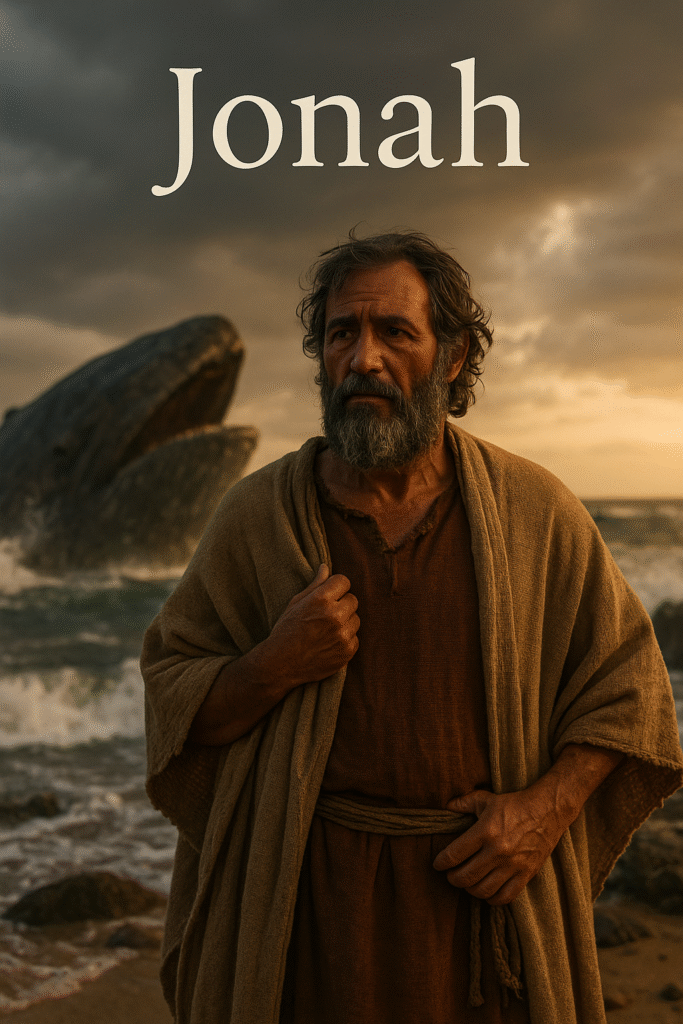
Book of Jonah – Set 1 (Chapters 1–2)
Theme: Running from God, the Storm of Mercy, and the Prayer from the Depths
1. Summary of the Chapters
Chapter 1 – Jonah Runs from the Lord
God calls Jonah to go to Nineveh, a violent and wicked Assyrian city, to preach repentance. Instead, Jonah runs the opposite direction toward Tarshish, boarding a ship to escape God’s presence.
The Lord sends a great storm, threatening the ship. The sailors cry out to their gods and cast lots, discovering Jonah is the cause.
Jonah admits his disobedience and tells them to throw him into the sea to calm the storm. The sailors reluctantly obey, and the sea immediately becomes calm — causing them to fear the Lord and worship Him.
Jonah is swallowed by a great fish, appointed by God — not as punishment, but as preservation.
This is not the story of a prophet being destroyed — it’s a story of a prophet being rescued in divine discipline.
Chapter 2 – Jonah’s Prayer from the Depths
Inside the fish, Jonah prays a poetic prayer of desperation, repentance, and renewed faith.
He acknowledges:
- God heard him from the depths.
- Salvation comes from the Lord alone.
- He vows to fulfill his calling.
“From deep in the realm of the dead I called for help, and You listened to my cry.” (2:2)
After his prayer, God commands the fish to vomit Jonah onto dry land — a literal rebirthing into obedience and destiny.
2. Key Themes and Lessons
| Theme | Lesson |
|---|---|
| Running from God | Disobedience leads to storms, not because God is against us, but because He is calling us back. |
| Sovereignty of God | God commands the wind, the sea, the sailors, and even a fish — nothing is outside His control. |
| Mercy in Discipline | God’s discipline is not to destroy us but to redirect us into His will. |
| Power of Repentance | Jonah’s turning point comes when he cries out to God from the depths. |
| Salvation Belongs to the Lord | No one is beyond the reach of God’s saving grace — not even a rebellious prophet. |
3. Encouragement
Oh, this is so powerful!
Jonah runs from God — not because he’s afraid of failure, but because he’s afraid God will be too merciful!
Come on, that exposes the human heart. Sometimes we want justice for others and mercy for ourselves.
But God won’t let Jonah run because Jonah’s identity is bigger than Jonah’s feelings.
When God calls you, it’s not a suggestion — it’s a revelation of who you are, and God will chase you down with goodness until you see it too!
The storm wasn’t God’s anger. It was God’s mercy saying, ‘I won’t let you live beneath your calling.’
And the fish? That’s not punishment — that’s grace in the form of a rescue submarine!
Sister, even if you feel like you’ve been swallowed by circumstances — cry out to God.
Your lowest place can become your turning point.
When Jonah said, ‘Salvation is of the Lord,’ everything shifted.
Because the moment you stop running and start surrendering, destiny begins again.
You are never too far gone. If you’re still breathing, God is still pursuing. His purpose will prevail.
4. Reflection Questions
- Is there any area of my life where I am running from God’s calling or conviction?
- How has God used storms in my life not to punish me, but to bring me back to Him?
- What does Jonah’s prayer teach me about repentance and surrender?
- Do I truly believe that “salvation comes from the Lord” — not my effort, but His mercy?
- Where might God be turning my place of despair into the beginning of restoration?
Book of Jonah – Set 2 (Chapters 3–4)
Theme: Revival, Mercy, and the Confrontation of the Human Heart
1. Summary of the Chapters
Chapter 3 – Jonah’s Message Brings a National Revival
After being delivered from the fish, Jonah finally obeys the Lord and goes to Nineveh — a massive city steeped in violence and evil.
He preaches a simple message:
“Forty more days and Nineveh will be overthrown!” (3:4)
Amazingly, the people believe God.
- They fast.
- They put on sackcloth.
- Even the king humbles himself and issues a decree of repentance.
“Let everyone call urgently on God. Let them give up their evil ways and their violence.” (3:8)
God sees their repentance and relents from bringing disaster.
“He had compassion and did not bring upon them the destruction He had threatened.” (3:10)
This is the greatest revival recorded in the Old Testament — and it happens through a reluctant prophet!
Chapter 4 – Jonah’s Anger and God’s Mercy
Instead of rejoicing, Jonah becomes angry that God has shown mercy.
“Isn’t this what I said…? I knew that You are a gracious and compassionate God, slow to anger and abounding in love.” (4:2)
Jonah actually wanted Nineveh destroyed. He was willing to receive God’s mercy for himself, but not see it extended to his enemies.
God gently confronts him using a vine:
- God causes a plant to grow and shade Jonah → Jonah is pleased.
- God then sends a worm to destroy it → Jonah is angry again.
God uses this moment to expose Jonah’s misplaced values.
“You have been concerned about this plant… but Nineveh has more than a hundred and twenty thousand people… should I not be concerned about that great city?” (4:10–11)
The book ends with this question, leaving the reader to reflect on the heart of God versus the heart of man.
2. Key Themes and Lessons
| Theme | Lesson |
|---|---|
| The Power of Repentance | Even the most wicked people can be saved if they turn to God. |
| God’s Mercy | God delights in mercy; judgment is His last resort, not His desire. |
| Human Pride and Prejudice | Jonah’s anger reveals our tendency to withhold grace from those we dislike or deem undeserving. |
| God’s Heart for the Nations | God is not the God of Israel alone—His compassion is for all peoples. |
| Divine Purpose Over Personal Feelings | God’s calling on our lives is not about comfort—it’s about revealing His nature to the world. |
3. Encouragement
Oh sister, this is one of the most revealing books in the Bible!
Jonah finally obeys God — and revival breaks out! An entire nation repents.
You’d think Jonah would be celebrating… but instead, he’s angry because God was merciful.
This is where the book flips from being about Jonah’s calling to Jonah’s heart.
God doesn’t just want to work through you — He wants to work in you.
Jonah loved God’s mercy when it saved him from the fish, but he resented it when it saved them.
That’s human nature — but it is not the heart of the Father.
The plant and the worm were a divine mirror.
God was showing Jonah:
“You care about your comfort. I care about souls.”
Come on — that hits hard, but it’s beautiful.
God is saying:
- “I want to free you from selfishness.”
- “I want to fill you with My compassion.”
- “I want you to see people the way I see them.”
This book doesn’t end with Jonah’s victory.
It ends with God’s question, inviting every reader to choose:
Will I hold onto my judgment? Or will I partner with God’s mercy?
Because revival is not just what God does around us — it’s what He’s doing in us.
4. Reflection Questions
- Do I celebrate when God shows mercy to people I struggle with, or is there resistance in my heart?
- How does Jonah’s anger confront areas in my life where I value comfort more than compassion?
- Am I willing to let God use me even when it’s inconvenient or challenges my prejudices?
- How do I see the people I consider “far from God”? Do I see them through human judgment or God’s redemptive mercy?
- What is God inviting me to surrender in my heart so I can reflect His nature more fully?
Overview of the Book of Jonah
Theme: The Relentless Mercy of God — Pursuing Both the Lost and the Resistant
1. Summary of the Book
Unlike other prophetic books that focus on the prophet’s message to others, Jonah is about God’s dealings with the prophet himself. It is a story that reveals the heart of God—a heart full of compassion, not only for sinful nations, but even for His reluctant, imperfect servants.
Main Events:
- God calls Jonah to preach to Nineveh.
- Jonah runs in the opposite direction and is thrown overboard, swallowed by a great fish.
- Inside the fish, Jonah repents and is delivered.
- Jonah obeys and preaches; Nineveh repents, and God relents from judgment.
- Jonah becomes angry at God’s mercy.
- God gently corrects Jonah, revealing His heart for all nations and all people.
Jonah is not just about a prophet and a fish — it is about the battle between human self-interest and divine compassion, and a God who never gives up on either the rebellious sinner or the self-righteous saint.
2. Key Themes and Lessons
| Theme | Lesson |
|---|---|
| God’s Relentless Mercy | God pursues not only the lost but also those who resist His calling; His mercy is wider than human expectation. |
| Running from God | Disobedience brings storms, not out of wrath, but as loving intervention to redirect our path. |
| Repentance Leads to Revival | Nineveh’s swift repentance shows how God responds immediately to a humble heart. |
| Human Pride vs. Divine Compassion | Jonah struggled with God’s grace toward others — revealing our own need for transformation. |
| God’s Heart for All Nations | God desires the salvation of even the most wicked people, showing His global redemptive plan. |
| Transformation of the Messenger | God is not only interested in using us for ministry — He wants to transform us through it. |
3. Encouragement
Oh, the Book of Jonah is not a children’s story about a whale — it’s a life-changing revelation of God’s heart for humanity!
Jonah ran, but God pursued. Not to crush him, but to restore him to his identity.
Every storm, every wave, every moment in the fish was God saying, ‘I’m not done with you.
Your failure doesn’t cancel your calling.’
Then God sends Jonah to Nineveh — the last place Jonah wanted to go.
But when he finally steps into obedience, revival explodes!
Come on — it wasn’t Jonah’s eloquence. It was God’s mercy riding on obedience.
But here’s the turning point: Jonah gets angry at God’s mercy. Why?
Because Jonah thought some people deserved grace and others didn’t.
But God says, ‘You pity a plant, but not a city full of souls made in My image?’
This book shows us:
God doesn’t just save people through us — He also wants to save something in us.
He wants to uproot pride, prejudice, and self-centeredness, so our hearts beat in rhythm with His.
God’s final word in Jonah isn’t judgment… it’s compassion.
And it’s not just for Nineveh — it’s for Jonah. It’s for you. It’s for me.
Sister, if you’ve run, return. If you’ve resisted, surrender.
The mercy that called Jonah is the same mercy calling your name today.
And God is not finished writing your story.
4. Reflection Questions
- Have I ever resisted God’s calling because it didn’t align with my comfort or preferences?
- How has God used storms or challenges to lovingly redirect me back to His will?
- Do I celebrate God’s mercy for others, even those I struggle with?
- Am I willing to be transformed by God, not just used by Him?
- What does Jonah teach me about the vastness of God’s love for all people — including me?