
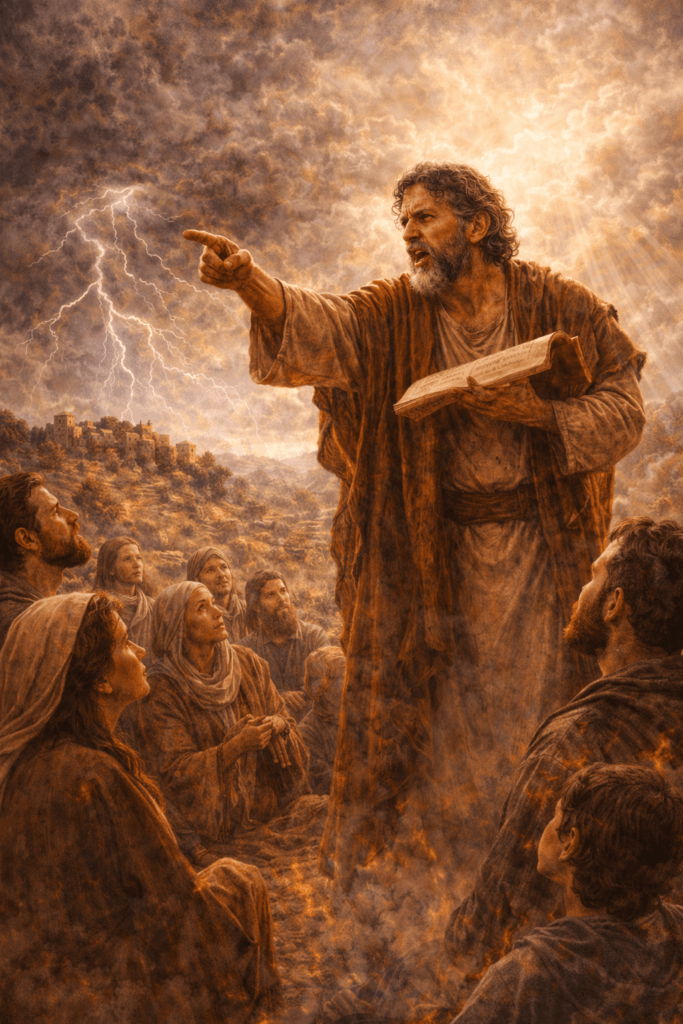
James — Faith That Works, Wisdom That Walks, Maturity That Endures
Introduction
Welcome to the James Study Hub — a direct and practical call to mature, visible faith.
James does not write softly. He writes clearly.
His concern is not theological debate. It is authentic transformation.
He addresses believers scattered under pressure — facing trials, poverty, injustice, and temptation.
But instead of offering comfort alone, James offers clarity.
He calls the church to:
• Persevere through trials
• Seek wisdom from God
• Control the tongue
• Reject partiality
• Care for the vulnerable
• Resist worldliness
• Demonstrate faith through action
James refuses passive belief.
Faith must move. Faith must speak carefully. Faith must act justly. Faith must endure.
This letter confronts comfortable Christianity.
It reveals that: Hearing is not enough. Agreement is not enough. Intention is not enough.
Maturity is the goal.
James repeatedly calls believers toward wholeness — a faith that is complete, not divided.
Trials produce perseverance. Perseverance produces maturity. Maturity produces stability.
He exposes double-mindedness. He challenges pride. He confronts dead faith. He warns against careless speech.
But beneath the intensity lies invitation.
If anyone lacks wisdom — ask God. If anyone is suffering — pray. If anyone has wandered — restore them.
James is not harsh. He is urgent. He calls believers to align belief with behaviour.
At the heart of the letter stands this steady truth: Faith without works is dead.
Not because works save — but because living faith always produces fruit.
James invites you to examine not just what you profess — but how you live.
Be doers. Be steadfast. Be humble. Be wise.
James 1 — Endurance That Produces Maturity
Summary
James begins with a bold and unexpected instruction: “Consider it pure joy… whenever you face trials of many kinds.”
Not because suffering is pleasant. But because testing produces perseverance.
And perseverance, when finished, produces maturity — completeness, lacking nothing.
Trials are not interruptions. They are development.
If wisdom is needed, ask God. He gives generously without finding fault.
But ask in faith. Not double-minded. Not divided.
James exposes instability. A double-minded person is unsettled, inconsistent, easily swayed.
Maturity requires steadiness.
He addresses both poverty and wealth.
The humble can rejoice in exaltation. The rich must remember their fragility.
External status does not define eternal identity.
Then James clarifies temptation. God does not tempt with evil.
Temptation arises when desire pulls and entices. Unchecked desire gives birth to sin. Sin matures into death.
But this is not the full story. “Every good and perfect gift is from above.”
God is not the source of corruption. He is the giver of light.
He brought us forth by the word of truth. We are a kind of firstfruits of His creation.
Then comes practical instruction:
Be quick to listen. Slow to speak. Slow to anger. Anger does not produce God’s righteousness.
Receive the implanted Word. Not as information. But as transformation.
Do not merely listen. Do. Those who only hear deceive themselves.
The Word is compared to a mirror.
If you see yourself and forget, nothing changes. If you look intently and act, you are blessed.
True religion is simple and powerful: Care for the vulnerable. Remain unstained by the world.
James 1 establishes the foundation of the letter: Endurance produces maturity. Wisdom stabilises faith. Obedience proves authenticity.
Key Identity Realities
| Truth | Identity Proclamation |
|---|---|
| Trials Develop Me | Testing strengthens, not destroys me. |
| Wisdom Is Available | I ask God confidently and receive generously. |
| I Reject Double-Mindedness | I live steady and wholehearted. |
| Temptation Is Not From God | I take responsibility for my choices. |
| Every Good Gift Comes From Him | I trust His goodness completely. |
| I Am Brought Forth by Truth | My identity is rooted in His Word. |
| The Word Transforms Me | I do not merely hear — I respond. |
| Compassion Reflects Maturity | Care and purity mark authentic faith. |
Encouragement
Sister, do not resent the trial. It may be shaping more than you realise.
Perseverance is not weakness. It is strength forming.
If you lack wisdom — ask. Do not overthink. Do not hesitate.
God does not withhold clarity from sincere hearts.
Reject double-mindedness. Choose steadiness. Choose trust.
And when temptation whispers, remember: God is not manipulating you. He is strengthening you.
Receive the Word deeply. Let it take root. Act on what you know.
Your faith is not proven by agreement. It is revealed by obedience.
You are not being tested to fail. You are being formed to maturity.
Remain steady. Ask boldly. Act faithfully.
Reflection Questions
- How do I currently respond to trials — with resistance or with trust?
- Where might I need to ask God for wisdom instead of reacting impulsively?
- Is there any area where I am double-minded or inconsistent?
- Am I merely hearing truth, or actively doing it?
- How can I care for the vulnerable while guarding my heart from compromise?
James 2 — Living Faith and Impartial Love
Summary
James 2 moves directly into the visible evidence of faith.
He begins with a confronting question:
How can you claim faith in our glorious Lord Jesus Christ and show favouritism?
He paints a scene.
A wealthy person enters. A poor person enters. The rich are honoured. The poor are dismissed.
James calls this what it is: Discrimination rooted in wrong motives.
Partiality contradicts the character of God.
God has chosen those who are poor in the eyes of the world to be rich in faith and heirs of the Kingdom.
Favouritism reveals misaligned values.
James then anchors his instruction in the “royal law”: “Love your neighbour as yourself.”
If you show favouritism, you break the law. Obedience is not selective. Mercy triumphs over judgment.
James then addresses one of the most quoted themes in the letter: Faith without works is dead.
He does not oppose grace. He opposes empty profession.
If someone says they have faith but does nothing to help a brother or sister in need, what value is that claim?
Words without action lack life. Even demons believe intellectually. Belief alone is not transformation.
James points to Abraham and Rahab. Their faith was demonstrated through action. Their trust moved them. Their obedience revealed authenticity.
Faith and works are not competitors. Works complete faith.
The chapter closes with this clear statement: As the body without the spirit is dead, so faith without works is dead.
James 2 confronts comfortable confession.
Authentic faith sees clearly. Loves impartially. Acts compassionately.
Key Identity Realities
| Truth | Identity Proclamation |
|---|---|
| God Shows No Partiality | I treat others with equal dignity. |
| The Royal Law Governs Me | Love directs my conduct. |
| Mercy Triumphs | I choose compassion over judgment. |
| Faith Must Be Visible | My belief expresses itself in action. |
| Words Alone Are Insufficient | I align confession with obedience. |
| Faith and Works Work Together | Action completes my trust. |
| True Riches Are Spiritual | I value Kingdom wealth over appearance. |
| Obedience Reveals Authenticity | My faith is alive and active. |
Encouragement
Sister, faith is not fragile. It is active.
You are not called to evaluate people by status, success, or appearance. You are called to love.
The royal law is simple. But it is powerful.
Love sees clearly. Love responds generously. Love refuses superiority. If you claim faith — live it.
Not to earn salvation. But because salvation is alive within you.
Mercy is not weakness. It is strength under grace.
Let your faith move your hands. Let your belief shape your behaviour. Let your trust produce compassion.
Living faith is visible. And visible faith glorifies Christ.
Reflection Questions
- Is there any subtle favouritism influencing how I treat others?
- Does my faith consistently express itself in practical love?
- Where might I be confessing belief without corresponding action?
- How can I intentionally choose mercy in a current situation?
- What does “faith made complete by works” look like in my daily life?
James 3 — The Tongue and True Wisdom
Summary
James 3 begins with a sobering caution:
Not many should become teachers, because teachers will be judged more strictly.
Influence carries responsibility.
James then shifts to a universal struggle — the tongue.
We all stumble in many ways. But if anyone does not stumble in what they say, they are mature.
The tongue is small — yet powerful.
Like:
• A bit in a horse’s mouth
• A rudder steering a large ship
• A small spark setting a forest ablaze
Words direct. Words ignite. Words expose.
The tongue can praise God — and curse people made in His likeness.
This inconsistency reveals an internal conflict.
Fresh water and salt water do not flow from the same spring. Fig trees do not produce olives.
Speech reflects source.
James then moves from speech to wisdom.
He asks: Who is wise and understanding among you?
True wisdom is not loud. It is lived.
It is demonstrated by good conduct and humility.
He contrasts two types of wisdom:
Earthly wisdom:
• Envy
• Selfish ambition
• Disorder
• Every evil practice
Heavenly wisdom:
• Pure
• Peace-loving
• Considerate
• Submissive
• Full of mercy and good fruit
• Impartial
• Sincere
Peacemakers who sow in peace reap righteousness.
James 3 reveals that the tongue and wisdom both expose the condition of the heart.
Maturity is measured by: Controlled speech. Humble conduct. Peaceful wisdom.
Key Identity Realities
| Truth | Identity Proclamation |
|---|---|
| My Words Carry Weight | I speak carefully and intentionally. |
| Maturity Controls the Tongue | I pursue disciplined speech. |
| I Reflect God’s Image | I do not curse what He has created. |
| Speech Reveals Source | My heart alignment shapes my language. |
| True Wisdom Is Humble | I reject selfish ambition. |
| Heavenly Wisdom Is Peaceful | I cultivate gentleness and sincerity. |
| Peacemaking Produces Righteousness | I sow peace intentionally. |
| Integrity Flows From Within | My outward speech mirrors inner health. |
Encouragement
Sister, your words matter.
They can wound. They can heal. They can ignite. They can calm.
Do not underestimate small speech.
If the tongue feels difficult to control, do not despair. Maturity is growing. The Spirit is shaping.
Heavenly wisdom is not dramatic. It is gentle. It is peaceable. It is sincere.
You are not called to dominate conversations. You are called to sow peace.
Let your speech reflect purity. Let humility guide your tone. Let mercy shape your responses.
When envy whispers, silence it. When ambition pushes, humble it. When conflict rises, pursue peace.
The heart surrendered produces speech aligned.
You are not powerless over your words. You are being formed into maturity.
Reflection Questions
- Do my words consistently reflect the character of Christ?
- Where might I need greater discipline in speech?
- Is there any envy or selfish ambition influencing my tone?
- How can I intentionally cultivate heavenly wisdom in conversations?
- Am I sowing peace — or unintentionally stirring conflict?
James 4 — Humility That Draws Near
Summary
James 4 exposes internal conflict.
He asks: “What causes fights and quarrels among you?”
The answer is not external pressure. It is internal desire.
Unchecked cravings. Self-centred ambition. Misaligned priorities.
Conflict begins within before it appears without.
“You desire but do not have, so you quarrel.”
James is not condemning desire itself. He is confronting desire that rules rather than submits.
He uses strong language: Friendship with the world is hostility toward God.
This is not about culture engagement. It is about allegiance.
Double loyalty fractures devotion.
But then comes invitation: “God opposes the proud but gives grace to the humble.”
Pride resists grace. Humility receives it.
James calls believers to:
• Submit to God
• Resist the devil
• Draw near to God
• Cleanse hands
• Purify hearts
• Mourn over sin
• Humble themselves
And this promise follows: “He will lift you up.”
Humility is not humiliation. It is positioning for grace.
James then addresses judgment.
Do not speak evil against one another. There is one Lawgiver and Judge.
He confronts presumption about tomorrow. “You who say, ‘Today or tomorrow we will…’”
Life is a mist. Plans must be surrendered.
“If the Lord wills…” Arrogance assumes control. Humility acknowledges dependence.
James 4 reveals the root of spiritual instability: Pride.
And the pathway to restoration: Humble surrender.
Key Identity Realities
| Truth | Identity Proclamation |
|---|---|
| Conflict Begins in the Heart | I examine my desires before blaming others. |
| Pride Blocks Grace | I choose humility to receive strength. |
| God Gives More Grace | I am never beyond His restoring help. |
| Submission Strengthens Me | Surrender aligns my heart. |
| I Can Resist the Enemy | Authority flows from alignment with God. |
| Drawing Near Is Possible | Intimacy is accessible. |
| My Life Is Dependent | I trust God with tomorrow. |
| Humility Leads to Exaltation | God lifts surrendered hearts. |
Encouragement
Sister, humility is not weakness. It is clarity.
You are not called to win every argument. You are called to guard your heart.
If conflict has surfaced, look inward first. Let God search desire before defending position.
Grace is available. More grace.
Pride exhausts. Humility restores.
Draw near. Not cautiously. Not timidly. But honestly.
Clean hands. Pure heart. Softened spirit.
Resist what opposes God. Release control of tomorrow.
You are not in charge of outcomes. You are entrusted with surrender.
And when you humble yourself, He lifts you.
Not through self-promotion. But through divine favour.
Remain soft. Remain dependent. Remain near.
Reflection Questions
- Are any unchecked desires influencing my reactions?
- Where might pride be blocking grace in my life?
- How can I intentionally draw nearer to God this week?
- Am I speaking about others in ways that reflect humility?
- Do my plans reflect surrender to “If the Lord wills”?
James 5 — Patient Endurance and Restoring Prayer
Summary
James 5 opens with a warning to the wealthy who have gained riches unjustly.
This is not a condemnation of wealth itself. It is a confrontation of oppression.
Riches hoarded. Workers defrauded. Luxury pursued while others suffer.
James reminds them: Corruption has consequence. Injustice is not ignored. The cries of the oppressed reach the Lord Almighty.
Then he turns to believers: “Be patient, then, brothers and sisters, until the Lord’s coming.”
Like a farmer waiting for the precious harvest, endurance requires steady trust.
Do not grumble against one another. The Judge is standing at the door.
James points to the prophets and to Job.
They suffered. They endured. They witnessed the Lord’s compassion and mercy.
Patience is not passive. It is confident waiting.
James then addresses integrity: Let your “Yes” be yes. Let your “No” be no. Simple honesty protects stability.
He shifts to prayer.
Is anyone suffering? Let them pray. Is anyone cheerful? Let them sing praise. Is anyone sick? Call the elders to pray.
The prayer of faith is powerful and effective. Elijah prayed — and circumstances shifted.
Righteous prayer is not dramatic. It is aligned.
James closes with restoration: If someone wanders from the truth and another brings them back, that rescuer saves them from death and covers a multitude of sins.
James ends where he began: Living faith acts.
It endures. It speaks honestly. It prays. It restores.
Key Identity Realities
| Truth | Identity Proclamation |
|---|---|
| God Sees Injustice | I trust His righteous judgment. |
| Patience Reflects Trust | I wait without anxiety. |
| The Lord Is Compassionate | His mercy frames my endurance. |
| Integrity Matters | My words are consistent and reliable. |
| Prayer Is Powerful | I approach God confidently. |
| Righteousness Influences Outcomes | Alignment strengthens my petitions. |
| Community Restores | I help bring wandering hearts home. |
| Endurance Is Rewarded | Waiting is not wasted. |
Encouragement
Sister, do not mistake patience for weakness. The farmer waits because harvest is certain.
If injustice feels loud, remember: The Lord hears.
If waiting feels long, remember: The Lord is near.
Do not grumble. Do not grow bitter. Do not lose steadiness.
Pray. Sing. Call others to pray.
You are not powerless. You are aligned.
Integrity in small speech. Faithfulness in long waiting. Compassion in restoration.
The Lord is compassionate and merciful. And endurance carries promise.
Remain steady. Remain honest. Remain prayerful.
Waiting is not wasted.
Reflection Questions
- How do I respond when I witness injustice?
- Where might I need greater patience in my current season?
- Is my speech marked by simple integrity?
- Do I view prayer as powerful and effective?
- Who might God be inviting me to gently restore?
Completion Note — Mature, Steady, Whole
From trials to temptation, from speech to submission, from faith to works, James carries one unwavering call: Become mature.
This letter does not entertain shallow belief. It calls for integrated faith.
Trials are not interruptions. They are formation.
Wisdom is not hidden. It is available.
The tongue is not insignificant. It reveals the heart.
Faith is not private. It is visible.
James moves us from hearing to doing. From profession to practice.
From pride to humility. From impatience to endurance.
He confronts double-mindedness. He exposes partiality. He corrects careless speech.
He challenges worldly allegiance. He anchors patience in the Lord’s coming.
And yet, beneath every instruction, grace flows.
If you lack wisdom — ask. If you are wandering — be restored.
If you are suffering — pray. If you are rejoicing — praise.
Maturity is not self-made. It is formed through surrender and obedience.
James does not call you to perfectionism. He calls you to wholeness.
Single-hearted. Steady. Aligned.
Faith that works. Wisdom that walks. Endurance that finishes.
You are not being pressed to perform. You are being invited to grow.
Remain humble. Remain obedient. Remain patient. Remain prayerful.
And let your faith be alive. Whole. Visible. Mature.
1. Big-Picture Summary
James is a call to integrated, visible faith.
It declares that: Authentic belief produces measurable transformation.
Trials develop perseverance. Wisdom stabilises the heart. Speech reveals maturity. Humility invites grace. Patience reflects trust.
James refuses passive Christianity. Hearing is not enough. Agreement is not enough. Intention is not enough.
Faith must move.
The book moves through:
• Joy in trials and the pursuit of wisdom
• The call to be doers of the Word
• Impartial love and living faith
• The discipline of speech and heavenly wisdom
• Humility and surrendered desire
• Patience, integrity, and powerful prayer
James teaches us that maturity is the goal. Wholeness. Steadiness. Consistency.
At its core stands this uncompromising truth: Faith without works is dead.
Not because works earn salvation — but because living faith cannot remain inactive.
2. Chapter-by-Chapter Summary
| Chapter | Summary |
|---|---|
| 1 | Trials produce perseverance and maturity. Wisdom is available to those who ask. The Word must be heard and done. True religion reflects compassion and purity. |
| 2 | Favouritism contradicts faith. The royal law of love governs conduct. Faith without works is dead. |
| 3 | The tongue reveals the heart. Heavenly wisdom contrasts with selfish ambition. Peacemakers sow righteousness. |
| 4 | Conflict arises from misaligned desires. Pride resists grace. Humility draws near to God and aligns future plans with His will. |
| 5 | Injustice is seen by God. Patience marks believers awaiting the Lord. Prayer is powerful and restoration matters. |
3. Major Movements
| Movement | Focus | Transformation Thread |
|---|---|---|
| Trials and Wisdom | Endurance through testing | Perseverance produces maturity |
| Hearing and Doing | Obedient response | Faith becomes visible |
| Impartial Love | Living compassion | Love completes belief |
| Speech and Wisdom | Controlled tongue | Humility stabilises influence |
| Surrender and Humility | Aligning desires | Grace flows to the humble |
| Patience and Prayer | Steady endurance | Faith acts while waiting |
James moves from testing → obedience → action → refinement → surrender → endurance.
4. Key Themes and Identity Lessons
| Theme | Identity Lesson |
|---|---|
| Trials Produce Maturity | I grow through testing. |
| Wisdom Is Generously Given | I ask and receive clarity. |
| Faith Is Active | My belief produces action. |
| The Tongue Reflects the Heart | I pursue disciplined speech. |
| Humility Invites Grace | I lower myself to be lifted by God. |
| Desire Must Be Aligned | I surrender internal conflicts. |
| Patience Reflects Trust | I wait with confidence. |
| Prayer Is Effective | I approach God with expectancy. |
| Restoration Matters | I help bring wandering hearts home. |
5. Encouragement
Sister, maturity is not instant. It is formed.
James may feel direct, but it is protective.
He is not trying to burden you. He is inviting you to wholeness.
If trials have tested you — they are shaping you.
If speech has stumbled — maturity is growing.
If pride has surfaced — grace is available.
If waiting feels long — patience is forming strength.
You are not called to shallow faith. You are called to living faith.
Do not settle for profession without transformation.
Let your faith act. Let your wisdom walk. Let your humility deepen. Let your endurance stabilise.
Wholehearted faith is powerful. And maturity honours Christ.
6. Reflection Questions
- Where is God currently using trials to grow perseverance in me?
- Is my faith visibly active in love and obedience?
- What does my speech reveal about my heart condition?
- Where might humility invite greater grace into my life?
- How can I live this week with patient, prayerful endurance?