
Book of Habakkuk – Set 1 (Chapters 1–2)
Theme: From Questioning to Trust — Learning to See from God’s Perspective
1. Summary of the Chapters
Chapter 1 – Habakkuk’s First Complaint: “Why Do You Allow Injustice?”
Habakkuk looks around at Judah and sees:
- Violence
- Corruption
- Injustice in the courts
- The wicked prospering
He cries out:
“How long, Lord, must I call for help, but You do not listen?” (1:2)
God’s First Response
God tells Habakkuk something unexpected:
- He is raising up the Babylonians (Chaldeans), a ruthless nation, as an instrument of judgment against Judah.
- This shocks Habakkuk. How could a more wicked nation be used to judge God’s people?
Habakkuk’s Second Complaint
Habakkuk struggles with this revelation:
“Why are You silent while the wicked swallow up those more righteous than themselves?” (1:13)
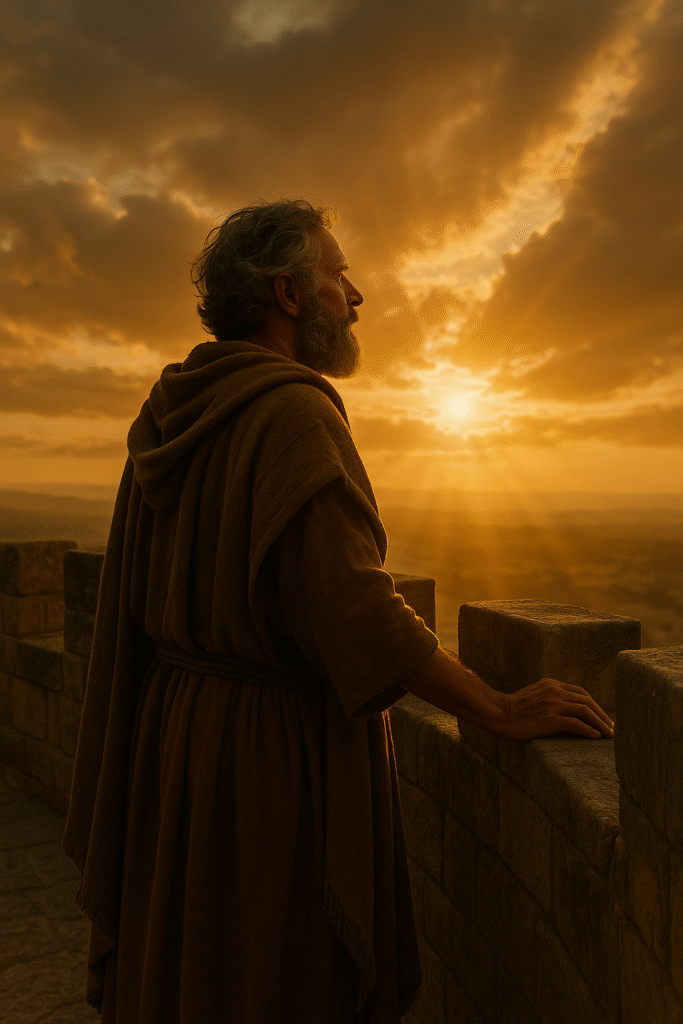
He positions himself like a watchman, ready to hear God’s answer:
“I will stand at my watch… and look to see what He will say to me.” (2:1)
Chapter 2 – God’s Answer: “The Righteous Shall Live by Faith”
God tells Habakkuk to write the vision clearly—it is certain and will come at the appointed time.
“Though it lingers, wait for it; it will certainly come and will not delay.” (2:3)
Then God gives the defining statement of the entire book—and one of the most important verses in Scripture:
“The righteous shall live by his faith.” (2:4)
This means:
- The proud rely on their own strength and will fall.
- The righteous trust in God and will stand.
God goes on to pronounce five woes against the Babylonians, assuring Habakkuk that evil will not go unpunished. Though they rise in power for a time, they too will face judgment.
“For the earth will be filled with the knowledge of the glory of the Lord as the waters cover the sea.” (2:14)
2. Key Themes and Lessons
| Theme | Lesson |
|---|---|
| Wrestling with God | Bringing our questions to God is not a lack of faith—it is the pathway to deeper trust. |
| God’s Sovereignty | God uses nations and events to fulfill His purposes, even when we don’t understand them. |
| The Righteous Live by Faith | True faith is trusting God’s character beyond what the eyes can see or the mind can explain. |
| Justice Will Prevail | Evil may prosper temporarily, but God assures that justice will come in His perfect timing. |
| Write the Vision | God’s promises are certain—waiting is not inactivity, but faith in motion. |
3. Encouragement
Oh, I love this book!
Habakkuk doesn’t hide his confusion or pretend everything is okay.
He sees injustice, and he cries out to God with honesty. And guess what?
God answers him—not with condemnation, but with revelation.
God doesn’t explain everything, but He gives Habakkuk something better than answers—He gives him Himself.
He reminds Habakkuk that the story is bigger than what he sees.
When God says, ‘The righteous shall live by faith,’ He’s saying, ‘Habakkuk, you don’t walk by what you see—you walk by who I am.’
Faith is not denial—it’s dependence. It’s trusting God’s heart when His hand is not yet visible.
And then God says, ‘Write the vision.’ Why?
Because when God speaks, you don’t let your emotions erase His promises.
You hold onto His word until it comes to pass!
Come on—this is not a book about judgment. It’s a book about confidence in God’s character.
It’s about learning to live in such trust that no matter what happens around you, you stand firm—because your faith is rooted in God, not in circumstances.
4. Reflection Questions
- What questions or burdens have I been holding back from bringing honestly to God?
- Do I trust God’s timing, even when it seems delayed from my perspective?
- Am I living by sight or by faith in God’s Word and character?
- What vision or promise has God given me that I need to “write down” and hold onto?
- How can I shift from anxiety to watchfulness, waiting expectantly for God’s answer?
Book of Habakkuk – Set 2 (Chapter 3)
Theme: From Fear to Faith — Rejoicing in God Regardless of Circumstances
1. Summary of the Chapter
Habakkuk’s Prayer (A Psalm of Revival and Surrender)
Habakkuk responds to God’s revelation not with further questions, but with worship.
“Lord, I have heard of Your fame; I stand in awe of Your deeds.
Renew them in our day, in our time make them known; in wrath remember mercy.” (3:2)
He recalls God’s mighty acts in the past—how He delivered Israel, shook the nations, and showed power over nature itself.
Verses 3–15 – The Majesty and Power of God
Habakkuk’s vision is filled with poetic imagery:
- God comes like the rising sun.
- Plague and pestilence obey His command.
- The mountains tremble, the oceans part.
- God rides on chariots of salvation.
- He crushes the head of the wicked.
Habakkuk is overwhelmed—not by fear of circumstances, but by awe of God’s sovereignty and power.
Verses 16–19 – The Great Declaration of Faith
Habakkuk feels human fear:
“I heard and my heart pounded, my lips quivered…” (3:16)
But then, he makes the greatest declaration of trust in the Old Testament:
“Though the fig tree does not bud
and there are no grapes on the vines,
though the olive crop fails
and the fields produce no food,
though there are no sheep in the pen
and no cattle in the stalls,
yet I will rejoice in the Lord,
I will be joyful in God my Saviour.
The Sovereign Lord is my strength;
He makes my feet like the feet of a deer,
He enables me to tread on the heights.” (3:17–19)
This is not denial of reality—it is superior reality. Habakkuk declares that God is enough, even if every visible blessing disappears.
2. Key Themes and Lessons
| Theme | Lesson |
|---|---|
| Reverence in Prayer | Revival begins not with complaint, but with remembering who God is. |
| Faith Over Feelings | True faith remains even when circumstances fail. |
| Rejoicing in God Alone | Joy is not based on what God gives, but on who God is. |
| Divine Strength | God empowers His people to rise above fear and walk in victory. |
| Transformation Through Revelation | Habakkuk’s heart changed because his perspective shifted from earthly problems to God’s eternal power. |
3. Encouragement
Oh, this is gold!
Habakkuk started terrified at what he saw around him—but by the end, he’s dancing on the heights!
What changed? Not his circumstances—his revelation.
He saw God as bigger than the Babylonians, bigger than injustice, bigger than scarcity, bigger than fear.
He basically says, ‘Even if everything I rely on falls apart—my income, my provision, my security—yet I will rejoice in the Lord! Because my joy is not in things, it’s in Him.’
This is the heart of true faith!
Faith isn’t pretending hard times aren’t real—it’s knowing God is more real than the hard times.
Then he says, ‘He makes my feet like a deer’s.’ A deer doesn’t slip on high places—it thrives there.
That means God doesn’t just help you survive trials—He helps you rise above them.
Sister, the message of Habakkuk is this:
Your strength is not your circumstances, your emotions, or your understanding.
Your strength is the Lord Himself.
And if you have Him, you can rejoice in any season.
4. Reflection Questions
- Do I praise God only when circumstances are favourable, or do I rejoice in Him regardless of what I see?
- What does it mean for me personally to say, “Yet I will rejoice in the Lord”?
- Have I allowed fear to dominate my perspective instead of remembering God’s power and faithfulness?
- What past testimonies of God’s goodness can I recall to strengthen my faith today?
- How can I position myself like Habakkuk—on the heights, walking in God’s supernatural strength?
Overview of the Book of Habakkuk
Theme: From Questioning God to Trusting God — Living by Faith in Troubling Times
1. Summary of the Book
The Book of Habakkuk is unlike any other prophetic book—it is not a message to the people, but a conversation between the prophet and God. Habakkuk brings his deepest questions, confusion, and burdens before the Lord: “Why is there so much injustice? Why does evil seem to prevail? Why does God delay in setting things right?”
Instead of rebuking him, God answers with profound truth:
- He is raising up Babylon as an instrument of judgment.
- Even when circumstances are confusing, His ways are just, His timing is perfect.
- The key to surviving a shaking world is this foundational statement:
“The righteous shall live by his faith.” (Habakkuk 2:4)
Habakkuk then responds not with despair, but with worship. Chapter 3 is a prophetic psalm of revival, where the prophet remembers God’s past faithfulness and declares his trust in God’s character regardless of circumstances.
The book ends with one of the most powerful declarations of faith in Scripture:
“Though the fig tree does not blossom… yet I will rejoice in the Lord; I will be joyful in God my Saviour.” (Habakkuk 3:17–18)
Habakkuk moves from fear to faith, from confusion to confidence, reminding us that God is sovereign, and those who trust in Him will stand firm even when everything around them is shaking.
2. Key Themes and Lessons
| Theme | Lesson |
|---|---|
| Honest Dialogue with God | God invites us to bring our questions and struggles to Him. |
| Living by Faith | True righteousness is defined by trust in God, not circumstances. |
| God’s Sovereignty Over Nations | God directs history, even using ungodly nations for His purposes. |
| Waiting on God’s Timing | What God promises will surely come to pass—faith waits with expectation. |
| Joy in God Alone | Our rejoicing is rooted in God’s nature, not in outward provision or comfort. |
| Strength in the Lord | God empowers His people to rise above fear and walk in victory. |
3. Encouragement
Oh, this book is amazing!
Habakkuk doesn’t pretend everything is okay—he takes his pain straight to God.
And instead of falling apart, he ends up standing on the heights!
God doesn’t just fix Habakkuk’s situation—He fixes Habakkuk’s perspective.
He teaches him: ‘Habakkuk, you’re not called to live by what you see—you’re called to live by who I am.’
That’s faith!
It’s when your heart is so grounded in God’s goodness that even if everything falls apart around you, your joy stands unshaken.
Come on—what if we stopped trying to control outcomes and started trusting God’s character?
That’s where peace lives.
Habakkuk ends up with deer’s feet—able to stand in high, dangerous places without slipping.
That’s what faith does: it lifts you above the storm.
This book is not about judgment—it’s about trust, transformation, and the unstoppable joy of those who live by faith.
4. Reflection Questions
- What situations in my life tempt me to question God’s justice or timing?
- How can I shift from anxiety to faith by remembering God’s past works?
- What does it practically mean for me to “live by faith” today?
- Do I rejoice in God Himself, or only in what He provides?
- How can Habakkuk’s declaration—“Yet I will rejoice in the Lord”—become my personal anthem in times of uncertainty?