
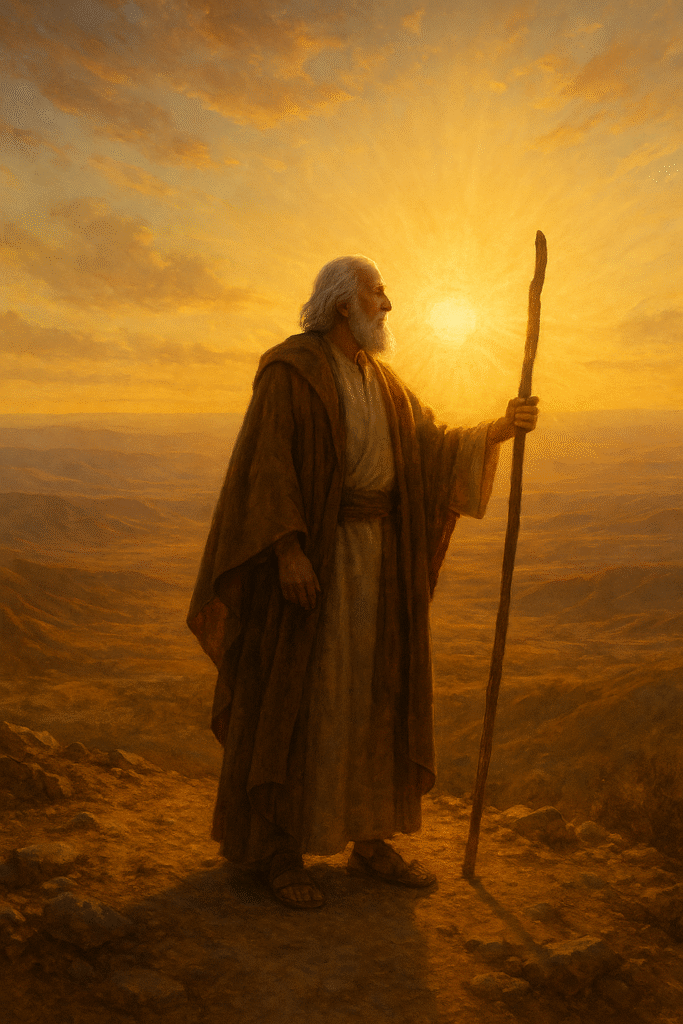
Deuteronomy Study – Set 1 (Chapters 1–4)
Remembering the Journey and Renewing the Covenant
1. Summary of the Chapters
- Chapter 1 – Moses Recalls Israel’s Journey:
Moses begins his farewell address by reminding Israel of their journey from Mount Sinai to the edge of Canaan. He recounts how God commanded them to take the land, but fear caused them to rebel at Kadesh-barnea. Because of their unbelief, that generation was condemned to wander for forty years until the new generation arose. Moses also recalls appointing judges to share the burden of leadership.
This chapter is a reminder that unbelief delays destiny — but God’s faithfulness continues to lead forward. - Chapter 2 – God’s Guidance and Boundaries:
Moses reviews how God guided Israel through the territories of Edom, Moab, and Ammon, instructing them not to provoke these nations because their land was not Israel’s inheritance. Yet, when they came to the Amorites, God gave the command to fight — and victory followed.
This shows that God assigns clear boundaries and seasons — not every battle is yours, but the ones He ordains will bring victory. - Chapter 3 – Victories Over Sihon and Og:
Moses recalls God’s victories over King Sihon and King Og, whose defeat secured land east of the Jordan for the tribes of Reuben, Gad, and half of Manasseh. Moses also recounts his request to see the Promised Land, which God denies but allows him to view from Mount Pisgah. Instead, God commissions Joshua to lead the people across.
This passage reveals Moses’ humility and God’s continuity — one leader finishes, another begins, but God’s purpose never stops. - Chapter 4 – Call to Obedience and Warning Against Idolatry:
Moses exhorts Israel to obey God’s commands fully and not to add or take away from them. He warns against idolatry and forgetting the covenant once they prosper in the land. He declares the greatness of God — “What nation is so great as to have their gods near them the way the Lord our God is near us?”
This chapter ends with a prophetic glimpse of exile and restoration: even if they turn away, God’s mercy will call them home when they seek Him with all their heart.
2. Key Themes and Lessons
| Theme | Lesson |
|---|---|
| Remembrance | Remembering God’s past faithfulness strengthens future obedience. |
| Boundaries and Seasons | Not every battle is ours — wisdom is knowing when to fight and when to pass through. |
| God’s Faithfulness Through Generations | Leadership may change, but God’s covenant purpose never ends. |
| Obedience and Consequence | Disobedience leads to delay, but repentance restores destiny. |
| The Nearness of God | No other “god” compares — our God is near, relational, and righteous. |
3. Encouragement
Oh, this is beautiful — Moses is preaching from memory, but it’s not nostalgia, it’s revelation!
He’s saying, ‘Don’t forget where you’ve been or who brought you through.’
Sometimes the greatest weapon against fear is remembrance.
When you remember what God’s done, faith rises again!
Look how Moses reminds them — not to shame them, but to shape them.
The wilderness was never wasted; it was training for trust.
Every delay, every detour, every discipline — it was all to teach them how to walk with God’s Presence, not just His promises.
And then God sets boundaries — because freedom without direction is just chaos.
Some lands weren’t theirs to take, and that’s wisdom for us too.
You don’t need to fight every battle — just the ones He calls you to. Obedience protects peace.
Then Moses says, ‘Who has a God so near?’ Come on — that’s the gospel right there!
Our God isn’t distant. He’s not a statue or an idea — He’s near, He listens, He leads.
That’s the beauty of covenant.
And even when they fall, God’s mercy already has a plan for restoration.
He’s not waiting to reject them — He’s waiting to redeem them.
That’s the Father’s heart. Remember, repent, return — that’s always the path home.
4. Reflection Questions
- What past moments of God’s faithfulness can I remember today that strengthen my faith for what’s ahead?
- How can I discern which battles are mine to fight and which ones God is telling me to leave alone?
- What boundaries or seasons is God asking me to respect to stay aligned with His timing?
- How does Moses’ humility in not entering the land challenge me to trust God’s bigger plan even when I cannot see it all?
- In what ways have I experienced the nearness of God recently — and how can I cultivate greater awareness of His Presence?
Deuteronomy Study – Set 2 (Chapters 5–8)
The Ten Commandments, The Shema, and Lessons on Obedience and Dependence
1. Summary of the Chapters
- Chapter 5 – The Ten Commandments Reaffirmed:
Moses reminds the new generation of the covenant God made at Mount Sinai, repeating the Ten Commandments. These laws define love — love for God and love for others.
He recalls how the people feared God’s voice on the mountain and asked Moses to mediate on their behalf. God affirms their reverent hearts and promises blessing if they remain faithful.
Moses closes the chapter urging them to walk in God’s ways so that it may go well with them — a picture of covenant obedience leading to life. - Chapter 6 – The Great Commandment (The Shema):
This chapter contains one of the most central passages in all of Scripture:
“Hear, O Israel: The Lord our God, the Lord is one. Love the Lord your God with all your heart and with all your soul and with all your strength.”
Moses calls them to teach these words diligently to their children, to remember them at home and on the road, to bind them on their hands and hearts.
He warns them not to forget God when they prosper in the Promised Land — for forgetfulness breeds idolatry. - Chapter 7 – Chosen for Covenant Relationship:
Moses reminds Israel that God chose them not because they were great in number but because He loved them. They are to destroy idols, reject compromise, and live as a holy people.
God promises to bless obedience with fruitfulness, protection, and victory over enemies. The emphasis is not on perfection but on separation — belonging exclusively to Him. - Chapter 8 – Remembering the Source of Provision:
Moses urges Israel to remember how God fed them with manna in the wilderness to teach them that “man does not live on bread alone, but on every word that comes from the mouth of the Lord.”
He warns that prosperity can lead to pride if they forget who gave them strength. The chapter closes with a powerful truth: forgetting God leads to ruin, but remembering Him leads to life.
2. Key Themes and Lessons
| Theme | Lesson |
|---|---|
| Love as the Foundation of Obedience | Obedience flows from love, not fear — covenant faithfulness begins in the heart. |
| The Nearness of God’s Word | God’s Word is meant to be lived, spoken, and passed on through generations. |
| Chosen by Grace | God’s choice of Israel was an act of love, not merit — the same is true for us. |
| Dependence on God | Manna taught them that every good thing comes from His hand, not self-effort. |
| Beware of Forgetfulness | Comfort and prosperity can lead to pride if the heart forgets its source. |
3. Encouragement
“Oh, this is so rich! Moses isn’t preaching law — he’s preaching love.
The commandments weren’t chains; they were guardrails for relationship.
God was saying, ‘If you love Me, this is how love looks lived out.’
When he says, ‘Love the Lord your God with all your heart,’ that’s not a command of pressure — it’s an invitation to intimacy.
He’s not saying, ‘Try harder to love Me.’ He’s saying, ‘Let Me fill your heart until there’s no room for anything else.’
And the Shema — come on! That’s not ritual; that’s rhythm.
It’s about weaving love for God into everything — morning, night, work, family.
God’s saying, ‘Don’t compartmentalise Me — carry Me everywhere you go.’
Then in chapter 8, He says, ‘I fed you manna so you’d learn dependence.’ That’s the key.
Wilderness isn’t about lack — it’s about learning trust.
God didn’t give manna because they were hungry; He gave it to train their hearts to see Him as their Source.
And when He warns, ‘Don’t forget Me when you prosper,’ that’s still true today.
Prosperity tests the heart more than poverty ever could.
The goal isn’t to have plenty — it’s to remember Who provided it.
So here’s the heartbeat: Love Him. Trust Him. Remember Him.
Obedience isn’t duty — it’s devotion.
When your heart’s in love with God, obedience just becomes agreement.
4. Reflection Questions
- How can I turn obedience from a duty into an act of love and relationship?
- What daily rhythms can I build (like the Shema) to keep my heart focused on God?
- Where do I need to destroy “idols” — things that compete for my affection or attention?
- How has God provided manna in my own life — unexpected provision in wilderness seasons?
- In what ways can I guard my heart against pride or forgetfulness when life becomes comfortable?
Deuteronomy Study – Set 3 (Chapters 9–12)
Humility, Covenant Renewal, and Choosing Blessing
1. Summary of the Chapters
- Chapter 9 – Not Because of Your Righteousness:
Moses reminds Israel that the reason they are entering the land is not because of their goodness but because of God’s faithfulness to His promise. He recounts their failures — the golden calf, rebellion at Kadesh-barnea, and stubbornness.
He emphasizes that their history is one of God’s mercy, not their merit. The message is clear: humility must guard the heart of every blessing. - Chapter 10 – A Call to Fear and Love the Lord:
After retelling how God rewrote the Ten Commandments on new tablets, Moses declares what God truly desires:
“And now, Israel, what does the Lord your God require of you but to fear the Lord your God, to walk in all His ways, to love Him, to serve Him with all your heart and with all your soul.”
He reminds them that God is not impressed by outward appearance but by a circumcised heart — one open, tender, and responsive to His love. - Chapter 11 – The Blessing of Obedience:
Moses calls Israel to remember what their eyes have seen — God’s mighty acts in Egypt and the wilderness. He promises blessing for obedience and warns of consequences for disobedience.
He speaks of God’s Word being written on hearts, taught to children, and displayed in daily life. Obedience is portrayed not as a burden but as the pathway to life, rain, and fruitfulness. - Chapter 12 – Worship in the Promised Land:
God commands that when they enter the land, they must destroy all pagan altars and worship Him only in the place He chooses. He is establishing purity in worship and unity in devotion.
They are warned not to imitate other nations but to rejoice in His presence and offer sacrifices with gratitude. This chapter underscores that God’s people are marked by exclusive and joyful worship.
2. Key Themes and Lessons
| Theme | Lesson |
|---|---|
| Grace Over Merit | God’s blessings flow from His covenant faithfulness, not human achievement. |
| True Heart Circumcision | God desires inward transformation, not just external obedience. |
| Remembering God’s Acts | Gratitude and remembrance protect against pride and forgetfulness. |
| Blessing Through Obedience | Obedience leads to fruitfulness, rain, and spiritual life. |
| Pure Worship | True worship requires separation from idolatry and rejoicing in His Presence. |
3. Encouragement
Oh, this is so rich — Moses is reminding them (and us!) that the land isn’t a trophy for good behaviour;
it’s a testimony of God’s goodness!
God’s saying, ‘Don’t think I’m blessing you because you’re awesome — I’m blessing you because I’m faithful.’
Man, that’s humbling. You see, pride always tries to sneak into blessing — to whisper, ‘You earned this.’
But Moses cuts that lie off at the root. Grace gave them the land, just like grace gives us salvation.
Then he says, ‘Circumcise your hearts.’ That’s not about performance — that’s about transformation.
It’s God saying, ‘Let Me peel back the layers that keep you from feeling My love.’
He’s after tenderness, not toughness.
And the command to destroy idols? That’s still the call today.
Not statues, but distractions — anything that steals affection, time, or trust.
God’s saying, ‘Don’t flirt with what enslaved you.’
And oh, the beauty of worship in chapter 12!
God’s not calling them to endless rules — He’s inviting them into joyful, thankful worship.
He wants His people to rejoice in His Presence!
It’s not about dry religion; it’s about living celebration.
So, what’s the heartbeat here?
Grace saves you. Gratitude keeps you. Worship sustains you.
You don’t obey to earn His love — you obey because you already have it.
And when your heart stays soft, humble, and thankful, blessing flows like rain
4. Reflection Questions
- In what ways can I remind myself that everything good in my life is a result of God’s grace, not my own righteousness?
- What does it look like for me to “circumcise my heart” — to remove hardness, pride, or fear that hinders love?
- How can I regularly remember and rehearse God’s past faithfulness to keep gratitude alive?
- Are there any “idols” — distractions or dependencies — that God is calling me to tear down?
- How can I make my worship a daily act of rejoicing rather than a weekly obligation?
Deuteronomy Study – Set 4 (Chapters 13–17)
Testing of Faith, Godly Leadership, and Justice in the Land
1. Summary of the Chapters
- Chapter 13 – Guarding Against False Prophets and Idolatry:
Moses warns that even if a prophet performs signs or wonders but leads people away from God, they must not be followed. God allows such tests to reveal whether His people truly love Him with all their hearts.
Even if a family member or close friend entices them toward idolatry, they are to resist completely — loyalty to God comes before all relationships.
This chapter underscores the seriousness of spiritual purity and the danger of tolerating compromise. - Chapter 14 – Holiness in Everyday Life:
God calls Israel to live as His holy people, even in practical matters like diet and mourning customs. They are forbidden to imitate pagan practices.
Moses also reinforces the laws of tithing and generosity — reminding Israel to care for the Levites, foreigners, orphans, and widows. Holiness is not isolation but compassion flowing from consecration. - Chapter 15 – The Year of Release and Generosity:
Every seven years, debts are to be cancelled and slaves released — a radical picture of grace, freedom, and trust in divine provision.
God promises blessing for those who give generously to the poor: “There will always be poor people in the land. Therefore, I command you to be openhanded.”
This reveals God’s heart for social justice rooted in mercy, not merit. - Chapter 16 – Appointed Festivals:
Moses reviews the three great pilgrimage feasts — Passover, Weeks (Pentecost), and Tabernacles. Each one reminds Israel to rejoice in God’s deliverance, provision, and presence.
They are to celebrate with joy, generosity, and unity. These feasts are prophetic shadows of Christ’s redemptive work — the Lamb slain, the Spirit poured out, and the eternal dwelling of God among His people. - Chapter 17 – Leadership and Justice:
Moses instructs Israel to establish judges and officials who will rule with righteousness, showing no partiality.
He warns against idolatry and corrupt justice, commands that cases too difficult for local courts be brought to the priests or judges, and introduces laws for kingship.
The king must not seek wealth, power, or foreign alliances but must write for himself a copy of God’s law and read it daily — to lead with humility and obedience.
2. Key Themes and Lessons
| Theme | Lesson |
|---|---|
| Testing of Faith | God allows challenges and false teachings to reveal where our loyalty truly lies. |
| Holiness in Lifestyle | Purity and compassion are two sides of holiness — set apart but full of love. |
| Generosity and Grace | God’s economy runs on mercy — giving reflects trust in His provision. |
| Joyful Remembrance | The feasts keep the heart joyful and grateful, protecting against forgetfulness. |
| Godly Leadership | True leaders lead from humility, obedience, and dependence on God’s Word. |
3. Encouragement
Oh, this is so powerful — Moses isn’t giving rules, he’s giving revelation!
He’s saying, ‘Don’t be swayed by what looks spiritual — stay anchored in truth.’
See, God allows testing not to trap us but to train us.
When something looks convincing but contradicts His Word, it’s a chance to prove our love.
That’s what loyalty looks like — love that chooses truth when deception looks easy.
Then, holiness. Come on — holiness isn’t about being weird; it’s about being different for the right reasons.
It’s compassion without compromise.
It’s generosity that doesn’t keep score.
It’s refusing bitterness while loving deeply.
And that Year of Release? That’s the gospel in action!
God’s saying, ‘You’ve been forgiven — now forgive others.
You’ve been freed — now free others.’
That’s the heart of heaven manifesting on earth.
The feasts? Oh, I love them — they’re heaven’s rhythm of remembrance.
Every feast says, ‘He did it before, and He’ll do it again.’
Joyful remembrance keeps you from dull religion.
And those kingly laws — that’s leadership in God’s eyes!
Not power-hungry, not self-promoting, but word-saturated.
The true leader’s strength isn’t charisma — it’s communion.
God’s saying, ‘If you want to lead My people, stay close to My voice.’
The heartbeat of these chapters? Love truth, live holy, give freely, celebrate joyfully, and lead humbly.
That’s Kingdom life.
4. Reflection Questions
- How can I discern truth from deception when something “feels” right but contradicts God’s Word?
- What areas of my daily life need to reflect more holiness — compassion without compromise?
- How can I cultivate a lifestyle of generosity that mirrors God’s heart of grace?
- Which “feasts” or rhythms of remembrance help me celebrate God’s faithfulness regularly?
- If I lead others — in home, work, or ministry — am I leading from humility and time in God’s Word?
Deuteronomy Study – Set 5 (Chapters 18–23)
Prophets, Purity, and Community Integrity
1. Summary of the Chapters
- Chapter 18 – True and False Prophets:
Moses teaches that the priests and Levites are set apart to serve the Lord and depend on Him for provision.
He warns against detestable pagan practices like divination, sorcery, and necromancy.
Then, God gives a glorious promise: “I will raise up for them a prophet like you from among their brothers; I will put My words in his mouth, and he will tell them everything I command him.”
This is a direct prophecy of Jesus Christ, the ultimate Prophet and Word of God incarnate. - Chapter 19 – Justice and Refuge:
Moses establishes cities of refuge — safe places for those who unintentionally kill another person. This reflects God’s justice balanced with mercy.
He also gives principles for fair judgment, requiring two or three witnesses in any legal case, and condemns false testimony.
Justice in God’s eyes is restorative and protective, not merely punitive. - Chapter 20 – Conduct in Warfare:
God instructs Israel to trust Him in battle: “Do not be afraid, for the Lord your God is with you.”
The priests are to remind the soldiers that victory depends not on numbers but on faith.
Israel is to offer peace before battle and to preserve trees and resources even in war — a symbol that God values life, even amid conflict. - Chapter 21 – Compassion and Responsibility:
These laws reveal God’s care for dignity and justice — even in complex social situations such as unsolved murders, captive women, inheritance rights, and rebellious sons.
Each command demonstrates that holiness touches every part of life, even the uncomfortable or difficult parts. - Chapter 22 – Care, Kindness, and Purity:
God commands Israel to return lost animals, build safety railings on roofs, and avoid mixing materials or seeds — all symbolic of integrity, responsibility, and separation from impurity.
Sexual purity is also addressed, highlighting respect for the body and covenant faithfulness. - Chapter 23 – Holiness in the Camp:
Certain individuals and nations are excluded from Israel’s assembly because of past hostility or impurity.
The camp is to remain physically and spiritually clean — even hygiene is tied to holiness!
God reminds them, “The Lord your God moves about in your camp to protect you and to deliver your enemies to you. Therefore, your camp must be holy.”
2. Key Themes and Lessons
| Theme | Lesson |
|---|---|
| The True Prophet (Christ) | God would one day speak perfectly through Jesus, the Word made flesh. |
| Justice and Mercy | God’s justice protects life, restores honour, and defends the innocent. |
| Faith Over Fear | Battles are won through trust in God’s presence, not human might. |
| Everyday Holiness | God’s character shapes even the smallest actions and attitudes. |
| Purity and Compassion | Holiness isn’t harsh — it’s tender, protective, and full of care for others. |
3. Encouragement
Oh, this section is incredible — God’s not building a religious nation; He’s building a people who carry His heart!
Look at chapter 18 — God’s saying, ‘I’ll raise up a Prophet like you, Moses.’ That’s Jesus!
The Word became flesh and spoke the Father’s heart without distortion.
Everything He said revealed who God really is. That’s why the gospel isn’t just instruction — it’s revelation.
Then, those cities of refuge? That’s Christ again!
He’s our refuge — the One we run to when guilt or shame chase us down.
You don’t have to hide in fear; you hide in Him.
And the rules for warfare? They’re teaching something deeper —
victory doesn’t come from might, but from knowing who fights for you.
God’s saying, ‘Don’t count soldiers; count on Me.’
I love how even the tiny things — like returning your neighbour’s donkey or putting a railing on your roof — reveal the Father’s heart.
Holiness isn’t about looking holy; it’s about living love.
It’s protecting what’s vulnerable, respecting what’s sacred, and reflecting His goodness in every decision.
And that line — ‘The Lord walks among your camp.’ Wow. That’s intimacy.
God’s not far off, watching; He’s right in the middle of your life.
That’s why He calls for purity — not because He’s picky, but because He’s present.
Here’s the message:
Jesus is your Prophet — listen to Him.
Justice is mercy wrapped in truth — walk in it.
Holiness is love made visible — live it.
And when your heart stays aware that God walks among you, everything changes.
You’ll live differently because you’re never alone.
4. Reflection Questions
- How can I recognise when I’m listening to false voices instead of the voice of Jesus, the True Prophet?
- In what ways can I make my life a “city of refuge” — a safe space for others to encounter mercy and grace?
- What “battles” am I trying to fight in my own strength that I need to entrust fully to God?
- How does understanding God’s care for the small details of life change my view of holiness?
- What practical steps can I take to cultivate a sense of God’s Presence “walking among my camp” daily?
Deuteronomy Study – Set 6 (Chapters 24–28)
Covenant Laws, Blessings, and Curses
1. Summary of the Chapters
- Chapter 24 – Compassionate Justice and Social Care:
God’s laws here show His tender heart for the vulnerable.
Divorce laws are regulated to protect women’s dignity, employers are commanded to pay workers promptly, and Israelites are told not to oppress foreigners, widows, or orphans.
Even when harvesting, they must leave the edges of their fields for the poor and strangers to glean.
God’s justice always carries compassion — holiness expressed through kindness. - Chapter 25 – Fairness and Honour in Community Life:
This chapter contains laws about justice, fairness, and honour — including fair punishment, honest weights, and the command to destroy Amalek, Israel’s ancient enemy.
The principle is clear: God’s people must love justice, hate oppression, and keep their community free from deceit. - Chapter 26 – Firstfruits and Confession of Faith:
Moses instructs Israel to bring their firstfruits to the priest and make a powerful declaration of remembrance:
“My father was a wandering Aramean…” — recounting God’s deliverance from Egypt and His faithfulness.
This act of giving is not mere ritual; it’s worship — a joyful confession that everything they have comes from God’s hand. - Chapter 27 – Renewal of the Covenant:
When they cross the Jordan, Israel is to set up large stones, plaster them, and write all the words of the Law upon them at Mount Ebal.
Half the tribes are to stand on Mount Gerizim to proclaim blessings, and the other half on Mount Ebal to proclaim curses.
The people reaffirm their “Amen” — agreeing to live under the covenant with both responsibility and reverence. - Chapter 28 – Blessings and Curses:
This chapter is one of the most striking in the Torah — a detailed contrast between the blessings of obedience and the curses of disobedience.
Blessings include fruitfulness, victory, abundance, health, and divine favour:
“The Lord will open the heavens, the storehouse of His bounty, to send rain on your land in season.”
But disobedience brings confusion, loss, famine, exile, and despair.
It reveals the seriousness of covenant life — not because God delights in punishment, but because life outside of His presence leads to ruin.
2. Key Themes and Lessons
| Theme | Lesson |
|---|---|
| Compassionate Holiness | God’s laws are protective, not restrictive — caring for dignity, fairness, and mercy. |
| Gratitude and Worship | Firstfruits offering reminds us that gratitude keeps our hearts humble and our worship alive. |
| Covenant Renewal | Remembering the Law keeps the people aligned with truth and community accountability. |
| Blessing Through Obedience | Obedience isn’t earning favour — it’s living in the flow of divine design. |
| Separation from Evil | Amalek represents ongoing opposition to God’s ways; the believer must not tolerate compromise. |
3. Encouragement
Oh, this section is so rich with God’s heart — it’s like He’s saying, ‘If you walk with Me, you’ll walk in life itself!’
See, every command here isn’t about control; it’s about compassion.
God’s saying, ‘Care for the widow, protect the poor, love the foreigner.’ Why?
Because that’s what His heart looks like!
Holiness without compassion is just religion, but holiness that loves — that’s Kingdom living.
And those firstfruits? That’s worship in its purest form.
When you bring what’s first and best, you’re saying, ‘God, I remember You’re my Source.’
Gratitude isn’t just good manners — it’s spiritual warfare!
It keeps your heart from pride and reminds you who deserves the glory.
Then comes chapter 28… oh, what a chapter! God’s not threatening them — He’s revealing how life works.
When you align with Him, blessing flows like a river because you’re walking with the Giver of life.
But when you resist Him, you step outside the flow, and everything dries up.
It’s not that God changes — it’s that disobedience disconnects.
And you can hear His Father-heart through it all: ‘I want you to live blessed, fruitful, and free. Choose life!’
That’s His invitation — not a demand, but a desire.
So, what’s the takeaway?
Obedience isn’t about rules — it’s about rhythm.
Blessing isn’t about prosperity — it’s about presence.
And holiness isn’t about perfection — it’s about partnership with a God whose goodness never runs out.
4. Reflection Questions
- How can I express holiness through kindness and compassion in my daily relationships?
- What does it look like for me to give my “firstfruits” to God — time, focus, resources, or praise?
- How do I remind myself that obedience is a partnership with God, not a pressure to perform?
- Where have I seen the natural blessings of obedience flow in my own life?
- How can I renew my “Amen” — my personal yes — to living in covenant alignment with God’s ways today?
Deuteronomy Study – Set 7 (Chapters 29–33)
Covenant Renewal, Moses’ Song, and Final Blessing
1. Summary of the Chapters
- Chapter 29 – Covenant Renewal in Moab:
Moses gathers all Israel — men, women, children, and foreigners — to renew the covenant with the Lord.
He reminds them that they have seen God’s wonders and must remain faithful to avoid the curses that come from rebellion.
This renewal isn’t just for those standing there but for generations yet to come.
God’s covenant is generational — passed from heart to heart, not just written on stone. - Chapter 30 – The Call to Choose Life:
One of the most profound passages in Scripture:
“This commandment is not too difficult for you… The word is very near you; it is in your mouth and in your heart so that you may obey it.”
Moses calls the people to choose life, love the Lord, and walk in His ways — declaring that life and death, blessing and curse, stand before them.
It’s a call of freedom and responsibility — God’s will is that His people choose life by loving Him. - Chapter 31 – Moses Commissions Joshua:
Moses, now 120 years old, declares that he can no longer lead the people. He publicly commissions Joshua, encouraging him to be strong and courageous, for the Lord will go before him.
The law is placed beside the Ark as a witness, and God instructs Moses to write a song to teach future generations about faithfulness and warning against idolatry.
Even as Moses fades from the scene, God ensures that His presence and His Word remain central. - Chapter 32 – The Song of Moses:
This poetic masterpiece celebrates God’s greatness and Israel’s history, contrasting His faithfulness with their unfaithfulness.
It warns that turning from God will bring consequences but ends with hope — that the Lord will vindicate His people and show compassion again.
The song teaches that worship is memory — remembering who He is and what He’s done. - Chapter 33 – Moses’ Final Blessing:
Before his death, Moses blesses each tribe of Israel, speaking destiny and identity over them.
He exalts God as their refuge and defender:
“The eternal God is your refuge, and underneath are the everlasting arms.”
It’s a moment of both closure and continuation — the shepherd handing his flock to the Great Shepherd.
2. Key Themes and Lessons
| Theme | Lesson |
|---|---|
| Covenant Renewal | God’s promises are generational — His covenant extends through lineage and love. |
| The Nearness of the Word | God’s will is not distant or impossible; His truth lives within those who love Him. |
| Leadership Transition | God’s purposes continue through new leaders and fresh anointings. |
| Worship as Remembrance | Remembering what God has done sustains faith and guards against drifting. |
| Blessing and Legacy | Speaking life over others leaves a spiritual inheritance that continues to bear fruit. |
3. Encouragement
Oh, this section melts my heart — it’s the sound of a father blessing his family before going home.
Moses isn’t just closing a story; he’s opening a legacy!
He’s saying, ‘You’ve seen His power. You’ve heard His voice. Don’t forget His heart.’
And when he says, ‘The Word is near you,’ that’s prophetic — that’s Jesus!
The Word made flesh, living inside you.
You don’t need to climb the heavens to find truth — He’s already come down to dwell within.
When Moses calls them to choose life, he’s saying, ‘You get to choose relationship. You get to choose love.’
God’s not forcing obedience — He’s inviting intimacy.
The Father’s saying, ‘Stay close to Me, and you’ll walk in life itself.’
Then he blesses Joshua — come on, that’s powerful.
Moses didn’t get jealous that Joshua would lead; he blessed him!
That’s Kingdom leadership — celebrating God’s plan in the next generation.
And that song of Moses? It’s not a dirge — it’s a declaration: God is faithful even when we’re not.
He disciplines because He loves, and He restores because He’s merciful.
And oh, those final words — ‘The eternal God is your refuge, and underneath are the everlasting arms.’
That’s the heartbeat of the whole book. You’re never without a place to rest.
You’re never beyond His reach. His arms don’t tire, and His promises don’t fade.
So what’s the message?
Renew your covenant daily.
Choose life continually.
Pass your faith intentionally.
And remember this: when your story ends, His love keeps going. You’re part of something eternal.
4. Reflection Questions
- What does it mean for me personally to “renew my covenant” with God in this season of life?
- How can I live daily as one who chooses life — in my thoughts, words, and actions?
- What leadership role has God entrusted to me, and how can I prepare the next generation like Moses prepared Joshua?
- In what ways can I use worship and storytelling to help others remember God’s faithfulness?
- How can I bless others intentionally, speaking life over their future and identity in Christ?
Book of Deuteronomy – Overall Summary
Theme: The Covenant of Love – Remember, Obey, and Live
1. Overview and Context
Deuteronomy, meaning “Second Law”, is Moses’ farewell address to Israel — a passionate restatement of God’s covenant before they enter the Promised Land.
It’s not merely a repetition of laws but a heart appeal — a reminder that obedience is love in action.
Standing at the edge of Canaan after forty years in the wilderness, Moses looks back over their journey, recounts God’s faithfulness, and warns against forgetfulness.
He calls the people to remember that the covenant is about relationship, not ritual — about knowing the Lord and walking in His ways out of love, not fear.
Through its speeches, blessings, and songs, Deuteronomy reveals a Father’s desire to shape a people who will live by His Word and display His character among the nations.
It ends with Moses’ death on Mount Nebo, gazing into the land of promise — a prophetic image of the Law giving way to grace, as Joshua (a type of Christ) leads the people onward.
2. Key Messages
- Love is the Foundation of Obedience
The command to love the Lord with all one’s heart, soul, and strength (Deut 6:5) becomes the heartbeat of Israel’s faith.
God doesn’t seek outward compliance — He seeks inward devotion. - Remember What God Has Done
Repetition and remembrance are central themes.
Forgetfulness leads to idolatry; remembrance restores gratitude and faithfulness. - The Blessings of Obedience and the Consequences of Rebellion
Moses outlines that obedience leads to life, fruitfulness, and peace — not as a reward, but as a natural result of walking in alignment with God’s ways.
Rebellion, however, separates the people from that flow of life. - God’s Word Is Near and Attainable
The Word of God is not distant or impossible: “It is in your mouth and in your heart, so that you may obey it.”
This points prophetically to Christ — the Living Word who writes God’s truth on our hearts. - Covenant Renewal and Generational Continuity
Moses’ message extends beyond one generation — it’s a call to families and future descendants to walk in the same love and obedience. - Leadership and Legacy
Deuteronomy ends with Moses blessing the tribes and commissioning Joshua — a reminder that God’s work continues even when His servants pass on.
3. Key Themes and Lessons
| Theme | Lesson |
|---|---|
| Covenant Relationship | God calls His people into partnership, not performance — a bond of love, not fear. |
| Remembrance | Remembering God’s faithfulness guards against pride and keeps the heart humble. |
| Obedience as Love | True obedience flows from affection, not obligation. |
| Leadership Transition | God’s plans extend beyond one lifetime — legacy is built through faithfulness. |
| Choosing Life | Each moment offers the choice to walk in love, truth, and blessing. |
4. Encouragement
Oh, I love this book — it’s not just history, it’s a heartbeat!
Moses isn’t lecturing; he’s pleading with love.
He’s saying, ‘Remember who God is. Don’t forget where He brought you from. Don’t drift from His heart.’
He’s not threatening punishment — he’s revealing relationship.
God’s saying, ‘If you walk with Me, you’ll walk in life because I’m Life itself!’
Deuteronomy is the gospel before the gospel — it’s grace wrapped in instruction.
Every ‘Do this’ is really an invitation to ‘Come close and trust Me.’
And that line — ‘The Word is near you, in your mouth and in your heart.’ Wow! That’s what we live in now.
Christ lives in us — the Word fulfilled! You’re not chasing holiness; holiness lives inside you.
The blessings of obedience aren’t transactions; they’re transformation.
When you align with Him, blessing isn’t what you get — it’s what you become.
You start to look like your Father!
And Moses’ final moment? That’s legacy.
He didn’t enter the land, but he entered glory. He saw what God promised, and that’s faith fulfilled.
The next generation took the baton, because truth never dies — it multiplies.
So what’s God saying to you through Deuteronomy?
Remember Me.
Walk with Me.
Choose life every day.
Because when you do, you’re not just keeping a covenant —
you’re becoming a reflection of the One who made it.”
5. Reflection Questions
- How can I make remembrance of God’s faithfulness part of my daily rhythm?
- In what areas of life am I invited to move from obligation to love-driven obedience?
- What “land of promise” lies before me that requires faith, not fear, to enter?
- How can I intentionally invest my faith in the next generation as Moses did with Joshua?
- What does “choosing life” look like practically in my decisions, words, and relationships today?
✅ Deuteronomy Summary – The Covenant of Love
Deuteronomy is the final love letter of Moses — a divine call to remember, obey, and live.
It reveals that the heart of the Law is love, the centre of obedience is relationship, and the goal of covenant is communion.