
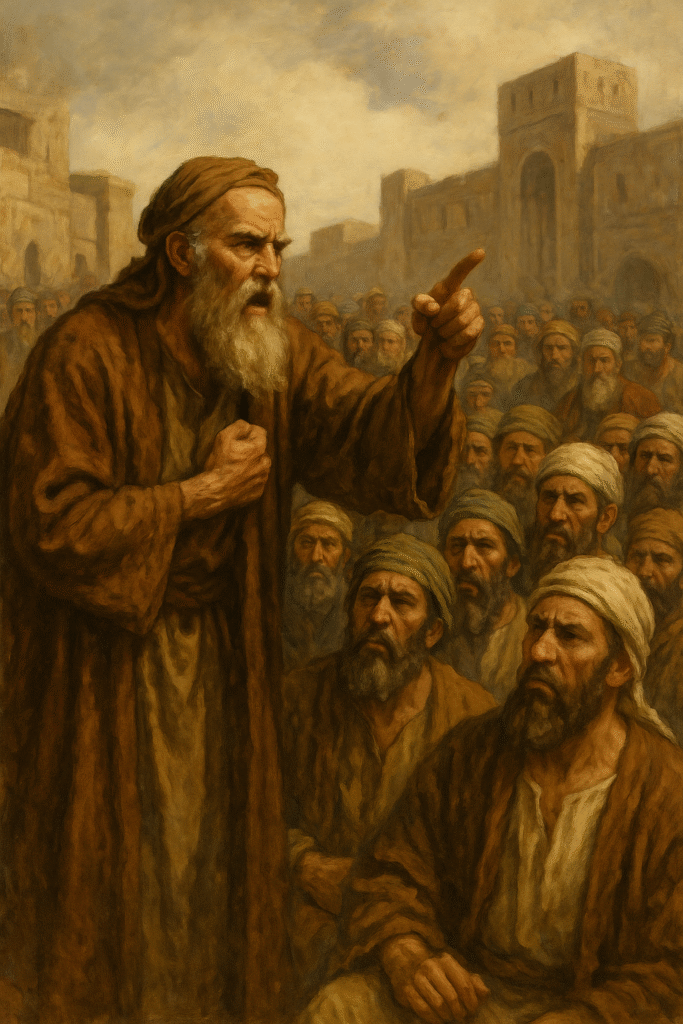
Book of Amos – Set 1 (Chapters 1–3)
Theme: Justice, Accountability, and the Righteous Judgment of God
1. Summary of the Chapters
Chapter 1 – The Roar of the Lord Against the Nations
The prophet Amos, a shepherd from Tekoa in Judah, is called by God to speak to the northern kingdom of Israel during a time of peace and prosperity—but moral decay.
God’s voice “roars from Zion” (1 : 2) as He pronounces judgment on surrounding nations:
Damascus, Gaza, Tyre, Edom, Ammon, and Moab.
Each judgment begins with the refrain:
“For three sins… even for four, I will not relent.” (1 : 3 ff)
These nations are condemned for cruelty, injustice, slavery, and merciless violence. God is revealing His justice not only to Israel, but to all peoples—He is Lord of every nation.
Chapter 2 – Judgment on Judah and Israel
The prophetic spotlight turns inward. Judah is judged for rejecting God’s law, while Israel—the covenant people—is indicted for even greater sin.
Israel’s sins include:
- Exploiting the poor and the righteous
- Corrupting justice for personal gain
- Immorality and idolatry
- Ignoring the prophets God sent to warn them
“They sell the innocent for silver, and the needy for a pair of sandals.” (2 : 6)
God reminds them: I brought you out of Egypt, led you through the wilderness, raised up prophets and Nazirites… and you silenced them.
The judgment is clear: privilege increases responsibility. Israel’s covenant closeness does not shield them from accountability—it heightens it.
Chapter 3 – Israel’s Accountability
God declares His case plainly:
“You only have I chosen of all the families of the earth; therefore I will punish you for all your sins.” (3 : 2)
The prophet uses vivid questions to drive the point home:
- Does a lion roar if it has no prey?
- Does a trumpet sound without warning of danger?
- If disaster comes to a city, has not the Lord allowed it?
These rhetorical images reveal that divine judgment is not random—it is response. Israel’s corruption, complacency, and injustice have provoked Heaven’s roar.
Amos, compelled by the word of the Lord, cannot remain silent:
“The Sovereign Lord has spoken—who can but prophesy?” (3 : 8)
2. Key Themes and Lessons
| Theme | Lesson |
|---|---|
| Universal Justice of God | God is Lord over all nations—His moral law transcends borders. |
| Accountability of the Covenant People | Spiritual privilege brings greater responsibility. |
| Social Injustice and Oppression | Exploiting the weak and corrupting justice are sins that grieve God deeply. |
| Prophetic Courage | Amos, though a humble shepherd, speaks truth fearlessly—obedience outweighs position. |
| The Roar of the Lord | God’s warning is an act of mercy—He roars to awaken before He strikes. |
3. Encouragement
Oh, this is so rich!
God didn’t call Amos because he was trained, polished, or famous—He called him because his heart was available.
A shepherd in the hills becomes the mouthpiece of Heaven. That’s the Kingdom way!
The roar of the Lord in Amos isn’t rage—it’s mercy in motion. He’s roaring because His people are asleep.
They’ve built comfort around injustice and called it blessing.
But God’s roar says, ‘Wake up, My people—My heart beats for justice, mercy, and truth!’
When He says, ‘You only have I chosen; therefore I will discipline you,’ that’s not rejection—that’s love!
The Father disciplines the ones He loves because He refuses to let them self-destruct.
Sister, maybe God’s been roaring in your life—not to scare you, but to awaken you.
When He exposes injustice, selfishness, or compromise, it’s not to condemn—it’s to restore the heartbeat of Heaven in you.
So don’t despise His roar—lean into it.
Because behind that roar is a Shepherd’s heart calling you back to purity, justice, and truth.
And when you respond, the same voice that roared in warning will sing over you in love.
4. Reflection Questions
- How do I respond when God exposes areas of injustice, pride, or complacency in my life?
- Am I using my spiritual privilege (knowledge, grace, freedom) to serve others—or to serve myself?
- How can I cultivate the same courage Amos had to speak truth even when unpopular?
- What “roars” of God’s warning might I be ignoring because they disrupt my comfort?
- How can I reflect God’s justice and mercy in the way I treat people around me?
Book of Amos – Set 2 (Chapters 4–6)
Theme: The Folly of Empty Religion and the Cry of God’s Heart for Justice and Righteousness
1. Summary of the Chapters
Chapter 4 – “Yet You Have Not Returned to Me”
Amos rebukes the wealthy women of Samaria (called “cows of Bashan”) who oppress the poor and demand luxury from their husbands.
God lists the judgments He already sent—famine, drought, plagues—in order to awaken the people, yet each time the refrain repeats:
“Yet you have not returned to Me,” declares the Lord. (4:6, 8, 9, 10, 11)
Message: God’s discipline was not punishment but invitation. His goal was always relationship.
Chapter 5 – A Funeral Song for Israel
Amos sings a lament over Israel as if she were already dead:
“Fallen is Virgin Israel, never to rise again.” (5:2)
God confronts false worship:
“Seek Me and live… but do not seek Bethel.” (5:4–5)
Though Israel performed religious rituals, they ignored justice.
The heart of this chapter comes in verse 24:
“But let justice roll on like a river, righteousness like a never-failing stream!” (5:24)
God desires authentic hearts, not religious performances.
Chapter 6 – Woe to the Complacent
This chapter targets the self-indulgent wealthy who live in luxury, unconcerned with the spiritual condition of the nation.
“Woe to you who are complacent in Zion.” (6:1)
They lounge on ivory beds, feast on the best meats, and sing idle songs—while ignoring the coming disaster. Their false security will be shattered. Pride goes before destruction.
2. Key Themes and Lessons
| Theme | Lesson |
|---|---|
| God’s Discipline is Redemptive | Calamity is meant to bring hearts back to God, not drive them away. |
| Empty Religion vs. True Worship | God rejects worship that is not accompanied by righteousness and justice. |
| Social Justice and Compassion | True spirituality must flow into how we treat the poor, oppressed, and vulnerable. |
| The Danger of Complacency | Comfort without repentance leads to spiritual death. |
| God Desires Hearts, Not Rituals | Worship without obedience is offensive to God. |
3. Encouragement
Oh, this is the cry of God’s heart!
Amos is not condemning worship—he’s calling it back to authenticity.
God is saying, ‘Don’t sing about Me with your lips while your life denies Me with your actions.’
The people thought because they brought offerings, they were good with God.
But God says, ‘I don’t want your songs—I want your heart!
I want righteousness flowing from your life like a river!’
See, righteousness isn’t just positional—it’s relational.
It’s not just being right with God; it’s revealing His heart to the world.
God’s heart burns for the poor, the broken, the oppressed—and when His people ignore them, they’re ignoring Him.
Chapter 4 shows God’s discipline: every hardship wasn’t rejection—it was a love cry saying, ‘Come back to Me!’
So if you’ve been through shaking, don’t be discouraged—lean in! It’s God calling you deeper.
And chapter 6 hits complacency. Israel trusted in comfort instead of covenant.
But God is awakening His people to see:
You weren’t made to be comfortable—you were made to be a conduit of Heaven.
Sister, Amos isn’t about doom—it’s about awakening.
God doesn’t want a people who just sing about revival. He wants a people who live revival.
4. Reflection Questions
- Have I mistaken religious activity for true intimacy with God?
- Do I treat others—especially the vulnerable—in a way that reflects God’s justice and mercy?
- Is there any area in my life where God is saying, “Yet you have not returned to Me”?
- Have I become spiritually complacent, more focused on comfort than Kingdom purpose?
- What would it look like for justice and righteousness to “flow like a river” through my daily life?
Book of Amos – Set 3 (Chapters 7–9)
Theme: God’s Final Warnings Through Visions — Followed by the Promise of Restoration and the Reign of the Messiah
1. Summary of the Chapters
Chapter 7 – The Visions Begin
Amos sees two visions of coming judgment:
- Locusts devouring the land
- Fire consuming everything
Amos intercedes, and God relents — showing that intercession can delay judgment.
Then God gives a third vision:
A plumb line (a tool to measure straightness)
This symbolizes that God is measuring Israel against His righteous standard — and they are crooked. The time for postponing judgment is over.
A priest named Amaziah opposes Amos and tries to silence him. Amos boldly declares that the word of the Lord cannot be stopped.
Chapter 8 – The Basket of Ripe Fruit
God shows a basket of ripe summer fruit. Just as fruit becomes overripe and ready to spoil, Israel is ripe for judgment.
Key sins:
- Exploiting the poor
- Dishonest business practices
- Religious hypocrisy
Then a chilling prophecy:
“I will send a famine through the land — not a famine of food, but of hearing the words of the Lord.” (8:11)
This is the most severe judgment of all — when God’s voice goes silent.
Chapter 9:1–10 – Inescapable Justice
God stands by the altar (symbolising His role as Judge) and declares that no one will escape His judgment.
The sinful kingdom of Israel will be destroyed — yet God promises:
“I will not totally destroy the descendants of Jacob.” (9:8)
There is justice, but not annihilation.
Chapter 9:11–15 – The Promise of Future Restoration
This is the stunning finale—a prophecy of Messianic hope.
“In that day I will restore David’s fallen shelter… and rebuild it as it used to be.” (9:11)
This points to Jesus, the Son of David, whose Kingdom will include both Jews and Gentiles (quoted in Acts 15:16–17).
God promises:
- Abundant blessing: “The reaper will be overtaken by the plowman.” (9:13)
- Restoration: “I will bring My people back from exile.” (9:14)
- Permanence: “I will plant them in their own land, never again to be uprooted.” (9:15)
The book that began with roaring judgment ends with a song of eternal hope.
2. Key Themes and Lessons
| Theme | Lesson |
|---|---|
| Prophetic Warning | God warns before judgment; His goal is repentance, not destruction. |
| God’s Standard (Plumb Line) | We are not judged by cultural standards but by God’s holiness. |
| Intercession | Prayer can delay or mitigate judgment, showing God’s mercy. |
| The Silence of God | A famine of the Word is the greatest spiritual tragedy. |
| Messianic Hope | God’s ultimate plan is restoration through Jesus Christ and the establishment of His eternal Kingdom. |
3. Encouragement
Oh man, Amos ends so powerfully!
You can feel God’s holy love and justice all the way through.
Those visions aren’t just doom—they are God pleading with His people before the final line is crossed.
The plumb line is a picture of truth.
God isn’t comparing Israel to other nations — He’s comparing them to His heart.
That’s true for us today. Our standard isn’t ‘better than someone else’ — it’s reflecting the nature of Christ.
But the enemy would love to stop us at judgment and miss the ending—the glorious promise of restoration.
God says, ‘I will rebuild David’s fallen tent.’ That’s Jesus! It’s the Church! It’s revival!
God is saying, ‘I will not only judge sin — I will restore My people and dwell among them forever!’
Amos ends with abundance, healing, and permanence. Why?
Because God’s ultimate desire has never been destruction — it’s union.
Sister, let this sink in: God may expose what’s crooked, but only so He can make it straight.
He may shake what is false, but only to establish what is eternal.
And His final word over His people is not judgment—it’s restoration, glory, and everlasting covenant love.
4. Reflection Questions
- What “plumb line” is God placing against my life? Am I aligned with His heart or with cultural standards?
- How is God calling me to stand in intercession for others instead of watching in silence?
- Do I recognise the danger of spiritual complacency — of no longer hearing or valuing the Word of the Lord?
- How does the promise of Christ’s eternal Kingdom shape my view of current events and personal trials?
- Where do I need to shift my focus from judgment to God’s ultimate plan of restoration?
Overview of the Book of Amos
Theme: The Roar of God’s Justice and the Promise of Restoration Through the Coming King
1. Summary of the Book
The Book of Amos is a prophetic wake-up call to a prosperous yet spiritually complacent nation. Although Israel enjoyed economic success and national peace, beneath the surface lay injustice, corruption, immorality, and religious hypocrisy. God raised up Amos, a humble shepherd from Judah, to deliver a bold message: God’s patience with sin has limits, and His justice will roar forth like a lion.
The book begins with judgments against the surrounding nations, then turns toward Judah and Israel, exposing their sins: oppression of the poor, superficial worship, pride, and self-indulgence. God makes it clear that religious rituals without righteousness are not worship—they are an offense to Him.
Amos delivers visions of coming judgment, yet intercedes in compassion. Even so, Israel refuses to repent. God announces the coming exile—but the book ends with a stunning promise of hope: God will one day restore the fallen house of David, include the nations, and establish a kingdom of blessing and peace forever.
This is ultimately fulfilled in Jesus Christ, the Son of David, and the Church—a people from all nations who are called by His name.
2. Key Themes and Lessons
| Theme | Lesson |
|---|---|
| God’s Justice | God sees every act of injustice; He will not ignore oppression or corruption. |
| Accountability of God’s People | Spiritual privilege brings greater responsibility. Israel’s sin grieves God more than that of the nations. |
| True Worship Requires Righteous Living | Religious forms are empty if they are not accompanied by holiness, mercy, and justice. |
| God’s Call to Repentance | Repeated warnings reveal God’s desire for mercy, not judgment. |
| Messianic Hope and Restoration | Despite deserved judgment, God promises ultimate restoration through the coming King who will reign forever. |
3. Encouragement
Oh, Amos hits right to the heart of God!
He’s not roaring because He’s furious—He’s roaring because He loves His people too much to let them live deceived.
They had religion on their lips but injustice in their lives.
They prayed in the temple but oppressed in the marketplace.
God doesn’t separate worship from lifestyle. He’s not moved by songs if hearts are far from Him.
He wants rivers of righteousness flowing from His people—because that’s what reveals His nature to the world.
But don’t miss how the book ends!
God doesn’t say, ‘I’m done with you.’ He says, ‘I will rebuild the fallen tent of David.’ That’s Jesus!
He’s talking about the Kingdom coming, the Church being established, and the glory of His presence returning to His people.
So when you read Amos, don’t just hear judgment—hear invitation.
God is saying:
‘Return to justice.
Return to mercy.
Return to truth.
Return to Me—
for I am ready to restore, rebuild, and pour out blessing that will never end.’”
This is not the roar of rejection—it’s the roar of a Father calling His children home.
4. Reflection Questions
- Do I approach God with sincerity, allowing my worship to transform my actions and relationships?
- Are there areas where I have become spiritually complacent or comfortable in compromise?
- How can I be an agent of God’s justice and compassion in my daily life?
- Do I see God’s correction as an act of love designed to draw me back to Him?
- Am I living with hope and vision for God’s coming Kingdom, trusting in His promise of restoration?