
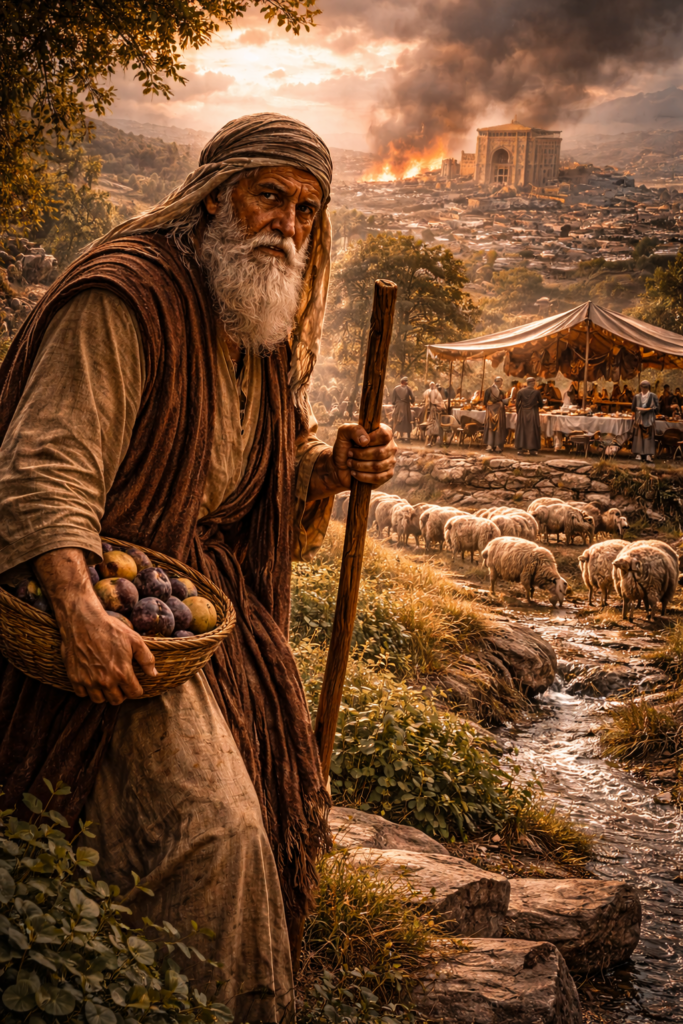
Amos — Justice Restored, Complacency Confronted, Alignment Reclaimed
Introduction
Welcome to the Amos Study Hub — a bold and uncompromising call back to justice, righteousness, and true alignment with God.
Amos is not a priest. He is not a prophet by profession. He is a shepherd.
An ordinary man, called to speak an extraordinary message.
He is sent to a people who appear outwardly secure and prosperous.
Their lives look stable. Their systems look strong. Their worship appears active.
But beneath the surface:
- Justice is absent.
- Righteousness is compromised.
- The vulnerable are neglected.
Amos is written to:
- Confront complacency
- Expose false security
- Call out injustice
- Reveal misalignment between worship and life
- Restore the importance of righteousness
This book is direct. It does not soften its message.
It reveals that external success does not equal internal alignment.
It makes clear: God is not impressed by activity that lacks integrity.
- Worship without justice is empty.
- Prosperity without righteousness is unstable.
- Religion without relationship is hollow.
Amos reminds us: God sees beyond appearances.
He looks at:
- How people are treated.
- How power is used.
- How truth is lived.
This book is not merely about judgement. It is about realignment.
It calls us back to something simple, yet essential: Let justice flow. Let righteousness remain.
Because true worship is not just expressed — It is lived.
Amos 1 — When God Speaks Against Injustice
Summary
“The words of Amos…” A shepherd. Not positioned by status. But by calling.
“The Lord roars from Zion…” God’s voice is not silent. It is strong. Unavoidable.
“The pastures of the shepherds dry up…” Even creation responds.
“The top of Carmel withers.” Nothing is untouched.
Then begins a pattern: “For three sins… even for four…”
Not counting. Emphasising fullness. The measure is complete.
Then: “I will not relent.” Accountability is established. First: Damascus.
“Because she threshed Gilead with sledges having iron teeth…” Violence. Cruelty. People treated without care.
“I will send fire…” Consequence declared. Then: Gaza.
“Because she took captive whole communities…” Exploitation. Displacement.
“They sold them to Edom…” People treated as commodities. Then: Tyre.
“Because she sold whole communities…” Again, exploitation.
“And did not remember the covenant…” Relationship ignored. Then: Edom.
“Because he pursued his brother with a sword…” Betrayal.
“Because he stifled all compassion…” Hardness of heart.
“Because his anger raged continually…” Uncontrolled.
“His fury flamed unchecked.” No restraint. Then: Ammon.
“Because he ripped open pregnant women…” Extreme violence.
“To extend his borders…” Self-gain at any cost. Then: Moab.
“Because he burned to ashes the bones of Edom’s king…” Dishonour. Disrespect even in death.
Each declaration follows:
- “I will send fire…”
- “I will destroy…”
- “I will cut off…”
- “I will punish…”
Consistent. Clear. Nothing ignored. No nation is overlooked. No action is unseen.
Chapter 1 establishes:
- God sees all actions clearly.
- Injustice is not ignored.
- Violence and exploitation matter deeply.
- People are not to be treated as commodities.
- Lack of compassion has consequences.
- Betrayal and dishonour are seen.
- God holds nations accountable.
- Judgment reveals the seriousness of misalignment.
Key Identity Realities
| Truth | Identity Proclamation |
|---|---|
| God Sees Everything | Nothing in my life or the world is hidden from Him. |
| Justice Matters | I value what is right and aligned with God’s heart. |
| People Have Value | I honour others as created with worth. |
| I Choose Compassion | I do not harden my heart toward others. |
| I Live with Integrity | My actions reflect alignment, not compromise. |
| God Is Just | I trust His fairness and righteousness. |
| I Am Accountable | My choices matter and carry impact. |
| I Reflect God’s Heart | I choose to live in a way that honours others. |
Encouragement
Sister, Amos 1 begins strongly. “The Lord roars…” This is not quiet. This is not distant.
God is making something clear: He sees. Everything. Not just what is visible. Not just what is public.
But the way people are treated. The way power is used. The way hearts respond.
And this matters: Because it reveals what God values. Not appearance. Not success. Not outward strength.
But justice. Compassion. Integrity.
And while this chapter speaks of nations — It invites personal reflection. Because alignment begins in the heart.
And this is not meant to create fear. It is meant to bring clarity.
God is not indifferent. He cares deeply about how people are treated.
And that means: Your life matters. Your choices matter. Your heart posture matters.
You are not being asked to carry weight. You are being invited to reflect truth.
To live aligned. To respond with compassion. To walk in integrity.
Because this is what reflects Him. And you are created to reflect Him.
Reflection Questions
- How do I respond to injustice when I see it?
- Do I truly value others as having God-given worth?
- Are there any areas where I have allowed my heart to become hardened?
- What does it look like for me to live with integrity in my daily life?
- How can I reflect God’s heart more clearly in how I treat others?
Amos 2 — When Accountability Comes Closer
Summary
“For three sins of Moab, even for four…” The pattern continues. “I will not relent.” Accountability remains.
“Because he burned to ashes the bones of Edom’s king…” Dishonour. Violation beyond life.
“I will send fire on Moab…” Consequence declared.
Then the focus shifts: Closer. More personal. Judah.
“For three sins of Judah, even for four…” Not exempt. Not overlooked.
“Because they have rejected the law of the Lord…” Truth dismissed.
“And have not kept His decrees…” Disobedience.
“They have been led astray by false gods…” Misplaced trust.
“The gods their ancestors followed.” Patterns repeated.
“I will send fire on Judah…” Consequence reaches God’s own people.
Then further: Israel. The centre.
“For three sins of Israel, even for four…” Full measure.
“I will not relent.” Then the specifics:
“They sell the innocent for silver…” People reduced to value.
“The needy for a pair of sandals…” Exploitation of the vulnerable.
“They trample on the heads of the poor…” Oppression.
“Deny justice to the oppressed…” Justice ignored.
“Father and son use the same girl…” Boundary broken.
“My holy name is profaned.” God’s name misrepresented.
“They lie down beside every altar on garments taken in pledge…” Religious activity mixed with injustice.
“They drink wine taken as fines in the house of their god.” False worship.
External appearance — internal corruption.
Then God reminds them: “I destroyed the Amorites before them…” Victory given.
“Though he was tall as the cedars…” Strength overcome.
“I brought you up out of Egypt…” Deliverance.
“I led you forty years in the wilderness…” Guidance.
“I raised up prophets…” Direction.
“And Nazirites from among your youth.” Set-apart lives.
“Is this not true?” God appeals to memory.
Then: “But you made the Nazirites drink wine…” Corruption of what was set apart.
“And commanded the prophets not to prophesy.” Truth silenced.
Then the response: “Now then, I will crush you…” Weight of consequence.
“As a cart crushes when loaded with grain.” Pressure. “Heavy.“
“The swift will not escape…” Strength fails.
“The strong will not muster their strength…” Ability is insufficient.
“The warrior will not save his life…” Self-reliance cannot rescue.
“Even the bravest warriors will flee naked on that day.” Nothing holds.
Chapter 2 establishes:
- Accountability applies to everyone.
- Being chosen does not remove responsibility.
- Rejecting truth leads to misalignment.
- Exploitation of others is taken seriously.
- Religious activity cannot replace integrity.
- God remembers what He has done.
- Silencing truth has consequences.
- Self-reliance cannot sustain.
- Alignment matters more than appearance.
Key Identity Realities
| Truth | Identity Proclamation |
|---|---|
| I Am Responsible for Truth | I choose to live aligned with what God has revealed. |
| I Honour Others | I treat people with dignity and care. |
| I Do Not Separate Worship from Life | My actions reflect what I believe. |
| I Remember God’s Faithfulness | My life is rooted in what He has done. |
| I Do Not Silence Truth | I remain open to God’s voice. |
| I Walk in Integrity | My life is consistent, not divided. |
| I Do Not Rely on My Own Strength | My security is in God, not myself. |
| I Live in Alignment | I choose truth over compromise. |
Encouragement
Sister, Amos 2 brings something closer.
It is no longer about “others.” It is about God’s own people.
And this is important: Being close to truth… does not remove the need to live aligned with it.
And notice this: The issue is not lack of knowledge. It is rejection.
God had: Delivered them. Led them. Spoken to them.
And yet — They chose differently.
And this is where the invitation comes to you: Not to feel pressure — But to live aware.
Because relationship with God is not about: Knowing more. It is about living what you know.
And this is not about perfection. It is about alignment.
And then something very clear: Religious activity does not replace integrity.
Being around truth… does not equal living in truth.
And this is freeing: Because God is not asking you to perform. He is inviting you to live consistently.
To let your life reflect what is real.
And then the reminder: “I brought you up… I led you…” God has already been faithful.
Your life is not starting from lack. It is anchored in what He has already done.
And from that place — You respond. Not to earn. But because you are already positioned in relationship.
And this is where stability is found: Not in effort. Not in appearance. But in alignment.
Reflection Questions
- Am I living in alignment with what I already know to be true?
- Are there any areas where my actions and beliefs feel disconnected?
- How do I treat others, especially those who are vulnerable?
- Do I rely on my own strength, or remain anchored in God?
- What would it look like for my life to reflect integrity in every area?
Amos 3 — When Relationship Brings Responsibility
Summary
“Hear this word, people of Israel…” God calls attention again.
“This word the Lord has spoken against you…” Direct. Clear.
“Against the whole family I brought up out of Egypt…” Reminder of relationship. Origin. Connection.
“You only have I chosen…” Set apart. Known. Relational language.
“Of all the families of the earth…” Distinct.
“Therefore I will punish you for all your sins.” Responsibility increases with relationship.
Not rejection — accountability.
Then a series of questions: “Do two walk together unless they have agreed to do so?” Alignment matters.
“Does a lion roar in the thicket when it has no prey?” Nothing happens without cause.
“Does a bird swoop down… when no trap has been set?” Actions follow reason.
“When a trumpet sounds in a city, do not the people tremble?” Response follows warning.
“When disaster comes to a city, has not the Lord caused it?” God is not disconnected.
“Surely the Sovereign Lord does nothing without revealing His plan…” God communicates.
“To His servants the prophets.” Truth is not hidden.
“The lion has roared—who will not fear?” Awareness.
“The Sovereign Lord has spoken—who can but prophesy?” Truth must be declared.
Then: “Proclaim to the strongholds of Ashdod and Egypt…”
Even surrounding nations are called to observe.
“Assemble on the mountains of Samaria…” Witness.
“See the great unrest within her…” Internal disorder.
“The oppression among her people.” Injustice exposed again.
“They do not know how to do right…” Misalignment has become normal.
“Who store up in their fortresses what they have plundered…” Gain through injustice.
Then: “An enemy will overrun your land…” Consequence unfolds.
“Your strongholds will be plundered…” What was relied on will fall.
Then imagery: “As a shepherd rescues from the lion’s mouth only two leg bones…” Minimal remains.
“So will the Israelites living in Samaria be rescued…” Partial. Loss is real.
Then: “Hear this and testify…” Witness is established.
“On the day I punish Israel…” Accountability continues.
“I will destroy the altars of Bethel…” False worship addressed.
“The horns of the altar will be cut off…” No false refuge.
“I will tear down the winter house along with the summer house…” Comfort structures removed.
“The houses adorned with ivory will be destroyed…” Wealth cannot protect.
“The mansions will be demolished…” Status does not sustain.
Chapter 3 establishes:
- Relationship with God brings responsibility.
- God communicates truth clearly.
- Nothing happens without cause.
- Alignment matters in walking with God.
- Injustice leads to consequence.
- Misalignment can become normal if unchecked.
- False security will not protect.
- God sees beyond structures and appearances.
- Truth is revealed before action is taken.
Key Identity Realities
| Truth | Identity Proclamation |
|---|---|
| I Am Known by God | I live from relationship, not distance. |
| I Am Responsible for Alignment | I walk in agreement with truth. |
| God Speaks to Me | I am not left without direction. |
| I Respond to Truth | I do not ignore what God reveals. |
| I Do Not Rely on False Security | My stability is not in external things. |
| I Live with Awareness | I recognise cause and effect in my life. |
| I Am Called to Integrity | My life reflects what is right. |
| God Is Involved | He is active and present in my life. |
Encouragement
Sister, Amos 3 brings something into clarity: “You only have I chosen…”
This is not distance. This is relationship.
But with relationship comes something important: Responsibility.
Not pressure. Not performance. But alignment. Because walking with God is not passive.
“Do two walk together unless they have agreed?” Agreement matters.
And this is not about trying harder. It is about being aligned.
And then something reassuring: God speaks. He reveals. He does not leave you unaware.
You are not navigating life without direction. You are being guided.
And this means: You do not need to guess. You need to listen. And then respond.
And notice this: The issue is not just what is happening externally.
It is what has become normal internally.
“They do not know how to do right…” This is what misalignment does if left unchecked. It becomes familiar.
And this is why awareness matters. Because you are not called to live unaware. You are called to live aligned.
And then this truth: What looks strong externally… may not be stable internally.
Houses. Wealth. Structures. They do not sustain. Only alignment does.
And this is freeing: Because your security is not in what you build. It is in who you walk with.
You are not trying to establish your life.
You are living from relationship with the One who is already established.
And that is where stability is found.
Reflection Questions
- What does it mean for me personally that I am “known” by God?
- Am I walking in agreement with what God is showing me?
- How do I respond when God brings something to my attention?
- Is there anything in my life that has become misaligned but feels “normal”?
- Where am I placing my sense of security?
Amos 4 — When God Calls You Back Again and Again
Summary
“Hear this word, you cows of Bashan…” A confronting image. Addressing those living in comfort and excess.
“Who oppress the poor and crush the needy…” Prosperity without compassion.
“Who say to your husbands, ‘Bring us some drinks!’” Self-indulgence. Unaware of impact.
“The Sovereign Lord has sworn by His holiness…” This is serious.
“Days are coming when you will be taken away with hooks…” Consequence.
“You will each go straight out through breaches in the wall…” No protection. No escape.
Then: “Go to Bethel and sin…” Irony.
“Go to Gilgal and sin yet more…” Religious activity continues — but it is empty.
“Bring your sacrifices every morning…” Outward devotion. But it is not alignment.
“For this is what you love to do…” Motivation exposed. It is not about God. It is about preference.
Then a shift: God recounts what He has done.
“I gave you empty stomachs…” Lack allowed. “Yet you have not returned to me.” Again.
“I also withheld rain…” Provision withheld. “Yet you have not returned to me.” Repeated.
“I struck your gardens and vineyards…” Loss experienced. “Yet you have not returned to me.”
“I sent plagues among you…”Disruption. “Yet you have not returned to me.”
“I killed your young men with the sword…” Severe consequence. “Yet you have not returned to me.”
“I overthrew some of you…” Shaking. “Yet you have not returned to me.”
The pattern is unmistakable:
- Intervention.
- Opportunity.
- Invitation.
- No response.
Then: “Therefore this is what I will do to you…”
And then: “Prepare to meet your God, O Israel.” A moment of encounter.
Then a declaration of who He is:
“He who forms the mountains…” Creator.
“Creates the wind…” Powerful.
“Reveals His thoughts to mankind…” Communicates.
“Turns dawn to darkness…” Authority over time and circumstance.
“The Lord God Almighty is His name.” Sovereign.
Chapter 4 establishes:
- Comfort without compassion leads to misalignment.
- Religious activity can mask a disconnected heart.
- God calls people back repeatedly.
- Lack and disruption can be invitations to return.
- Ignoring correction leads to deeper consequence.
- God is patient, but response matters.
- External devotion does not equal internal alignment.
- God desires relationship, not routine.
- Eventually, there is a moment of encounter.
Key Identity Realities
| Truth | Identity Proclamation |
|---|---|
| I Am Invited to Return | I respond when God calls me closer. |
| I Do Not Ignore Correction | I allow God to realign my heart. |
| My Worship Is Genuine | I live from connection, not routine. |
| I Remain Compassionate | I care for others with integrity. |
| I Recognise God’s Hand | I see His invitation in every season. |
| I Respond with Awareness | I do not remain passive or disconnected. |
| I Value Relationship Over Ritual | My heart is engaged, not just my actions. |
| I Prepare to Meet God | I live aware of His presence in my life. |
Encouragement
Sister, Amos 4 reveals something deeply important: God does not withdraw quickly.
He reaches. Again. And again. And again.
“Yet you have not returned to me…”
This is not frustration without care. This is persistent invitation.
And this shows you something about His heart: He desires relationship. Not distance.
And sometimes — what feels like disruption… is actually invitation.
Not punishment. Not rejection. But a moment to turn. To realign. To come back.
And this is important: God is not looking for more activity. He is looking for your heart.
Because it is possible to be: Doing the right things externally — but disconnected internally.
And He sees that. And He lovingly calls it back.
And then this moment: “Prepare to meet your God…”
This is not meant to create fear. It is meant to awaken awareness.
Because you are not living separate from Him. You are living in His presence.
And He is not distant. He is near.
And this is where it becomes beautiful: Every moment… is an opportunity to turn toward Him.
Not because you are far — but because relationship is always open.
And you do not need to wait. You can respond now. With simplicity. With honesty. With openness.
And say: “I am here.” And He meets you there.
Reflection Questions
- Have I been responsive when God has been drawing my attention to something?
- Is there anything in my life where I have been going through the motions rather than engaging my heart?
- How do I interpret moments of disruption — as frustration or invitation?
- Am I open to allowing God to realign areas of my life?
- What would it look like for me to respond fully to God today?
Amos 5 — Seek Him and Live
Summary
“Hear this word, Israel, this lament I take up concerning you…” A lament. Grief expressed.
“Fallen is Virgin Israel, never to rise again…” Collapse.
“Deserted in her own land…” Loss.
Then a shift: “This is what the Sovereign Lord says…” Clarity.
“The city that marches out a thousand strong will have only a hundred left…” Reduction. Weakening.
“This is what the Lord says to Israel: Seek me and live.” The invitation. Simple. Direct.
Not perform. Not strive. Seek.
“Do not seek Bethel…” Do not rely on places.
“Do not go to Gilgal…” Not location-based.
“Do not journey to Beersheba…” Not tradition.
“These will surely go into exile…” External systems will fail.
Then again: “Seek the Lord and live…” Repeated.
Or: “He will sweep through the tribes of Joseph like a fire…” Without response — consequence.
Then: “There is no one at Bethel to quench it.” False centres cannot help.
Then: “There are those who turn justice into bitterness…” Distortion.
“And cast righteousness to the ground.” Truth ignored.
Then a reminder of who God is: “He who made the Pleiades and Orion…” Creator.
“Who turns midnight into dawn…” Authority over seasons.
“Who calls for the waters of the sea…” Powerful.
“The Lord is His name.”
Then: “With a blinding flash He destroys the stronghold…” Strength is not security.
“There are those who hate the one who upholds justice…” Resistance to truth.
“And detest the one who tells the truth.” Truth rejected.
“You levy a straw tax on the poor…” Exploitation continues.
“And impose a tax on their grain…” Burdening the vulnerable.
“You have built stone mansions…” External success.
“But you will not live in them…” Temporary.
“You have planted lush vineyards…” Effort invested.
“But you will not drink their wine…” No lasting reward.
“For I know how many are your offences…” Nothing hidden.
“How great your sins…” Fully seen.
“You oppress the innocent…” Injustice again.
“Take bribes…” Corruption.
“Deprive the poor of justice…” Repeated.
“Therefore the prudent keep quiet…” Fear silences.
“For the times are evil.”
Then: “Seek good, not evil, that you may live…” The invitation continues.
“Then the Lord God Almighty will be with you…” Presence.
“As you say He is.” Alignment between belief and life.
“Hate evil, love good…” Clarity.
“Maintain justice in the courts…” Practical expression.
“Perhaps the Lord… will have mercy…”
Then lament returns: “Wailing in all the streets…” Grief spreads.
“Farmers summoned to weep…” Widespread sorrow.
“Wailing in all the vineyards…” Loss is everywhere.
“For I will pass through your midst…” God is not absent.
Then: “Woe to you who long for the day of the Lord…” Misunderstood expectation.
“Why do you long for the day of the Lord?” Misplaced desire.
“That day will be darkness, not light.” Not what they expect.
“Like a man who flees from a lion only to meet a bear…” No escape through avoidance.
Then the core: “I hate, I despise your religious festivals…” Strong language.
“Your assemblies are a stench to me…” Rejected.
“Even though you bring me burnt offerings…” Activity continues.
“I will not accept them…” Disconnected from truth.
“Take away the noise of your songs…” Worship without alignment is noise.
“But let justice roll on like a river…” This is what God desires.
“Righteousness like a never-failing stream.” Sustained. Consistent. Not occasional.
Then: “Did you bring me sacrifices forty years in the wilderness?”
A reminder. Relationship existed before ritual.
Then: “You have lifted up the shrine of your king…” Idolatry.
“You will go into exile…” Consequence finalised.
Chapter 5 establishes:
- Seeking God is the path to life.
- External religion cannot replace internal alignment.
- Justice and righteousness are central to true worship.
- God sees and responds to injustice.
- Misplaced trust leads to instability.
- Truth may be resisted, but it remains necessary.
- God’s presence aligns with a life that reflects Him.
- The “day of the Lord” is not what false expectation assumes.
- God desires consistency, not performance.
Key Identity Realities
| Truth | Identity Proclamation |
|---|---|
| I Seek God and Live | My life flows from relationship with Him. |
| I Do Not Rely on External Systems | My foundation is not in tradition or place. |
| I Value Justice | I live with fairness and integrity. |
| I Love What Is Good | My choices reflect truth. |
| My Worship Is Aligned | My life and my praise agree. |
| God Is Present With Me | I live aware of His nearness. |
| I Respond to Truth | I do not resist what is right. |
| I Live Consistently | Righteousness flows through my life. |
Encouragement
Sister, Amos 5 brings everything into simplicity: “Seek me and live.”
Not: Do more. Try harder. Perform better. Seek.
Because life is not found in activity. It is found in relationship.
And this is freeing:
You are not being asked to build your life. You are being invited to live from Him.
And then something very clear: God is not looking for religious activity. He is looking for alignment.
Because it is possible to: Sing. Gather. Give. Participate. And still be disconnected.
And God lovingly exposes that. Not to condemn — but to realign.
And then this powerful image: “Let justice roll on like a river…”
Not occasional. Not forced. Flowing. Natural. Continuous.
This is what your life looks like when it is aligned. Not striving — flowing.
And this is important: God is not trying to take something from you. He is calling you into something stable.
Because everything built outside of alignment… will not hold. But what is built from Him — remains.
And then the invitation again: Seek. Not once. Not occasionally. Continually.
Because relationship is not an event. It is a way of living.
And as you seek Him — You find life.
Reflection Questions
- What does it look like for me to truly seek God in my daily life?
- Are there any areas where I have relied on external practices rather than relationship?
- How does justice and righteousness show up in my everyday actions?
- Is my worship reflected in how I live, not just what I say?
- What would it look like for my life to flow naturally from alignment with God?
Amos 6 — When Comfort Becomes Complacency
Summary
“Woe to you who are complacent in Zion…” A warning. Directed at those at ease.
“And to you who feel secure on Mount Samaria…” Confidence. But misplaced.
“You notable men of the foremost nation…” Influence. Position. People others look to.
“To whom the people of Israel come…” Leaders.
But: Comfort has replaced awareness.
Then: “Go to Kalneh and look at it…” Comparison.
“Then go from there to great Hamath…” Observe.
“Then go down to Gath in Philistia…” Look around.
“Are they better off than your two kingdoms?” Perspective.
“Is their land larger than yours?” False comparison exposed.
“You put off the day of disaster…” Delay. Avoidance.
“And bring near a reign of terror…” Unintended consequence.
Then: “You lie on beds adorned with ivory…” Luxury.
“Lounge on your couches…” Ease.
“You dine on choice lambs…” Excess.
“And fattened calves…” Indulgence.
“You strum away on your harps…” Entertainment.
“Like David and improvise on musical instruments…” Creativity used for comfort, not alignment.
“You drink wine by the bowlful…” Overconsumption.
“And use the finest lotions…” Self-focus.
“But you do not grieve over the ruin of Joseph.” Disconnected. Unaware. No concern for what matters.
Then: “Therefore you will be among the first to go into exile…” Reversal.
“The feasting and lounging will end.” Temporary comfort exposed.
Then: “The Sovereign Lord has sworn by Himself…” Serious declaration.
“I abhor the pride of Jacob…” Pride identified.
“And detest his fortresses…” False security.
“I will deliver up the city…” Nothing will hold.
Then imagery: “If ten people are left in one house…” Few remain.
“They too will die.” Severity.
“Someone will carry them out…” Loss is personal.
Then: “Hush!” he will say. “Do not mention the name of the Lord.” Silence. Fear. Disconnection.
Then: “For the Lord has given the command…” God is not passive.
“He will smash the great house into pieces…” Structures fall.
“And the small house into bits.” Nothing exempt.
Then questions: “Do horses run on the rocky crags?” No.
“Does one plough the sea with oxen?” No.
Then: “But you have turned justice into poison…” Distortion.
“And the fruit of righteousness into bitterness.” What should bring life — has been corrupted.
“You who rejoice in the conquest of Lo Debar…” False victories.
“And say, ‘Did we not take Karnaim by our own strength?’” Self-reliance. Credit misplaced.
Then: “For the Lord God Almighty declares…” Final authority.
“I will stir up a nation against you…” Consequence.
“That will oppress you…” From one end of the land to the other. Complete.
Chapter 6 establishes:
- Comfort can lead to complacency.
- False security creates blind spots.
- External success can mask internal misalignment.
- Disconnection from what matters leads to indifference.
- Pride and self-reliance distort perspective.
- What is meant to bring life can be corrupted.
- Ignoring reality does not prevent consequence.
- God sees beyond comfort and appearance.
- Urgency is necessary — awareness matters.
Key Identity Realities
| Truth | Identity Proclamation |
|---|---|
| I Do Not Live in Complacency | I remain aware and responsive. |
| My Security Is in God | I do not rely on comfort or status. |
| I Stay Aligned with What Matters | I do not become distracted by ease. |
| I Care About Justice | I remain engaged with what is right. |
| I Do Not Rely on My Own Strength | My confidence is in God, not myself. |
| I Remain Humble | I do not allow pride to shape my perspective. |
| I Live with Awareness | I see beyond appearances. |
| I Stay Responsive to God | I do not ignore His prompting. |
Encouragement
Sister, Amos 6 brings a gentle but important warning: Comfort… can quietly lead to disconnection.
Not because comfort is wrong — But because it can create:
Unawareness. Passivity. Distance from what matters.
And this is what is being revealed: “They did not grieve…” There was no awareness. No response.
And this is the invitation for you: To remain aware. Not anxious. Not striving. But awake.
Because your life is not meant to drift. It is meant to be aligned.
And then something very important: False security is subtle.
It can look like: Stability. Success. Control. But if it is not rooted in God — It does not hold.
And this is freeing: Because your security is not in:
- What you have.
- What you build.
- What you control.
It is in Him.
And that means: You do not need to protect your life. You live from Him.
And then this truth: Pride and self-reliance distort perspective.
“Did we not do this by our own strength?” This is where misalignment begins.
But you are not living from self. You are living from relationship.
And that keeps your heart: Soft. Responsive. Aware.
And this is where life remains steady: Not in comfort. But in connection.
And you are invited to stay there.
Reflection Questions
- Have I become comfortable in a way that has reduced my awareness?
- Where might I be relying on security outside of God?
- Am I attentive to what truly matters, or distracted by ease?
- Do I recognise God as the source of what I have, or do I lean toward self-reliance?
- What would it look like for me to remain spiritually aware and responsive today?
Amos 7 — When Mercy Interrupts Judgment
Summary
“This is what the Sovereign Lord showed me…” A shift. From declaration — to vision.
“He was preparing swarms of locusts…” Destruction forming.
“After the king’s share had been harvested…” Leaving little behind.
“And just as the late crops were coming up…” Timing matters. Vulnerability.
“When they had stripped the land clean…” Total loss.
Then: “I cried out, ‘Sovereign Lord, forgive!’” Intercession. Appeal.
“How can Jacob survive? He is so small!” Recognition of weakness.
Then: “So the Lord relented.” Mercy. “This will not happen…” Judgment paused.
Then another vision: “The Sovereign Lord was calling for judgment by fire…” Different form.
“He dried up the great deep…” Severe. “Devoured the land.”
Again: “I cried out, ‘Sovereign Lord, I beg you, stop!’” Intercession continues.
“How can Jacob survive? He is so small!” Again — humility.
Then: “So the Lord relented.” Mercy again. “This will not happen…”
Then a third vision: “The Lord was standing by a wall…” Stability image.
“With a plumb line in His hand…” Measurement. Alignment.
“What do you see, Amos?” “‘A plumb line,’ I replied.”
Then: “I am setting a plumb line among my people Israel…” Standard. Truth.
“I will spare them no longer.” This time — no pause. Alignment is required.
“The high places of Isaac will be destroyed…” False systems removed.
“The sanctuaries of Israel will be ruined…” External religion addressed.
“With my sword I will rise against the house of Jeroboam.” Leadership confronted.
Then a shift to narrative: “Amaziah the priest of Bethel sent a message…” Resistance arises.
“To Jeroboam king of Israel…” Authority involved.
“Amos is raising a conspiracy against you…” Truth misrepresented.
“The land cannot bear all his words.” Truth rejected.
Then: “Get out, you seer!” Dismissal.
“Go back to the land of Judah…” Rejection of the messenger.
“Earn your bread there…” Motives questioned.
“Do your prophesying there…” Control attempted.
“Do not prophesy anymore at Bethel…” Silencing truth.
“This is the king’s sanctuary…” Ownership claimed.
Then Amos responds: “I was neither a prophet nor the son of a prophet…” Not position-based.
“But I was a shepherd…” Ordinary. “The Lord took me…” Called.
“And said to me, ‘Go, prophesy…’” Obedience.
Then: “Now then, hear the word of the Lord…”
Truth continues. “You say, ‘Do not prophesy…’” Resistance named.
Therefore: “This is what the Lord says…” Consequences declared.
“Your wife will become a prostitute in the city…” Personal.
“Your sons and daughters will fall by the sword…” Severe.
“Your land will be measured and divided…” Loss.
“You yourself will die in a pagan country…” Exile.
“And Israel will surely go into exile…” Final outcome.
Chapter 7 establishes:
- God reveals before He acts.
- Intercession matters and can delay judgment.
- Mercy is available, but alignment is required.
- God measures by truth, not perception.
- Not all warnings are removed — some require response.
- Truth is often resisted and misrepresented.
- God uses ordinary people to speak truth.
- Authority does not determine truth — God does.
- Silencing truth does not stop reality.
Key Identity Realities
| Truth | Identity Proclamation |
|---|---|
| God Reveals Truth to Me | I am not left unaware. |
| My Prayers Matter | I can intercede and respond. |
| I Am Aligned with Truth | I allow God to measure my life. |
| I Respond to God’s Standard | I live according to what is true. |
| I Am Willing to Speak Truth | I do not silence what God reveals. |
| I Am Called, Not Self-Appointed | My identity is rooted in God’s call. |
| I Remain Steady in Resistance | I do not withdraw when truth is challenged. |
| God’s Word Stands | Truth is not determined by human approval. |
Encouragement
Sister, Amos 7 reveals something deeply reassuring: God does not act without revealing.
He shows. He speaks. He gives opportunity.
And then something powerful: Intercession matters. Amos cried out — and God relented. Twice.
This shows you:
- Your response matters.
- Your prayers matter.
- You are not passive in this relationship.
- You participate.
And then this shift: The plumb line. This is not about punishment. It is about alignment.
Because God is not measuring to reject. He is revealing what is true.
And this is an invitation: To let your life be aligned. Not compared. Not judged by others.
But measured by truth.
And then something important: Truth is not always welcomed.
Amos was: Misunderstood. Rejected. Told to stop.
But this did not change the truth. And it did not change his calling.
And this is where it speaks to you:
You are not defined by how others respond. You are anchored in what God has spoken.
And notice this: Amos was not “qualified” in the way people expected.
He was a shepherd. But God called him. And that is enough.
Your identity is not based on position. It is based on relationship and calling.
And this is where you stand: Not needing approval. Not needing validation.
But simply responding to God. And living aligned with what He has shown you.
Reflection Questions
- How do I respond when God reveals something to me — do I act or delay?
- Do I believe that my prayers and responses truly matter?
- Am I open to allowing God to align areas of my life that may be out of place?
- How do I respond when truth is resisted — do I withdraw or remain steady?
- Do I see my identity as coming from God’s call rather than external validation?
Amos 8 — When Time Runs Out
Summary
“This is what the Sovereign Lord showed me…” Another vision.
“A basket of ripe fruit.” Ready. Fully formed.
“What do you see, Amos?” “‘A basket of ripe fruit,’ I answered.”
Then: “The time is ripe for my people Israel…” Completion. Full measure.
“I will spare them no longer.” No delay. No extension.
“The songs in the temple will turn to wailing…” Reversal.
“Many, many bodies…” Loss.
“Flung everywhere…” Silence follows.
Then: “Hear this, you who trample the needy…” Focus returns to injustice.
“And do away with the poor of the land…” Exploitation.
“You say, ‘When will the New Moon be over…’” Impatience. Religious observance seen as interruption.
“That we may sell grain…” Profit-driven.
“And the Sabbath be ended…” Disconnection from purpose.
“That we may market wheat…” Focus on gain.
“Skimping on the measure…” Dishonesty.
“Boosting the price…” Manipulation.
“Cheating with dishonest scales…” Corruption.
“Buying the poor with silver…” People treated as commodities.
“And the needy for a pair of sandals…” Repeated pattern.
“Selling even the sweepings with the wheat.” No integrity.
Then:
“The Lord has sworn by Himself…” Certainty.
“I will never forget anything they have done.” Nothing hidden.
“Will not the land tremble for this…” Creation responds.
“All who live in it mourn…” Widespread impact.
“The whole land will rise like the Nile…” Instability.
Then: “In that day…” A marked moment.
“I will make the sun go down at noon…” Disruption.
“Darken the earth in broad daylight…” Unexpected.
“I will turn your religious festivals into mourning…” Reversal again.
“All your singing into weeping…” Joy replaced.
“I will make all of you wear sackcloth…” Grief visible.
“It will be like mourning for an only son…” Deep loss.
“The end of it will be like a bitter day.”
Then: “The days are coming…” A shift.
“When I will send a famine through the land…” Not physical. “Not a famine of food…” Clarified.
“Or a thirst for water…”
But: “A famine of hearing the words of the Lord.” Silence.
“People will stagger from sea to sea…” Searching.
“Wandering from north to east…” Looking.
“Searching for the word of the Lord…” Desire emerges.
“But they will not find it.” Too late.
“In that day the lovely young women and strong young men will faint…” Strength fades. From thirst.
“Those who swear by the sin of Samaria…” False allegiance.
“And say, ‘As surely as your god lives…’” Misplaced trust.
“They will fall…” Collapse. “Never to rise again.” Final.
Chapter 8 establishes:
- There is a point where time reaches completion.
- Injustice and corruption are not overlooked.
- Religious activity without integrity is empty.
- God sees and remembers all actions.
- Ignoring truth leads to eventual silence.
- The opportunity to respond is not endless.
- What is neglected will eventually be desired.
- False systems cannot sustain.
- Alignment must happen before time runs out.
Key Identity Realities
| Truth | Identity Proclamation |
|---|---|
| I Value God’s Word | I do not take His voice for granted. |
| I Live with Integrity | I choose honesty in every area. |
| I Honour Others | I do not exploit or overlook people. |
| I Respond While I Can | I do not delay alignment. |
| I Remain Attentive | I stay aware of what God is saying. |
| I Do Not Rely on False Systems | My trust is in God alone. |
| I Live with Urgency | I do not treat truth casually. |
| God Sees Everything | My life is lived openly before Him. |
Encouragement
Sister, Amos 8 carries a weight — but also a clarity.
“The time is ripe…” This is not sudden. This is the result of what has been building.
And this reveals something important: What we consistently choose… matters.
And then something sobering: A famine of hearing the word of the Lord.
Not because God cannot speak — but because it has been ignored.
And what was once available… is now absent.
And this is the invitation for you: Do not take His voice lightly.
Because you are not meant to: Search later… for what you can respond to now.
And this is not about fear. It is about value. Because His voice is life. Guidance. Alignment.
And you are being invited to remain: Attentive. Responsive. Present.
And then something very clear: Integrity matters. How you live.
How you treat others. How you conduct your life. It all matters.
Because your life is not separate from your worship. It is your worship.
And then this truth: You are not being asked to rush. You are being invited to respond. Now.
While your heart is open. While His voice is clear. While alignment is available.
And that is where life remains steady.
Reflection Questions
- Do I value and respond to God’s voice in my life right now?
- Are there any areas where I have delayed responding to what I know is right?
- How do I handle integrity in everyday decisions?
- Am I treating others with fairness and care?
- What would it look like for me to live fully responsive to God today?
Amos 9 — When Restoration Follows Refinement
Summary
“I saw the Lord standing by the altar…” Presence. Direct.
“Strike the tops of the pillars…” Structure shaken.
“So that the thresholds shake…” Foundations impacted.
“Bring them down on the heads of all the people…” No hiding behind systems.
“Those who are left I will kill with the sword…” No escape through avoidance.
“Not one will get away…” Total exposure.
Then: “Though they dig down to the depths below…” No hiding.
“From there my hand will take them.”
“Though they climb up to the heavens…” No escape.
“From there I will bring them down.”
“Though they hide themselves on the top of Carmel…” No concealment.
“I will hunt them down.”
“Though they hide from my eyes at the bottom of the sea…” No distance.
“From there I will command the serpent…” Nothing is beyond His reach.
Then: “They will go into exile…” Consequence continues.
“I will keep my eye on them…” Still seen. “For harm and not for good.”
Then a declaration of who He is: “The Lord, the Lord Almighty…” Authority.
“He touches the earth and it melts…” Power.
“All who live in it mourn…” Impact.
“The whole land rises like the Nile…” Movement.
“Who builds His lofty palace in the heavens…” Sovereign.
“Sets its foundation on the earth…” Connected.
“Calls for the waters of the sea…” Control.
“The Lord is His name.”
Then: “Are not you Israelites the same to me as the Cushites?” Perspective shift. Declares the Lord.
“Did I not bring Israel up from Egypt…” Yes.
“But also the Philistines from Caphtor…” Others too.
“And the Arameans from Kir?” God is not limited. Not partial.
“The eyes of the Sovereign Lord are on the sinful kingdom…” Nothing hidden.
“I will destroy it…” Accountability remains.
Yet: “Yet I will not totally destroy the descendants of Jacob…” A shift. Preservation.
“Declares the Lord.” Hope begins.
“For I will give the command…” Action.
“And I will shake the people of Israel among all the nations…” Refining.
“As grain is shaken in a sieve…” Separation.
“And not a pebble will reach the ground.” Nothing lost unintentionally.
“All the sinners among my people will die by the sword…” Those who remain resistant.
“Those who say, ‘Disaster will not overtake us.’” Denial ends.
Then: “In that day…” A new movement.
“I will restore David’s fallen shelter…” Restoration.
“I will repair its broken walls…” Rebuilding.
“And restore its ruins…” Renewal.
“And will rebuild it as it used to be…” Return.
“So that they may possess the remnant of Edom…” Expansion.
“And all the nations that bear my name…” Inclusion.
“Declares the Lord, who will do these things.” God initiates restoration.
Then: “The days are coming…” Promise continues.
“When the reaper will be overtaken by the ploughman…” Abundance.
“And the planter by the one treading grapes…” Overflow.
“New wine will drip from the mountains…” Provision.
“And flow from all the hills…” Sustained.
“I will bring my people Israel back from exile…” Return.
“They will rebuild the ruined cities and live in them…” Stability.
“They will plant vineyards and drink their wine…” Fruitfulness.
“They will make gardens and eat their fruit…” Enjoyment.
“I will plant Israel in their own land…” Establishment.
“Never again to be uprooted…” Security.
“From the land I have given them…” Belonging.
“Declares the Lord your God.”
Chapter 9 establishes:
- Nothing is hidden from God.
- Avoidance cannot remove accountability.
- God is fully aware and present.
- Judgment is not the final word.
- A remnant is preserved.
- Refinement separates what is true.
- Restoration follows realignment.
- God rebuilds what was broken.
- Abundance and stability are restored by Him.
- Belonging is re-established.
Key Identity Realities
| Truth | Identity Proclamation |
|---|---|
| I Am Seen by God | Nothing in my life is hidden from Him. |
| I Cannot Hide from Truth | I live openly and honestly before God. |
| I Am Refined, Not Rejected | God preserves what is true in me. |
| I Am Part of Restoration | My life is included in what God rebuilds. |
| God Rebuilds What Is Broken | I trust Him to restore and renew. |
| I Am Planted and Established | My life has stability in Him. |
| I Live in God’s Promise | I am not defined by past disruption. |
| I Belong to God | My identity is secure in Him. |
Encouragement
Sister, Amos 9 brings everything to completion — but not to despair. To restoration.
And this is important: Nothing is hidden from God.
Not to expose you for harm — but to bring everything into truth.
Because what is brought into truth… can be restored.
And then this beautiful shift: “Yet I will not totally destroy…”
This is the heart of God. Preservation. Even in refinement.
And this means: You are not being removed. You are being refined.
And then: “I will restore…” This is where everything leads.
Not to loss — but to rebuilding. Repairing. Renewing.
And notice: God is the one doing it.
You are not striving to rebuild your life. You are responding to the One who restores it.
And then this promise: “Never again to be uprooted…” Stability. Belonging. Security.
And this is what remains: Not the shaking. Not the disruption. But the planting.
And you are invited to live from that place:
Not looking back at what was shaken — But standing in what has been restored.
Because God’s final word is not judgment. It is restoration.
And you are included in that.
Reflection Questions
- Do I trust that God sees my life fully and still desires restoration?
- Are there areas where I have tried to hide rather than bring things into truth?
- How do I respond to the idea of being refined rather than rejected?
- What might God be restoring or rebuilding in my life right now?
- What does it mean for me to live from a place of being established and secure in Him?
Completion Note — The Heart of Amos
From warning to awakening, from complacency exposed to alignment restored, from false security dismantled to true stability revealed, the Book of Amos delivers one unshakable truth:
- Alignment with God is not optional — it is essential.
- Justice is not external — it is lived.
- Worship is not activity — it is integrity.
Amos is not simply a warning. It is a realignment.
- It confronts comfort.
- It exposes complacency.
- It dismantles false security.
- It reveals hidden injustice.
- It calls out divided living.
It makes clear:
- God is not looking for performance — He is looking for alignment.
- You are not sustained by what you build. You are sustained by who you walk with.
- You are not defined by external success. You are revealed by internal integrity.
- You are not protected by systems. You are anchored in truth.
Amos removes illusion. It shows that:
- Religion without righteousness does not stand.
- Comfort without awareness leads to drift.
- Prosperity without justice is unstable.
- Hearing truth without responding leads to silence.
And yet — it does not end in warning. It ends in restoration.
- God does not expose to abandon. He exposes to restore.
- He does not shake to destroy. He shakes to realign.
- He does not remove to leave empty. He removes to rebuild.
- You are not called to live unaware. You are called to live aligned.
- You are not called to perform. You are called to walk with Him.
- You are not left in disruption. You are planted in restoration.
Amos does not leave you uncertain. It leaves you awake.
Aware. Aligned. Established.
Overall Summary of Amos
1. Big-Picture Summary
The Book of Amos reveals that life with God is not sustained by activity, status, or external appearance, but by alignment, justice, and integrity.
Written during a time of outward prosperity, Amos exposes a deeper reality:
- The people appeared secure — but were spiritually disconnected.
- They were active in worship — but absent in integrity.
- They were prosperous — but unjust.
Amos brings clarity: God sees beyond what is visible.
He is not moved by religious routine when it is disconnected from how people live.
He calls His people back — not through vague invitation, but through clear exposure, repeated warnings, and consistent opportunities to return.
This book reveals a pattern:
God warns. God invites. God reveals. God waits. But response matters.
Amos shows that ignoring truth does not remove consequence — it delays it.
And yet, the final word is not destruction. It is restoration.
- God preserves a remnant.
- He rebuilds what was broken.
- He restores what was lost.
- He re-establishes His people in security and belonging.
Amos ultimately reveals:
God’s heart is not to condemn — but to realign.
2. Chapter-by-Chapter Summary
| Chapter | Summary |
|---|---|
| 1 | Judgment begins with surrounding nations, revealing that injustice and cruelty are seen and addressed by God. |
| 2 | Accountability moves closer — Judah and Israel are confronted for rejecting truth and exploiting others. |
| 3 | Relationship with God brings responsibility; alignment matters because they are known by Him. |
| 4 | God recounts repeated attempts to draw His people back, yet they do not return. |
| 5 | A clear invitation: “Seek Me and live.” True worship is justice and righteousness, not ritual. |
| 6 | Complacency and false comfort are exposed; ease has led to disconnection and pride. |
| 7 | Visions reveal both mercy and measurement; God relents through intercession but ultimately requires alignment. |
| 8 | The time becomes “ripe”; warning intensifies, and a famine of hearing God’s word is revealed. |
| 9 | Judgment is completed, but restoration follows — God preserves, rebuilds, and re-establishes His people. |
3. Major Movements in Amos
| Movement | Chapters | Focus | Transformation Thread |
|---|---|---|---|
| 1. Exposure of Injustice | 1–2 | Judgment on nations, then Judah and Israel | What is hidden is brought into the light |
| 2. Responsibility in Relationship | 3–4 | Being chosen, warned, and called to return | Awareness increases, but response is resisted |
| 3. Invitation to Realign | 5–6 | “Seek Me and live,” justice over ritual, complacency exposed | The call shifts from warning to invitation |
| 4. Revelation and Measurement | 7–8 | Visions, intercession, plumb line, urgency of time | Mercy is shown, but alignment is required |
| 5. Refinement to Restoration | 9 | Judgment completed, remnant preserved, restoration promised | What is refined is rebuilt and established |
4. Key Themes & Identity Lessons
| Theme | Identity Lesson |
|---|---|
| Alignment | I live in agreement with God, not in divided living. |
| Justice | I reflect God’s heart in how I treat others. |
| Integrity | My life and my worship are consistent. |
| Awareness | I remain responsive to God’s voice. |
| Responsibility | Relationship with God shapes how I live. |
| Refinement | I am refined, not rejected. |
| Restoration | God rebuilds what has been broken. |
| Belonging | I am established and secure in Him. |
Encouragement
Sister, Amos may feel confronting at first — but it is deeply stabilising.
Because it removes what is uncertain… and replaces it with what is real.
It shows you that:
- You do not need to maintain an appearance.
- You do not need to perform.
- You do not need to build your life on unstable things.
Because God is not looking at the surface. He is inviting your whole life into alignment.
And this is freeing: Because alignment is simpler than striving.
It is not about doing more. It is about living true.
And then this beautiful truth: God does not expose to shame you. He exposes to restore you.
- Everything He reveals — He intends to realign.
- Everything He corrects — He intends to rebuild.
- And everything He refines — He intends to establish.
And this is where you stand: Not under pressure. But in invitation.
To live aware. To live aligned. To live from relationship.
Because you are not being asked to fix your life.
You are being invited to walk with Him — and let Him establish it.
Reflection Questions
- Where in my life is God inviting me into deeper alignment?
- Do my actions reflect what I say I believe?
- How do I respond when truth is brought to my attention?
- Am I living aware of God’s presence, or drifting into complacency?
- What does it look like for me to live from restoration rather than striving?