
1 Peter — Chosen, Refined, and Set Apart
Introduction
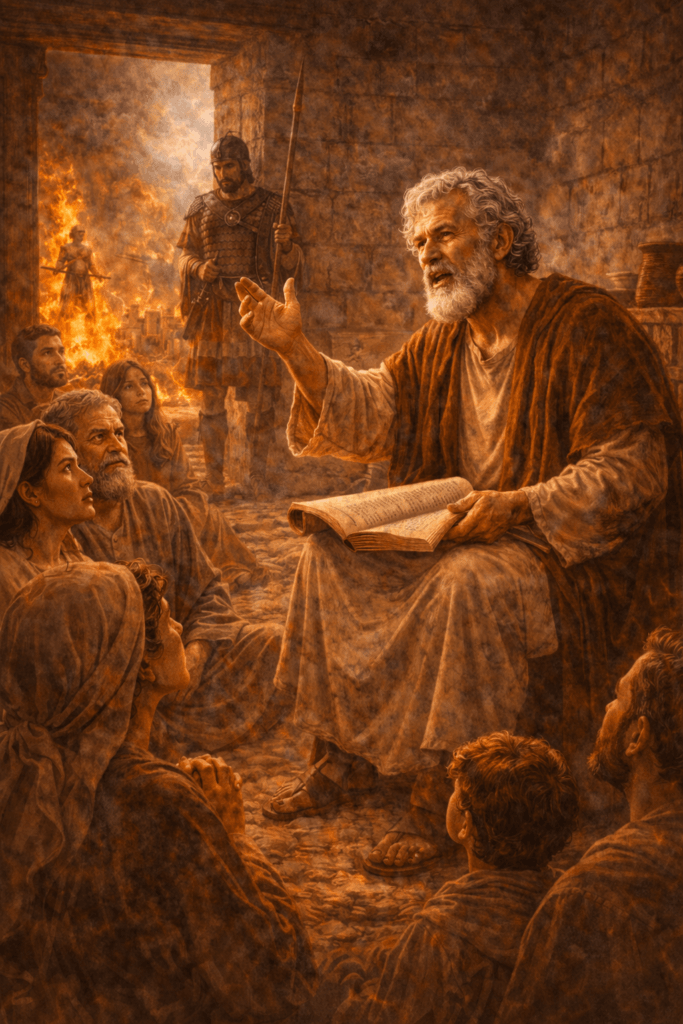
Welcome to the 1 Peter Study Hub — a letter written to believers scattered under pressure, learning how to live faithfully in a world that does not share their values.
Peter writes to Christians who are: Marginalised. Misunderstood. Opposed. Suffering.
Yet his tone is not defeat. It is identity.
He begins with who they are: Chosen according to the foreknowledge of God. Sanctified by the Spirit. Sprinkled with the blood of Jesus Christ.
Before addressing behaviour, Peter anchors identity.
1 Peter is not primarily about suffering. It is about perspective within suffering.
He calls believers to:
• Rejoice in a living hope
• Endure trials that refine faith
• Live holy as God is holy
• Honour authority without compromising allegiance
• Submit without losing dignity
• Love deeply from the heart
• Stand firm in grace
This letter reveals a powerful truth: Suffering does not cancel calling. It clarifies it.
Believers are described as: A chosen people. A royal priesthood. A holy nation. God’s special possession.
You are not displaced. You are distinct. You are not forgotten. You are refined.
Peter teaches that holiness is not withdrawal. It is visible difference.
Hope is not fragile. It is living.
Faith is not theoretical. It is tested and proven genuine.
1 Peter moves through three steady anchors: Identity. Endurance. Holy conduct.
It invites you to live as a citizen of heaven while residing on earth.
Not anxious. Not retaliatory. Not hidden.
But steadfast. Respectful. Pure. Courageous.
At its heart stands this stabilising promise:
After you have suffered a little while, He Himself will restore you and make you strong, firm, and steadfast.
1 Peter 1 — Living Hope and Holy Identity
Summary
Peter begins not with instruction, but with inheritance.
“Praise be to the God and Father of our Lord Jesus Christ.” Why?
Because in His great mercy, He has given us new birth into a living hope through the resurrection of Jesus Christ from the dead.
This hope is not abstract. It is anchored.
An inheritance that can never perish, spoil, or fade — kept in heaven for you.
Believers are shielded by God’s power through faith.
Trials may come. Grief may surface. But testing refines faith like gold purified by fire.
And refined faith results in praise, glory, and honour when Jesus Christ is revealed.
Though unseen, He is loved. Though unseen, He is trusted.
And joy flows — inexpressible and filled with glory.
Peter reminds them that this salvation was long anticipated by prophets.
Even angels long to look into these things.
Then comes the call:
“Therefore, prepare your minds for action. Be sober-minded. Set your hope fully on the grace to be brought to you.”
Identity produces instruction.
Do not conform to former ignorance. Be holy in all you do.
“For it is written: Be holy, because I am holy.”
Holiness is not isolation. It is alignment.
Live with reverent fear — not terror, but awe — because you were redeemed not with perishable things, but with the precious blood of Christ.
You have been born again. Not of perishable seed. But through the living and enduring Word of God.
All flesh is like grass. But the Word of the Lord endures forever.
Chapter 1 establishes: You are reborn. You are secure. You are refined. You are called to holiness.
Key Identity Realities
| Truth | Identity Proclamation |
|---|---|
| I Am Born Again | My identity is rooted in mercy. |
| My Hope Is Living | Resurrection anchors my future. |
| My Inheritance Is Secure | What God has promised cannot decay. |
| Trials Refine Me | Testing strengthens my faith. |
| I Am Shielded by God’s Power | I am protected through faith. |
| Holiness Reflects My Father | I align my life with His nature. |
| I Am Redeemed by Christ’s Blood | My value is immeasurable. |
| The Word Endures | My foundation is unshakable. |
Encouragement
Sister, your hope is alive. Not fragile. Not fading. Not temporary.
You have been born again into something secure.
Trials do not erase inheritance. They refine faith.
You are not abandoned under pressure. You are being purified.
Set your hope fully. Not partially. Not divided.
Holiness is not legalism. It is resemblance.
You reflect the One who redeemed you.
Your life is not random. Your identity is not fragile. Your future is not uncertain.
You are shielded. You are refined. You are reborn.
Let hope stabilise you. Let reverence shape you. Let holiness mark you.
Your inheritance is secure. And the Word that birthed you endures forever.
Reflection Questions
- How does knowing my inheritance is secure reshape how I view trials?
- Is my hope fully set on Christ, or divided by temporary concerns?
- What does holiness look like practically in my current season?
- How does understanding my redemption affect my self-worth?
- Am I allowing the enduring Word to shape my thinking daily?
1 Peter 2 — Living Stones and a Holy People
Summary
Peter begins Chapter 2 with a call to growth.
Rid yourselves of malice, deceit, hypocrisy, envy, and slander.
These attitudes fracture community and weaken witness.
Instead, crave pure spiritual milk, so that by it you may grow up into salvation.
Growth is not automatic. It is desired. “As you come to Him, the Living Stone…”
Jesus is described as the Living Stone — rejected by humans but chosen and precious to God.
And believers are called living stones too. You are being built into a spiritual house. Not isolated bricks.
But a holy priesthood offering spiritual sacrifices acceptable to God through Jesus Christ.
Peter anchors identity in Scripture: The Stone the builders rejected has become the cornerstone.
For those who believe, He is precious. For those who reject, He becomes a stumbling stone.
Response to Christ reveals alignment.
Then comes one of the strongest identity declarations in the New Testament:
“You are a chosen people, a royal priesthood, a holy nation, God’s special possession…” Why?
That you may declare the praises of Him who called you out of darkness into His wonderful light.
Once not a people. Now the people of God. Once without mercy. Now recipients of mercy.
Identity fuels conduct.
Peter urges believers to abstain from sinful desires that wage war against the soul.
Live such good lives among unbelievers that even if they accuse you, they may see your good deeds and glorify God.
He then addresses submission to governing authorities.
Submit for the Lord’s sake. Not out of fear. But for witness.
Live as free people. But do not use freedom to cover evil.
Show proper respect. Love the family of believers. Fear God. Honour the emperor.
He concludes with Christ as the example in suffering.
When insulted, He did not retaliate. When suffering, He did not threaten. He entrusted Himself to Him who judges justly.
He bore our sins in His body on the cross, so that we might die to sin and live for righteousness.
By His wounds, you have been healed.
Chapter 2 establishes: You are built together. You are chosen. You are distinct. You are called to visible, honourable conduct.
Key Identity Realities
| Truth | Identity Proclamation |
|---|---|
| I Am a Living Stone | I am part of God’s spiritual house. |
| Christ Is My Cornerstone | My foundation is secure and aligned. |
| I Am Chosen | My identity is intentional, not accidental. |
| I Am a Royal Priest | I represent God in daily life. |
| I Am Called Out of Darkness | Light defines my present reality. |
| I Have Received Mercy | My past does not define me. |
| Freedom Is Directed | I live responsibly, not recklessly. |
| Christ Is My Example | I entrust injustice to God. |
Encouragement
Sister, you are not isolated. You are being built.
You are not discarded. You are chosen. You are not hidden. You are a royal priesthood.
When culture misunderstands you, when opposition surfaces, when accusation rises — Live honourably.
Your conduct may speak louder than argument.
Freedom is not rebellion. It is responsibility.
And when suffering feels unfair, remember Christ.
He did not retaliate. He entrusted.
You are not called to defend your reputation at all costs. You are called to reflect Him.
You have received mercy. You now reflect light.
Stand firm. Live distinct. Entrust outcomes to God.
You are part of something eternal.
Reflection Questions
- Am I intentionally growing, or spiritually stagnant?
- How does seeing myself as a “living stone” reshape my view of community?
- Is my conduct among non-believers honourable and consistent?
- How do I respond when treated unfairly — with retaliation or trust?
- What does it mean practically that I am a royal priest today?
1 Peter 3 — Gentle Strength and Unshakeable Hope
Summary
Peter continues his theme of honourable conduct, beginning with relationships.
He addresses wives first — calling them to respectful and pure conduct, even if their husbands do not believe the Word.
This is not inferiority. It is influence. Gentleness and quiet strength carry weight.
True beauty is not external adornment. It is the inner self — unfading, precious before God.
He then speaks to husbands — urging them to live with understanding and honour toward their wives, recognising shared grace. Mutual dignity strengthens prayer.
Peter widens the instruction to the whole community:
Be like-minded. Be sympathetic. Love one another. Be compassionate. Be humble.
Do not repay evil with evil. Do not retaliate with insult. Instead, bless.Why?
Because you were called to inherit a blessing.
He anchors this in Scripture — the one who desires life must guard their tongue, turn from evil, seek peace, and pursue it.
The eyes of the Lord are on the righteous. His ears are attentive to their prayer.
Then Peter addresses suffering directly.
Who is going to harm you if you are eager to do good?
But even if you suffer for righteousness, you are blessed.
Do not fear threats. Do not be intimidated.
Set apart Christ as Lord in your hearts.
Be prepared to give an answer for the hope you have. But do so with gentleness and respect.
Keep a clear conscience.
If you suffer, let it be for doing good — not for wrongdoing.
Peter then points to Christ: He suffered once for sins — the righteous for the unrighteous — to bring you to God.
He was put to death in the body but made alive in the Spirit.
The chapter closes with Christ’s authority — angels, authorities, and powers subject to Him.
Chapter 3 reveals: Gentleness is strength. Blessing is power. Hope is unshakeable. Christ is victorious.
Key Identity Realities
| Truth | Identity Proclamation |
|---|---|
| My Influence Is Rooted in Character | Inner strength carries eternal value. |
| Gentleness Is Precious to God | Quiet confidence reflects trust. |
| I Inherit Blessing | I respond to insult with grace. |
| The Lord Sees and Hears | My prayers are attended to. |
| I Am Blessed in Righteous Suffering | Obedience is never wasted. |
| Christ Is Lord in My Heart | My allegiance is internal first. |
| I Carry Living Hope | I can explain my faith gently. |
| Christ Is Victorious | Authority ultimately belongs to Him. |
Encouragement
Sister, gentleness is not weakness. It is controlled strength.
You do not need loud defence. You need steady character.
When insult comes, bless. When misunderstood, remain clear. When opposed, do not fear.
Your security is not in approval. It is in Christ.
Set Him apart in your heart. Let your hope be visible. Let your tone be gentle. Let your conscience remain clear.
If suffering arises, remember: Obedience is blessed. Righteousness is seen. Christ reigns.
You are not fighting for victory. You are living from it.
Remain composed. Remain respectful. Remain courageous.
Hope within you is powerful.
Reflection Questions
- How does gentleness function as strength in my life?
- When insulted, do I retaliate or bless?
- Is Christ clearly set apart as Lord in my heart?
- Can I articulate my hope with gentleness and respect?
- Where might fear be influencing my obedience?
1 Peter 4 — Suffering With Purpose, Serving With Urgency
Summary
Peter opens Chapter 4 with a decisive mindset:
“Since Christ suffered in His body, arm yourselves also with the same attitude.”
Suffering is not random. It clarifies allegiance.
Whoever suffers in the body is done with sin — not sinless, but no longer ruled by former passions.
The goal is no longer human desire. It is the will of God.
Peter acknowledges their past: Living in sensuality, drunkenness, idolatry, excess.
But that chapter has closed.
Now their difference confuses others. Former companions are surprised. They malign.
But accountability remains. They will give account to Him who is ready to judge the living and the dead.
Peter then shifts perspective: “The end of all things is near.”
Not to create panic — but urgency. Be alert. Be sober-minded. Pray.
Above all, love each other deeply, because love covers a multitude of sins.
Offer hospitality without grumbling.
Use whatever gift you have received to serve others as faithful stewards of God’s grace in its various forms.
If you speak — speak as one speaking the very words of God.
If you serve — serve with the strength God provides. Why?
So that in all things God may be glorified through Jesus Christ.
Then Peter addresses suffering again: Do not be surprised at the fiery ordeal. It is not strange. It refines.
Rejoice as you participate in Christ’s sufferings.
If you are insulted because of His name, you are blessed.
The Spirit of glory and of God rests on you.
Suffering for wrongdoing brings consequence. Suffering as a Christian brings honour.
“Commit yourselves to your faithful Creator and continue to do good.”
Chapter 4 reveals: Suffering is purposeful. Love is urgent. Service is stewardship. Glory is the aim.
Key Identity Realities
| Truth | Identity Proclamation |
|---|---|
| I Live for God’s Will | Former patterns no longer define me. |
| Accountability Is Certain | I live with eternal awareness. |
| The End Produces Urgency | I remain alert and prayerful. |
| Love Covers | I choose depth over division. |
| I Am a Steward of Grace | My gifts are entrusted, not owned. |
| Service Glorifies God | Strength flows from Him. |
| Suffering for Christ Is Honourable | I am blessed under insult. |
| God Is My Faithful Creator | I entrust hardship to Him. |
Encouragement
Sister, do not be surprised by refining fire.
It is not evidence of abandonment. It is evidence of alignment.
Your past does not define your present. Your present is anchored in purpose.
Live alert. Pray steadily. Love deeply.
Hospitality matters. Generosity matters. Faithful use of your gifts matters.
If insult comes, do not shrink. The Spirit rests on you.
You are not suffering in vain. You are participating in something eternal.
Commit yourself to your faithful Creator. Continue doing good.
You are not ruled by former desires. You are governed by God’s will.
And glory belongs to Him.
Reflection Questions
- Am I living intentionally for God’s will in this season?
- How does urgency shape my prayer life?
- Are my gifts being used as stewardship or withheld?
- How do I respond when misunderstood or insulted for my faith?
- What does it mean for me to entrust hardship to my faithful Creator?
1 Peter 5 — Humble Strength and Steadfast Resistance
Summary
Peter closes his letter with pastoral instruction and stabilising assurance.
He first addresses elders — those who shepherd God’s people.
Shepherd the flock willingly. Not under compulsion. Not for dishonest gain. Not lording authority over others.
Lead by example. When the Chief Shepherd appears, there is a crown of glory that will not fade.
Leadership is stewardship. Influence is responsibility.
Peter then calls younger believers to humility and submission.
“All of you, clothe yourselves with humility toward one another.” Why?
Because “God opposes the proud but gives grace to the humble.”
Humility positions the heart for grace.
Humble yourselves under God’s mighty hand. He will lift you up in due time.
Cast all your anxiety on Him because He cares for you. Not some anxieties. All.
Then comes a sober warning: Be alert and of sober mind.
Your adversary the devil prowls like a roaring lion seeking someone to devour.
But you are not powerless. Resist him. Stand firm in the faith.
Suffering is not isolated. Believers throughout the world experience similar trials.
And then comes the stabilising promise:
After you have suffered a little while, He Himself will restore you and make you strong, firm, and steadfast.
Peter closes with this affirmation: “This is the true grace of God. Stand firm in it.”
Chapter 5 reveals: Leadership must be humble. Anxiety must be surrendered. Resistance must be steady. Grace must be stood in.
Key Identity Realities
| Truth | Identity Proclamation |
|---|---|
| Leadership Is Stewardship | I influence through example, not control. |
| Humility Invites Grace | I position myself to receive strength. |
| God Lifts the Humble | Exaltation belongs to Him. |
| I Can Cast My Anxiety | I am cared for personally. |
| I Am Not Ignorant of the Enemy | I remain alert and discerning. |
| Resistance Is Possible | I stand firm in faith. |
| Suffering Is Temporary | Refinement is limited in duration. |
| God Restores | He makes me strong, firm, and steadfast. |
Encouragement
Sister, humility is strength under control.
You do not need to elevate yourself. God lifts surrendered hearts.
If anxiety presses, do not carry it. Cast it. He cares for you. Not distantly. Personally.
If opposition feels real, remain alert. But do not fear.
The enemy roars. He does not rule.
You are called to resist. To stand firm. To remain steady in grace.
Suffering is not permanent. Refinement is not endless.
Restoration is promised. He Himself will strengthen you.
Stand firm in grace. Not in self-effort. Not in defensiveness. Not in anxiety.
In grace. And grace is sufficient.
Reflection Questions
- Where might pride be subtly resisting grace in my life?
- Am I actively casting anxiety, or carrying it?
- How alert am I spiritually to subtle opposition?
- What does standing firm in grace look like practically?
- Do I trust that God Himself will restore and strengthen me?
Completion Note — Chosen, Refined, and Steadfast
From living hope to holy conduct, from gentle strength to humble endurance, 1 Peter carries one steady call: Stand firm in grace.
This letter was written to scattered believers. Marginalised. Misunderstood. Pressured.
Yet Peter does not centre their weakness. He centres their identity.
You are chosen. You are born again. You are living stones. You are a royal priesthood. You are called out of darkness into light.
Suffering does not cancel that. It clarifies it.
Trials refine faith. Opposition reveals allegiance. Insult confirms distinction.
Holiness is not retreat. It is visible difference.
Submission is not inferiority. It is strength under control.
Gentleness is not weakness. It is anchored confidence.
Hope is not fragile. It is living.
Peter moves us through: Identity before instruction. Conduct that reflects calling. Suffering that refines rather than defeats. Humility that attracts grace. Resistance that stands firm.
And he closes with this stabilising promise: After you have suffered a little while, He Himself will restore you and make you strong, firm, and steadfast.
Grace is not theoretical. It is sustaining.
You are not abandoned in pressure. You are refined through it.
You are not called to panic. You are called to stand.
Stand firm in grace. Stand firm in hope. Stand firm in holiness. Stand firm in humility.
You are chosen. You are refined. You are being established.
And the God of all grace will strengthen you.
1. Big-Picture Summary
1 Peter is a letter to believers learning how to live faithfully under pressure.
It declares that: Identity precedes endurance.
You are chosen. You are reborn into living hope. You are built together as living stones.
You are called to holiness. You are strengthened through suffering.
Peter does not minimise hardship. He reframes it.
Suffering is not abandonment. It is refinement.
Believers are not displaced. They are distinct.
The book moves through:
• Anchoring identity in living hope
• Calling believers to visible holiness
• Honouring authority without compromising allegiance
• Responding to suffering with gentleness and trust
• Serving faithfully with urgency
• Humbling oneself under God’s mighty hand
• Standing firm in grace
1 Peter teaches us that suffering clarifies calling.
At its core stands this steady promise:
After you have suffered a little while, He Himself will restore you and make you strong, firm, and steadfast.
2. Chapter-by-Chapter Summary
| Chapter | Summary |
|---|---|
| 1 | New birth into a living hope. Trials refine faith. Believers are called to holiness because they are redeemed and secure. |
| 2 | Christ is the Living Stone; believers are living stones built together. A chosen people called to visible, honourable conduct. |
| 3 | Gentle strength and respectful conduct reflect hope. Suffering for righteousness is blessed. Christ reigns victorious. |
| 4 | Live for God’s will, not former desires. Use gifts as stewards of grace. Do not be surprised by suffering — rejoice in participation with Christ. |
| 5 | Shepherd with humility. Cast anxiety on God. Resist the enemy. Stand firm in grace. God Himself restores and strengthens. |
3. Major Movements
| Movement | Focus | Transformation Thread |
|---|---|---|
| Living Hope | Identity in resurrection | Hope stabilises endurance |
| Holy Conduct | Distinct living | Identity shapes behaviour |
| Gentle Strength | Suffering without fear | Trust replaces retaliation |
| Purposeful Endurance | Participation in Christ | Refinement produces maturity |
| Humble Resistance | Standing firm | Grace sustains perseverance |
1 Peter moves from identity → holiness → endurance → service → humility → steadfastness.
4. Key Themes and Identity Lessons
| Theme | Identity Lesson |
|---|---|
| Living Hope | My future is anchored in resurrection. |
| Chosen Identity | I belong intentionally to God. |
| Holiness | I reflect the One who redeemed me. |
| Suffering for Righteousness | Obedience is blessed, not wasted. |
| Gentle Strength | Meekness is controlled confidence. |
| Stewardship of Grace | My gifts serve God’s glory. |
| Humility | Grace flows to surrendered hearts. |
| Spiritual Alertness | I stand firm against subtle opposition. |
| Restoration | God Himself strengthens me. |
5. Encouragement
Sister, you are not surviving a hostile world. You are shining in it.
You are not forgotten. You are chosen.
You are not fragile. You are refined.
When pressure comes, do not panic. When misunderstood, do not retaliate. When suffering surfaces, do not shrink.
Your identity is secure. Your inheritance is guarded. Your hope is living.
Holiness is not isolation. It is resemblance.
Stand firm in grace. Cast anxiety on Him. Resist fear. Entrust injustice.
The God of all grace will restore you. And you will stand strong, firm, and steadfast.
6. Reflection Questions
- How does living hope reshape my response to suffering?
- Am I living visibly distinct in conduct and character?
- Where might gentleness replace defensiveness in my life?
- Am I stewarding my gifts intentionally?
- Do I truly trust that God will restore and strengthen me?